
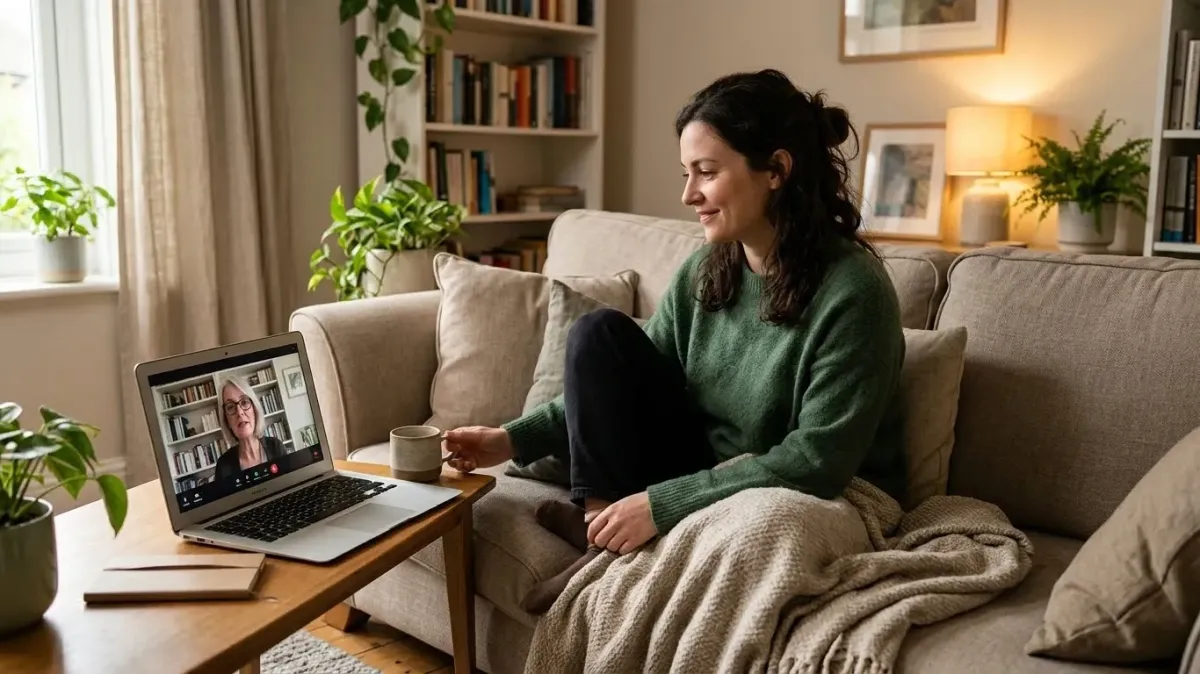
Is Online Therapy Effective for Depression? | Radiant Path Therapy
Depression is one of the leading causes of disability in the world and can make everyday life very hard. CBT is one of the most effective ways to treat it. Depression has a way of making even the smallest tasks feel heavy. And for many people, the idea of getting dressed, driving somewhere, sitting in a waiting room, and talking to a stranger about all of it feels like too much to take on.
And thanks to the internet, more people can now access that kind of support from home. People across Grand Terrace, California and surrounding areas can now access that kind of support from home. Online therapy removes many of the barriers that stop people from getting help, including cost, travel, busy schedules, and the fear of being judged. Getting mental health support takes time, trust, and real effort, so you want to know it is worth it.
What Is Online Therapy?
Online therapy is professional mental health treatment that happens over the internet instead of in a physical office. A licensed therapist works with you the same way they would in person, but you connect through a video call, phone call, or sometimes a secure messaging platform.
How Online Therapy Works
Most online therapy happens through video sessions, where you and your therapist meet face to face over a screen at a scheduled time. Phone sessions are also available for people who prefer audio only or who do not have reliable video access. Some platforms also offer messaging or chat support, where you can write to your therapist between sessions. Therapy apps bring all of this together in one place, often with added tools like mood tracking, journaling, and guided exercises.
Types of Therapy Available Online
The types of therapy you can access online are the same ones used in traditional offices. CBT is one of the most widely available and well-researched. It focuses on changing negative thought patterns that contribute to depression. Talk therapy, psychodynamic therapy, behavioral activation, and even online group therapy are all options depending on the platform and therapist you work with.
Benefits of Online Therapy for Depression
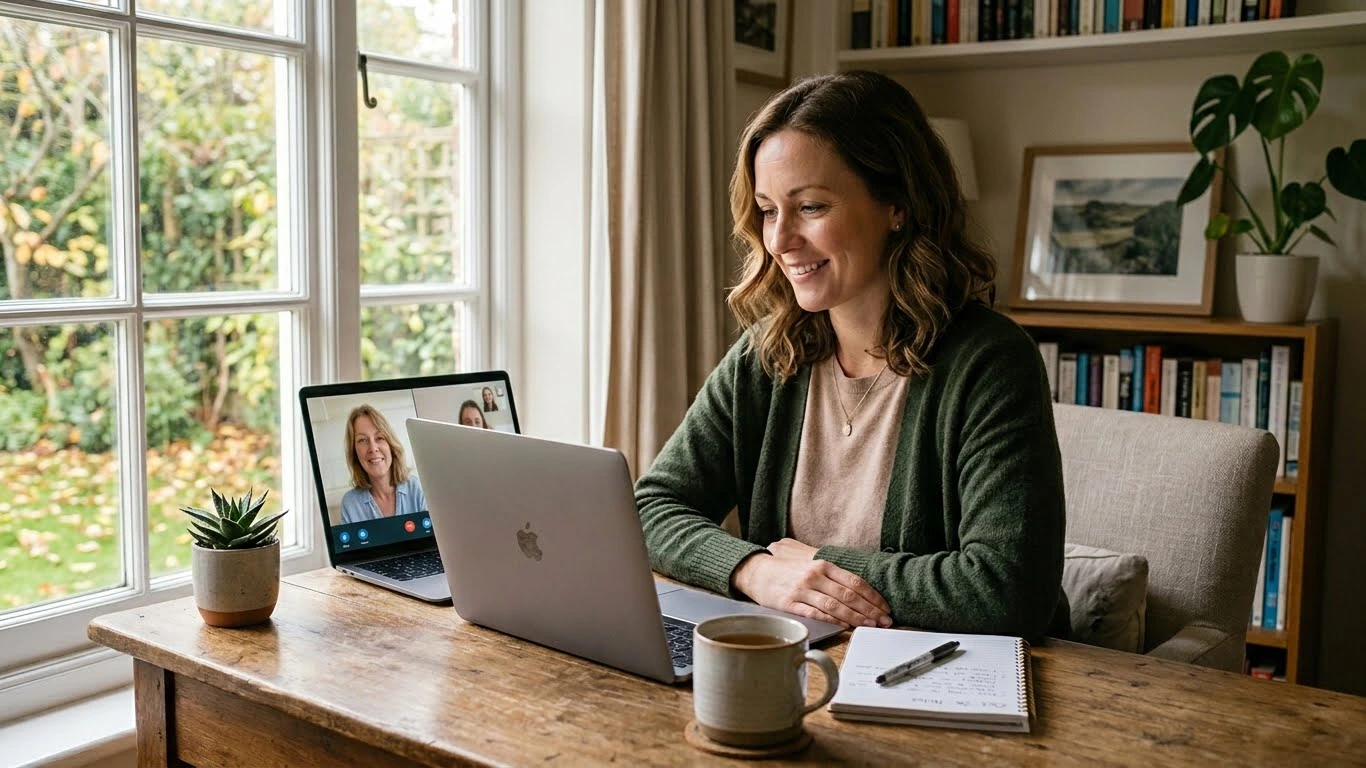
Online therapy offers several advantages for people struggling with depression, especially those who may find traditional in-person sessions difficult to access.
Greater Accessibility
Online therapy has opened up mental health care to people who previously had little or no access to it. Online platforms remove that barrier entirely and allow you to work with a specialist in depression regardless of where you live. Parents of young children, people working long hours, and anyone with a packed schedule find online therapy far easier to fit into their lives.
Flexible Scheduling
Traditional therapy offices typically operate during standard business hours. Online therapists often offer evening and weekend appointments, which makes it possible for working professionals and parents to get consistent support without disrupting their week. Flexibility in scheduling means fewer missed sessions.
More Affordable Than Traditional Therapy
The cost of therapy is one of the most common reasons people delay getting help. Online therapy tends to cost less per session than in-person therapy. There are no travel costs, no parking fees, and many platforms offer subscription-based pricing that makes regular access more manageable.
Increased Privacy and Comfort
Attending a session from your own home removes a layer of anxiety that many people feel about going to a clinic. You do not have to sit in a waiting room or worry about running into someone you know. For people who feel self-conscious about seeking mental health support, that added privacy often makes it easier to show up and stay engaged.
Similarities in Treatment Outcomes
Online therapy and in-person therapy often produce similar outcomes for treating depression, especially when using evidence-based methods like Cognitive Behavioural Therapy (CBT). Both approaches aim to reduce symptoms such as low mood, negative thinking, and loss of motivation, and many people see steady improvement over time.
Research also shows that the quality of the therapist-client relationship can be strong in both formats, which plays an important role in recovery. Overall, both online and in-person therapy can be equally effective when delivered consistently by a qualified professional.
When Online Therapy May Not Be the Best Fit
Online therapy is effective for many people, but it may not be the right choice in every situation. It can be less suitable for individuals experiencing severe depression, active suicidal thoughts, where in-person or emergency care is more appropriate In some cases, individuals with complex mental health conditions may benefit more from the closer monitoring and direct support that in-person therapy can provide.
Severe Depression or Crisis Situations
If you are having thoughts of suicide or self-harm, or if you are in a mental health crisis, online therapy alone is not the appropriate level of care. In these situations, please contact emergency services, go to your nearest emergency room, or call a crisis helpline such as the 988 Suicide and Crisis Lifeline. You deserve immediate, in-person support.
Complex Mental Health Conditions
People dealing with severe trauma, psychosis, or substance use disorders that require intensive treatment may need a higher level of care than online therapy can provide. These conditions often need structured programs, medication management, and more intensive clinical oversight.
Technology or Privacy Challenges
Online therapy requires a reliable internet connection and a private space to speak freely. If you share a small home with others and have no private area, or if your internet access is unreliable, the experience may be frustrating and less effective. In these cases, exploring community-based or in-person options may be more practical.
Signs Online Therapy Could Help You
Sometimes it is hard to know whether what you are feeling needs professional support. Here are some signs that online therapy could be a good fit for you. You have felt sad, empty, or hopeless for more than a couple of weeks and nothing seems to help. Your mood is affecting your ability to work, study, or take care of daily responsibilities. You have been pulling away from friends and family and spending more time alone than usual.
You want to talk to someone but the idea of going to a clinic or sitting in a waiting room feels too overwhelming. You need flexibility because your schedule makes it hard to attend regular in-person appointments. You have been putting off getting help simply because it felt too hard to access.
What to Expect During an Online Therapy Session
An online therapy session is usually very similar to a traditional in-person appointment, except it takes place through a secure video call, phone call, or messaging platform. At the start, your therapist will often check in with how you have been feeling since your last session and what has been most challenging for you. You will then talk through your thoughts, emotions, and any situations affecting your depression.
The therapist may guide the conversation using structured techniques such as Cognitive Behavioural Therapy (CBT), helping you understand negative thinking patterns and develop healthier coping strategies. Sessions are usually private, confidential, and follow a set time, often around 45 to 60 minutes.
Tips for Getting the Most Out of Online Therapy
Getting results from online therapy depends a lot on how you show up for it. Here are some simple things that make a real difference.
Find a quiet and private space before each session so you can speak openly without worrying about being overheard.
Be honest with your therapist, even about things that feel hard to say. The more open you are, the more useful the sessions will be.
Attend sessions consistently, especially on the days when you do not feel like it. Those are often the sessions that help the most.
Practice any coping strategies or exercises your therapist gives you between sessions. Therapy works best when you apply what you learn in real life.
Track how you are feeling between sessions. Noticing small changes in your mood or energy helps you and your therapist see what is working.
Give the process time. Depression does not lift overnight and real progress usually takes several weeks of steady effort.
How to Choose the Right Online Therapist
Start by checking that any therapist you consider is properly licensed in your state or country. A license means they have met specific educational and professional standards. Look for someone who has specific experience treating depression rather than a general-purpose therapist.
Read reviews and testimonials where available, and pay attention to how other clients describe the therapist's communication style. Compare costs across different platforms and find out what your insurance covers before committing. Make sure the platform you choose uses encrypted, secure technology to protect your privacy during sessions.
Common Concerns About Online Therapy
A common concern is whether online therapy is as effective as in-person therapy. Research shows it can be just as helpful for mild to moderate depression, especially with CBT-based treatment. Some people also worry about privacy, but most platforms use secure systems to keep sessions confidential.
Others feel unsure about building a connection through video, though many find a strong therapist relationship still develops over time. Technical issues like internet problems can also be a concern, but most platforms are designed to be simple and easy to use.
The Future of Online Mental Health Treatment
Telehealth therapy has grown dramatically and shows no sign of slowing down. More insurance providers are covering virtual sessions, more licensed therapists are offering online services, and technology continues to make the experience smoother and more accessible.
Hybrid models that combine online and in-person sessions are becoming more common, giving people the best of both formats. As acceptance of virtual care continues to grow, more people who previously had no access to mental health support are getting the help they need.
Ready to Start Feeling Better?
Taking the first step toward feeling better is the hardest part. Everything after that gets easier. At Radiant Path Therapy in Grand Terrace, California, we offer evidence-based online therapy for depression tailored to your needs. Whether you are just starting out or have been struggling for a while, Contact our team. Our licensed therapists are here to support you every step of the way.
Conclusion
Depression is serious, but it is also very treatable. Online therapy has given millions of people access to professional support that they might not have sought otherwise, whether because of cost, location, stigma, or simply the weight of the condition itself.
It reduces symptoms, improves daily functioning, and produces results that are comparable to in-person care for most people with mild to moderate depression. The key is finding a therapist you trust, showing up consistently, and giving the process the time it needs.
If you have been putting off getting help because it felt too difficult or too far away, know this: you do not have to have everything figured out before you start. You just have to take one step.
Frequently Asked Questions
Is online therapy as effective as in-person therapy for depression?
For mild to moderate depression, research consistently shows that online therapy produces results very similar to in-person therapy. The quality of the therapist and the consistency of attendance matter more than the format.
What type of online therapy works best for depression?
CBT has the strongest research support for treating depression online. Behavioral activation and psychodynamic therapy are also effective options depending on your needs and preferences.
Can online therapy help severe depression?
Online therapy can be part of a treatment plan for severe depression, but it is not a substitute for crisis care or intensive psychiatric treatment. If you are in crisis, please seek immediate in-person support.
How long does online therapy take to work?
Many people begin to notice some improvement within four to eight weeks of consistent sessions. Significant change often takes three to six months or longer depending on the individual and the severity of their depression.
Is online therapy covered by insurance?
Many insurance plans now cover online therapy. Coverage varies by plan, so contact your insurance provider directly to confirm what is included under your policy.
Can I do CBT online for depression?
Yes. CBT is one of the most widely available therapy types online and has strong research support specifically for treating depression in a virtual format.


