
Can I Get Disability for Depression? Eligibility, Benefits, and How to Apply
Yes, you may be able to get disability for depression if your condition is severe enough to significantly affect your ability to work. A diagnosis alone does not automatically qualify you. The Social Security Administration considers your medical evidence, symptoms, functional limitations, ability to maintain work, and how long the condition is expected to last. Depression is evaluated under the SSA's listing for depressive, bipolar, and related disorders.
Both moderate and severe depression can interfere with concentration, attendance, social interaction, decision-making, and completing everyday work tasks. What matters for disability benefits is not simply whether your depression is labeled “moderate” or “severe,” but how seriously it limits your functioning. If depression is affecting your work or everyday life, Radiant Path Therapy in Grand Terrace, CA can provide compassionate mental health support while you explore the disability options available to you.
Depending on your circumstances, you may qualify for Social Security Disability Insurance (SSDI), Supplemental Security Income (SSI), or another disability program. SSDI generally depends on qualifying disability and sufficient work history, while SSI is designed for people who meet disability or age requirements and have limited income and resources. California also has State Disability Insurance for certain workers who temporarily cannot work because of a non-work-related physical or mental health condition.
Understanding Depression and Disability Benefits
Depression affects how a person thinks, feels, and functions. In its more severe forms it can make basic daily tasks difficult or impossible to manage.The Equality Act 2010 defines a disability as any impairment that has a substantial and long-term negative effect on daily life and moderate to severe depression can meet that definition.
Can Depression Qualify as a Disability?
Yes, depression can qualify as a disability, but a diagnosis alone does not automatically make someone eligible for Social Security disability benefits. For SSDI or disability-based SSI, the Social Security Administration looks at the severity of your condition, medical evidence, functional limitations, and how your symptoms affect your ability to work.
For Social Security Disability Insurance, the condition generally must affect your ability to work for at least 12 months or be expected to result in death. SSDI also requires sufficient work history. SSI uses the same general adult disability definition but has separate financial eligibility requirements.
When Depression May Be Considered Disabling
SSA evaluates depressive disorders under its mental-disorder criteria. Medical evidence may document symptoms such as depressed mood, loss of interest, sleep or appetite changes, low energy, difficulty concentrating, feelings of guilt or worthlessness, and thoughts of death or suicide.
However, symptoms are only part of the evaluation. SSA also considers how the condition affects four important areas of mental functioning:
Understanding, remembering, or applying information
Interacting with other people
Concentrating, persisting, or maintaining pace
Adapting or managing yourself
For one route through the listing, SSA requires an extreme limitation in one of these areas or marked limitations in two. There is also an alternative pathway for certain serious and persistent mental disorders with a medically documented history of at least two years and additional requirements.
Is Depression a Disability Under the ADA?
Depression may also qualify as a disability under the Americans with Disabilities Act when a mental impairment substantially limits one or more major life activities. However, ADA protection and Social Security disability benefits use different standards, so qualifying under one system does not automatically mean you qualify under the other.
Can You Get Disability for Depression and Anxiety?
Yes, it is possible to qualify for disability when depression and anxiety occur together, but having both diagnoses does not automatically result in approval. Social Security considers the combined effects of all medically determinable impairments when determining how severely they limit your ability to function and work.
Depression and anxiety can affect concentration, memory, attendance, communication, stress tolerance, sleep, and the ability to adapt to changes or interact with others. SSA evaluates depressive disorders and anxiety disorders under separate mental-disorder listings, while also considering the overall effect of a person's impairments during the disability determination process.
Types of Disability Benefits for Depression
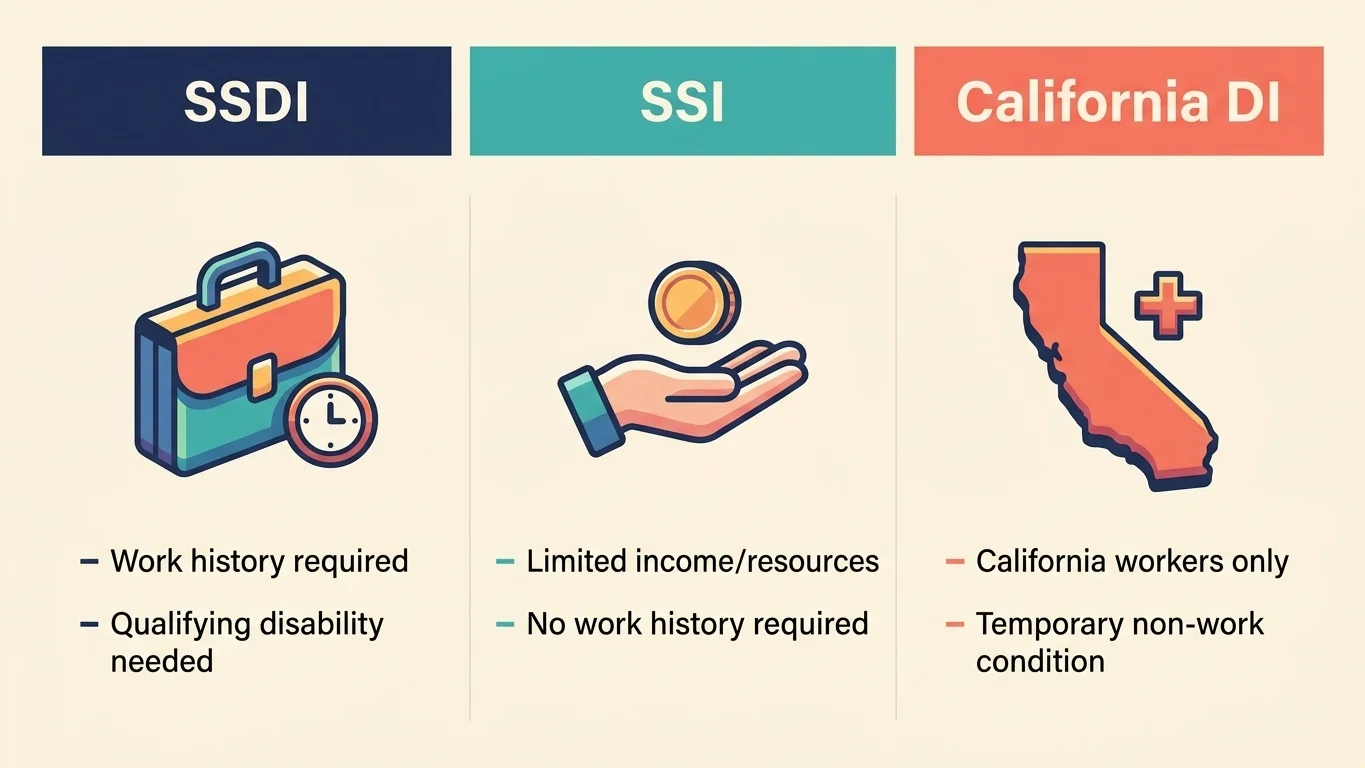
Several disability programs may provide financial support when depression prevents or significantly limits your ability to work. The right program depends on your work history, income, resources, and whether your disability is expected to be short-term or long-term.
Program | Who It May Help | Main Requirement |
Social Security Disability Insurance (SSDI) | People whose depression prevents or significantly limits their ability to work | You generally need a qualifying disability and sufficient Social Security work history |
Supplemental Security Income (SSI) | People with qualifying disabilities who have little or no income or resources | Eligibility depends on disability as well as financial requirements |
California Disability Insurance (DI) | Eligible California workers who temporarily cannot work because of a non-work-related physical or mental condition | You must meet California EDD eligibility requirements and have your disability medically certified |
SSDI vs. SSI for Depression
SSDI and SSI can both provide disability benefits for depression, but they have different eligibility rules. SSDI is generally for people who have worked and paid Social Security taxes long enough to earn the required work credits. You must also meet Social Security's disability requirements and show that your depression significantly limits your ability to work.
SSI does not require a specific work history. Instead, it is designed for people who are disabled and have limited income and resources. Some people may qualify for both SSDI and SSI, depending on their work history, financial situation, and the severity of their condition.
Who Is Eligible for Disability Benefits for Depression?
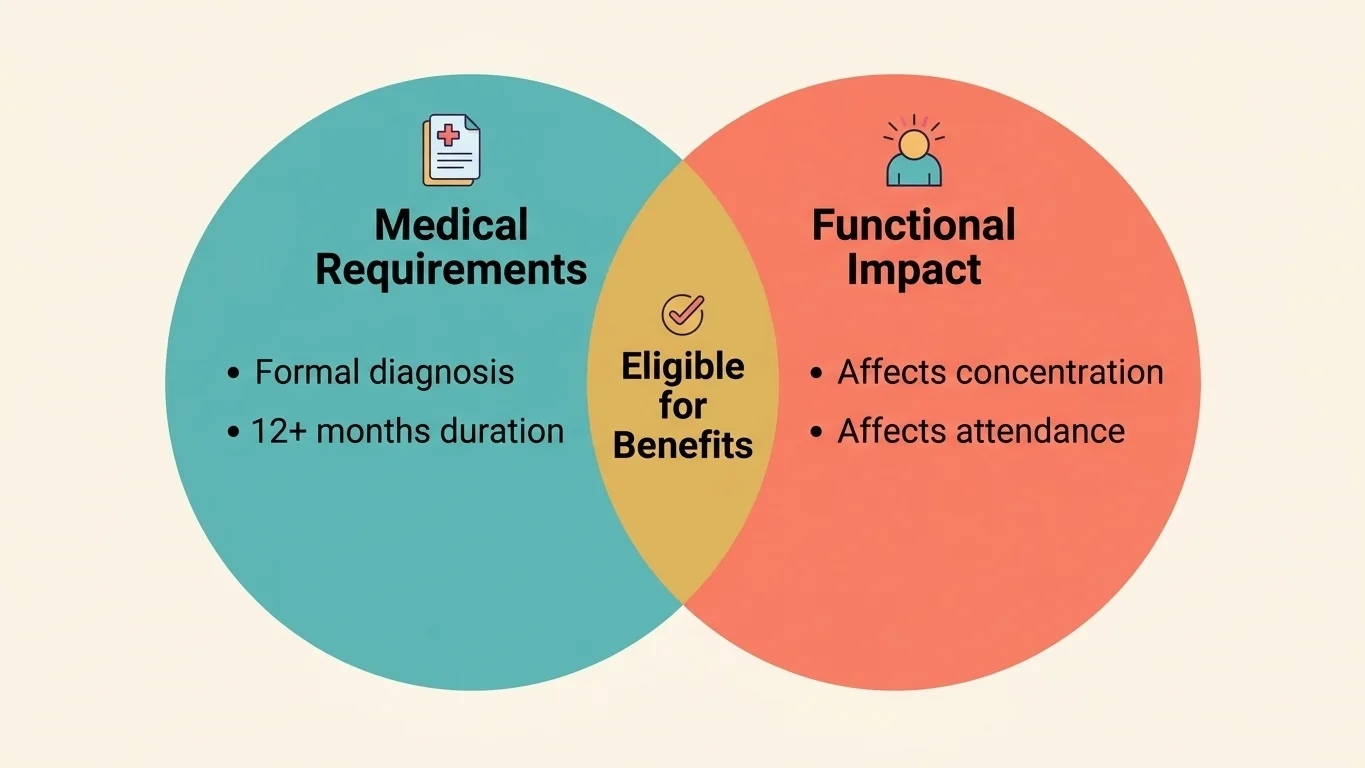
Eligibility is not based on diagnosis alone. What matters is how depression affects your daily life and your ability to function and how well you can evidence that impact.
Medical Requirements
To qualify you will need a formal diagnosis from a GP or psychiatrist and evidence that your condition has lasted or is expected to last at least 12 months. The strength of your medical evidence matters enormously GP letters, psychiatric reports and documentation of how depression affects your daily life all strengthen your claim considerably.
How Depression Affects Your Ability to Work
The benefits system looks at how depression affects your ability to concentrate, follow instructions, manage stress, interact with colleagues, and maintain regular attendance. Cognitive difficulties,emotional instability, and social anxiety are all recognised barriers to work and all can support a successful claim.
The Work Capability Assessment (WCA)
The Work Capability Assessment determines whether you qualify for the health element of Universal Credit or ESA. It covers areas like following instructions, coping with change, and interacting with other people.
Describe your symptoms accurately, including how often difficult days occur, how long they last, what triggers or worsens symptoms, and what activities you can or cannot perform consistently.
How to Apply for Disability Benefits for Depression
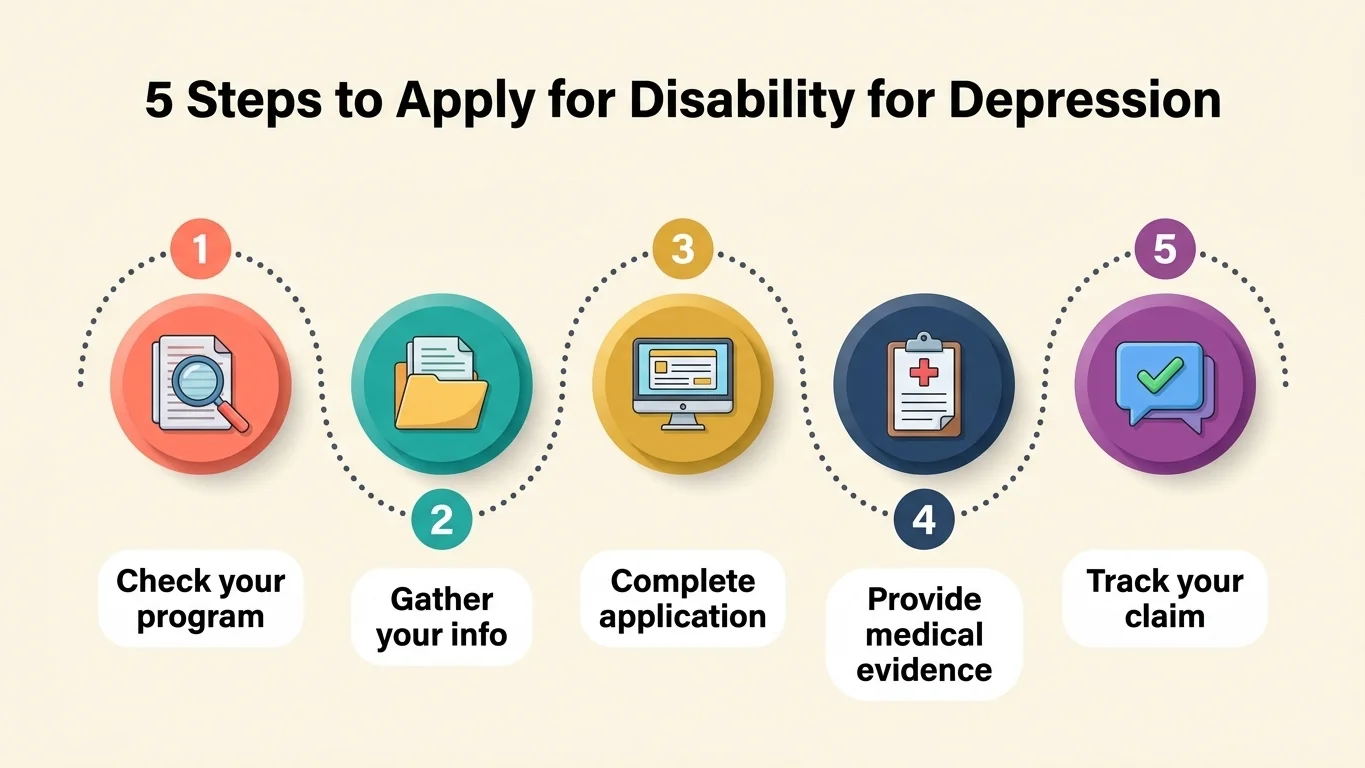
Applying for disability benefits for depression can feel difficult when symptoms already affect your concentration, energy, memory, or motivation. Breaking the process into clear steps can make the application easier to manage and help you provide Social Security with the information needed to evaluate your claim.
Step 1: Check Which Disability Program May Apply
Start by understanding whether you may qualify for Social Security Disability Insurance (SSDI), Supplemental Security Income (SSI), or potentially both.
SSDI generally requires a qualifying disability and sufficient work history under Social Security. SSI is intended for people who meet disability requirements and have limited income and resources. Your depression must also meet Social Security's definition of disability rather than simply having a diagnosis.
For adult Social Security disability benefits, your medical condition generally must prevent or significantly limit your ability to work and be expected to last at least 12 months or result in death.
Step 2: Gather Your Medical and Work Information
Before beginning your mental health disability application, collect information about your depression, treatment history, and employment. Having accurate information available can make the application easier to complete.
You may need details such as:
Names and contact information for doctors, therapists, psychiatrists, hospitals, and clinics
Dates of treatment and mental health appointments
Medications you take and who prescribed them
Medical records or reports you already have
Information about previous jobs and when you worked there
The date your depression began preventing you from working
Recent earnings and employer information
Social Security's Adult Disability Report collects detailed information about your medical conditions and work history. SSA also considers medical evidence when determining whether your condition meets its disability requirements.
Do not delay your application simply because you do not have every medical record in your possession. Social Security states that applicants can still apply and that SSA may help obtain medical evidence from treatment providers with the applicant's permission.
Step 3: Complete Your Social Security Disability Application
You can apply for Social Security disability benefits online. Applications can also be started by contacting Social Security by phone or through a local Social Security office.
When completing the application, describe your depression accurately and specifically. Instead of simply stating that depression makes working difficult, explain how your symptoms affect tasks you need to perform consistently.
For example, you might describe problems with:
Concentrating long enough to complete tasks
Remembering instructions or appointments
Maintaining a regular work schedule
Interacting appropriately with coworkers or customers
Handling stress or unexpected changes
Completing tasks at an appropriate pace
Managing everyday responsibilities
Explain how frequently these problems happen and how they affect your ability to function over time. Specific, consistent information can give SSA a clearer understanding of how depression affects your ability to work.
Step 4: Provide Medical Evidence About Your Depression
Medical evidence is an important part of a depression disability claim. SSA requires objective medical evidence from an acceptable medical source to establish that you have a medically determinable impairment. It then considers medical and nonmedical evidence when evaluating how severely the condition limits your ability to function.
Evidence may include treatment records, mental health evaluations, doctors' reports, medication history, therapy records, and other relevant documentation.
Your records should help show the nature and severity of your depression, how long you have experienced symptoms, and how the condition affects your ability to perform work-related mental activities.
Social Security may also ask you to complete an authorization allowing SSA and the state disability determination service to request relevant medical information from your healthcare providers.
Step 5: Respond to Follow-Up Requests and Track Your Claim
Submitting the application is not always the end of the process. After receiving your claim, Social Security reviews the information and may contact you if additional documents or details are needed. SSA then processes the application and sends you its decision.
Respond to requests for information as accurately and promptly as you can. Keep copies of important documents, treatment information, and correspondence related to your application.
If your existing medical records do not provide enough information for Social Security to determine whether you are disabled, SSA may request additional information or arrange a consultative examination.
Throughout the process, continue describing your condition honestly. Explain not only which symptoms you experience, but also how often they occur and how they affect your ability to maintain reliable, consistent work.
Preparing for a Disability Benefits Assessment
Knowing what to expect before your assessment makes the whole process significantly less stressful. The better prepared you are the more clearly you can communicate how depression affects your daily life.
What Happens During the Assessment
The assessment is carried out by a healthcare professional contracted by the DWP. It can take place in person, over the phone, or by video call and typically lasts between 30 minutes and an hour.
The assessor will ask questions about your condition and how it affects your daily life. Their report is then used to make a decision on your claim. You are allowed to bring someone with you for support and it is worth doing so.
Tips to Prepare for Your Evaluation
Write down your symptoms and how they affect daily life before the assessment
Keep a diary in the weeks before noting what you could and could not manage each day
Ask your GP for a supporting letter
Bring someone you trust for support
Take your time you are allowed to ask for questions to be repeated and to take breaks
What If Your Disability Claim Is Denied?
A rejected claim is not the end of the road. Many claims for depression-related benefits are refused the first time but a large number are successfully overturned on appeal. Do not give up.
Common Reasons Claims Are Rejected
Insufficient medical evidence
Answers on the form that did not fully capture the impact of the condition
Assessors underestimating the severity of mental health conditions
Failing to describe the worst days accurately
How to Appeal a Decision
If your claim is rejected, request a Mandatory Reconsideration within one month of your decision letter. Submit any additional evidence at this stage. If the outcome does not change you can appeal to an independent tribunal success rates for mental health conditions are high and it is always worth pursuing.
Getting Help From a Benefits Adviser
You do not have to do this alone. Citizens Advice, Mind, and Rethink Mental Illness all offer free help with claims and appeals. A benefits adviser can help you complete your form, gather evidence, and represent you at tribunal if needed and professional help significantly increases your chances of success.
Get Support for Depression in Grand Terrace, CA
Depression can affect your ability to work, manage responsibilities, and feel like yourself. You do not have to navigate those symptoms without support. Radiant Path Therapy provides compassionate mental health care in Grand Terrace, CA to help you understand your symptoms, build healthier coping strategies, and move toward greater stability.
Ready to take the next step? Contact Radiant Path Therapy today to schedule a consultation and learn how therapy for depression may help.
Conclusion
So, can you get disability for depression? Yes, depression can qualify for disability benefits when it is medically documented and severe enough to significantly limit your ability to work. However, having depression, anxiety, or even a clinical diagnosis does not automatically mean your claim will be approved. The Social Security Administration considers the severity and duration of your condition, your medical evidence, your functional limitations, and whether you can maintain substantial work.
People with qualifying depression may be eligible for SSDI if they have sufficient work history, or SSI if they meet disability requirements and have limited income and resources. Depression and anxiety can also be evaluated together when both conditions contribute to a person's limitations. California workers who need shorter-term support may have a separate option through California State Disability Insurance.
If a Social Security disability claim is denied, you generally have the right to request reconsideration within 60 days rather than the one-month deadline currently mentioned in your article. Strong medical records, treatment history, and specific examples of how your symptoms affect concentration, attendance, communication, self-management, and everyday work can help SSA understand the full impact of your condition.
Financial support may help with the practical effects of depression, but treatment matters too. If depression is interfering with your work, relationships, or daily life, Radiant Path Therapy in Grand Terrace, CA can help you address the mental health side of what you are experiencing and work toward greater stability.
Frequently Asked Questions
Can I get disability for depression?
Yes, depression may qualify for Social Security disability when it is medically documented and significantly limits your ability to work. A diagnosis alone is not enough; SSA also evaluates severity, functional limitations, duration, and other eligibility requirements.
Does severe depression qualify for disability?
Severe depression can qualify for disability when the medical and functional evidence meets Social Security's requirements. SSA evaluates symptoms as well as limitations involving concentration, interaction with others, managing yourself, and understanding or applying information.
Can moderate depression qualify for disability?
Possibly. Social Security does not approve or deny a claim simply because depression is described as “moderate” or “severe.” What matters is the medical evidence and how the condition affects your ability to perform sustained work activities.
Can I get disability for depression and anxiety?
Yes, depression and anxiety may be considered together when both are medically determinable conditions affecting your ability to function. SSA evaluates the combined effect of a person's impairments when determining disability.
What disability benefits can I get for depression?
Depending on your circumstances, you may qualify for SSDI or SSI. Eligible California workers who temporarily cannot work because of a non-work-related mental health condition may also qualify for California Disability Insurance.
What evidence do I need for a depression disability claim?
Useful evidence may include medical and mental health treatment records, medication history, evaluations, and information describing how symptoms affect work and everyday functioning. SSA uses medical and other evidence to determine the severity and functional impact of the condition.
Can I work and still receive disability benefits for depression?
In some situations, yes, but Social Security has specific earnings and work rules that can affect eligibility or payments. The rules vary depending on the program and circumstances, so working does not always automatically end disability benefits.
What happens if my depression disability claim is denied?
A denial does not necessarily end the process. Social Security generally allows 60 days to request reconsideration, and additional appeal stages may be available if you continue to disagree with the decision.


