
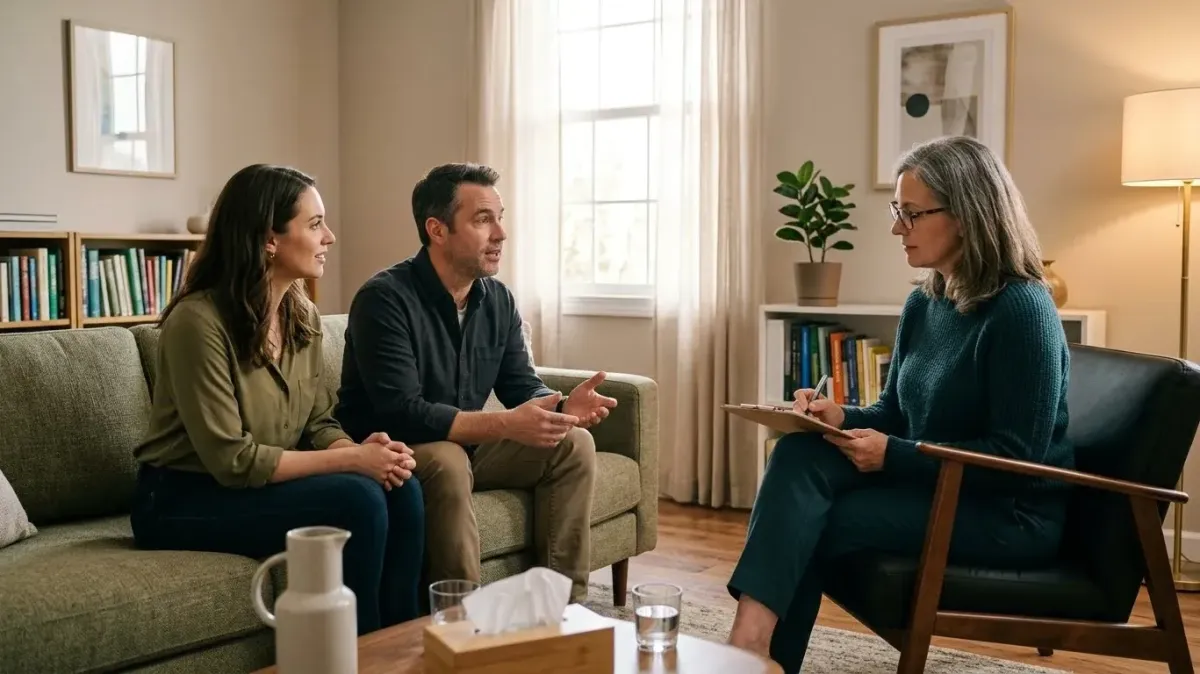
Couples Therapy: What to Expect in Your First Session
In your first couples therapy session, the therapist gets to know both partners, reviews your relationship history, discusses the concerns that brought you in, and helps set initial goals for the work ahead. The session typically runs 50 to 60 minutes and focuses more on understanding your relationship than solving anything right away.
If you have a session coming up and don't know what to say when you get there, that uncertainty is common. Most couples walk in without a clear plan, and that alone can make the whole thing feel more intimidating than it needs to be.
Below, we walk through exactly what happens before, during, and after your first couples therapy session, how to prepare, what your therapist is actually assessing, and how long the process usually takes, so you can walk in feeling calm and ready to do the work that matters. At Radiant Path Therapy in Grand Terrace, California, same-day admission is available with no waitlist required.
Why Starting Couples Therapy Can Feel Intimidating
Starting couples therapy can feel intimidating because it often involves discussing sensitive emotions, relationship challenges, and concerns that may have been difficult to address in the past. Many couples worry about being judged or unsure of what to expect during the process.
It is also common to feel nervous about opening up in front of a therapist. However, the first session is designed to create a supportive environment where both partners can share their perspectives and begin working toward healthier communication and understanding.
Common Fears Couples Have Before Therapy
Many couples feel nervous before their first therapy session. Common concerns include being judged, discussing difficult relationship issues, or worrying that therapy could make things worse. While these fears are understandable, they are rarely what happens in a supportive therapeutic environment.
Why Feeling Nervous Is Completely Normal
Therapy encourages honest conversations about difficult topics, which can feel uncomfortable at first. Feeling nervous is normal and often reflects a genuine desire to improve the relationship. For many couples, those initial worries begin to ease shortly after the session starts.
Is Couples Therapy the Right Choice for Your Relationship?
Couples therapy can help partners improve communication, resolve ongoing conflicts, and strengthen their relationship in a supportive and structured environment. It is also beneficial during major life changes, such as becoming parents, moving, career changes, or coping with loss, when maintaining a strong connection becomes more challenging.
When Individual Therapy May Be More Appropriate
Couples therapy is most effective when both partners are willing to participate and work toward positive change. In some cases, individual therapy may also be recommended to address concerns such as trauma, addiction, or mental health challenges alongside relationship counseling.
Situations That Require Specialized Support
Some situations require specialized support beyond traditional couples therapy. Concerns such as abuse, domestic violence, or severe substance use disorders may need targeted treatment and safety-focused interventions before relationship counseling can be effective.
How to Prepare for Your First Couples Therapy Session
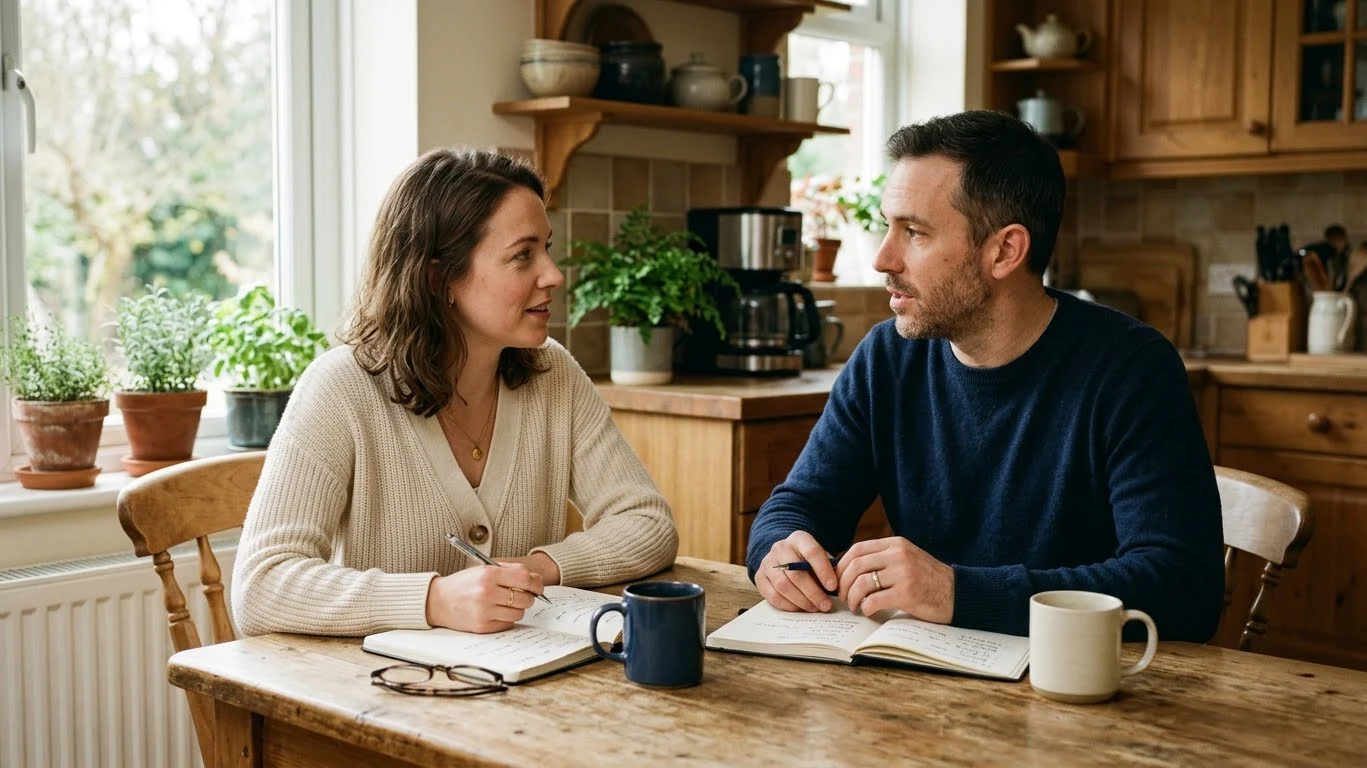
Preparing for your first couples therapy session can help both partners feel more comfortable, communicate openly, and make the most of the experience.
Discuss Expectations With Your Partner
Before your first session, talk with your partner about why you are seeking therapy and what you hope to achieve. You do not need to agree on everything, but having a shared understanding can help you start the process more effectively.
Think About Your Relationship Goals
Take some time to think about what you want to improve in your relationship. Having clear goals, such as better communication or a stronger emotional connection, can help make the session more productive.
Keep an Open Mind
Therapy may bring up uncomfortable topics or reveal patterns you have not noticed before. Approaching the process with an open mind can help you get more value from each session.
What to Bring to the Session
You do not need to bring anything to your first session except honesty and a willingness to participate. Being open, listening respectfully, and engaging in the process can help make therapy more effective.
What Happens During the First Couples Therapy Session?
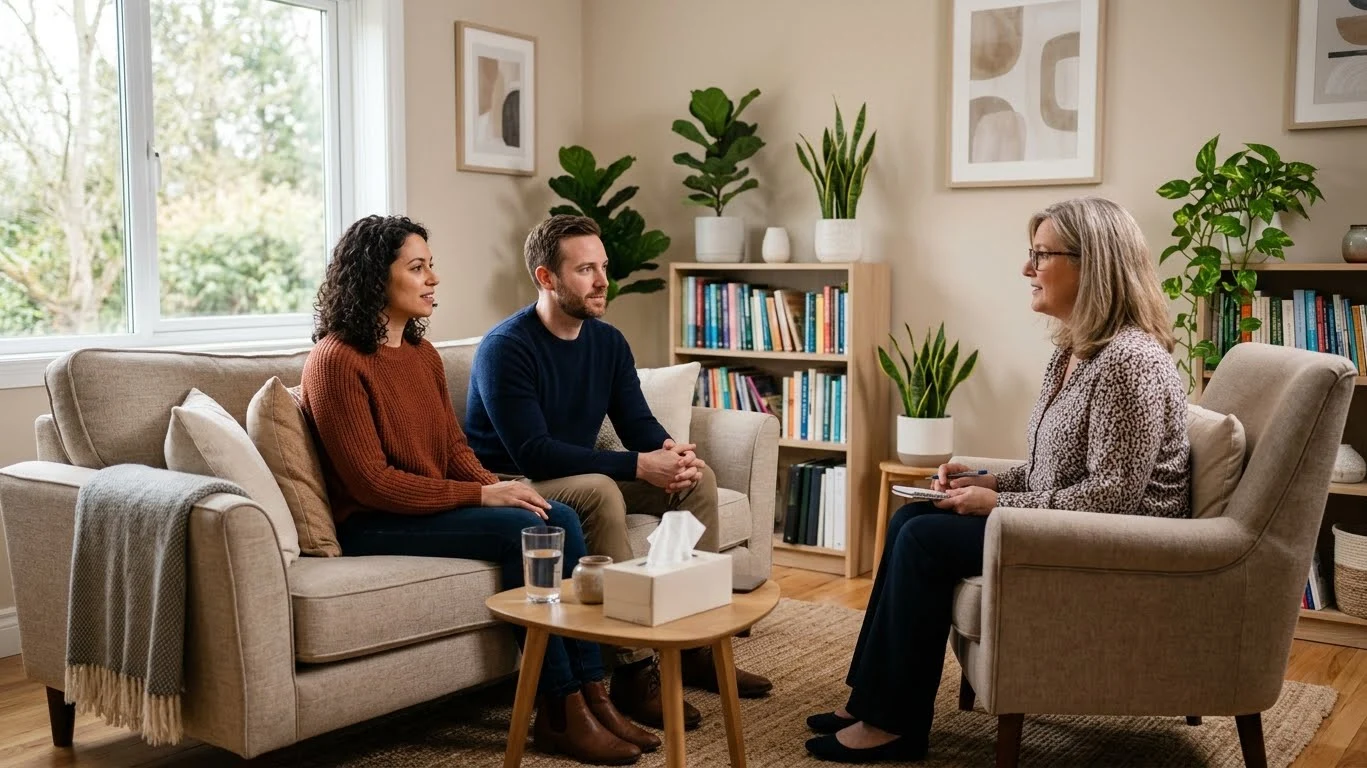
The first couples therapy session focuses on understanding your relationship, identifying key concerns, and establishing goals for the work ahead. The session usually begins with introductions and an overview of the therapy process. Your therapist may explain confidentiality, session structure, and what to expect, helping both partners feel comfortable and supported.
Reviewing Relationship History
Your therapist will likely ask about your relationship history, including how you met and how the relationship has evolved over time. This helps provide context and identify important patterns that may be affecting the relationship today.
Discussing Current Challenges
The therapist will ask what led you to seek therapy, giving both partners a chance to share their perspective. While this part can feel tense, the therapist helps keep the conversation balanced and constructive.
Exploring Communication Patterns
Even in the first session, the therapist observes how you communicate and respond to each other. They look at patterns like emotional reactions, listening style, and conflict responses to understand what needs attention in the relationship.
Identifying Shared and Individual Goals
Toward the end of the session, the therapist asks each partner what they hope to achieve from therapy. These goals may differ, and that is completely normal. Understanding both perspectives helps shape a balanced treatment plan for the relationship.
Creating a Plan for Future Sessions
Before the session ends, the therapist shares initial observations and suggests a direction for future work. They may also discuss a treatment approach, session frequency, and what to expect moving forward.
What Your Therapist Is Assessing During the Session
During the session, your therapist observes how you interact, communicate, and respond to understand relationship patterns, emotional dynamics, and areas that need support.
Communication Styles
The therapist observes how each partner communicates, including speaking and listening patterns. They pay attention to signs of dominance, withdrawal, defensiveness, and whether both partners feel comfortable expressing themselves.
Emotional Connection
The therapist assesses emotional attunement between partners, including how well you recognize each other’s feelings and respond to emotional cues instead of talking past one another.
Conflict Patterns
Every couple has conflict patterns. Some escalate quickly, others shut down, and many repeat the same arguments without resolution. The therapist identifies these early, as changing them is often key to progress.
Relationship Strengths and Challenges
A therapist looks at both challenges and strengths in the relationship. Identifying what already works well helps build a strong foundation for therapy.
What Not to Expect From Couples Therapy
Couples therapy is not about instant fixes or taking sides, but about building understanding and improving communication over time.
Immediate Solutions
Couples therapy is a process, not a quick fix. The first session is an assessment and a starting point. Meaningful change usually takes time and consistent work from both partners.
A Therapist Choosing a Side
If the expectation is for the therapist to side with one partner, therapy may feel frustrating. The therapist works with both people equally and challenges each partner to support growth and better understanding.
Instant Relationship Transformation
Real change in a relationship takes time. The first session may bring insight, but lasting improvements in communication and connection develop gradually over weeks and months.
Therapy Approaches Commonly Used in Couples Counseling
Couples counseling often uses structured, evidence-based approaches that help partners improve communication, resolve conflict, and strengthen their relationship.
Gottman Method Therapy
The Gottman Method is a research-based approach that helps couples strengthen friendship, manage conflict, and build shared meaning. Therapists use practical tools and techniques to guide the process.
Emotionally Focused Therapy (EFT)
EFT focuses on strengthening the emotional bond between partners. It helps identify the deeper needs and fears behind conflicts and encourages more supportive responses that improve connection.
Cognitive Behavioral Therapy for Couples
CBT for couples focuses on identifying and changing unhelpful thought patterns that drive negative relationship cycles. It helps partners challenge distorted thinking and understand each other’s behavior in a healthier way.
What Happens After the First Session?
After the first session, couples usually begin working on the issues discussed, with the therapist guiding ongoing sessions, setting goals, and tracking progress over time.
Homework and Practice Exercises
Many therapists assign exercises to practice between sessions, such as guided conversations, journaling, or small behavior changes at home. This between-session work is often just as important as the therapy itself.
Follow-Up Sessions
After the first session, your therapist will suggest a follow-up schedule, often starting with weekly sessions, especially in the early stages of therapy.
Tracking Progress Over Time
Progress in couples therapy is not always linear. Some weeks may feel like progress while others feel like setbacks, but your therapist helps you stay focused on overall improvement and adjusts the approach when needed.
How Long Does Couples Therapy Usually Take?
The length of couples therapy varies depending on the couple’s goals, the challenges involved, and how consistently both partners engage in the process.
Factors That Influence Progress
The length of therapy depends on the nature of the issues, how long they have been present, both partners’ commitment, and how consistently they engage in work during and between sessions.
Short-Term vs Long-Term Therapy
Some couples resolve specific issues in 8–12 sessions, while others continue therapy for longer due to more complex challenges or ongoing support. There is no fixed timeline.
Benefits of In-Person Sessions
In-person therapy allows therapists to observe body language and non-verbal cues more clearly. It can be especially helpful for couples who struggle with communication or conflict.
Benefits of Virtual Therapy
Online couples therapy offers flexibility, making it easier to attend sessions from home without travel or commute time. It is especially helpful for busy couples, parents, or those without easy access to local therapists, supporting more consistent participation.
Benefits of Couples Therapy Beyond Conflict Resolution

Couples therapy goes beyond resolving conflicts by helping partners strengthen communication, deepen emotional connection, and build a healthier, more supportive relationship overall.
Improving Communication
Most couples seek therapy due to conflict, but the communication skills they develop improve every part of their relationship. Learning to express needs clearly, listen without defensiveness, and repair conversations changes how partners connect overall.
Rebuilding Trust
When trust is broken due to betrayal, distance, or ongoing conflict, therapy offers a safe, structured space to rebuild it. While the process takes time, it is a key part of therapeutic healing and recovery.
Strengthening Emotional Connection
Over time, many couples notice a decline in emotional intimacy. Therapy helps partners reconnect on a deeper level and rebuild the feeling of being understood and emotionally close.
Developing Healthier Relationship Habits
Therapy not only resolves current issues but also builds lasting tools for communication, conflict management, and connection. These skills continue to support the relationship long after therapy ends.
Ready to Take the First Step Toward a Healthier Relationship?
If you and your partner are struggling to communicate, feeling emotionally distant, or stuck in the same cycle of conflict, you are not alone and support is available. Couples therapy can help you understand what is happening in your relationship and guide you toward a healthier way forward.
At Radiant Path Therapy in Grand Terrace, California, we take time to hear both of your stories before building a plan around your specific needs. Ready to strengthen your relationship and move forward together? Contact us today to schedule your first session and start moving toward a healthier relationship.
Conclusion
Walking into your first couples therapy session doesn't require having everything figured out. It just takes a willingness to show up honestly. The session will typically cover introductions, your relationship history, the challenges that brought you in, and the early goals you're both working toward, not a full resolution on day one.
From there, most couples continue with weekly sessions, working through exercises between meetings and revisiting progress along the way. Some see meaningful change in 8 to 12 sessions; others need longer, and that's normal, not a sign of failure. What actually predicts progress isn't the number of sessions, it's whether both partners stay engaged, both in the room and in the work they do outside of it.
If your relationship matters enough to ask what the first session looks like, that's already a sign it's worth showing up for. Radiant Path Therapy in Grand Terrace, California offers same-day admission with no waitlist.
Frequently Asked Questions
What happens in a first couples therapy session?
The first session typically involves introductions, a review of your relationship history, a discussion of current challenges, and the beginning of goal setting.
How should we prepare for couples counseling?
Talk with your partner about your expectations before the session. Think about what you want to change and what a healthier relationship would look like for you. Come with honesty and an open mind.
Will the therapist take sides?
A couples therapist works to support the relationship as a whole. They may challenge both partners at different points, but their goal is to help both of you, not to decide who is right.
How many couples therapy sessions are usually needed?
It varies. Some couples see progress in 8–12 sessions, while others need longer-term work. The duration depends on the complexity of the issues and the goals being addressed.
Does couples therapy really work?
Research shows that couples therapy leads to meaningful improvements in relationship satisfaction, communication, and emotional connection when both partners are actively engaged in the process.


