
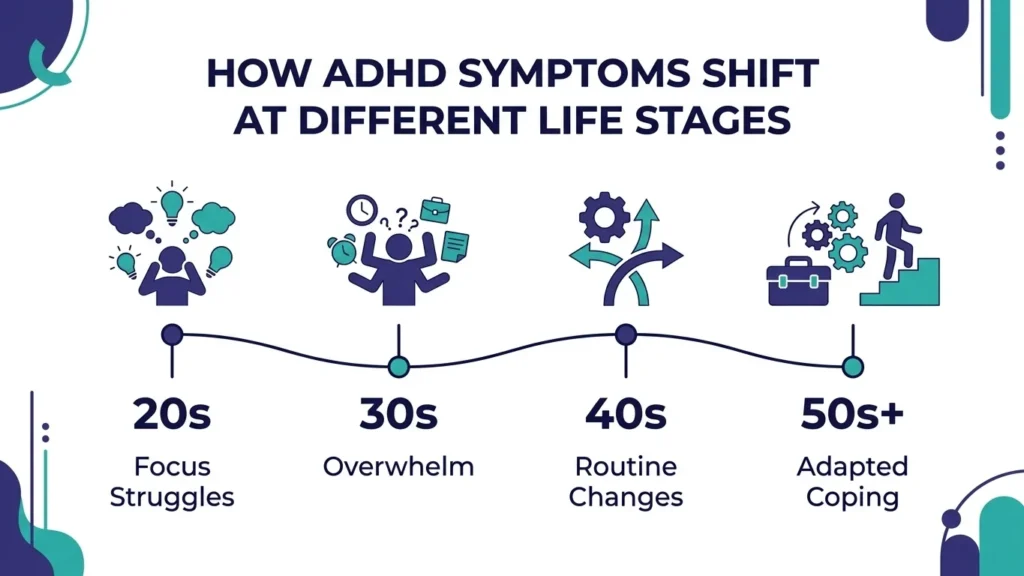
ADHD does not usually get worse simply because you are getting older. However, ADHD symptoms can change with age, and problems with focus, memory, organization, and emotional regulation may feel more disruptive when adult responsibilities increase. Hyperactivity and impulsivity may become less noticeable over time, while inattention and executive-function difficulties can continue into adulthood and later life.
If your ADHD feels harder to manage as you get older, factors such as chronic stress, poor sleep, changing routines, mental health concerns, and hormonal changes may be contributing. Untreated ADHD can also create accumulating problems with work, relationships, finances, and daily responsibilities, making it seem as though the condition itself is becoming more severe. If these changes are affecting your daily life, Radiant Path Therapy and Psychiatry in Grand Terrace, CA can help you understand what may be contributing to your symptoms and explore appropriate support.
So, does ADHD get worse with age? Not necessarily. Some symptoms improve, others persist, and certain challenges can become more noticeable depending on your health, environment, responsibilities, and stage of life. Understanding the difference between ADHD-related difficulties and normal age-related cognitive changes can help you determine when it may be time to seek an evaluation or adjust how your ADHD is managed.
What Is ADHD?
ADHD, or attention-deficit/hyperactivity disorder, is a neurodevelopmental condition characterized by persistent patterns of inattention, hyperactivity, impulsivity, or a combination of these symptoms. Although symptoms begin during childhood, ADHD can continue through adolescence and adulthood.
ADHD is associated with differences in brain development and neurobiology, and genetics appear to play an important role. It is not caused by laziness, poor motivation, or a lack of effort. How ADHD affects daily life can also change as a person’s responsibilities, environment, health, and support systems change.
Before looking at how ADHD changes with age, it helps to understand the types of ADHD a person can have. Clinically, ADHD is grouped into three presentations: predominantly inattentive, predominantly hyperactive impulsive, and combined type, which includes symptoms of both. Most children are diagnosed with the combined type, though a person’s presentation is not fixed. Hyperactivity and impulsivity often fade first, so someone diagnosed as combined type in childhood may present as predominantly inattentive by adulthood.
How ADHD Symptoms Change Throughout Life
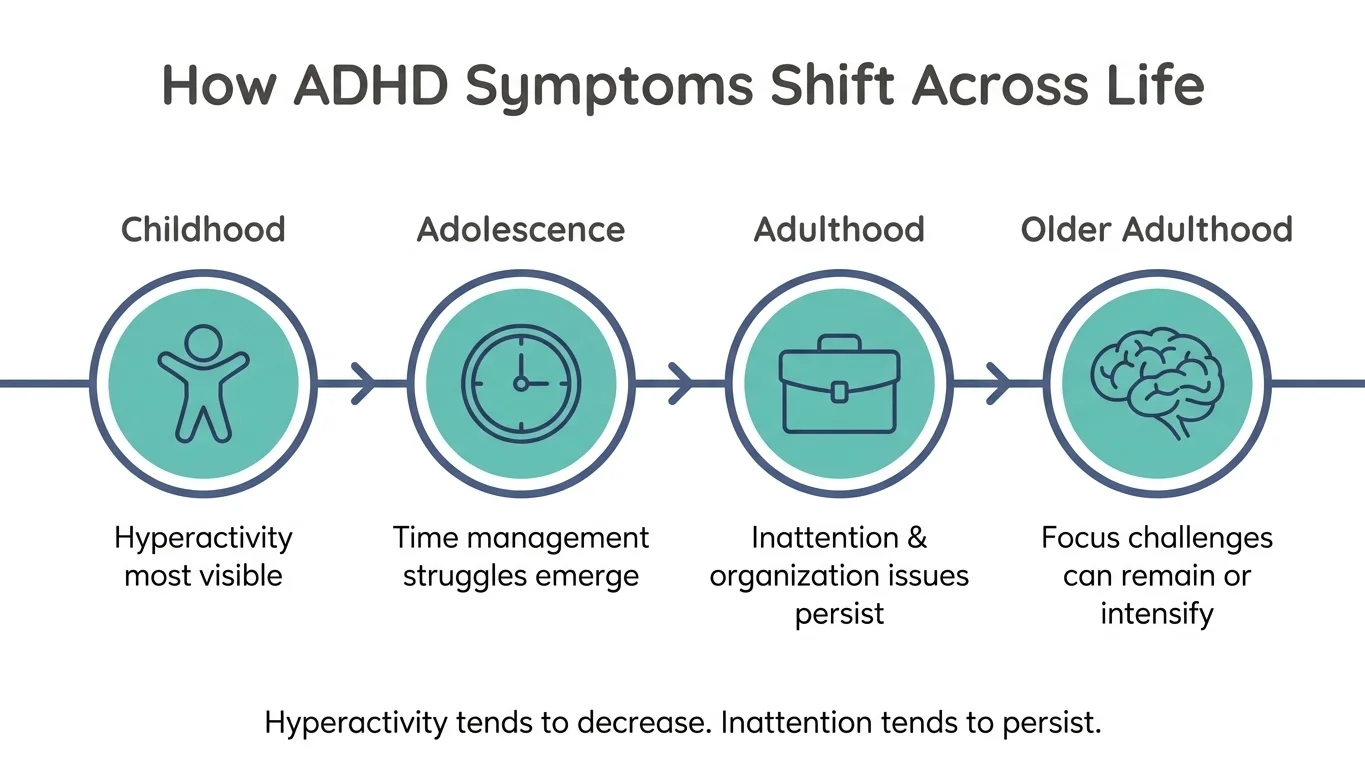
ADHD does not look the same at every age. The core brain differences remain, but how they show up shifts significantly depending on your stage of life.
ADHD in Childhood
This is when hyperactivity is most noticeable. Children with ADHD often fidget, blurt out answers, struggle to wait their turn, and have difficulty sitting through lessons. Even in structured environments with clear routines, they may find it challenging to meet expectations without additional support.
ADHD in Adolescence
Hyperactivity often decreases during the teenage years, but new challenges emerge. Teens with ADHD may struggle with time management, completing schoolwork, and regulating emotions. As social and academic pressures increase, these difficulties can become more noticeable.
ADHD in Adulthood
This is where things become more complicated. Many adults with ADHD were never diagnosed as children. By their 20s and 30s, they may be carrying years of frustration, self-doubt, and coping strategies that only work some of the time.
ADHD in Older Adults
ADHD in older adults remains under-researched, but growing evidence is shedding more light on its effects. Older adults with ADHD often face a double challenge, as the natural cognitive changes associated with aging can add to existing ADHD-related difficulties.
Can ADHD Change as You Get Older?
Yes, the way ADHD presents can change throughout life. A child with obvious physical hyperactivity may become an adult who experiences more internal restlessness, while difficulties with attention, organization, and time management may remain noticeable.
This does not necessarily mean that someone has developed a different condition. The balance of inattentive, hyperactive, and impulsive symptoms can shift as a person develops, learns coping strategies, and moves through environments with different demands.
Why ADHD Often Feels Worse as You Get Older
ADHD can feel harder to manage as you get older because life usually becomes more complex. Careers, finances, parenting, relationships, household responsibilities, and health needs can place greater demands on attention, planning, working memory, and organization.
At the same time, adults may lose some of the external structure they had during childhood or school. Stress, poor sleep, mental health conditions, changing routines, and normal age-related cognitive changes can also make existing ADHD difficulties more noticeable. This can create the feeling that ADHD itself has become worse even when the change may involve several different factors.
Does ADHD Get Better or Worse With Age?
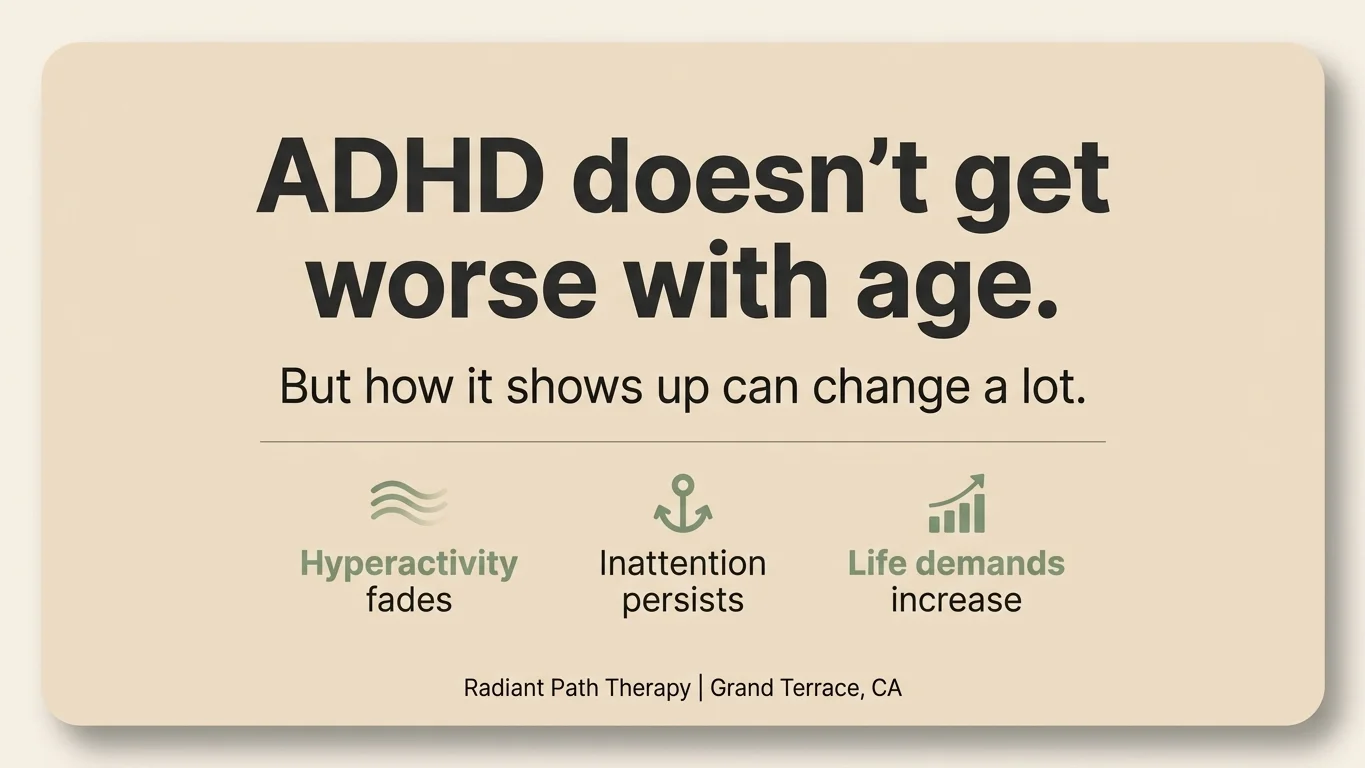
ADHD does not follow exactly the same pattern for everyone. Some symptoms may become less noticeable with age, while others can persist or become harder to manage as responsibilities, routines, health, and life circumstances change.
| ADHD Symptom | What May Happen With Age | How It May Look in Adults |
|---|---|---|
| Hyperactivity | Often becomes less obvious | Inner restlessness, fidgeting, difficulty relaxing |
| Impulsivity | May decrease for some people | Interrupting, quick decisions, impulsive spending |
| Inattention | Often persists | Losing focus, overlooking details, unfinished tasks |
| Organization | May remain challenging | Missed appointments, clutter, difficulty managing responsibilities |
| Time management | May continue into adulthood | Underestimating time, running late, missed deadlines |
| Working memory | May remain difficult | Forgetting instructions, appointments, or what you were doing |
| Emotional regulation | Can remain challenging | Quick frustration, difficulty calming down after strong emotions |
These changes do not necessarily mean ADHD itself is progressively getting worse. NIMH notes that inattentive symptoms often continue into adulthood, while hyperactivity and impulsivity are more likely to decrease with age. Life demands can also expose difficulties that were easier to manage when more external structure was available.
A person may therefore feel that ADHD is getting worse even when the underlying condition is presenting differently.
Factors That Can Make ADHD Symptoms Worse
Certain factors can make ADHD symptoms feel more intense or harder to manage over time, especially when combined with daily stress, lifestyle challenges, or lack of support.
Untreated ADHD
This is one of the most important factors. Without proper diagnosis and treatment, the ADHD brain does not receive the support it needs. Over time, symptoms can build up, along with secondary challenges such as low self-esteem, strained relationships, and career difficulties.
Anxiety and Depression
ADHD often coexists with anxiety or depression, and each condition can make the other worse. Anxiety drains the mental energy needed to manage ADHD symptoms, while depression can take away motivation completely.
Sleep Problems
ADHD is strongly linked to sleep difficulties, including trouble falling asleep, staying asleep, and waking up. Poor sleep can make every ADHD symptom much worse and is often an overlooked factor in managing the condition.
Substance Use
Some people with undiagnosed ADHD may try to self-medicate with alcohol, cannabis, or other substances. These may bring short-term relief, but over time they can worsen thinking ability and make ADHD symptoms more difficult to manage.
Hormonal Changes
Hormonal changes may influence how some women experience ADHD symptoms. Changes associated with puberty, the menstrual cycle, pregnancy, perimenopause, and menopause have received increasing research attention, particularly because sex hormones may interact with brain systems involved in attention and mood.
Some women report changes in concentration, memory, emotional regulation, or medication response during hormonal transitions. However, research in this area is still developing, especially regarding perimenopause and menopause, so experiences can vary considerably from person to person.
Lifestyle and Health Factors
Poor diet, lack of exercise, chronic stress, and social isolation can all make ADHD harder to manage. These are modifiable factors that can significantly affect how well the ADHD brain functions day to day.
Is It ADHD or Normal Aging?
ADHD and normal aging can sometimes produce similar everyday difficulties, especially with memory, concentration, organization, and processing information. However, ADHD is a developmental condition, which means symptoms begin during childhood even when the condition is not diagnosed until adulthood.
Normal age-related changes usually develop later in life. Someone may notice that recalling information takes longer, multitasking becomes more difficult, or occasional forgetfulness becomes more common. ADHD-related difficulties, by comparison, generally reflect a much longer pattern of problems with attention, organization, planning, impulsivity, or completing tasks.
A sudden or significant change in memory, attention, reasoning, or everyday functioning should not automatically be attributed to ADHD. Sleep disorders, medications, anxiety, depression, physical health conditions, and neurocognitive conditions can produce overlapping symptoms. A healthcare professional can help determine what may be contributing to a new change.
Unique Challenges Older Adults With ADHD Face
The unique challenges older adults with ADHD often face in daily life, including changes in routine, memory, and overall cognitive demands
Managing Daily Responsibilities
Medications, appointments, and finances the core tasks of daily life in older adulthood all require strong organizational skills, which are often challenging for people with ADHD.
Memory and Concentration Concerns
Older adults with ADHD often worry that their memory and focus problems are early signs of dementia. While ADHD and dementia are different conditions, overlapping symptoms can create anxiety and sometimes delay proper evaluation.
Social and Relationship Challenges
Decades of ADHD-related misunderstandings, including forgotten plans, emotional outbursts, and unfinished conversations, can strain or even break relationships.
Retirement and Loss of Routine
For many adults with ADHD, work provides external structure that helps keep symptoms manageable. When retirement removes that structure, symptoms that were previously under control can reappear with greater intensity.
Does Untreated ADHD Get Worse With Age?

Untreated ADHD is not necessarily a condition that progressively becomes more severe with age. However, symptoms that remain unmanaged can continue interfering with work, relationships, finances, education, and everyday responsibilities.
The consequences can also accumulate. Repeated missed deadlines, relationship conflicts, financial problems, chronic stress, or difficulty maintaining routines may make life increasingly difficult even if the underlying ADHD has not neurologically worsened. Co-occurring problems such as anxiety, depression, substance use, or sleep difficulties can add another layer of difficulty.
Getting evaluated and finding appropriate treatment or coping strategies can help reduce these effects at any stage of adulthood.
How ADHD Is Diagnosed in Adults and Older Adults
ADHD in adults and older adults is diagnosed through a detailed evaluation of symptoms, medical history, and daily life challenges.
Common Signs That Warrant Evaluation
If you consistently struggle with focus, organization, time management, and emotional regulation, and these problems have been present since childhood even if they were never labeled, an ADHD evaluation is worth pursuing. You do not need to have been hyperactive as a child to have ADHD.
What Happens During an ADHD Assessment
A proper ADHD assessment involves a clinical interview, symptom rating scales, and often input from a family member or partner. For older adults, cognitive testing may also be included to rule out dementia. There is no single brain scan or blood test for ADHD. Diagnosis is based on a comprehensive clinical evaluation.
Effective Treatments for ADHD at Any Age
ADHD treatment depends on a person’s symptoms, age, medical history, daily challenges, and treatment goals. A healthcare professional can help determine which approach is appropriate.
ADHD Medication: Stimulant and nonstimulant medications are commonly used to manage ADHD symptoms in adults. Medication decisions should be individualized, particularly for older adults who may have other health conditions or take additional medications.
Cognitive Behavioral Therapy (CBT): CBT adapted for ADHD can help adults improve planning, time management, organization, emotional coping, and procrastination.
ADHD Coaching and Counseling: Coaching can help with practical systems, routines, accountability, and goal setting. Counseling or psychotherapy may also help when ADHD occurs alongside stress, anxiety, depression, relationship concerns, or low self-esteem.
Healthy Daily Habits: Regular physical activity, consistent sleep, structured routines, and practical organizational tools can support overall functioning. These strategies may complement professional treatment rather than replace it.
Practical Strategies for Managing ADHD as You Age
ADHD shifts as you age. Hyperactivity tends to fade, but inattention and forgetfulness often get harder to manage. Simple tools like time-blocking, digital reminders, and breaking tasks into smaller steps can make a real difference. Regular exercise also helps by naturally boosting dopamine and improving focus.
Calendar apps, written routines, and accountability partners help fill the gaps that working memory leaves behind. Medication needs may also change as your body ages, so periodic check-ins with your doctor are worth keeping. CBT therapy is another solid option for reshaping the self-doubt that tends to build up over years of unmanaged ADHD.
Get Support for ADHD in Grand Terrace, CA
If ADHD symptoms are becoming harder to manage as you get older, you do not have to keep adjusting on your own. Radiant Path Therapy and Psychiatry in Grand Terrace, CA provides personalized support to help adults understand their ADHD patterns, strengthen practical coping skills, and manage the challenges affecting everyday life.
Contact Radiant Path Therapy and Psychiatry today to learn how ADHD therapy can help you move forward with greater structure, clarity, and confidence.
Conclusion
So, does ADHD get worse with age? For most people, ADHD is not simply a condition that progressively worsens with every year. Its symptoms can change throughout life. Hyperactivity and impulsivity may decrease, while inattention, forgetfulness, time-management problems, and executive-function difficulties can remain or become more noticeable as responsibilities and age-related changes increase.
Untreated or undiagnosed ADHD can certainly feel worse with age because its consequences can accumulate. Work stress, relationship difficulties, financial problems, poor sleep, anxiety, depression, changing routines, and other health factors can place additional pressure on skills that are already difficult for someone with ADHD. For some women, hormonal transitions may also coincide with noticeable changes in attention, memory, or emotional regulation, although research into ADHD and menopause is still developing.
ADHD can also become easier to manage with age when you understand your symptoms and have effective treatment, routines, organizational systems, therapy, or other support in place. If your attention or memory has suddenly changed, however, do not automatically assume ADHD is responsible. New or rapidly worsening cognitive symptoms should be discussed with a qualified healthcare professional so ADHD, normal aging, medication effects, sleep problems, and other possible causes can be properly evaluated.
Frequently Asked Questions
At What Age Does ADHD Peak?
There is no single age when ADHD peaks for everyone. Hyperactivity and impulsivity are often most noticeable during childhood and commonly become less prominent with age, while inattention and organizational difficulties may continue into adulthood.
Can Adult ADHD Become More Severe If Left Untreated?
ADHD itself is not generally considered a progressively worsening condition. However, untreated symptoms can continue affecting work, relationships, finances, sleep, and mental health, allowing the consequences of ADHD to accumulate over time.
Does ADHD Get Better With Age?
Some ADHD symptoms can become less noticeable with age, particularly hyperactivity and impulsivity. Inattention, organization problems, and time-management difficulties may persist, although treatment and effective coping strategies can make them easier to manage.
Why Does My ADHD Feel Worse as I Get Older?
Adult responsibilities, chronic stress, poor sleep, changing routines, mental health conditions, and reduced external structure can make ADHD symptoms more noticeable. Sometimes the environment has become more demanding rather than the ADHD itself becoming more severe.
Does Inattentive ADHD Get Worse With Age?
Inattentive symptoms do not necessarily worsen with age, but they often persist into adulthood. Problems with focus, organization, forgetfulness, and completing tasks may become more disruptive when responsibilities increase.
How Does Menopause Affect ADHD Symptoms?
Some women report increased problems with attention, memory, mood, or executive functioning during perimenopause and menopause. Research suggests hormonal changes may influence ADHD symptoms, but evidence is still developing and individual experiences vary.
Is ADHD Different From Normal Aging?
Yes. ADHD is a developmental condition whose symptoms begin in childhood, while normal age-related cognitive changes occur later in life. Because memory and concentration problems can overlap, new or rapidly worsening symptoms should be evaluated rather than automatically attributed to ADHD.
Can ADHD Be Diagnosed Later in Life?
Yes. Adults can receive an ADHD diagnosis in their 40s, 50s, 60s, or later, especially if symptoms were overlooked when they were younger. For an ADHD diagnosis, however, evidence must indicate that relevant symptoms were present during childhood.
Can Your ADHD Type Change With Age?
The pattern of ADHD symptoms can change over time. Hyperactive behavior may become less obvious while inattention, restlessness, disorganization, or executive-function problems remain, which can make someone’s ADHD presentation look different in adulthood.
.