
Does Anxiety Get Worse With Age? Signs & Treatment
Yes, anxiety often gets worse with age when it is left untreated. This happens because of a mix of life changes, health issues, and the way chronic worry builds up over time when it is never addressed. Aging itself does not automatically cause anxiety, but the added stress of retirement, health problems, loss, and isolation can make existing anxiety more intense or bring on new symptoms later in life.
Anxiety disorders affect an estimated 10 to 20 percent of older adults, according to the Geriatric Mental Health Foundation, yet only about a third of older adults with generalized anxiety disorder ever receive mental health care for it, based on a 2023 review published in JAMA Psychiatry. That gap between how common anxiety is and how rarely it gets treated is a big part of why so many people feel it worsening year after year.
The good news is that anxiety at any age can be treated effectively. If you live near Grand Terrace, CA and have noticed anxiety creeping into your life or a loved one's life as the years go by, Radiant Path Therapy offers support built around real, lasting relief rather than just getting through the day.
What Is Anxiety?
Anxiety is your body's natural response to stress or a perceived threat. In small doses, it is normal and even helpful, since it can keep you alert and cautious. Problems arise when anxiety becomes constant, intense, or out of proportion to the actual situation.
Normal Anxiety vs. An Anxiety Disorder
Everyone feels nervous or worried sometimes, before a big event or during a stressful week. This kind of anxiety usually fades once the situation passes. An anxiety disorder is different. It involves ongoing, excessive worry that does not go away and often interferes with daily life, relationships, and physical health.
Common Types of Anxiety Disorders
Generalized anxiety disorder involves constant worry about many areas of life, even without a clear reason. Panic disorder causes sudden, intense episodes of fear along with physical symptoms like a racing heart.
Social anxiety disorder centers around fear of judgment or embarrassment in social situations. Specific phobias involve intense fear of a particular object or situation, and these can all appear or worsen at different points in life, including later adulthood.
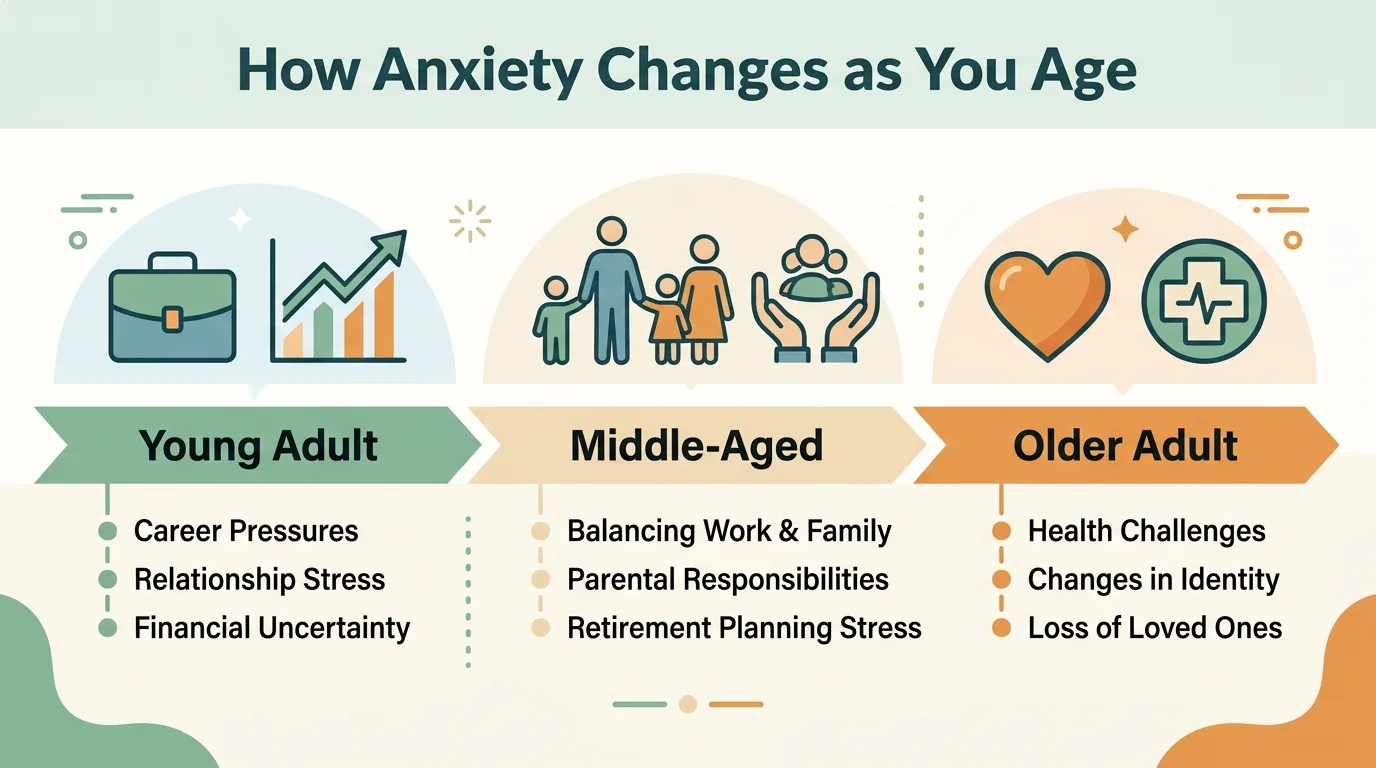
How Anxiety Changes as You Age
Anxiety does not always look the same at every stage of life. It can shift in both cause and intensity as circumstances change, and research on this is more nuanced than a simple decline or rise.
Anxiety in Your 20s and 30s
In younger years, anxiety often centers around work, relationships, and building a stable life. This period can bring anxiety tied to career pressure, finances, and identity. In your 30s specifically, anxiety often takes on a new shape tied to major life decisions that feel more permanent: buying a home, having children, or hitting a career plateau that feels harder to change course from than it did in your 20s.
This lines up with the data: several studies point to ages 30 to 40 as the window with the highest incidence of new anxiety disorder onset, even though the earliest symptoms often first appear between ages 16 and 26. Many people in this age range describe a sense that the stakes of every decision suddenly feel higher, which can fuel a more persistent, background kind of worry rather than the acute anxiety more common earlier in adulthood.
Middle Age
Middle age often introduces new stressors, like raising children, caring for aging parents, and managing long-term career or financial responsibilities. Anxiety during this stage can feel like it comes from all directions at once. Interestingly, some research on anxiety prevalence has found a notable peak in the early-to-mid 50s, driven largely by this exact combination of caregiving strain, career pressure, and health concerns creeping in for the first time. This complicates the broader trend of anxiety declining with age, since for many people midlife, not older adulthood, is actually where anxiety hits hardest before beginning to ease later on.
Nationally, generalized anxiety disorder affects an estimated 3.1 percent of U.S. adults in a given year, and only around 43 percent of those cases receive treatment, a gap that often widens in midlife as caregiving and work demands crowd out time for a person's own care. Women are diagnosed at roughly twice the rate of men across every age group, and that gap tends to hold through this stage as well. Hormonal changes during perimenopause and menopause can also intensify anxiety symptoms or trigger new ones during this stage, even in people without any prior history of anxiety.
Older Adulthood
In older adulthood, anxiety often shifts toward health concerns, loss of loved ones, retirement adjustment, and worries about independence. For some people, anxiety that was manageable earlier in life becomes harder to control during this stage, especially without treatment.
This is also the stage where anxiety disorders overall become less common in the population: a systematic review of studies on adults over 65 found 12-month anxiety prevalence ranging from roughly 3.6 to 17.2 percent depending on the population studied, with most research showing prevalence trending downward as age increases. Even so, the people who do have anxiety at this stage tend to experience more disruption from it, since it's more likely to be layered on top of a chronic health condition, grief, or reduced independence.
Why Anxiety May Feel Different in Seniors
Anxiety in older adults can show up more through physical symptoms than emotional ones, and it is often mixed in with other health conditions, which can make it harder to recognize and easier to overlook. Geriatric psychiatrists have noted that later-life anxiety symptoms tend to present more physically than the anxiety experienced by younger patients, which is part of why it so often goes unnoticed.
Why Untreated Anxiety Can Become Worse Over Time
Anxiety left unaddressed rarely stays the same. It tends to grow, and there are clear reasons why. When anxiety goes untreated, the body stays in a constant state of stress. Over time, this can wear down both physical health and emotional resilience, making it harder to cope with everyday challenges.
Many people respond to anxiety by avoiding the things that trigger it. While this can bring short-term relief, it often reinforces the anxiety in the long run, since the person never learns that the feared situation is manageable.
Constant worry, when left unchecked, can shrink a person's world over time. Relationships, hobbies, and daily routines often become smaller as anxiety takes up more space in someone's life.
Signs Anxiety Is Getting Worse Over Time
Anxiety rarely worsens overnight. It tends to escalate gradually, which is part of why it's often missed until it's significantly affecting daily life. Some patterns worth paying attention to include:
Worry spreading to new areas of life. What used to be limited to one or two specific concerns starts showing up around unrelated topics too.
Physical symptoms intensifying or becoming more frequent. Occasional tension headaches or a racing heart during stressful moments start happening even during calm, uneventful days.
Avoidance expanding. A person who once avoided one specific trigger begins avoiding a wider range of situations, people, or places connected to it.
Sleep becoming harder to protect. Trouble falling asleep becomes trouble staying asleep, or worry starts showing up as soon as the day winds down.
Reassurance providing less relief. Where a comforting conversation used to ease worry for hours or days, it now only helps briefly before the anxiety returns.
Increasing reliance on others. A gradual shift toward needing constant company, check-ins, or reassurance to get through ordinary parts of the day.
Noticing even one or two of these shifting in the wrong direction is often a better signal to seek support than waiting for a single dramatic moment.
What Causes Anxiety to Increase With Age?
Several life changes common in later years can contribute to rising anxiety.
Retirement and Major Life Changes. Retirement can bring a loss of structure, purpose, and social connection that many people do not expect, which can trigger or worsen anxiety.
Chronic Health Conditions. Managing an ongoing health condition often brings added worry about symptoms, treatment, and the future, which can fuel anxiety over time. Conditions like COPD, heart disease, thyroid disorders, and diabetes are especially linked to higher anxiety risk in older adults.
Loss of Loved Ones and Social Isolation. Losing a spouse, close friends, or family members can lead to grief, loneliness, and increased anxiety, especially when social circles shrink with age.
Financial Concerns. Worries about retirement savings, medical costs, or fixed incomes are common sources of anxiety for many older adults.
Medication Side Effects. Certain medications, including steroids, stimulants, and inhalers, can contribute to feelings of anxiety or make existing anxiety feel more intense.
Reduced Mobility and Independence. Losing the ability to drive, live independently, or perform everyday tasks can bring on new anxiety centered around safety, dependence, and loss of control.
Symptoms of Anxiety in Older Adults
Anxiety can show up in several different ways, and recognizing the signs is the first step toward getting help. Persistent worry, restlessness, irritability, and a sense of dread are common emotional signs of anxiety. Anxiety can cause a racing heart, muscle tension, headaches, stomach issues, and fatigue, even when there is no clear physical illness behind them.
Avoiding social situations, withdrawing from activities once enjoyed, or becoming more dependent on others are common behavioral shifts tied to anxiety. Difficulty concentrating, racing thoughts, and trouble making decisions can all be signs of anxiety, and these are sometimes mistaken for normal aging or memory decline.
Why Anxiety Is Often Missed or Misdiagnosed in Seniors
Anxiety in older adults is frequently overlooked, which allows it to worsen without ever being properly treated.
Symptoms Mistaken for Physical Illness
Physical symptoms of anxiety, like a racing heart or stomach discomfort, are often attributed to other health conditions rather than recognized as anxiety.
Anxiety Overlapping With Depression
Anxiety and depression frequently occur together, and overlapping symptoms can make it harder to identify anxiety as a distinct concern needing its own attention.
Cognitive Changes That Mask Anxiety
Memory or concentration issues caused by anxiety are sometimes mistaken for normal cognitive aging, which can delay proper diagnosis and treatment.
Underreporting Emotional Symptoms
Some older adults grew up in generations less comfortable discussing mental health, which can lead to underreporting symptoms to doctors or loved ones.
Health Risks of Leaving Anxiety Untreated
Untreated anxiety does not just affect emotional wellbeing. It can also impact physical health in meaningful ways.
Who Is Most at Risk?
Certain groups face a higher likelihood of developing or experiencing worsening anxiety with age. Women are statistically more likely to be diagnosed with anxiety disorders than men, across all age groups. Ongoing health conditions add daily stress and uncertainty, which raises the risk of developing anxiety.
Caring for a spouse, parent, or other loved one often brings significant emotional and physical strain, increasing anxiety risk. A family history of anxiety disorders can increase a person's likelihood of experiencing anxiety themselves, including later in life. Living alone, especially after the loss of a spouse or partner, can increase feelings of isolation and anxiety.
How Anxiety Is Diagnosed in Older Adults
A doctor or mental health professional typically diagnoses anxiety through a combination of conversation, symptom history, and sometimes physical exams to rule out other causes.
They may ask about emotional patterns, physical symptoms, sleep habits, and how symptoms affect daily life. Because anxiety can overlap with physical health conditions, a thorough evaluation helps ensure the right diagnosis and treatment plan.
Treatment Options for Anxiety
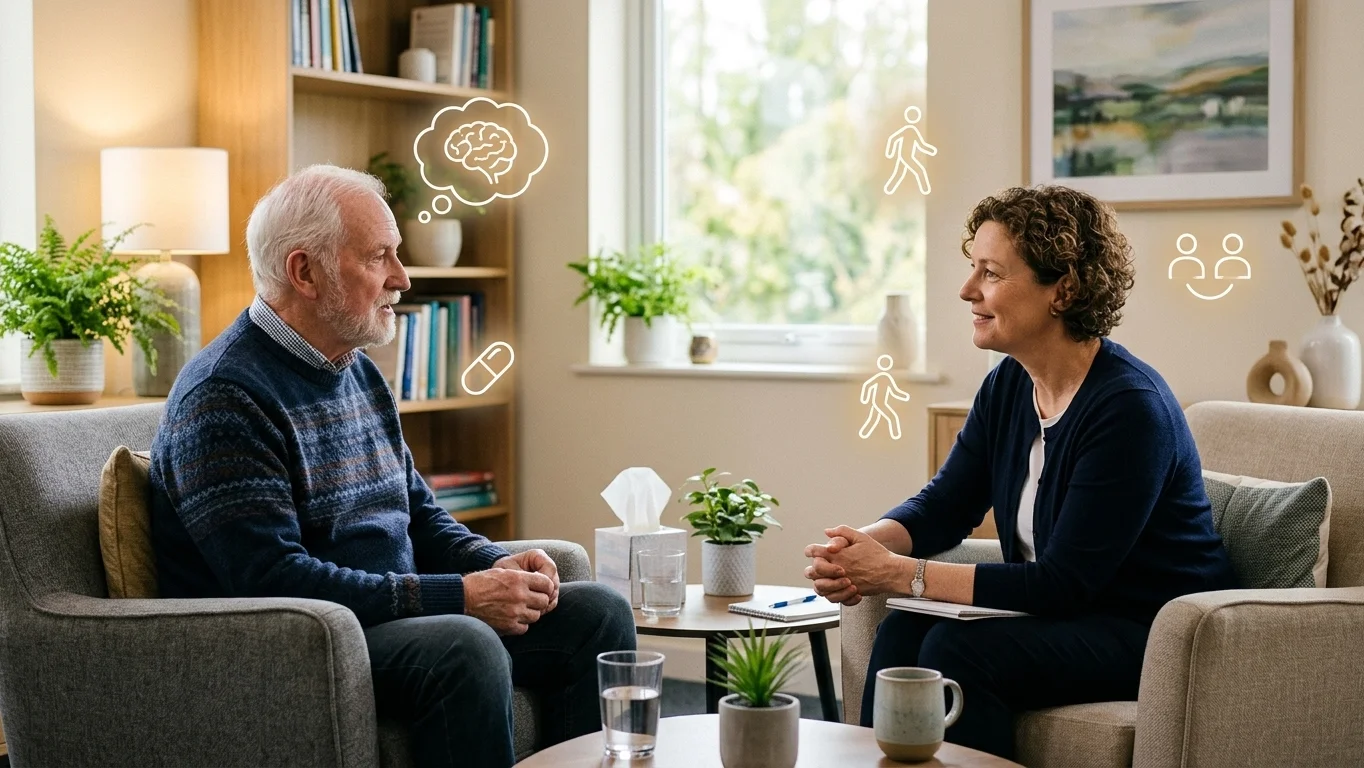
Effective treatment options exist for anxiety at any age, including for those who have lived with it for years.
CBT helps people identify and change the thought patterns that fuel anxiety, replacing them with healthier, more balanced ways of thinking. Certain medications can help manage anxiety symptoms, especially when combined with therapy, and a doctor can help determine what fits a person's specific health needs.
Regular exercise, better sleep habits, and reduced caffeine or alcohol intake can meaningfully reduce anxiety symptoms over time. Practices like deep breathing, meditation, and gentle movement can help calm the nervous system and reduce the intensity of anxious moments.
Connecting with others who understand similar experiences can reduce feelings of isolation and provide encouragement throughout treatment.
Everyday Ways to Manage Anxiety as You Age
Alongside professional treatment, daily habits can play a meaningful role in managing anxiety.
Stay Physically Active. Regular movement, even gentle walking, helps release tension and supports both physical and emotional health.
Maintain Healthy Sleep Habits. A consistent sleep schedule supports emotional regulation and helps the body better manage stress.
Eat a Balanced Diet. Nutrient-rich meals support overall brain and body health, which can help stabilize mood and energy levels.
Limit Caffeine and Alcohol. Both substances can worsen anxiety symptoms, especially when consumed in larger amounts or later in the day.
Practice Stress Management. Simple daily habits like journaling, deep breathing, or short breaks throughout the day can help prevent stress from building up unchecked.
Stay Connected With Family and Friends. Regular social contact helps reduce feelings of isolation and provides emotional support during difficult periods.
Can You Prevent Anxiety From Worsening With Age?
For people who already notice some anxiety but aren't yet struggling significantly, there's real value in addressing it early rather than waiting for it to become disruptive. A few things tend to help:
Treating anxiety when it first appears, rather than waiting to see if it resolves on its own, tends to prevent the kind of long-term escalation described throughout this guide.
Building strong social connections before major life transitions, like retirement, so isolation doesn't compound with the stress of the change itself.
Staying on top of physical health, since chronic conditions and anxiety frequently reinforce each other. Managing one often helps stabilize the other.
Learning a coping skill before it's urgently needed, whether that's a grounding technique, a breathing exercise, or simply knowing who to call when anxiety spikes.
Getting periodic mental health check-ins, the same way most people get regular physical checkups, rather than only seeking care once symptoms have become severe.
Anxiety that's caught and managed early is far less likely to become the kind of entrenched, life-limiting pattern described in the sections above.
When Should You Seek Professional Help?
If anxiety is interfering with daily life, relationships, sleep, or physical health, it is time to seek professional support.
Persistent worry that does not improve, panic attacks, or noticeable withdrawal from activities and people are all signs that professional help can make a real difference. Anxiety does not need to be severe to be worth addressing, and earlier support often leads to easier, faster improvement.
Conclusion
Anxiety can absolutely worsen with age when it goes untreated, but this is not an inevitable part of getting older. Life changes like retirement, health concerns, and loss can add real stress, and without support, anxiety can grow into something that affects sleep, memory, relationships, and physical health. The important thing to remember is that anxiety is treatable at any age, and support is available no matter how long someone has been living with it.
If you or someone you love has been struggling with anxiety that seems to be getting worse over time, it does not have to stay that way.
Find Support at Radiant Path Therapy in Grand Terrace, CA
Anxiety does not have to be something you simply learn to live with as the years go by. If you are near Grand Terrace, CA and are noticing anxiety that feels harder to manage than it used to, Radiant Path Therapy is here to help.
Our clinical team offers compassionate, personalized care built around your specific experience, whether anxiety is new or something you have carried for years. Contact us today to schedule a consultation and take the first step toward feeling more like yourself again.
Frequently Asked Questions
Does anxiety naturally get worse as you get older?
Anxiety does not automatically worsen simply due to age, but life changes common in older adulthood, like health issues, loss, and isolation, can make anxiety more likely to develop or intensify if left untreated.
At what age does anxiety peak?
Some research points to the early-to-mid 50s as a common peak period for anxiety, driven by the combined pressures of caregiving, career demands, and early health concerns, rather than older adulthood itself. Overall prevalence of anxiety disorders tends to decline after this stage, even though the emotional and physical toll of anxiety can still feel significant for those affected.
Can untreated anxiety become permanent?
Anxiety left untreated can become a long-standing pattern that feels permanent, but it is treatable at any stage, and many people see significant improvement with the right support.
Can anxiety cause memory problems in older adults?
Yes, chronic anxiety can affect concentration and short-term memory, and these symptoms are sometimes mistaken for normal cognitive aging rather than recognized as anxiety.
Why is anxiety often missed in seniors?
Anxiety in seniors is often mistaken for physical illness, overlapping depression, or normal aging, which can delay proper diagnosis and treatment.
Can anxiety increase the risk of dementia?
Some research suggests a link between chronic, untreated anxiety and cognitive decline, though anxiety itself is not the same as dementia. Treating anxiety may help support overall cognitive health over time.
Does anxiety get worse during menopause?
Hormonal shifts during perimenopause and menopause can intensify anxiety symptoms or trigger new ones, even in people without a prior history of anxiety. This overlap is one of several reasons anxiety often becomes more noticeable in midlife specifically.
Does anxiety get worse at night?
Yes, for many people anxiety intensifies at night once daily distractions fade and the mind has more room to focus on worry. This is often one of the first noticeable signs that anxiety has shifted from manageable to disruptive.
What is the best treatment for anxiety in older adults?
Treatment often combines therapy, such as cognitive behavioral therapy, with lifestyle changes and, when appropriate, medication. For older adults specifically, SSRIs are generally favored over benzodiazepines due to a meaningfully safer risk profile.
Can lifestyle changes reduce anxiety without medication?
Yes, habits like regular exercise, better sleep, reduced caffeine and alcohol, and stress management techniques can meaningfully reduce anxiety symptoms, especially when combined with therapy.


