
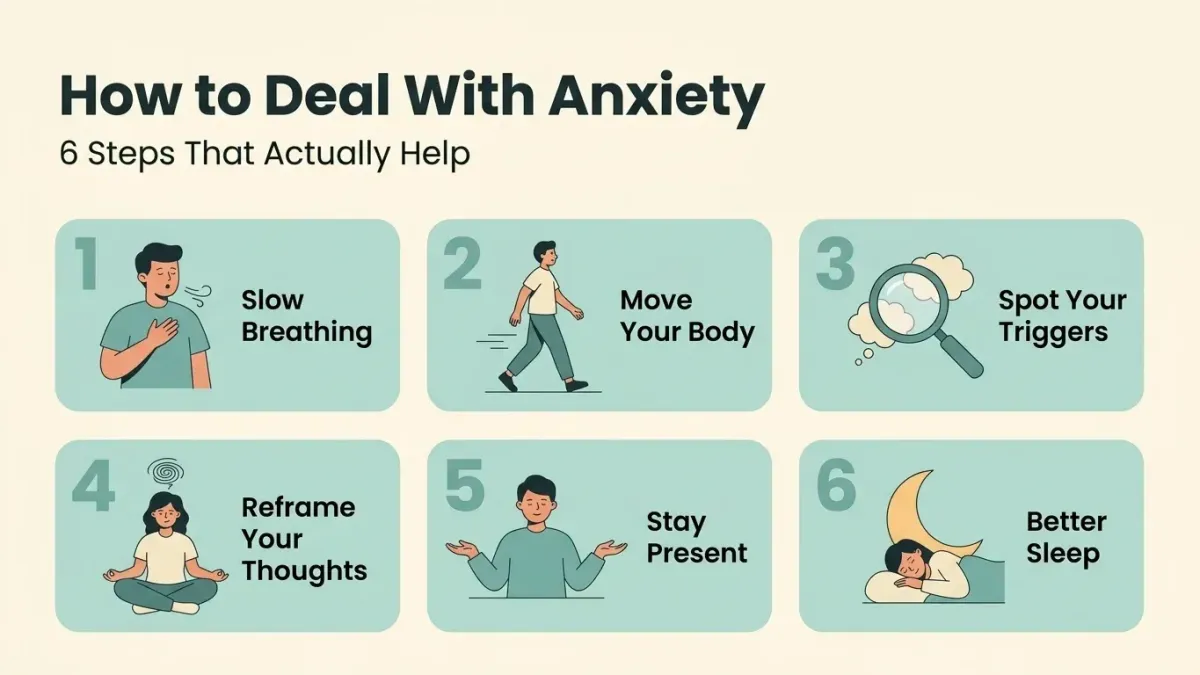
How to Deal With Anxiety: Practical Ways to Feel Calm and in Control
If you are wondering how to deal with anxiety, start with a few practical steps: slow your breathing, bring your attention back to the present, identify what triggers your anxiety, move your body, and question thoughts that automatically jump to the worst-case outcome. Regular sleep, exercise, supportive relationships, and reducing habits that worsen anxiety can also make symptoms easier to manage over time.
When anxiety keeps affecting your sleep, relationships, work, concentration, or ability to enjoy everyday life, self-help may not be enough. Our mental health clinic provides professional anxiety support that can help you understand your triggers, change unhelpful thought and behavior patterns, and develop healthier ways of responding when anxiety appears.
This guide explains what anxiety feels like, what may trigger it, how to calm sudden anxiety, which everyday habits may help, and when professional treatment should be considered. You will also learn breathing, grounding, mindfulness, exercise, and thought-reframing strategies you can use when dealing with anxiety both in the moment and over the long term.
What Is Anxiety?
Anxiety is the body's natural response to stress, uncertainty, or a possible threat. In small amounts, it can help you stay alert, prepare for challenges, and respond to difficult situations. You might feel nervous before an interview, exam, medical appointment, or major life change.
Anxiety becomes more concerning when worry feels difficult to control, happens frequently, or starts interfering with sleep, concentration, relationships, work, or everyday activities. In these situations, the body's alarm response may stay active even when there is no immediate danger.
Common Symptoms of Anxiety
Anxiety shows up differently for different people, but some of the most common experiences include a racing heart, a tight chest, shallow breathing, and a mind that will not stop running through worst-case scenarios. Some people feel restless and on edge without quite knowing why. Others feel exhausted because their nervous system has been on high alert for so long.
What Causes Anxiety?
Anxiety rarely has one single cause. It tends to develop from a mix of factors: your life circumstances, how your brain is wired, your past experiences, and your day-to-day habits. Some people are more naturally prone to anxiety due to personality traits or genetics. Others develop it in response to difficult or prolonged stress. In many cases, it is a combination of both.
Anxiety happens when your brain’s alarm system reacts to stress or uncertainty, even when there is no real danger. It can be caused by ongoing stress, past experiences, genetics, poor sleep, or daily pressures. Anxiety is not your fault it is simply your body trying to protect you, even if it overreacts sometimes.
Stress and Life Events
Major life changes and ongoing stress can trigger anxiety. Challenges like job loss, relationship problems, financial pressure, or health issues can overwhelm the nervous system. Even positive changes, such as a new job or moving to a new place, can cause anxiety because they bring uncertainty and adjustment.
Health and Lifestyle Factors
Physical health and daily habits affect anxiety levels. Poor sleep, a diet high in processed foods and sugar, and lack of exercise can increase stress and anxiety. Certain medical conditions, like thyroid problems, heart issues, or hormonal imbalances, can contribute to or mimic anxiety. A medical check-up is helpful if anxiety persists to rule out physical causes.
Environmental and Genetic Factors
Some people are naturally more sensitive, and anxiety can run in families. This doesn’t mean anxiety is inevitable, but it may require more effort to manage stress. Environmental factors, such as growing up in high-stress settings or experiencing trauma, can also shape how your nervous system responds. Understanding these influences can help you manage anxiety more effectively.
Signs You May Be Experiencing Anxiety
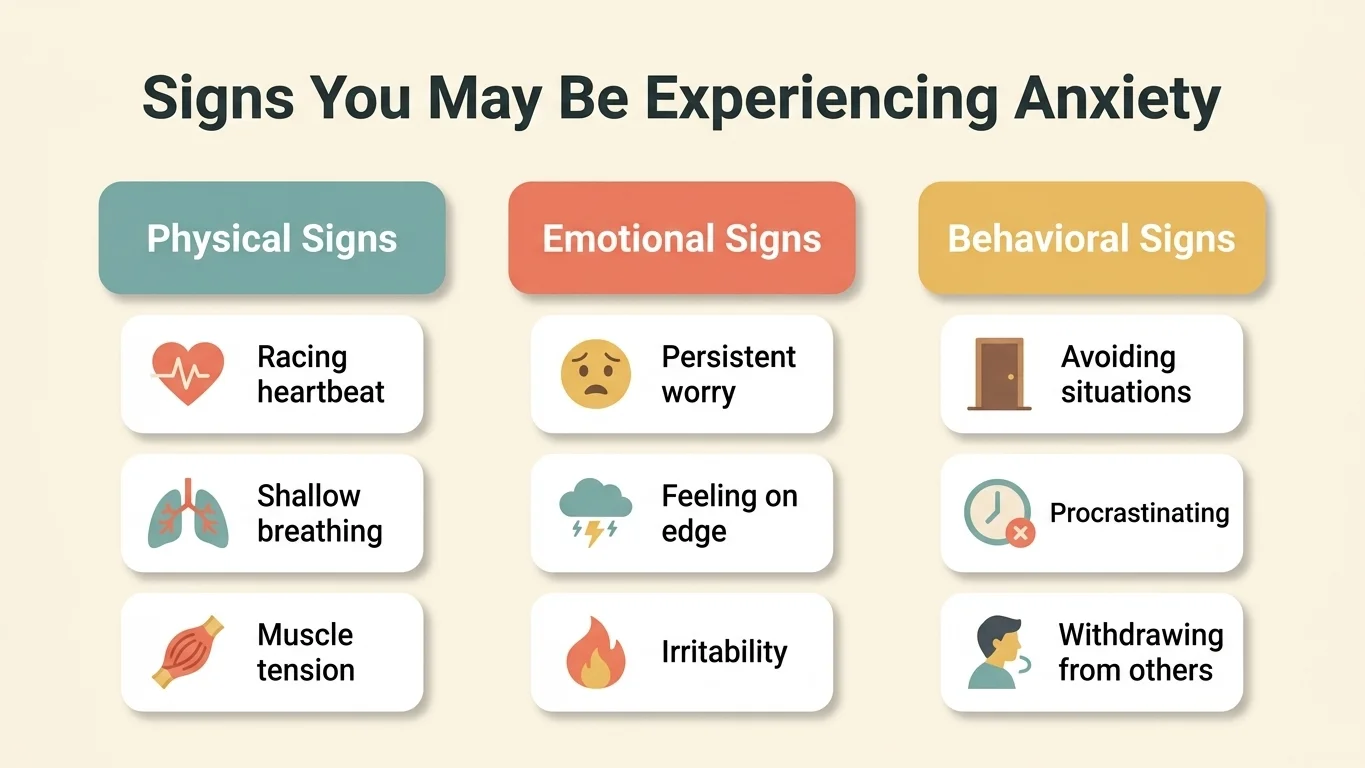
Anxiety can affect your thoughts, emotions, behavior, and physical health. Some people mainly notice racing thoughts, while others first notice symptoms such as muscle tension, stomach discomfort, or a fast heartbeat.
How to Deal With Anxiety: Practical Strategies
Anxiety can feel overwhelming, but simple coping strategies can help you feel more grounded and in control. The goal is not to force anxiety away instantly, but to calm your body's stress response and respond to anxious thoughts in a healthier way.
Identify Your Triggers
Pay attention to when your anxiety becomes stronger and what is happening around you at the time. Triggers may include work pressure, social situations, financial worries, health concerns, conflict, lack of sleep, or major life changes.
Keeping a simple journal can help you notice patterns between situations, thoughts, physical symptoms, and anxiety. Once you understand your common triggers, you can prepare for them and choose coping strategies before anxiety becomes overwhelming.
Practice Slow Breathing
Anxiety can make your breathing faster and shallower, which may increase physical tension. Slowing your breathing can help your body shift away from a heightened stress response.
Try breathing in slowly for four counts and breathing out for six to eight counts. Repeat for a few minutes while keeping your shoulders relaxed. Focus more on making the exhale slow and comfortable rather than forcing yourself to follow an exact count.
Exercise Regularly
Physical activity can reduce tension, improve mood, and give your mind a break from repetitive anxious thoughts. You do not need an intense workout to benefit.
Walking, cycling, stretching, swimming, yoga, or another activity you enjoy can all help. Aim for consistent movement throughout the week rather than relying on exercise only when anxiety becomes intense.
Try Mindfulness
Mindfulness helps you focus on what is happening right now instead of getting pulled into worries about what might happen later. It involves noticing thoughts, feelings, and physical sensations without immediately judging or reacting to them.
Start with five to ten minutes a day. Pay attention to your breathing, the sounds around you, or sensations in your body. When your mind wanders toward anxious thoughts, gently return your attention to the present.
Challenge Negative Thoughts
Anxiety often encourages worst-case thinking and makes uncertain situations feel more dangerous than they really are. Instead of automatically accepting every anxious thought as true, pause and examine it.
Ask yourself: What evidence supports this thought? What evidence goes against it? Am I predicting the worst possible outcome? What is a more balanced explanation? Practicing this regularly can help reduce the power anxious thoughts have over your decisions.
Focus on the Present
Anxiety often pulls your attention toward future possibilities that have not happened. Bringing your focus back to the present can interrupt that cycle.
Notice what you can see, hear, touch, smell, or taste around you. You can also focus on one small action you can take right now rather than trying to solve every possible future problem at once.
Lifestyle Changes That Help Reduce Anxiety
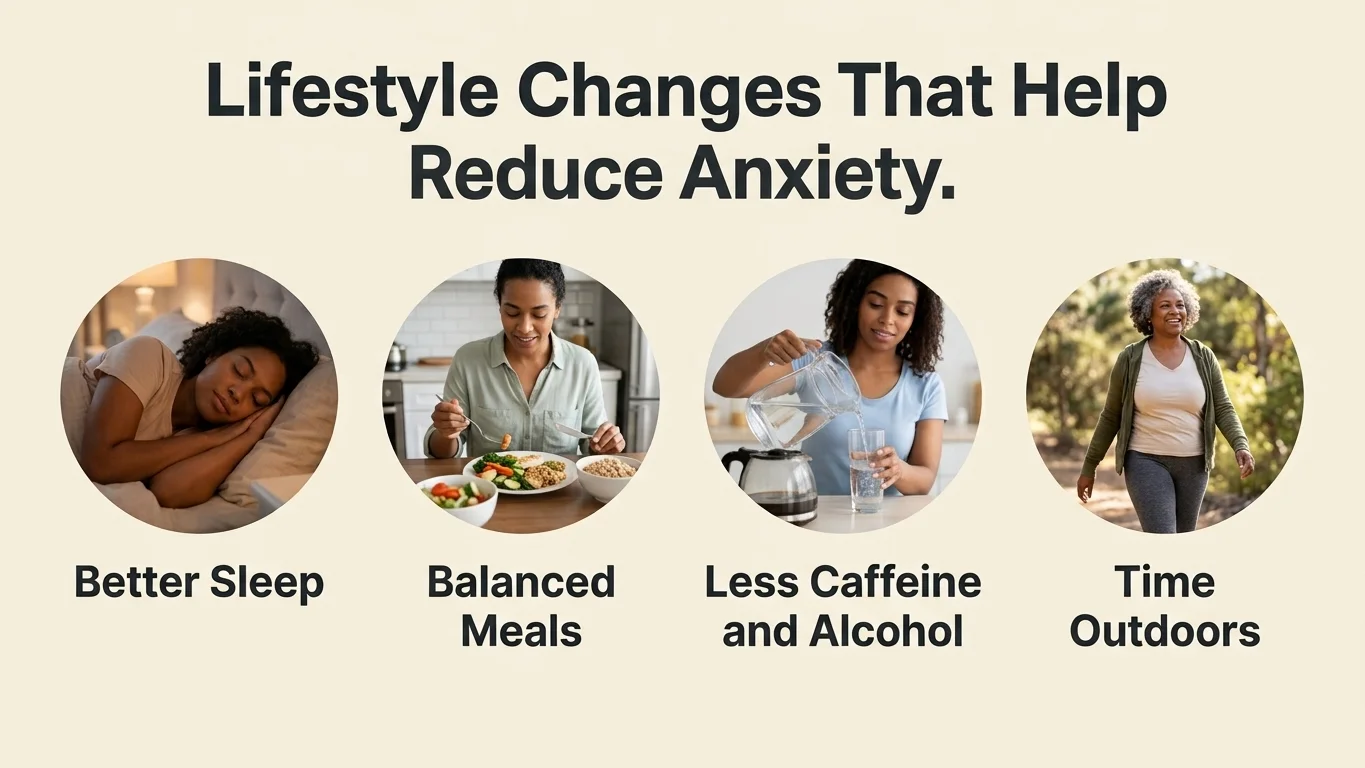
Coping techniques can help when anxiety rises, but your everyday habits also influence how well your body handles stress. Consistent sleep, nutrition, movement, and healthy routines can make anxiety easier to manage over time.
Get Enough Sleep
Poor sleep can make it harder to regulate emotions and cope with stress. Anxiety can also interfere with sleep, creating a cycle where each problem makes the other worse.
Aim for a consistent sleep and wake schedule and create a relaxing routine before bed. Limiting late-night caffeine, heavy meals, and screen use may also help improve sleep quality.
Eat Regular, Balanced Meals
Long gaps between meals and irregular eating patterns can leave some people feeling tired, shaky, or irritable, which may make anxiety symptoms feel stronger.
Try to eat regular meals that include vegetables or fruit, whole grains, protein, and healthy fats. You do not need a perfect diet. The goal is to give your body steady nutrition and avoid relying heavily on highly processed foods or large amounts of sugar.
Cut Back on Caffeine and Alcohol
Caffeine can increase alertness, but too much may also contribute to restlessness, a racing heartbeat, or difficulty sleeping. If you notice that coffee, energy drinks, or other caffeinated products worsen your anxiety, consider gradually reducing your intake.
Alcohol may feel relaxing temporarily, but it can disrupt sleep and may worsen anxiety afterward. Pay attention to how both substances affect your symptoms rather than using them as a regular way to cope with stress.
Spend Time Outdoors
Getting outside can give you a break from stressful environments and encourage physical activity at the same time. Even a short walk can help you slow down, clear your mind, and reconnect with what is happening around you.
Natural light during the day can also support a healthy sleep-wake cycle. Try making outdoor time part of your normal routine, whether that means walking, gardening, sitting in a park, or simply stepping outside for a few minutes.
Coping Techniques for Sudden Anxiety
Sometimes anxiety hits suddenly and you need something that works fast. These techniques are simple, effective, and can be used anywhere:
The 5-4-3-2-1 Grounding Method This pulls your attention out of your worried thoughts and back into the present moment. Name 5 things you can see, 4 you can feel, 3 you can hear, 2 you can smell, and 1 you can taste. It sounds simple but it works remarkably well when anxiety spikes suddenly.
The 4-4-8 Breathing Method Breathe in for 4 counts. Hold for 4 counts. Breathe out slowly for 8 counts. Repeat this 4 to 5 times. The long exhale directly calms your nervous system and most people feel a noticeable difference within just a few minutes.
Engage Your Senses Anxiety pulls you into your head. Your senses pull you back into your body. Hold something cold or textured. Splash cold water on your face. Take slow sips of water and focus entirely on the sensation. These simple actions work directly with your nervous system far more effectively than trying to think your way out of an anxiety spiral.
What Can Make Anxiety Worse?
Some habits provide temporary relief from anxiety but can make the cycle harder to manage over time. Constantly avoiding situations that make you nervous, for example, may reduce anxiety in the moment but can reinforce the belief that the situation is dangerous or impossible to handle.
Too much caffeine, poor sleep, frequent alcohol use, prolonged stress, social isolation, and repeatedly focusing on worst-case scenarios may also intensify anxiety for some people. Instead of trying to eliminate every uncomfortable feeling, work on gradually building healthier ways to respond to anxiety and uncertainty.
Pay attention to your own patterns. If something consistently leaves you feeling more tense, restless, worried, or avoidant, consider whether changing that habit could make anxiety easier to manage.
When to Seek Professional Help
Self-help strategies work well for many people but sometimes anxiety goes beyond what you can manage alone. Here is when it is time to reach out for professional support:
Signs You Should Talk to a Therapist
Your anxiety is constant and affecting your ability to work or maintain relationships
You are experiencing panic attacks regularly
You are avoiding more and more situations just to feel safe
You are using alcohol or other substances to cope
You feel hopeless alongside the anxiety
Therapy Options for Anxiety
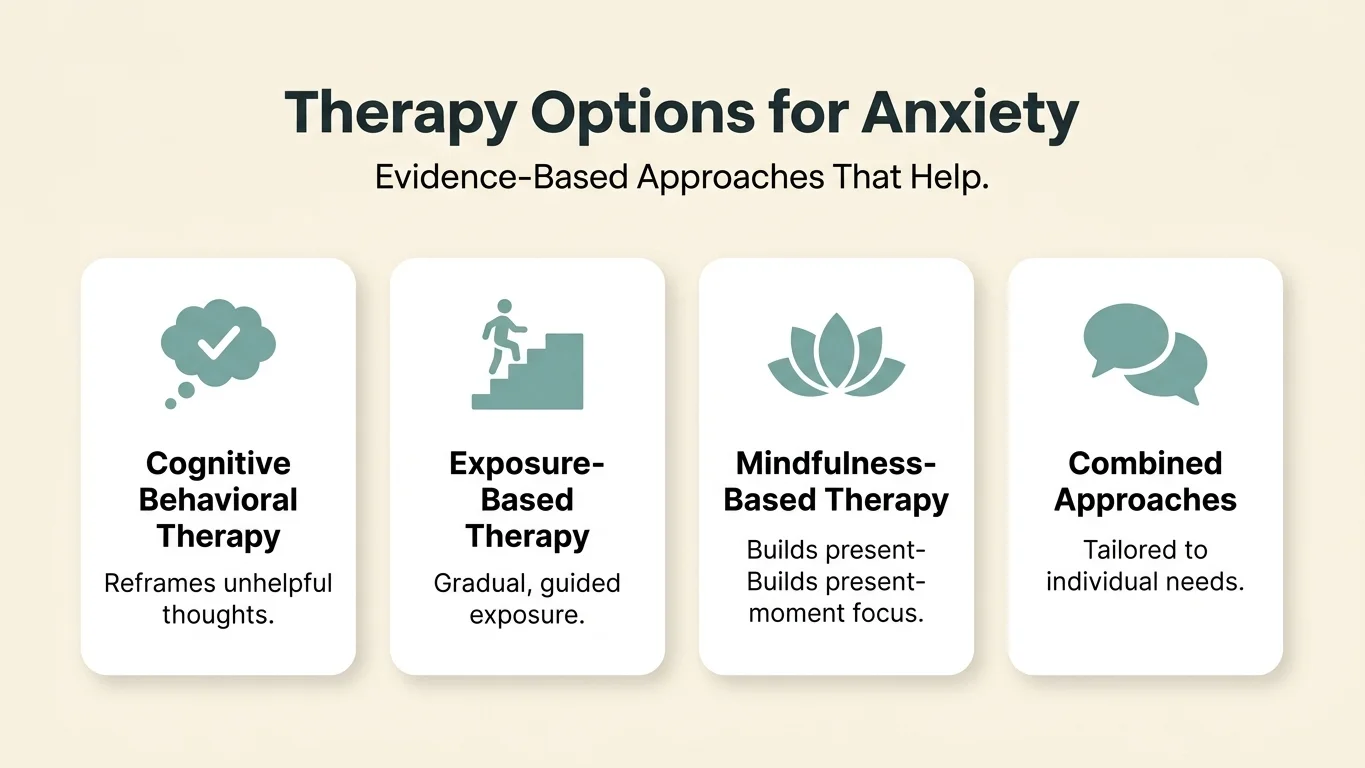
Therapy can help you understand what triggers your anxiety, recognize patterns that keep it going, and develop healthier ways to respond to stressful situations.
Cognitive behavioral therapy (CBT) is one of the most widely used and well-studied therapies for anxiety disorders. It focuses on identifying unhelpful thoughts and behaviors and learning more balanced ways to respond to fear, worry, and uncertainty.
Depending on your symptoms and needs, a mental health professional may also recommend other approaches, such as exposure-based therapy, mindfulness-based therapies, or a combination of techniques.
Medications for Anxiety
Medication may be helpful for some people, particularly when anxiety is persistent, severe, or significantly affecting daily life. The right medication depends on the type of anxiety, your symptoms, your overall health, and other individual factors.
Selective serotonin reuptake inhibitors (SSRIs) are commonly prescribed for certain anxiety disorders and may take several weeks to reach their full effect. Other medications may also be considered depending on the situation.
Medication should always be discussed with a qualified healthcare professional, who can explain the possible benefits, side effects, and whether it should be used alone or alongside therapy.
Long-Term Strategies to Manage Anxiety
Learning how to deal with anxiety over the long term is less about finding one perfect technique and more about building healthier ways to respond to stress, uncertainty, and difficult emotions. Once you know what tends to trigger your anxiety, you can work on patterns that make those situations easier to manage.
Build a Strong Support System
Anxiety can feel more intense when you try to handle every worry on your own. Staying connected with trusted friends, family members, or supportive people gives you a place to talk openly, gain perspective, and feel less isolated when stress builds.
Try to maintain supportive relationships even when you are feeling well, not only when anxiety becomes difficult. If personal support is limited, therapy or a support group may provide another safe place to talk through your experiences.
Learn Better Stress Management Skills
Stress cannot always be avoided, but you can become better at managing it before it becomes overwhelming. Setting realistic priorities, breaking large problems into smaller steps, taking regular breaks, and creating healthy boundaries can reduce unnecessary pressure.
It can also help to notice which responsibilities, situations, or relationships consistently leave you feeling overwhelmed. Learning when to say no, ask for help, or change your approach can make everyday stress feel more manageable and reduce the chance of anxiety building over time.
Practice Coping Skills Before You Need Them
Breathing, grounding, mindfulness, and thought-reframing techniques are easier to use during intense anxiety when you have already practiced them during calmer moments. Try using one or two strategies regularly instead of waiting until anxiety becomes overwhelming.
Over time, these skills can become more familiar and easier to turn to when you notice early signs of anxiety.
Get Support for Anxiety in Grand Terrace, CA
Learning how to deal with anxiety on your own can help, but you do not have to rely on self-help alone when anxiety keeps interfering with your daily life. A therapist can help you understand what is driving your anxiety and develop coping strategies based on your symptoms, triggers, and goals.
Radiant Path Therapy in Grand Terrace, CA provides personalized anxiety treatment using evidence-based approaches such as CBT and other therapy methods selected around your individual needs. If worry, panic, avoidance, racing thoughts, or physical anxiety symptoms are becoming difficult to manage, contact Radiant Path Therapy to schedule a consultation and learn what type of support may be right for you.
Conclusion
The best way to deal with anxiety is usually to combine strategies that calm you in the moment with habits that make anxiety easier to manage over time. Slow breathing, grounding through your senses, physical activity, mindfulness, identifying triggers, and challenging anxious thoughts can help you respond more calmly when anxiety rises. Better sleep, regular exercise, supportive relationships, and reducing things that aggravate anxiety can also support longer-term progress.
When dealing with anxiety, pay attention to how often it happens and how much it affects your life. Occasional worry is normal, but anxiety that repeatedly disrupts your sleep, work, relationships, concentration, or everyday activities deserves more attention. Avoiding everything that makes you anxious may provide temporary relief but can sometimes reinforce the anxiety cycle. If you have tried coping strategies and still feel overwhelmed, professional support may be worth considering.
Frequently Asked Questions
What is the difference between normal worry and anxiety?
Normal worry is usually connected to a specific problem and often decreases once the situation is resolved. Anxiety may feel more persistent, difficult to control, or stronger than the situation seems to require. If worry regularly interferes with your sleep, work, relationships, or everyday activities, professional support may be helpful.
What is the fastest way to calm anxiety in the moment?
Slow breathing and grounding techniques can help bring your attention back to the present when anxiety suddenly increases. You can try breathing in slowly for four counts and exhaling for longer, or use the 5-4-3-2-1 grounding technique to focus on what you can see, feel, hear, smell, and taste. Different methods work better for different people, so it may take some experimenting.
Can lifestyle changes really help with anxiety?
Healthy routines can support anxiety management, especially when practiced consistently. Regular physical activity, adequate sleep, balanced meals, social connection, and reducing excessive caffeine or alcohol may help some people feel more emotionally and physically regulated. Lifestyle changes can support treatment, but they may not replace professional care when anxiety is severe or persistent.
When should I seek professional help for anxiety?
Consider talking with a mental health professional when anxiety becomes difficult to control or begins interfering with work, school, sleep, relationships, or normal activities. Frequent panic attacks, increasing avoidance, substance use to cope, or persistent distress are also reasons to seek support. You do not need to wait until anxiety becomes unbearable before asking for help.
What is the most effective treatment for anxiety?
Treatment depends on the type and severity of anxiety and the individual's needs. Cognitive behavioral therapy (CBT) is one of the most established treatments for anxiety disorders, while other therapy approaches and medications may also be appropriate. A qualified mental health or medical professional can help determine which approach makes the most sense for you.
Can anxiety go away on its own?
Mild anxiety related to temporary stress may improve when the situation passes. Persistent or recurring anxiety may require changes in coping habits, therapy, medication, or a combination of approaches. If anxiety continues to interfere with everyday life, consider speaking with a mental health professional.


