

Heal Childhood Trauma Without Therapy: 9 Real Steps
Healing from childhood trauma without therapy can involve learning your emotional triggers, journaling, practicing grounding and mindfulness, improving sleep and daily routines, setting healthier boundaries, and building relationships with people who feel safe and supportive. These practices may help you understand old patterns, manage stress reactions, and respond to difficult emotions in healthier ways. Healing does not mean forgetting what happened. It means reducing how much the past controls your present life.
Childhood trauma can include abuse, neglect, violence, household instability, or other experiences that disrupt a child's sense of safety and stability. These experiences can have lasting effects on emotional health, relationships, stress responses, and well-being into adulthood. For adults in Grand Terrace, CA, recognizing the connection between childhood experiences and current patterns can be an important first step toward deciding what kind of support is needed.
Can you heal childhood trauma on your own? Some people can make meaningful progress through self-help and strong social support, especially when symptoms are manageable. But healing without therapy has limits. If you experience severe flashbacks, dissociation, worsening anxiety or depression, significant problems with daily functioning, or self-help makes you feel increasingly overwhelmed, professional trauma-informed care may be safer and more effective. Evidence-based treatments for trauma-related disorders include approaches such as trauma-focused CBT and EMDR.
What Is Childhood Trauma?
Childhood trauma refers to distressing or overwhelming experiences that happen during childhood and affect a child's sense of safety, trust, or emotional security. These experiences can continue to influence thoughts, emotions, behavior, relationships, and stress responses into adulthood.
Trauma does not have to come from one extreme event. Repeated criticism, neglect, instability, abuse, loss, or exposure to conflict can also have a lasting impact, especially when a child does not have enough support to cope with what is happening.
Different Forms of Childhood Trauma
Childhood trauma can come from major events such as physical or sexual abuse, witnessing violence, serious accidents, or sudden loss. It can also develop from ongoing experiences such as emotional neglect, constant criticism, bullying, family conflict, or growing up in an unpredictable home.
What matters is not only what happened, but also how the experience affected the child's sense of safety and ability to cope. Two people can experience similar events and respond to them very differently.
Single-Event vs. Repeated or Complex Trauma
Single-event trauma may develop after one frightening or overwhelming experience. Repeated or complex trauma can result from harmful experiences that continue over time, especially when they happen within relationships or environments that should have felt safe.
Repeated childhood trauma may have a broader effect on emotional regulation, self-worth, trust, and relationships. These patterns can continue into adulthood, even when the original danger is no longer present.
How Childhood Trauma Affects You as an Adult
Childhood trauma can continue to influence how you think, feel, react, and connect with others long after the original experiences have ended. As an adult, it may show up as anxiety, low self-worth, emotional numbness, difficulty trusting people, fear of abandonment, people-pleasing, perfectionism, or strong reactions to criticism and conflict.
Some people also struggle with setting boundaries, maintaining healthy relationships, or feeling safe even when there is no immediate danger. The effects can also appear physically and behaviorally. Ongoing stress responses may contribute to poor sleep, muscle tension, fatigue, difficulty concentrating, or feeling constantly on edge.
You may also avoid certain situations, isolate yourself, or repeat unhealthy relationship patterns without fully understanding why. These reactions often began as ways to cope during childhood, but in adulthood they can become patterns that interfere with emotional stability, relationships, and daily life.
Can You Heal from Childhood Trauma Without Therapy?
Yes, some people can make meaningful progress healing from childhood trauma without formal therapy by using self-help practices such as journaling, mindfulness, grounding, healthy routines, emotional awareness, and supportive relationships. These approaches can help you understand triggers, recognize unhealthy patterns, regulate stress, and build a stronger sense of safety and self-worth over time.
However, healing on your own has limits. If childhood trauma is causing severe anxiety, flashbacks, dissociation, major relationship problems, or difficulty managing daily life, professional support may be a safer and more effective option. Self-help can still be useful, but it should not become a reason to avoid getting help when symptoms feel overwhelming or continue to get worse.
How to Start Healing Childhood Trauma on Your Own
Before jumping into specific techniques it helps to understand the foundation that makes self-healing possible.
Awareness and Acknowledgment You cannot heal what you refuse to look at. Acknowledge that what happened was real, that it affected you, and that your struggles make sense. This is not about blaming the past. It is about being honest with yourself.
Accepting That Healing Is Not Linear Healing is not a straight line. There will be better days and harder days. Progress in trauma healing often looks messy from the inside even when real change is happening.
Creating a Safe Internal Space Before processing painful emotions you need to feel grounded and calm in your body. Learning to be with yourself without judgment is the foundation that makes everything else possible.
How to Process Childhood Trauma Without Therapy Safely
Processing childhood trauma on your own should focus on understanding your present emotions, triggers, beliefs, and reactions rather than forcing yourself to relive painful memories. Journaling, grounding, mindfulness, and noticing patterns can help you explore how past experiences still affect your life while keeping your attention connected to the present.
Go slowly and pay attention to how each practice affects you. If thinking or writing about trauma leads to intense panic, flashbacks, dissociation, worsening sleep, or difficulty returning to normal activities, stop the deeper exercise and return to grounding or everyday routines. Professional support may be appropriate when trauma feels too difficult to manage alone.
9 Ways to Heal Childhood Trauma Without Therapy
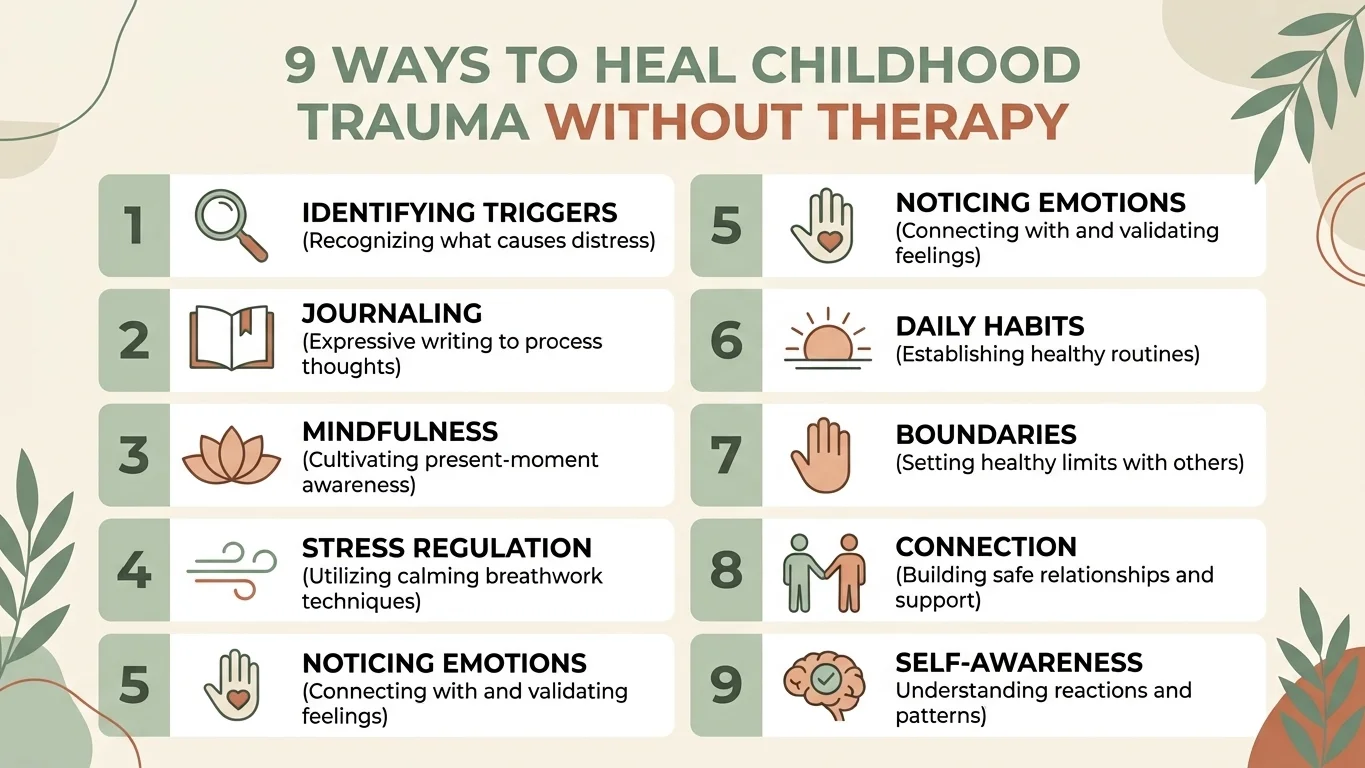
Healing childhood trauma without therapy can begin with small, consistent practices that help you understand triggers, manage emotions, and feel safer in daily life. You do not need to use every method at once. Start with one or two that feel manageable and build from there.
Identify Your Triggers Notice situations, words, places, or behaviors that create a strong emotional reaction. Tracking these patterns in a journal can help you understand what may be connected to earlier experiences.
Practice Self-Awareness Pay attention to your thoughts, emotions, and body reactions without judging them immediately. This can create space between a trigger and your response, making it easier to choose a calmer reaction.
Using Journaling to Process Emotions Writing about feelings, memories, and current reactions can help you organize experiences that feel confusing or overwhelming. Focus on what you are feeling now rather than forcing yourself to revisit painful details.
Try Mindfulness and Meditation Mindfulness can help bring your attention back to the present instead of getting pulled into past memories or future fears. Start with short guided exercises if longer meditation feels uncomfortable.
Regulating Your Stress Response Slow breathing, grounding exercises, stretching, and noticing your surroundings can help reduce feelings of panic or being constantly on alert. These practices can be especially useful when you notice a trigger.
Notice Emotions Without Overwhelming Yourself Allow yourself to recognize sadness, anger, fear, or shame without forcing the emotion to become more intense. If you start feeling overwhelmed, return to grounding, movement, or another activity that helps you feel present.
Building Healthy Daily Habits Regular sleep, balanced meals, physical activity, and predictable routines can support emotional stability and stress management. Small habits repeated consistently often help more than trying to change everything at once.
Set Healthy Boundaries Learning to say no, limit contact with harmful people, and protect your time can help create a stronger sense of safety. Boundaries can also reduce patterns such as people-pleasing or ignoring your own needs.
Connect With Safe and Supportive People Healing on your own does not have to mean being completely alone. Spending time with trusted friends, family members, or supportive communities can reduce isolation and give you a safe place to feel understood.
What Does Releasing Childhood Trauma Mean?
Releasing childhood trauma does not mean erasing memories or removing trauma from the body. It usually means changing how strongly past experiences influence your emotions, beliefs, relationships, and reactions in the present.
Over time, healing may involve recognizing triggers earlier, responding to emotions with greater control, building healthier boundaries, challenging negative beliefs about yourself, and feeling safer in everyday life.
Self-Healing Techniques That May Support Trauma Recovery
Some self-help practices can help you understand how childhood experiences still influence your emotions, beliefs, relationships, and stress responses today. These techniques are not meant to force you to relive painful memories. The goal is to build greater awareness, emotional safety, and healthier ways of responding when old patterns or triggers appear.
Shadow Work
Shadow work is a form of self-reflection that focuses on thoughts, emotions, beliefs, or parts of yourself that you tend to avoid, hide, or judge. These may include anger, shame, fear, jealousy, people-pleasing, or beliefs such as “I am not good enough.”
Journaling about when these feelings appear and what they remind you of can help you understand how past experiences may still influence your reactions. The goal is not to criticize these parts of yourself, but to approach them with curiosity and compassion.
Inner Child Work
Inner child work involves reflecting on the needs, fears, and experiences you had when you were younger. You might write a letter to your younger self, identify what you needed but did not receive, or imagine responding to that younger version of yourself with reassurance and care.
This practice may help you recognize why certain situations feel especially painful or threatening today. Over time, it can support a more compassionate view of yourself and help you respond to old emotional patterns in healthier ways.
Creative Expression
Creative activities can provide another way to explore emotions that may be difficult to explain in words. Drawing, painting, writing, music, photography, or other forms of expression can help you notice feelings and experiences without needing to describe every detail of the trauma directly. The goal is not to create something impressive. It is to give your emotions a safe outlet and help you better understand what you are experiencing.
Movement and Physical Activity
Childhood trauma can affect the body's stress response, which may leave some people feeling tense, restless, or constantly on alert. Gentle movement such as walking, stretching, yoga, dancing, or regular exercise can help reduce physical tension and bring your attention back to the present moment.
Movement can also support sleep, mood, and overall stress management. Choose activities that feel safe and comfortable rather than pushing yourself into anything that increases distress.
Nature and Grounding Practices
Spending time in nature can help shift your attention away from distressing thoughts and back toward what is happening around you. Walking outside, sitting in a quiet park, noticing sounds and textures, or feeling your feet on the ground can all be simple grounding practices.
Grounding is especially useful when you feel emotionally overwhelmed, disconnected, or caught in memories of the past. The purpose is to remind your mind and body that you are in the present and help you regain a sense of stability.
Common Mistakes to Avoid When Healing Trauma Alone
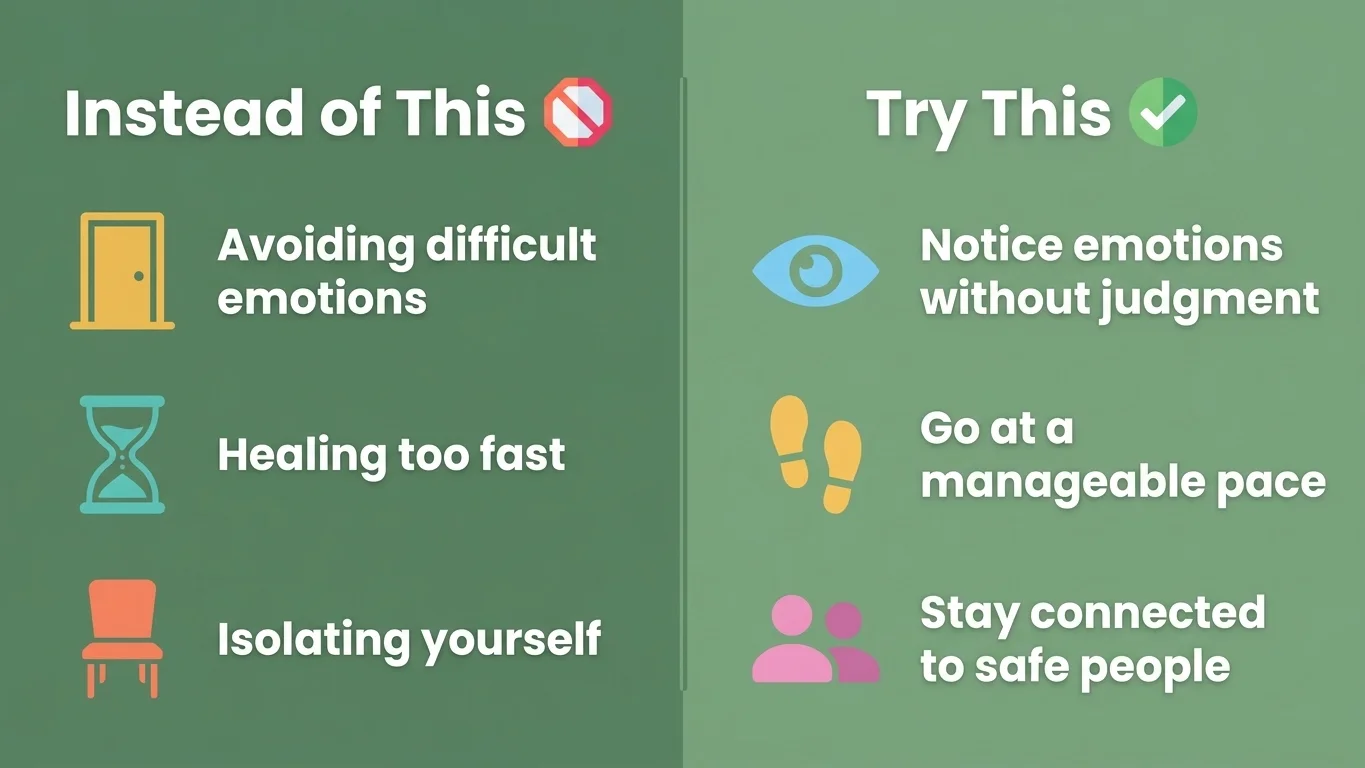
Trying to heal childhood trauma on your own can be helpful, but some approaches may make the process harder. The goal is not to force yourself through painful memories as quickly as possible. It is better to move slowly, stay aware of your limits, and focus on practices that help you feel more stable.
Avoiding Difficult Emotions
Ignoring difficult emotions may give short-term relief, but it can make it harder to understand what triggers you and why. Try to notice your feelings without judging them, while using grounding or calming techniques if they become too intense.
Trying to Heal Too Quickly
Trauma recovery usually takes time, and there is no fixed timeline. Pushing yourself to explore too much painful material at once can increase stress and leave you feeling overwhelmed, so it is better to work at a pace that feels manageable.
Isolating Yourself
Healing on your own does not mean you have to do everything alone. Staying connected with trusted friends, family members, or supportive communities can reduce isolation and help you feel safer during difficult moments.
Ignoring Your Physical Health
Poor sleep, lack of movement, irregular meals, and ongoing stress can make it harder to manage emotions. Taking care of your physical health can support better mood, energy, concentration, and overall stress management.
Ignoring Signs That You Need More Support
Self-help has limits, especially when symptoms become severe or begin affecting daily life. If you are experiencing intense flashbacks, dissociation, worsening anxiety, or difficulty functioning, professional support may be a safer next step.
What Does Healing from Childhood Trauma Look Like?

Recovery from childhood trauma is not about erasing what happened. It is about changing your relationship to it so it no longer controls your life.
Feeling Safer in Your Body You stop feeling constantly on edge. Your nervous system gradually learns that the danger is over. You can be present in your body without it feeling threatening.
Better Emotional Control Your emotional reactions become more proportionate to what is actually happening in the present. You can feel strong emotions without being completely overwhelmed by them.
Healthier Relationships As healing progresses, you may become better able to recognize healthy relationships, communicate your needs, build trust gradually, and set boundaries without as much guilt. You may also become more aware of unhealthy relationship patterns and make choices that support your emotional well-being.
Increased Self-Worth The inner critic gets quieter. You start to believe that you are worthy of love, safety, and good things not because you earned it but because you exist.
Get Support When Self-Healing Is Not Enough
If you have been trying to heal from childhood trauma without therapy but still feel trapped by old emotional patterns, professional support can give you another path forward. Radiant Path Therapy in Grand Terrace, CA provides trauma-specialized, evidence-based care designed around each person's history, symptoms, and treatment goals.
Contact Radiant Path Therapy to schedule a consultation and explore the level of support that may fit your needs. The practice offers in-person and telehealth care, including outpatient, IOP, and PHP options for eligible adults, with same-day admission available depending on insurance approval.

Conclusion
Healing from childhood trauma without therapy can begin with small, consistent steps such as recognizing triggers, journaling about emotions, practicing grounding or mindfulness, creating healthier routines, setting boundaries, and connecting with safe people. These practices can help you understand how past experiences continue to influence your emotions, relationships, and reactions today.
You do not need to erase childhood memories or force yourself to “get over” them in order to move forward. Progress may look like feeling safer, recognizing triggers sooner, responding to emotions with more control, developing healthier relationships, and treating yourself with greater patience and compassion.
Self-help can be valuable, but it does not have to become a rule that you must heal completely on your own. If symptoms remain intense, get worse, or interfere with work, sleep, relationships, or everyday functioning, reaching out to a trauma-informed mental health professional can provide additional support and evidence-based treatment.
Frequently Asked Questions
Can you really heal from childhood trauma without therapy?
Some people can make meaningful progress through self-help practices such as journaling, grounding, mindfulness, healthy routines, and supportive relationships. However, healing looks different for everyone, and self-help has limits. If trauma symptoms are severe or interfere with daily life, professional support may be appropriate.
How do I know if I have unresolved childhood trauma?
Possible signs include strong emotional reactions to certain situations, difficulty trusting people, low self-worth, people-pleasing, perfectionism, emotional numbness, or feeling constantly on guard. These signs can have many causes, so they do not automatically mean childhood trauma is responsible. A mental health professional can help clarify persistent symptoms.
How long does it take to heal from childhood trauma?
There is no fixed timeline for healing childhood trauma. Progress can depend on the type and duration of the trauma, current stress, available support, coping skills, and whether other mental health concerns are present. Healing often happens gradually, with periods of improvement and more difficult days.
What is inner child work?
Inner child work is a self-reflection practice that focuses on understanding emotional needs or experiences from childhood that may still influence you today. It may involve journaling, writing to your younger self, or responding to old feelings with greater compassion. It should not be treated as a replacement for evidence-based trauma treatment when significant symptoms are present.
Can you process trauma without therapy?
Some people can safely explore current triggers, emotions, beliefs, and behavioral patterns through journaling, mindfulness, grounding, and self-reflection. It is usually better to work gradually rather than forcing yourself to relive painful memories. If the process causes intense distress, flashbacks, or dissociation, deeper self-guided trauma work should be paused.
Can you heal trauma on your own?
You may be able to improve coping skills and make meaningful changes without formal therapy, but healing does not have to mean complete isolation. Supportive friends, family members, peer communities, healthy routines, and professional care when needed can all play a role. Social support is recognized as an important part of recovery after trauma.
When should I consider professional help for childhood trauma?
Consider professional support when trauma symptoms become increasingly difficult to manage or begin affecting sleep, work, relationships, safety, or daily functioning. Frequent flashbacks, severe anxiety, dissociation, substance misuse, or feeling unable to cope are also important warning signs. Evidence-based trauma treatment can provide structured support when self-help is not enough.
What are simple daily ways to cope with childhood trauma?
Helpful daily practices may include maintaining a regular sleep schedule, eating consistently, exercising, using grounding or breathing exercises, keeping routines, and spending time with supportive people. Small, repeatable habits can help manage stress reactions without requiring you to focus on traumatic memories every day.


