

How to Treat Functional Depression Effectively
Functional depression is usually managed through psychotherapy, supportive daily routines, social connection, and, when clinically appropriate, medication. A person may continue working, maintaining relationships, and meeting responsibilities while still experiencing persistent low mood, fatigue, emotional numbness, poor motivation, sleep problems, or loss of enjoyment. Treatment focuses on understanding and addressing these symptoms rather than simply helping someone continue to push through them.
If you are wondering how to deal with functional depression in Grand Terrace, CA, professional therapy can be an important place to start. Radiant Path Therapy provides a supportive space to understand what may be contributing to your symptoms and develop healthier ways to manage them. If feeling “fine” on the outside no longer matches how you feel internally, consider scheduling a confidential consultation.
“Functional depression,” sometimes called “high-functioning depression,” is not a formal mental health diagnosis. A professional evaluation may instead identify major depressive disorder, persistent depressive disorder, anxiety, burnout, another mental health concern, or a combination of factors. Understanding what is actually causing your symptoms can help guide the right treatment approach.
What Is Functional or High-Functioning Depression?
Functional depression is an informal term used to describe depressive symptoms in someone who can still manage many parts of everyday life. You may go to work, complete assignments, take care of your family, maintain friendships, and appear productive. At the same time, you may privately feel exhausted, disconnected, unmotivated, empty, or persistently unhappy.
This can make depression harder to recognize. Friends, coworkers, and even the person experiencing the symptoms may assume everything is fine because responsibilities are still being handled. However, being able to function does not mean emotional distress is mild or should be ignored.
Functional Depression vs. Major Depression vs. Persistent Depressive Disorder
Functional depression should not be viewed as the opposite of major depression. People with major depressive disorder can also continue working and appear outwardly successful.
The main difference is that “functional depression” describes a person's experience rather than a specific diagnosis.
Why Functional Depression Often Goes Unnoticed
Functional depression often goes unnoticed because a person may still work, maintain relationships, meet deadlines, and handle daily responsibilities. From the outside, they may appear productive and successful even while experiencing persistent sadness, fatigue, low motivation, or emotional numbness.
Many people also become used to hiding their symptoms or telling others they are fine. High expectations, fear of being judged, and the belief that they should be able to cope on their own can make it harder to recognize the problem or ask for professional support.
Common Signs of Functional Depression
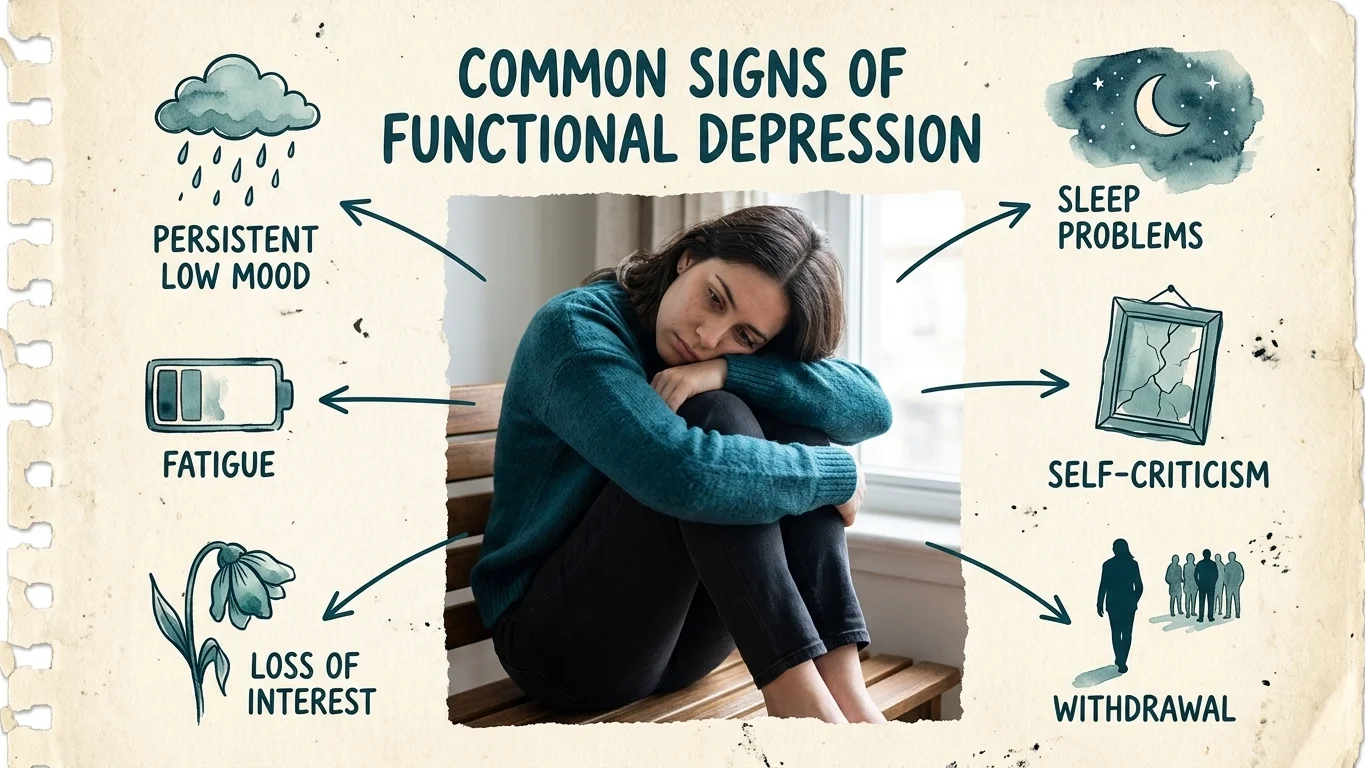
Functional depression can look different from person to person. Someone may experience several of the following symptoms while still appearing relatively productive.
Persistent Low Mood: You may feel sad, flat, empty, or emotionally heavy for long periods. The feeling may not be overwhelming every moment, but it keeps returning or never fully goes away.
Fatigue and Low Energy: Normal tasks can require much more effort than they used to. You may complete everything you need to do but feel completely drained afterward.
Loss of Interest or Enjoyment: Activities, relationships, hobbies, or goals that once felt meaningful may become less enjoyable. You may continue participating in them without feeling genuinely interested or excited.
Sleep Problems: Depression may affect sleep in different ways. Some people struggle to fall asleep or stay asleep, while others sleep longer than usual and still wake feeling tired.
Irritability: Depression is not always expressed as sadness. You may become more impatient, frustrated, sensitive, or easily overwhelmed by situations that previously felt manageable.
Low Self-Esteem and Self-Criticism: You may constantly question whether you are good enough, productive enough, successful enough, or doing enough for other people. Even accomplishments may provide little satisfaction.
Difficulty Concentrating: Reading, making decisions, remembering details, or staying focused may become harder. You may still finish your work, but doing so requires more mental effort.
Social Withdrawal: You may gradually spend less time with friends or family, cancel plans more often, or feel emotionally disconnected even when you are around other people.
What Causes Functional Depression?
There is no single cause of functional depression. Because it is an informal term rather than a specific diagnosis, the factors contributing to someone's symptoms can vary considerably.
Depression more broadly may involve a combination of biological, psychological, environmental, and lifestyle factors.
Chronic Stress
Ongoing pressure from work, finances, relationships, caregiving, or major life changes can contribute to emotional exhaustion and may worsen depressive symptoms.
Some people continue handling their responsibilities for a long time even as their mood and energy gradually decline.
Perfectionism and High Expectations
Perfectionism does not automatically cause depression, but constantly demanding more from yourself can contribute to stress and self-criticism.
People with very high expectations may also struggle to acknowledge when they need help.
Family and Biological Factors
A family history of depression can increase a person's risk. Depression appears to involve a complex interaction between genetics, brain function, life experiences, physical health, and environmental factors rather than one single cause.
Difficult Life Experiences
Loss, relationship difficulties, prolonged stress, traumatic experiences, major transitions, or other challenging events may contribute to depressive symptoms.
Sometimes symptoms develop after a clear event. In other cases, they build gradually over time.
Sleep and Daily Habits
Poor sleep, limited movement, alcohol or substance use, and inconsistent routines can affect mood and may make existing depressive symptoms harder to manage.
These factors should be considered as part of the bigger picture rather than treated as the only cause of depression.
Other Mental or Physical Health Conditions
Depressive symptoms can occur alongside anxiety, ADHD, substance use concerns, chronic health problems, or other mental health conditions.
Some medications and physical health conditions can also contribute to symptoms such as fatigue, low energy, sleep changes, or difficulty concentrating. This is another reason professional evaluation can be useful.
How Is Functional Depression Evaluated?
There is no specific test used to diagnose functional depression because it is not a formal clinical diagnosis.
Instead, a mental health professional may ask about your mood, energy, sleep, motivation, concentration, relationships, daily responsibilities, and ability to enjoy activities.
They may also ask:
When did the symptoms begin?
How often do they occur?
How long have they lasted?
Are they becoming more intense?
How are they affecting your work or relationships?
Have your sleep or eating habits changed?
Have you lost interest in things you normally enjoy?
Are anxiety or other symptoms also present?
The goal is to understand the overall pattern rather than judging depression based only on whether you can still work or complete everyday tasks.
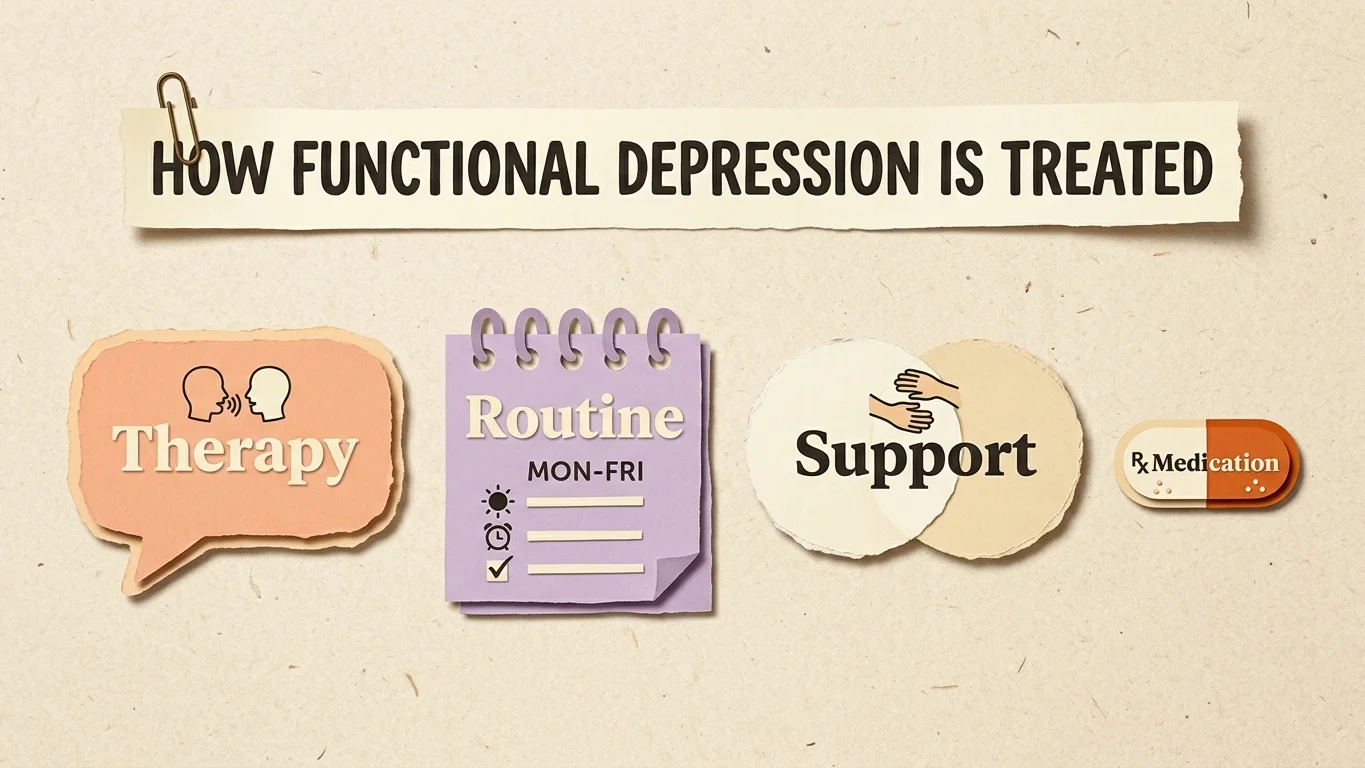
Treating Functional Depression: What Actually Helps
Functional depression is often treated with psychotherapy, healthy daily routines, social support, and, when appropriate, medication. Therapy approaches such as cognitive behavioral therapy (CBT) and behavioral activation can help identify unhelpful thought patterns, reduce avoidance, and rebuild routines that support mood and motivation.
Treatment should be based on the person's symptoms, how long they have lasted, and how much they affect daily life. Improving sleep, staying active, reducing alcohol or substance use, and maintaining supportive relationships can also help, but persistent or worsening symptoms should be discussed with a qualified mental health professional.
Simple Ways to Manage Functional Depression Daily
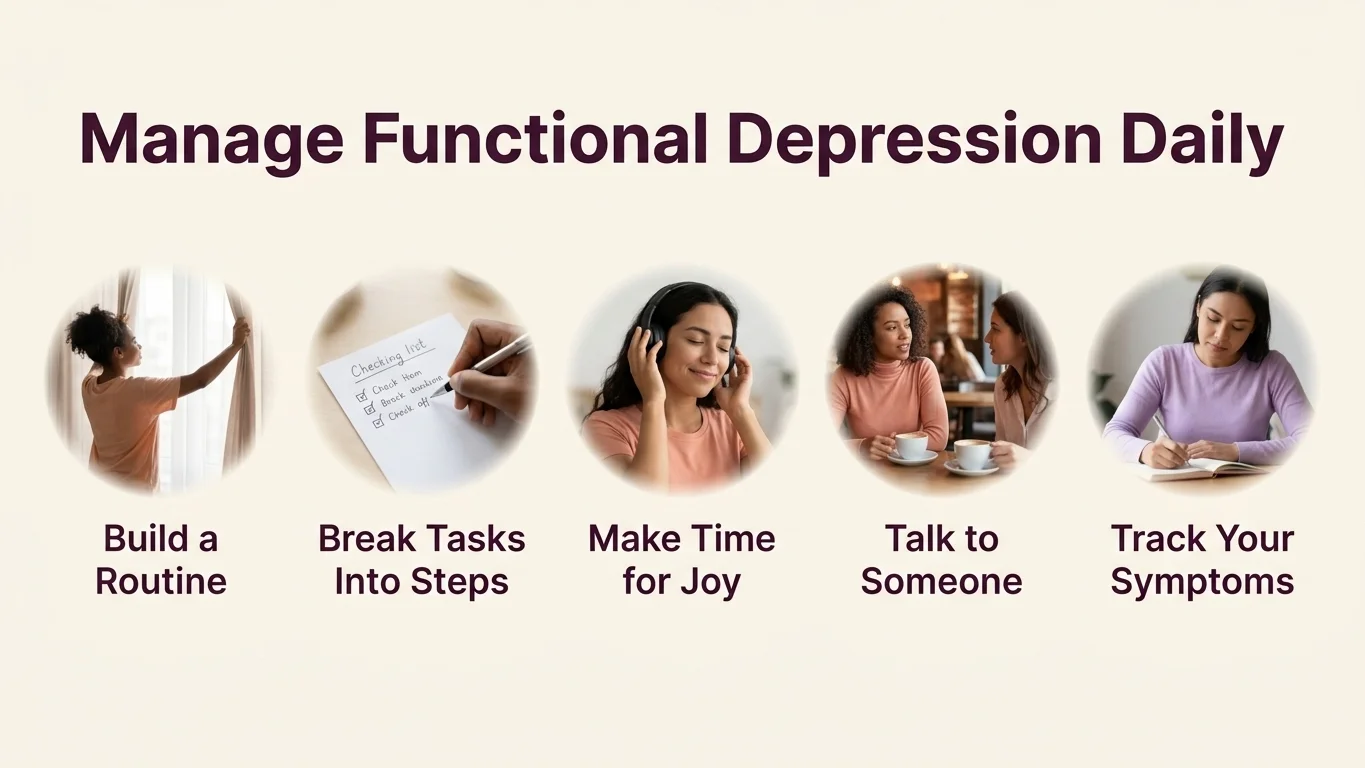
Learning how to deal with functional depression does not mean forcing yourself to be productive every day. Instead, focus on small actions that support your mental health while recognizing when you need additional help.
Create a Realistic Routine
A basic daily structure can make life feel more manageable when energy or motivation is low. Try creating consistent anchors for waking, eating, working, resting, and sleeping without expecting yourself to follow a perfect schedule.
Break Larger Tasks Into Smaller Steps
Depression can make ordinary responsibilities feel overwhelming. Instead of focusing on everything that must be completed, identify the smallest useful next step. Completing manageable actions can reduce pressure and make larger tasks easier to approach.
Make Time for Meaningful Activities
Do not always wait until you feel motivated before doing something enjoyable or meaningful. Depression can reduce motivation first. Sometimes participation comes before enjoyment begins to return. Start small with activities such as listening to music, spending time outdoors, cooking, reading, seeing a friend, or returning to a hobby.
Talk to Someone You Trust
You do not need to explain everything at once. Letting one trusted person know that you have been struggling can reduce isolation and create another source of support.
Track Changes in Your Symptoms
Pay attention to changes in:
Mood
Sleep
Energy
Motivation
Concentration
Appetite
Social activity
Enjoyment
Irritability
Tracking patterns over time can help you recognize whether symptoms are improving, remaining the same, or becoming more difficult to manage.
When to Seek Professional Help
Professional help may be appropriate when symptoms of functional depression continue for several weeks, become more intense, or start affecting your work, relationships, sleep, motivation, concentration, or ability to enjoy daily life.
You should also consider speaking with a mental health professional if you feel emotionally exhausted from constantly trying to appear fine, if you are withdrawing from others, or if healthy routines and self-help strategies are no longer helping.
Seeking support early can make it easier to understand what is contributing to your symptoms and determine whether therapy, lifestyle changes, medication, or a combination of treatments may be appropriate. If you experience thoughts of self-harm, suicide, or severe hopelessness, seek immediate professional or emergency support.
How to Support Someone With Functional Depression
Supporting someone with functional depression starts with taking their feelings seriously, even if they appear productive, social, or successful on the outside. Listen without judging, avoid comments such as “you seem fine,” and give them space to talk about what they are experiencing. Simple reassurance, regular check-ins, and showing that you are willing to listen can help reduce the isolation that often comes with hidden depression.
You can also gently encourage them to speak with a therapist or another qualified mental health professional if their symptoms continue or worsen. Offer practical support, such as helping them find a provider, accompanying them to an appointment, or taking pressure off everyday responsibilities when possible. Try to be patient and consistent, since recovery can take time and support is often most helpful when it feels steady rather than forced.
Professional Therapy for Depression in Grand Terrace, CA
If you continue handling your responsibilities but privately feel exhausted, disconnected, unmotivated, or persistently low, you do not have to wait until things become unbearable before reaching out. Radiant Path Therapy provides professional therapy for individuals experiencing depression and related emotional concerns in Grand Terrace, CA.
Therapy can help you explore what may be contributing to your symptoms, identify unhealthy patterns, develop practical coping skills, and determine what changes could support your emotional well-being. If you are ready to stop simply pushing through your symptoms, contact Radiant Path Therapy to schedule a confidential consultation and discuss your next steps.
Conclusion
Functional depression can be difficult to recognize because a person may continue working, maintaining relationships, and handling daily responsibilities while privately experiencing low mood, fatigue, emotional numbness, self-criticism, sleep problems, or loss of enjoyment.
Being able to function does not mean those symptoms should be ignored. For people searching for how to treat functional depression, support may include psychotherapy such as CBT or behavioral activation, healthy daily routines, stronger social connection, and medication when recommended by an appropriate healthcare professional.
Because functional depression is an informal term rather than a specific diagnosis, the right treatment depends on what is actually contributing to the symptoms. If you are wondering how to deal with functional depression, start by paying attention to persistent changes in your mood, sleep, energy, motivation, relationships, concentration, and ability to enjoy everyday life.
Frequently Asked Questions
What does it mean to be functionally depressed?
It means experiencing depressive symptoms while still managing work, relationships, or daily responsibilities. A person may look productive on the outside while privately dealing with low mood, fatigue, or emotional numbness.
Is high-functioning depression the same as persistent depressive disorder?
Not necessarily. High-functioning depression is an informal term, while persistent depressive disorder is a recognized diagnosis involving long-term depressive symptoms, usually lasting at least two years in adults.
Can you be successful and still have depression?
Yes. Someone can be successful, productive, and socially active while still experiencing depression. Outward achievements do not always reflect how a person feels emotionally.
How long does functional depression last?
There is no set timeline because functional depression is not a formal diagnosis. Symptoms may last for weeks, months, or longer depending on their severity, underlying causes, and whether treatment is received.
Can functional depression go away on its own?
Symptoms may improve for some people, but persistent depression should not be ignored. If symptoms continue, worsen, or affect daily life, speaking with a mental health professional can help.
What is the best treatment for functional depression?
Treatment may include psychotherapy, healthy lifestyle changes, social support, medication when appropriate, or a combination of approaches. The best option depends on the person’s symptoms, needs, and professional evaluation.
Do I need therapy if I can still work and function normally?
You can still benefit from therapy even if you are managing your daily responsibilities. Persistent sadness, fatigue, low motivation, or emotional numbness can affect your quality of life before your ability to function noticeably declines.
Can functional depression get worse over time?
Yes, depressive symptoms can become harder to manage over time for some people. Worsening sleep, increased withdrawal, hopelessness, or difficulty keeping up with responsibilities may be signs that professional support is needed.


