
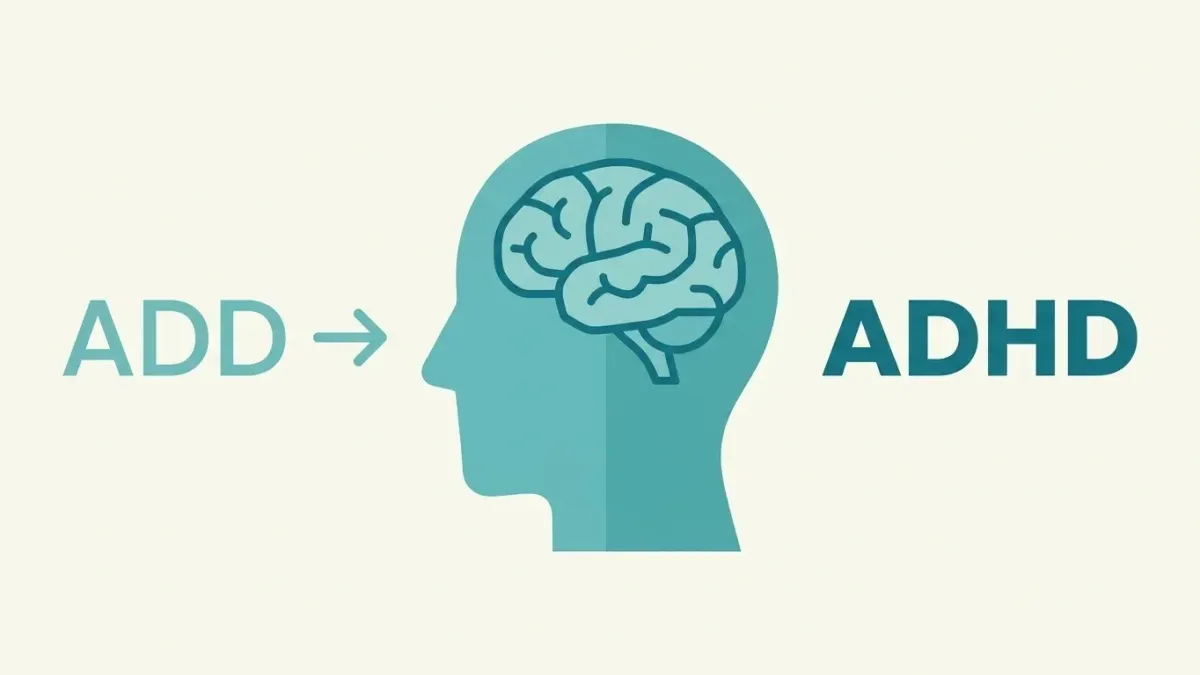
Is ADD the Same as ADHD? Key Differences
No, ADD and ADHD are the same condition. ADD (Attention Deficit Disorder) is the outdated name used before 1987; ADHD (Attention-Deficit/Hyperactivity Disorder) is the current, clinically recognized term that covers all three presentations, including the inattentive type once called ADD.
Some people also wonder if they or someone else might have ADD or ADHD, especially if they had these signs when they were younger but were never diagnosed. In the past, ADD was used for people who mainly had trouble paying attention, like forgetfulness, being disorganized but without being very hyperactive. If you are based in Grand Terrace CA and looking for professional support, our team offers ADHD support and management through telehealth services across the state.
What Is ADHD?
ADHD stands for Attention Deficit Hyperactivity Disorder. It is a neurodevelopmental condition, meaning it is rooted in how the brain develops and functions. People with ADHD experience persistent patterns of inattention or a combination of all three that interfere with daily life.
ADHD affects the brain's executive function system. This is the part of the brain responsible for planning, organizing, managing time, controlling impulses, and sustaining attention. Because these skills touch nearly every area of life, ADHD can show up in school performance and emotional regulation.
What Is ADD?
ADD stands for Attention Deficit Disorder. It was the official medical term used to describe attention-related difficulties before 1987. The American Psychiatric Association introduced this term in the third edition of the Diagnostic and Statistical Manual of Mental Disorders, known as the DSM-III, published in 1980.
In 1987, the DSM was updated and the term ADD was replaced entirely with ADHD. Researchers and clinicians had determined that inattention and hyperactivity were not two separate disorders but different presentations of the same underlying neurodevelopmental condition.
Is ADD the Same as ADHD?
ADD and ADHD refer to the same condition. The difference is purely one of terminology and time. ADD was the name used before 1987. ADHD is the name used today and is the only term recognized in current medical guidelines.
If someone is quiet and spacey rather than bouncy and impulsive, calling it ADD feels more accurate than calling it ADHD, which has the word hyperactivity right in the name. But that distinction is already built into the modern ADHD classification system. ADHD comes in different presentations, and one of them covers exactly the quiet, inattentive experience that most people associate with ADD.
Why Was ADD Replaced by ADHD?
The shift happened because research showed that inattention and hyperactivity were not two separate disorders but different expressions of the same condition. Treating them separately was causing inconsistency in diagnosis and treatment.
The updated framework also acknowledged that ADHD looks different from person to person. Not everyone with the condition is hyperactive, and not everyone is disorganized. Recognizing these differences through distinct presentations made diagnosis more accurate and treatment far more precise.
Types of ADHD
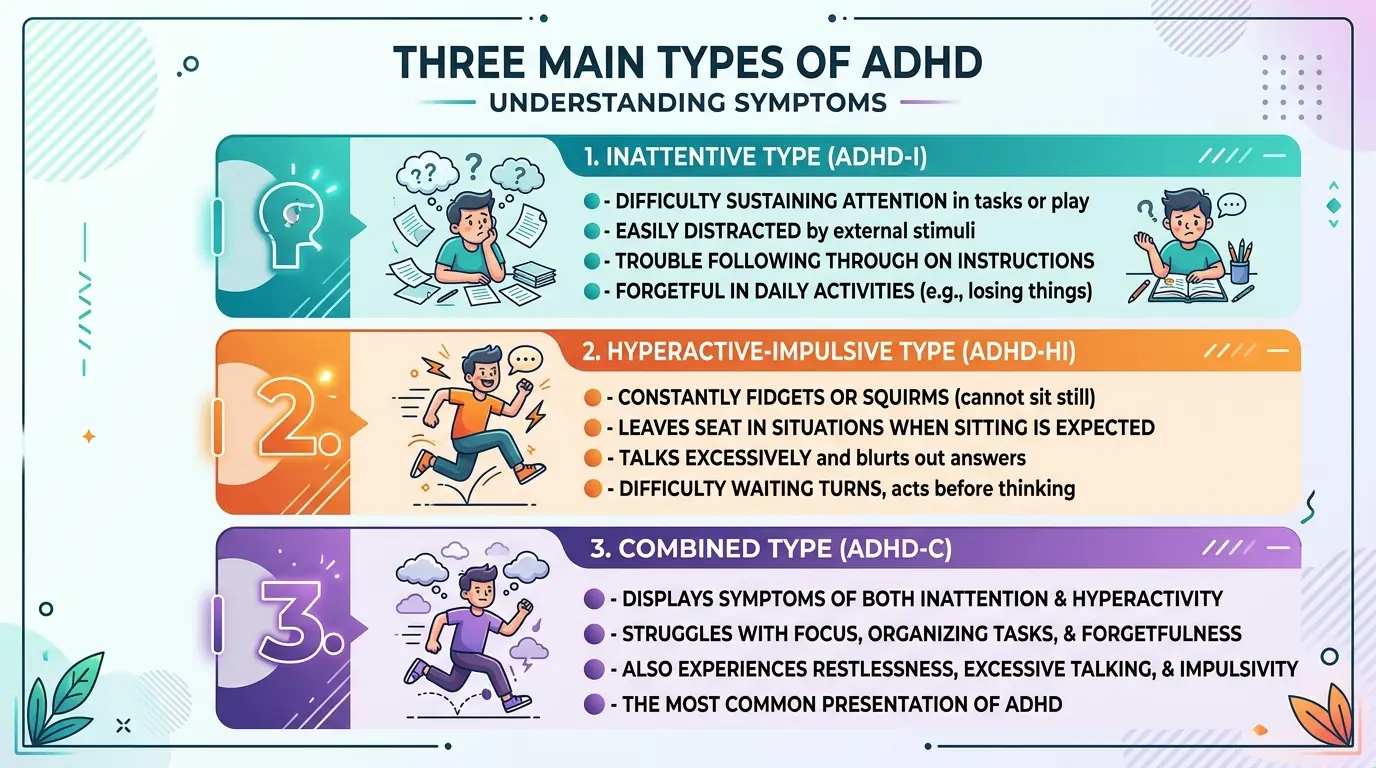
Under current DSM-5 guidelines, ADHD is categorized into three presentations based on which symptoms are most prominent.
Predominantly Inattentive Type (Formerly Called ADD)
This is the presentation most people are thinking of when they use the term ADD. People with inattentive ADHD have significant trouble staying focused, completing tasks, and staying organized. What makes this type easy to overlook is that it does not involve obvious behavioral disruption. A child with inattentive ADHD may sit quietly in class and look calm on the outside while struggling intensely on the inside.
Hyperactive-Impulsive Type
This presentation involves high levels of physical restlessness and difficulty controlling impulses. A person with hyperactive-impulsive ADHD may fidget constantly, leave their seat at inappropriate times, interrupt others, blurt out answers before questions are finished, and struggle to wait their turn.
Combined Type
This is the most commonly diagnosed presentation of ADHD. People with combined type ADHD struggle with staying focused and with controlling activity levels and impulses at the same time. Because both sets of symptoms are present, the impact on daily life tends to be broader and more complex.
Symptoms of ADD vs. ADHD
Since ADD and ADHD describe the same condition, the symptoms overlap completely. The difference lies in which symptoms are most prominent for a given individual.
Inattentive Symptoms
People with inattentive ADHD often struggle to stay focused on tasks, particularly ones that are repetitive or require sustained mental effort. They may start projects enthusiastically but fail to follow through to completion. Forgetfulness is a daily challenge, from missed appointments and deadlines to misplaced keys and important documents. Disorganization shows up in their physical space, their schedule, and their thought process.
Hyperactive and Impulsive Symptoms
Hyperactivity looks different depending on age. In younger children, it often means constant movement, running, and an inability to play quietly. In older children and adults, it may show up as inner restlessness, difficulty sitting still for long periods, and a persistent feeling of being driven by a motor. Impulsivity means acting before thinking.
How ADHD Is Diagnosed

ADHD is diagnosed through a careful evaluation of a person’s behavior, symptoms, and history, usually by a qualified healthcare professional.
Diagnostic Criteria
There is no blood test or brain scan that diagnoses ADHD. The diagnosis is clinical and based on a thorough evaluation of symptoms, their severity, and how they affect daily functioning across multiple settings. Under DSM-5 guidelines, a person must show a specific number of inattentive or hyperactive-impulsive symptoms that have been present for at least six months.
Professional Evaluation
A proper ADHD evaluation involves detailed interviews with the patient and, in the case of children, with parents and teachers as well. Standardized rating scales are used to measure the frequency and severity of symptoms. The clinician also checks whether symptoms were present before age 12, since ADHD is a developmental condition that begins in childhood even if it goes unrecognized until later.
Diagnosis in Children and Adults
ADHD can be diagnosed at any age. In children, the process typically involves input from parents, teachers, and the child's pediatrician or a mental health specialist. In adults, the evaluation focuses on current symptoms and their impact on work, relationships, and daily functioning, as well as any history of attention-related challenges going back to childhood.
Is Treatment Different for ADD and ADHD?
Because ADD and ADHD are the same condition, the treatment approach is also the same. What varies is how treatment is tailored based on which symptoms are most prominent.
Medication Options
Stimulant medications are the most commonly prescribed treatment for ADHD and are effective for the majority of people across all presentations. They work by increasing the availability of dopamine and norepinephrine in the brain, which improves focus and executive function. Non-stimulant medications are also available for those who do not respond well to stimulants or who have other health conditions that make stimulant use difficult.
Behavioral Therapy
Cognitive behavioral therapy, commonly called CBT, is particularly effective for ADHD across all presentations. It helps people identify unhelpful thought patterns, build practical organizational systems, and develop strategies for managing symptoms in real life. For children, parent training and classroom-based behavioral interventions are also important components of treatment.
Lifestyle and Support Strategies
Sleep, diet, exercise, and routine all have a meaningful impact on ADHD symptoms regardless of presentation. Regular physical activity has been shown to improve focus and reduce impulsivity. Consistent sleep schedules support the brain's executive function systems. External structure and reminders, helps compensate for the internal structure that the ADHD brain struggles to generate on its own.
ADHD in Children vs. Adults
ADHD can look different in children and adults, but it affects both attention, behavior, and daily life in similar ways.
Common Signs in Children
In school-age children, ADHD often shows up as difficulty staying seated, trouble following multi-step instructions, frequent careless mistakes, losing things constantly, and difficulty waiting for a turn. Children with inattentive ADHD may appear calm and cooperative but consistently underperform academically relative to their intelligence and effort.
Common Signs in Adults
In adults, ADHD frequently presents as chronic disorganization, trouble following through on commitments, and a pattern of underperforming despite clear capability. Adults with ADHD often describe a constant internal restlessness, a feeling that their mind is always moving even when the rest of them is still. Impulsive decision-making, difficulty maintaining relationships, and emotional dysregulation are also common.
Why Some Adults Receive a Late Diagnosis
Many adults are diagnosed with ADHD for the first time in their thirties or forties. This often happens after a child in the family receives a diagnosis and the parent recognizes the same patterns in themselves.Women are often diagnosed later because their symptoms are less obvious and can be hidden by coping strategies until adulthood.
Common Myths About ADD and ADHD
Many myths about ADD and ADHD are not true, and understanding the facts helps clear up confusion about the condition.

Myth: ADD and ADHD Are Different Disorders
This is the most common misconception. ADD and ADHD are not two separate conditions. ADD is simply an outdated name for the same condition that is now called ADHD. The condition itself has not changed. Only the terminology has.
Myth: Only Children Have ADHD
ADHD is a lifelong neurodevelopmental condition. While it is often identified in childhood, it does not go away when a person grows up. Many adults live with undiagnosed ADHD for years, often attributing their struggles to personal failings rather than a diagnosable condition. Research consistently shows that the majority of children diagnosed with ADHD continue to experience symptoms into adulthood.
Myth: ADHD Always Includes Hyperactivity
This is one of the most damaging myths because it causes the inattentive presentation to be chronically underdiagnosed. A person can have ADHD without any visible hyperactivity at all. The predominantly inattentive type, which was formerly called ADD, involves significant attention difficulties without the restlessness and impulsivity that most people associate with the condition.
When to Seek Professional Help
If you notice ongoing patterns of inattention, disorganization, impulsivity, or restlessness that are affecting school, work, or daily relationships, it is worth speaking with a doctor or mental health professional. These patterns need to be consistent, present in more than one setting, and cause real impairment in daily functioning before a diagnosis is made. If you are unsure whether what you are seeing is ADHD or something else, a proper clinical evaluation will give you clarity. Do not wait and hope the symptoms resolve on their own.
Get ADHD Support from Radiant Path Therapy
Understanding whether you or your child has ADHD is the first step toward getting the right support. At Radiant Path Therapy, our team provides ADHD support and management through secure telehealth sessions, so you can get professional care from the comfort of your own home.
We serve clients across Grand Terrace CA and multiple states, with same-day appointments available and sliding scale payment options to make care more accessible. Book your appointment today and take the first step toward a better daily life. Whether you are seeing signs of inattentive ADHD, hyperactive-impulsive ADHD, or are simply unsure where to start, our team will take the time to understand your situation and guide you toward the right next step.
Conclusion
ADD and ADHD are the same condition. ADD is an old name that doctors stopped using in 1987. ADHD is the current, clinically recognized diagnosis that covers all presentations of the condition, whether a person is inattentive, hyperactive, impulsive, or some combination of the three.
If you recognize these patterns in yourself or someone you care about, the most important step is to speak with a qualified medical or mental health professional. A correct diagnosis opens the door to the right treatment and support. ADHD is not a character flaw or a lack of effort. It is a real, treatable condition, and getting the right help starts with understanding exactly what you are dealing with.
Frequently Asked Questions
Is ADD an official diagnosis?
ADD has not been an official medical diagnosis since 1987. The current official diagnosis is ADHD, which covers all presentations of the condition including the inattentive type that was formerly called ADD.
Why do people still use the term ADD?
People still use ADD out of habit, cultural familiarity, and a desire to distinguish inattentive symptoms from hyperactive ones. Many parents, educators, and media outlets continue using the term even though it has been retired from clinical use. In any medical or professional context, the correct term is ADHD.
Can adults have ADHD?
ADHD is a lifelong condition. Many adults have had it since childhood but were never diagnosed. Adult ADHD often looks different from childhood ADHD, with less visible hyperactivity and more prominent difficulties with time management, organization, and emotional regulation.
What type of ADHD was once called ADD?
The predominantly inattentive presentation of ADHD is the type that was formerly called ADD. It involves significant difficulty with focus, attention, and organization but does not typically include prominent hyperactivity or impulsivity.
Are treatments the same for ADD and ADHD?
Since ADD and ADHD are the same condition, the treatment options are the same. What varies is how treatment is personalized based on which symptoms are most prominent for a given individual. This may include medication, behavioral therapy, lifestyle strategies, or a combination of all three.
Is ADD a mental illness?
No. ADD (now called ADHD) is a neurodevelopmental disorder, not a mental illness. It affects attention and impulse control due to differences in brain development, not mood or thought patterns.
What are the nine symptoms of ADD?
The nine DSM-5 inattentive symptoms are careless mistakes, trouble sustaining attention, not seeming to listen, failing to follow through on tasks, difficulty organizing, avoiding tasks that require sustained focus, losing needed items, being easily distracted, and forgetfulness. A diagnosis typically requires 6 of these 9 symptoms (5 for adults) for at least 6 months.
Medically reviewed by Tiffany, LMFT, Clinical Director at Radiant Path Therapy.


