
Is Depression a Disability? Under The ADA and SSDI Rules
Yes, depression can be considered a disability in the United States when it substantially limits major life activities such as working, concentrating, sleeping, learning, communicating, or caring for yourself. Major depressive disorder, severe depression, and chronic forms of depression can qualify as mental disabilities depending on how seriously symptoms affect daily functioning. However, having a depression diagnosis does not automatically mean someone qualifies for disability benefits.
The rules depend on the type of protection you are seeking. Under the Americans with Disabilities Act (ADA), depression may qualify as a disability when it substantially limits one or more major life activities. Social Security uses a different standard for SSDI and SSI and considers whether a medically documented condition prevents substantial gainful work and has lasted, or is expected to last, at least 12 months. If you are asking, “is depression a disability?” Because symptoms are affecting your work or daily life, Radiant Path Therapy in Grand Terrace, CA can help you understand what you are experiencing and explore appropriate treatment options.
This guide explains when depression may be considered a disability, how ADA protections differ from Social Security disability benefits, whether major depressive disorder can qualify, what evidence the SSA considers, and what workplace accommodations or other support may still be available if you do not qualify for SSDI or SSI.
What Is Depression?
Depression is not just feeling sad. It is a serious medical condition that affects how you think, feel, and function every day. Common symptoms include persistent low mood, extreme fatigue, difficulty concentrating, sleep problems, and feelings of worthlessness.
For many people these symptoms are severe enough to significantly limit their ability to work and take care of themselves. The World Health Organization estimates that around 5 percent of adults worldwide live with depression making it one of the leading causes of disability in the world.
How Is Disability Defined?
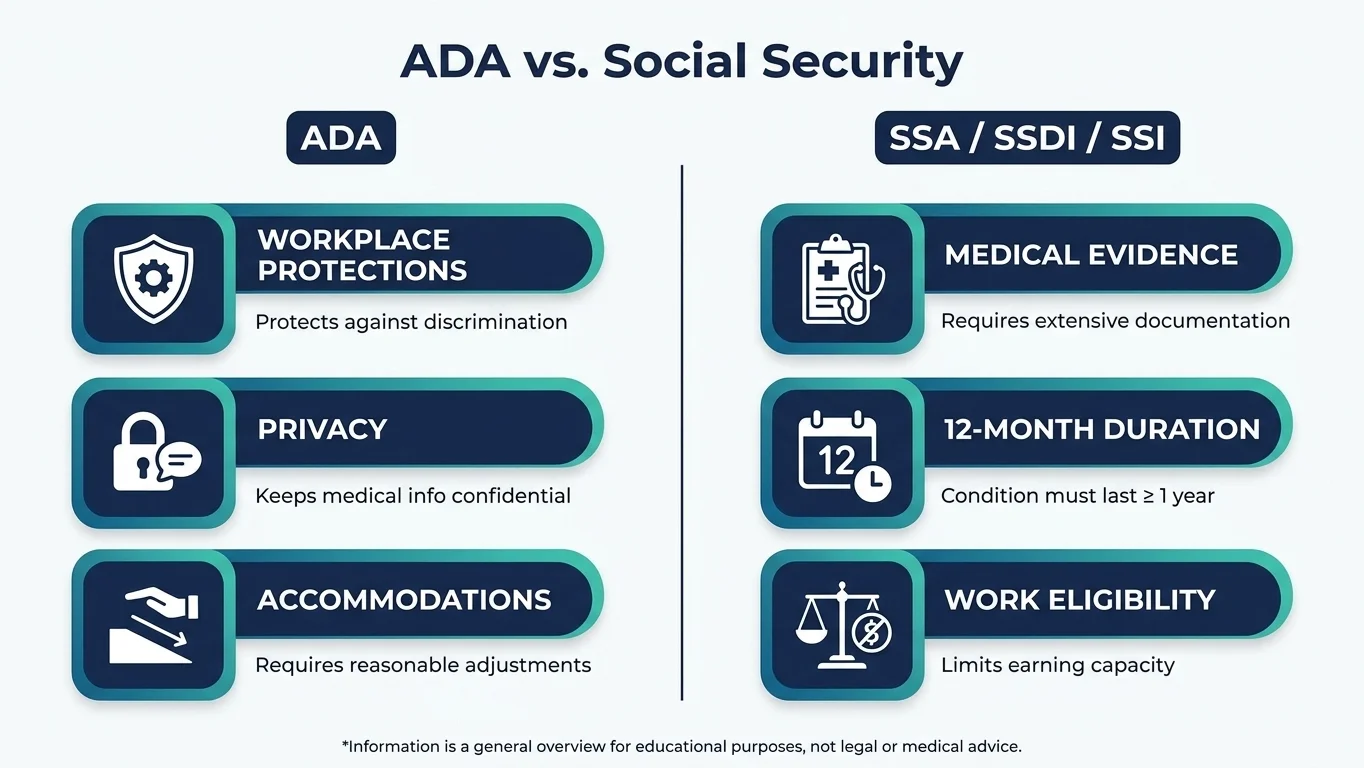
Whether depression is considered a disability depends partly on which law or benefit program applies. The Americans with Disabilities Act (ADA) and Social Security Administration (SSA) use different standards.
Is Depression a Disability Under the ADA?
Yes. Depression can qualify as a disability under the ADA when it substantially limits one or more major life activities, such as concentrating, thinking, sleeping, communicating, or working. Major depressive disorder can qualify, but the determination depends on how the condition affects the individual rather than diagnosis alone.
ADA protection is different from Social Security disability benefits. You do not have to qualify for SSDI or SSI for depression to potentially be protected under the ADA. The ADA can also apply to episodic conditions when they would substantially limit a major life activity while active.
Functional Limitations Social Security Considers
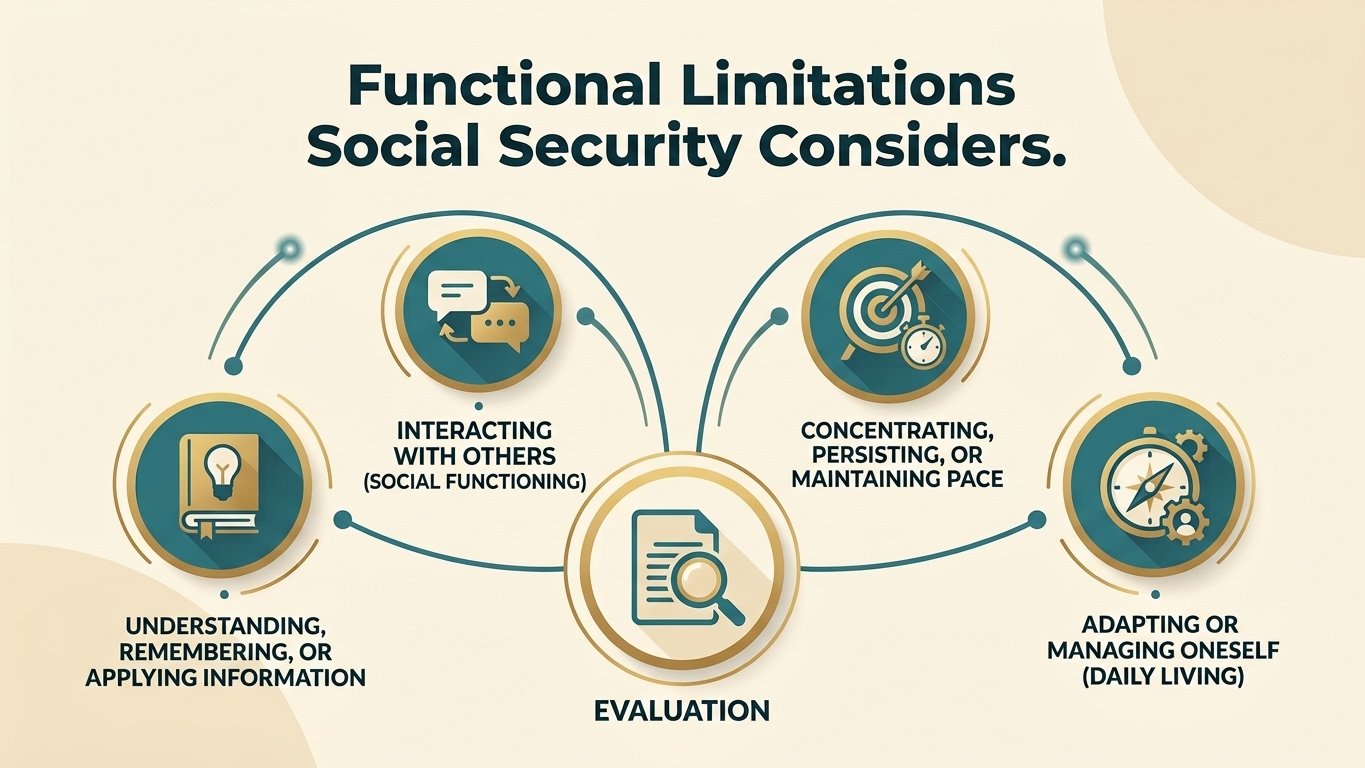
Social Security evaluates how depression affects four major areas of mental functioning:
Understanding, remembering, or applying information
Interacting appropriately with other people
Concentrating, persisting, or maintaining pace
Adapting to changes or managing yourself
What Are Your Rights Under the ADA?
If your depression qualifies as a disability under the ADA you have important legal rights that protect you in the workplace and in other areas of life.
Right to Reasonable Accommodations
A covered employer may be required to provide reasonable accommodations that help a qualified employee perform essential job functions, unless the accommodation would create an undue hardship.
Right to Privacy
You are not required to disclose your depression diagnosis to your employer. If you request accommodations you may need some medical documentation but you do not have to share your full diagnosis or treatment history.
Protection from Discrimination
Your employer cannot fire you, demote you, or treat you unfairly because of your depression. If you experience discrimination you have the right to file a complaint with the Equal Employment Opportunity Commission.
Is Depression a Disability Under the SSA?
Yes but the criteria are stricter than the ADA. The SSA looks specifically at whether depression prevents you from working.
To qualify you must have medical documentation of at least five depression symptoms and show that those symptoms cause marked or extreme limitations in your ability to concentrate, interact with others, understand information, or manage yourself.
To qualify for SSDI (Social Security Disability Insurance) or SSI (Supplemental Security Income) for depression:
Severity of Symptoms: You must have documented symptoms such as persistent sadness, fatigue, difficulty concentrating, social withdrawal, or sleep disturbances. These symptoms must substantially limit your ability to function at work.
Duration: The depression must have lasted, or be expected to last, at least 12 months. Short-term or situational depression usually does not qualify.
Medical Evidence: You need comprehensive medical records from a doctor, psychiatrist, or therapist showing diagnosis, treatment history, and how your symptoms limit daily functioning.
Functional Limitations: The SSA considers how depression affects your ability to understand and apply information, interact with others, maintain concentration and pace, and adapt or manage yourself.
History of Treatment: Evidence of ongoing treatment, including therapy or medication, can strengthen your claim. If symptoms persist despite treatment, it shows the condition is disabling.
Can I Qualify for Disability With Depression?
You may qualify for disability with depression if your condition is medically documented and severe enough to meet the requirements of the disability program you are applying for. A depression diagnosis alone does not guarantee eligibility.
For Social Security disability, the key question is how depression affects your ability to work on a sustained basis. Medical records, treatment history, symptoms, functional limitations, and your ability to perform past or other work can all become important during the evaluation.
For ADA protection, the question is different. Depression may qualify as a disability when it substantially limits one or more major life activities, such as concentrating, thinking, sleeping, communicating, or working. This means a person could qualify for ADA protection without qualifying for SSDI or SSI.
Does Major Depressive Disorder Qualify for Disability?
Major depressive disorder can qualify as a disability, depending on the law or program involved and the extent to which symptoms affect functioning. The ADA specifically recognizes major depressive disorder as a condition that can substantially limit brain function and other major life activities.
For Social Security benefits, having major depressive disorder is not enough by itself. The SSA evaluates medical evidence, symptom severity, functional limitations, duration, treatment history, and whether the condition prevents substantial gainful work.
Severe or chronic major depression may therefore qualify for disability benefits, but eligibility is determined individually rather than by diagnosis alone.
What Types of Disability Benefits Are Available?
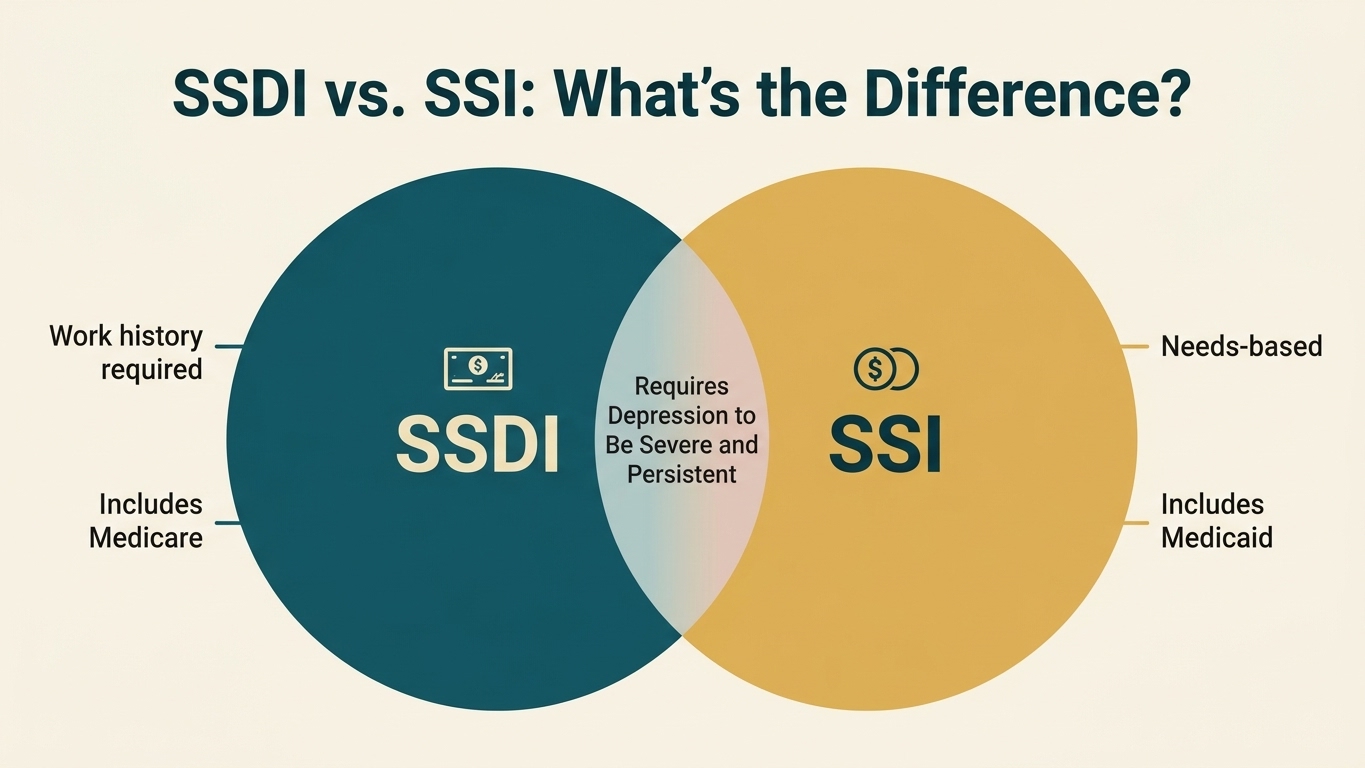
If your depression qualifies as a disability under the SSA there are two main types of financial benefits available.
Social Security Disability Insurance (SSDI)
SSDI provides monthly financial support to people who have worked and paid into Social Security but can no longer work due to a disability. The amount you receive depends on your earnings history. SSDI recipients also become eligible for Medicare after a waiting period.
Supplemental Security Income (SSI)
SSI provides financial support to people with low income and limited resources regardless of work history. It is designed for people who do not qualify for SSDI. SSI recipients are typically also eligible for Medicaid.
Both programs require depression to be severe and persistent. Short term or situational depression does not qualify unless it becomes chronic and severely impacts daily functioning.
Can Depression Qualify for California Disability Insurance?
California workers may also have access to State Disability Insurance (SDI), which is separate from federal SSDI and SSI. California Disability Insurance provides short-term wage replacement to eligible workers who cannot perform their regular work because of a qualifying physical or mental illness or injury.
Eligibility depends on factors such as lost wages, employment and SDI contributions, inability to perform regular work, and certification from an eligible healthcare professional. California Disability Insurance does not itself provide job protection, so employment protections may come from separate state or federal laws.
For people in Grand Terrace and other parts of California, understanding the difference between California SDI, Social Security disability benefits, and ADA workplace protections can make it easier to identify which type of support may apply.
When Might Depression Not Meet Disability Requirements?
Having depression does not automatically mean you meet every legal definition of disability. Eligibility depends on the severity of your symptoms, how they affect your functioning, and which disability law or benefit program applies.
For Social Security disability benefits, a short period of depression that does not prevent substantial gainful work for the required duration generally will not meet Social Security's definition of disability. A diagnosis by itself is also not enough. Social Security considers medical evidence and the effect symptoms have on your ability to function and work.
The ADA uses a different standard. Depression may be protected when it substantially limits a major life activity, and the determination is based on the individual's circumstances. This is why someone may receive ADA workplace protections even when they do not qualify for SSDI or SSI.
What If I Do Not Qualify for Disability Benefits?
Not qualifying does not mean you are without support. Your employer may still be required to provide reasonable accommodations under the ADA. Many health insurance plans also cover therapy and medication for depression under the Mental Health Parity Act. State programs, community mental health centers, and sliding scale therapy options are also available regardless of disability status.
You May Still Qualify for Workplace Accommodations
Even without disability benefits, your depression may still be protected under the ADA. Your employer may need to offer support like flexible hours, remote work, or lighter workloads.You Can Appeal the Decision
A denial is not final. Many claims are approved on appeal after adding more medical evidence.Treatment Can Strengthen Future Claims
Ongoing therapy, medication, and documentation can improve both your health and your chances if you reapply later.Other Support May Be Available
You may still qualify for state programs, short-term disability, or low-cost mental health services to help manage costs and care.
When to Seek Professional Help
If depression is significantly affecting your daily life, work, or relationships please do not wait to seek help. Depression is highly treatable and early support leads to better outcomes.
If you are experiencing thoughts of self-harm or suicide please reach out immediately by calling or texting 988. Help is available 24 hours a day seven days a week.
Your symptoms are getting worse or not improving
You are struggling to work or manage daily tasks
You feel constantly hopeless or exhausted
You have thoughts of self-harm or suicide
Seeking help is not a weakness. It is the first step toward feeling better and getting the support you deserve.
Get Support When Depression Is Affecting Daily Life
If you are wondering, “is depression a disability?” because symptoms are making work, relationships, concentration, or everyday responsibilities harder, you do not have to wait for them to become more severe before seeking support.
Radiant Path Therapy in Grand Terrace, CA provides personalized therapy to help you better understand your symptoms, develop healthier coping strategies, and explore treatment options that fit your needs. Contact Radiant Path Therapy to take the next step toward managing depression and improving your daily quality of life.
Conclusion
So, is depression a disability? It can be. Depression is a mental health condition that may qualify as a disability when its symptoms substantially interfere with important areas of daily life. Major depressive disorder, severe depression, persistent depressive disorder, and other chronic forms of depression may meet disability standards depending on their severity and functional impact.
Under the ADA, depression may qualify when it substantially limits major life activities such as concentrating, sleeping, communicating, caring for yourself, or working. Social Security disability benefits follow stricter rules. Severe or major depression may qualify for SSDI or SSI when medical evidence shows that the condition prevents substantial gainful work and has lasted, or is expected to last, at least 12 months. Meeting the specific requirements of SSA Listing 12.04 is one potential path, but Social Security may also evaluate your remaining ability to work when a condition does not meet the listing exactly.
Not qualifying for Social Security disability does not necessarily mean depression is not disabling or that no support is available. You may still qualify for reasonable workplace accommodations under the ADA, and treatment can help address symptoms that interfere with everyday functioning.
Frequently Asked Questions
Is depression considered a disability under the ADA?
Yes. Depression can qualify as a disability under the ADA when it substantially limits one or more major life activities. Major depressive disorder is specifically recognized in ADA guidance, although disability determinations depend on the circumstances of the individual.
Is depression a mental disability?
Depression is a mental health condition that can be considered a mental disability when it substantially limits important areas of daily functioning. A diagnosis alone does not automatically mean someone qualifies for every form of disability protection or financial benefit.
Can I qualify for disability with depression?
Yes, severe depression can qualify for disability benefits when the applicable requirements are met. Social Security considers medical evidence, functional limitations, duration, and whether the condition prevents you from performing substantial gainful work.
Is major depressive disorder a disability?
Major depressive disorder can be a disability when it significantly affects major life activities or the ability to work. The ADA recognizes major depressive disorder, while Social Security separately evaluates whether the condition meets its disability requirements.
Is severe or chronic depression a disability?
Severe or chronic depression may qualify as a disability when symptoms create substantial functional limitations. For Social Security benefits, duration and the effect of those symptoms on the ability to work are especially important.
What is the difference between SSDI and SSI for depression?
SSDI generally requires sufficient Social Security work credits in addition to meeting the federal disability definition. SSI also uses the federal disability standard but is a needs-based program for people who meet its income and resource requirements.
Do I need to register for ADA protection because of depression?
No. The ADA is a civil rights law, not a disability benefit program that you register for. Whether its protections apply depends on whether you meet the law's definition of disability and the particular situation involved.
Can I request workplace accommodations for depression?
Potentially, yes. If depression qualifies as a disability and an accommodation is needed because of it, reasonable adjustments might include scheduling changes, modified work arrangements, or other changes that help you perform your job, depending on the circumstances.


