
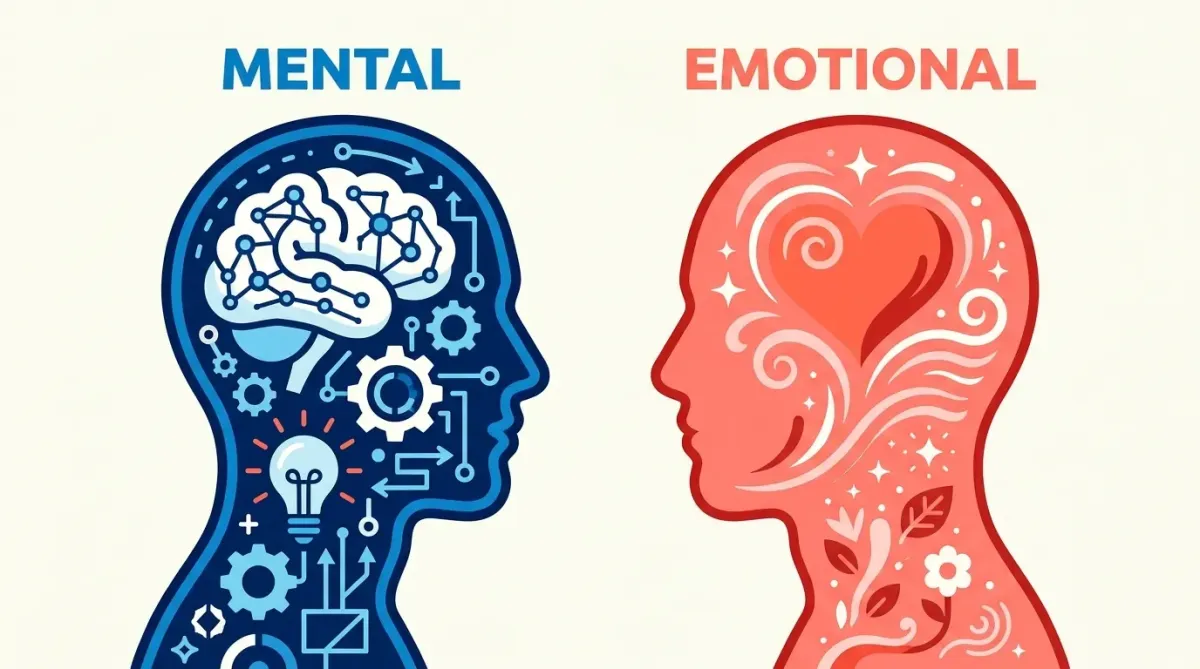
Mental Health vs. Emotional Health: The Difference (and Why It Matters)
Mental and emotional health are connected, but they are not the same. Mental health is about how you think, learn, and handle daily life. Emotional health is about how you understand, control, and share your feelings with others. Both are important for your overall well-being because they work together. Because they work together, both mental and emotional health play an important role in overall well-being.
What Is Mental Health?
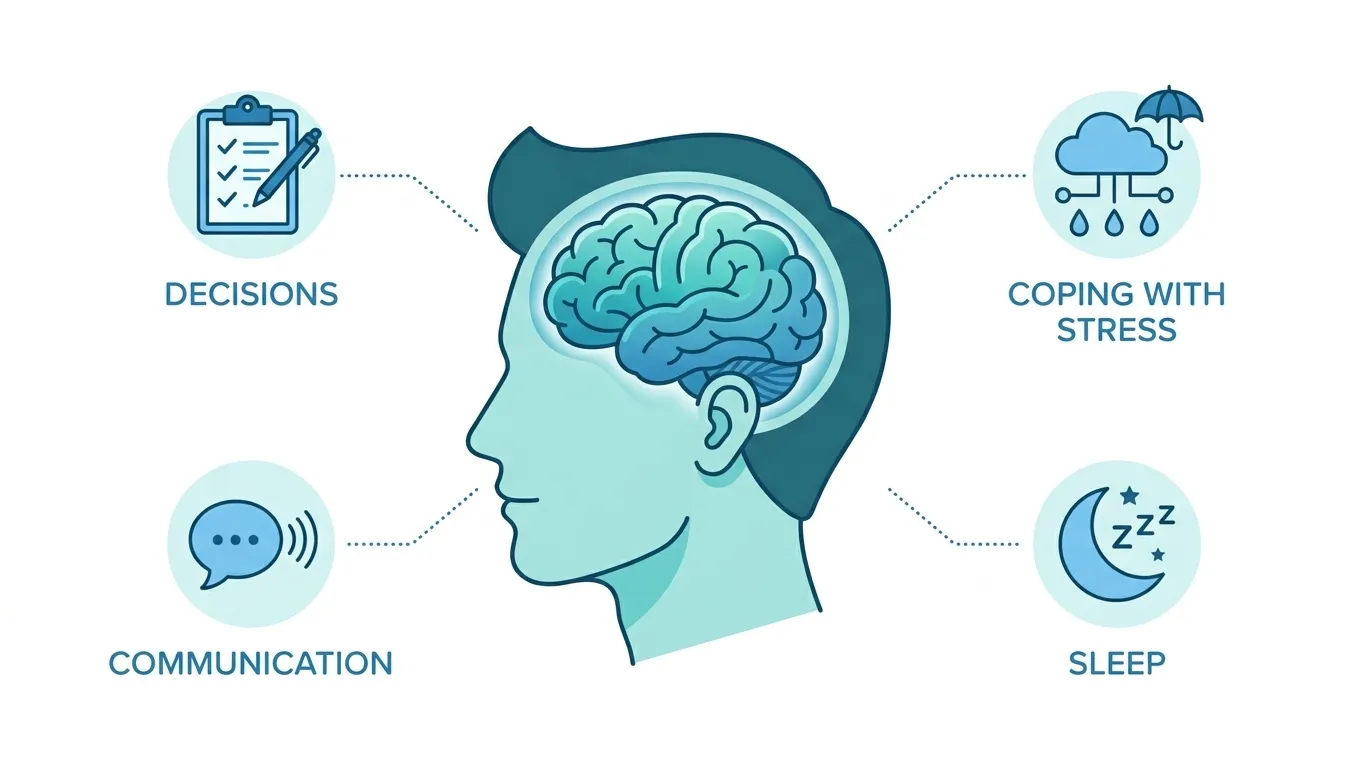
Mental health refers to your overall psychological well-being. It covers how you think, how you process information, how you make decisions, and how you cope with the everyday demands of life. Mental health is not just the absence of a mental illness. It is an active, ongoing state that affects everything from how well you sleep to how you interact with the people around you. According to the National Institute of Mental Health, nearly 1 in 5 U.S. adults experience a mental illness each year.
Mental Health Goes Beyond Thinking
Mental health shapes how you communicate under pressure, how you see yourself, and how you maintain the relationships that matter. The World Health Organization describes it as a state of well-being where a person can cope with stress, work productively, and contribute to their community.
Common Mental Health Conditions
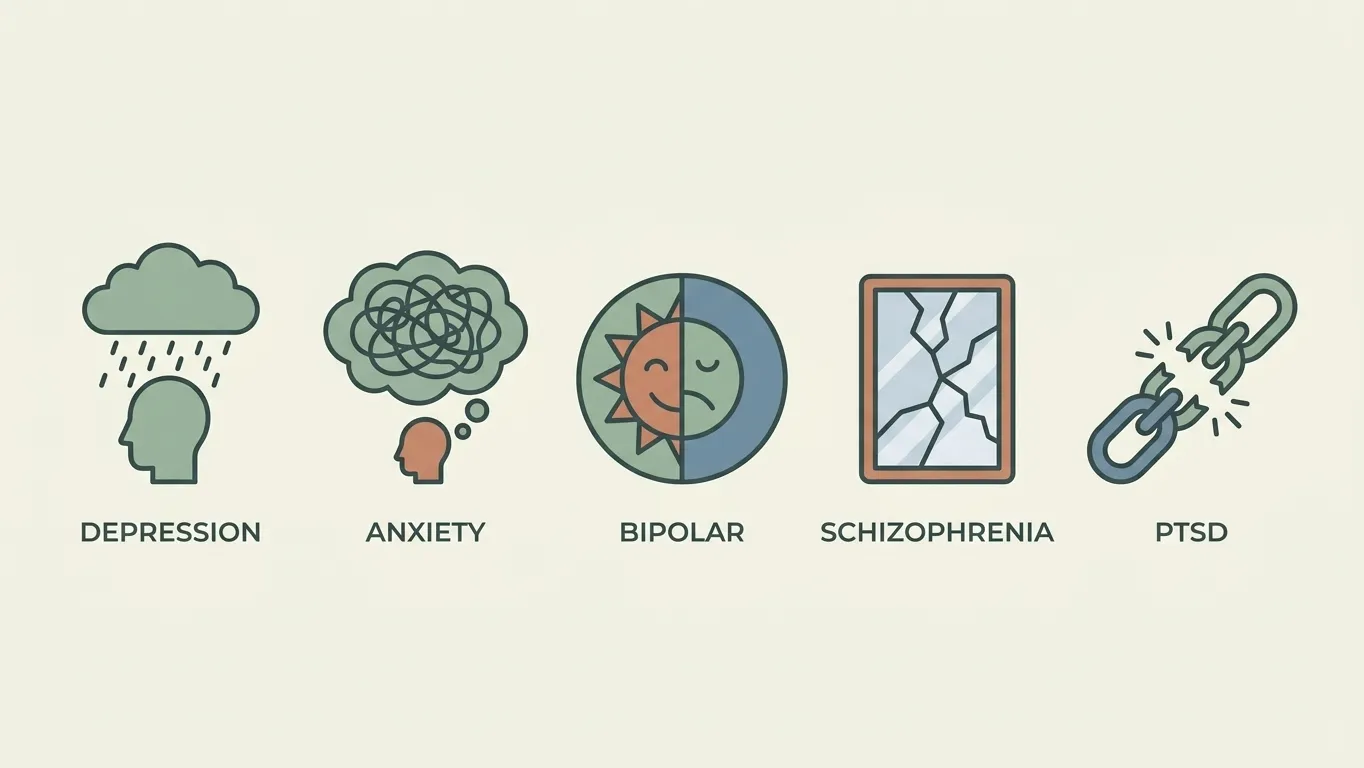
Mental health conditions are diagnosable disorders that go beyond everyday stress or a rough week. The most common include:
Depression: Persistent sadness and loss of motivation lasting weeks or longer
Anxiety disorders: Excessive worry or panic that makes routine situations feel unmanageable
Bipolar disorder: Extreme mood swings between emotional highs and deep lows
Schizophrenia: Affects how a person perceives reality and organizes thoughts
PTSD: Develops after trauma, causing flashbacks, avoidance, and heightened stress
What Good Mental Health Looks Like
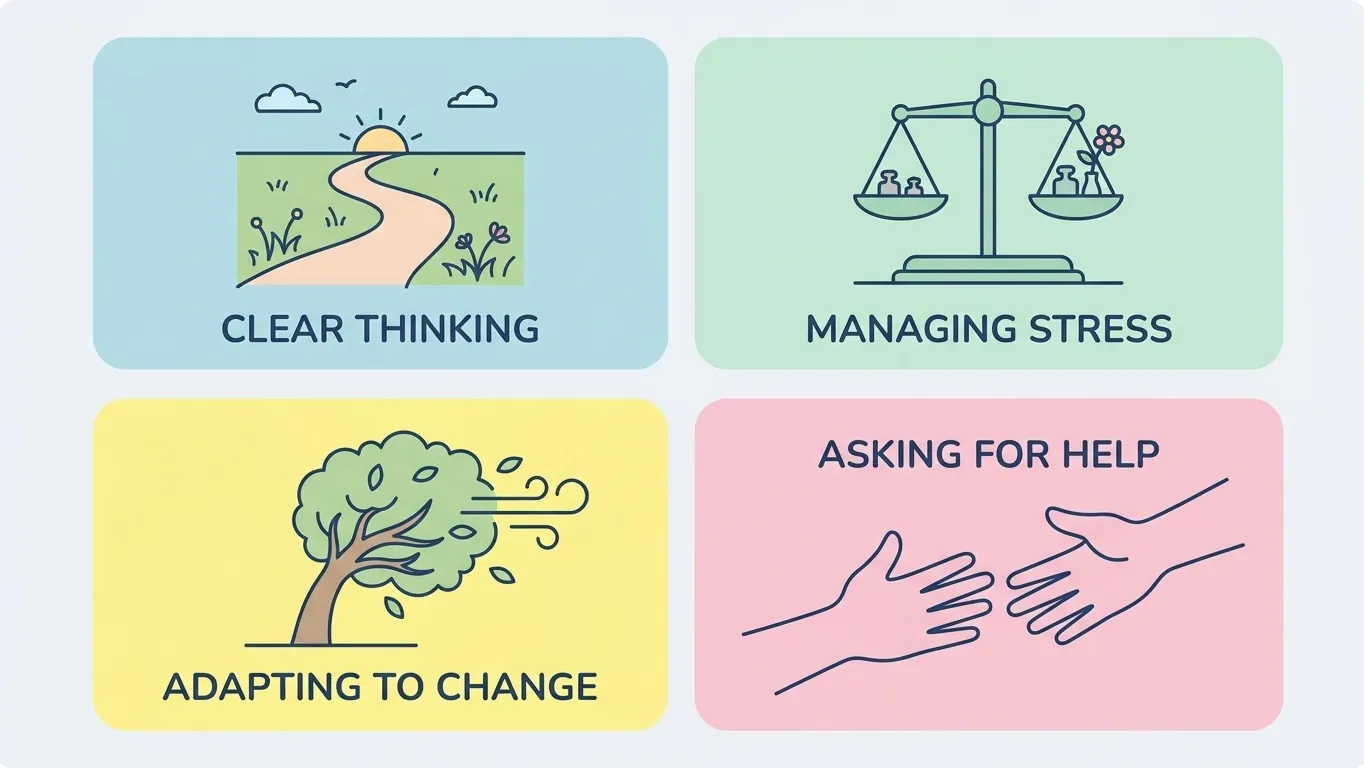
Good mental health is not about feeling happy all the time. It is about having enough of a foundation to cope when things get hard. Someone with strong mental health can:
Think clearly without constant second-guessing
Manage stress without it taking over
Adapt to change without falling apart
Ask for help without shame
What Is Emotional Health?
Emotional health refers to your ability to recognize, understand, and manage your emotions in a balanced and constructive way. It is not about avoiding negative feelings but about having the awareness and resilience to navigate them without losing your footing. Someone who is emotionally healthy can feel anger, grief, or fear without being overwhelmed or acting out in harmful ways.
Emotionally healthy people tend to communicate their needs clearly, set boundaries without guilt, and maintain relationships built on honesty and mutual respect. It is a skill set as much as a state of being one that can be developed over time through self-reflection, healthy habits, and a willingness to sit with discomfort rather than avoid it.
Key Differences Between Mental Health and Emotional Health
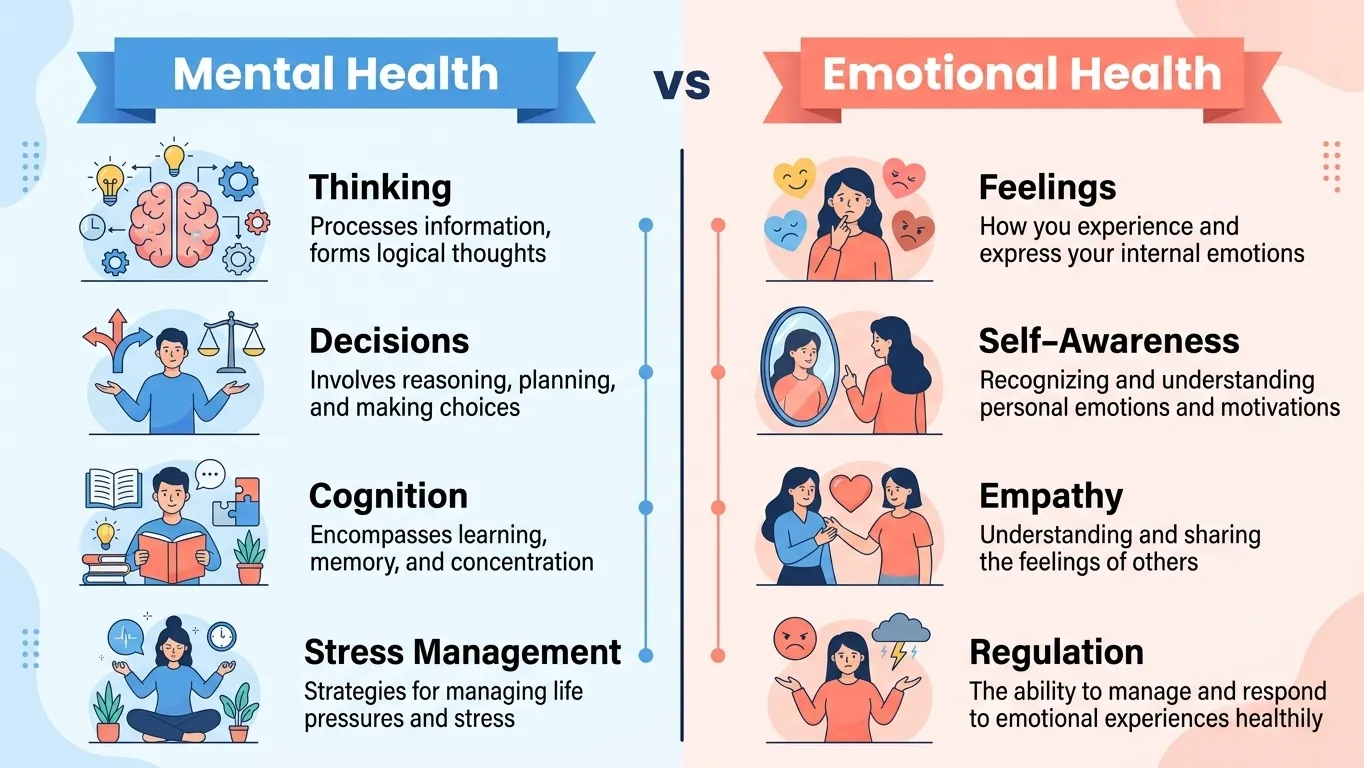
These two terms are often used interchangeably, but they refer to different though deeply connected aspects of your inner life.
Mental health is the broader umbrella. It covers how your mind functions across cognitive, emotional, and behavioral dimensions. It includes your ability to think clearly, make decisions, process information, manage stress, and function in daily life. Mental health exists on a spectrum, and conditions like depression, anxiety disorders, ADHD, or schizophrenia fall under its clinical scope.
Emotional health is more specifically about your relationship with your feelings and how well you recognize, understand, express, and regulate emotions. A person with strong emotional health can sit with difficult feelings without being overwhelmed, bounce back from setbacks, and communicate their inner experience to others. It's less about diagnosis and more about day-to-day emotional fluency.
How Mental Health and Emotional Health Affect Each Other
Mental health and emotional health are deeply interconnected when one suffers, the other usually follows. A mental health condition like anxiety or depression can dull your ability to process and express emotions clearly, leaving you feeling numb, reactive, or overwhelmed. Your mind's overall stability directly shapes how you experience and respond to feelings day to day.
The reverse is equally true. Consistently suppressing emotions, avoiding difficult feelings, or lacking emotional self-awareness puts real strain on your mental health over time. Poor emotional habits can worsen symptoms of existing mental health conditions or make you more vulnerable to developing them.
Warning Signs to Watch For
Knowing the warning signs of poor mental and emotional health can help you catch things early, before they become harder to manage.
Persistent sadness or low mood that does not lift after a few days
Changes in sleep or appetite that have lasted for weeks
Withdrawing from activities or people you used to enjoy
Feeling hopeless or having thoughts of self-harm
Frequent emotional outbursts or irritability over small things
Feeling unable to cope with normal stress or change
Difficulty expressing your feelings in words
If you or someone you know is having thoughts of self-harm, call or text 988 (Suicide & Crisis Lifeline) for immediate support.
What Affects Mental and Emotional Health?
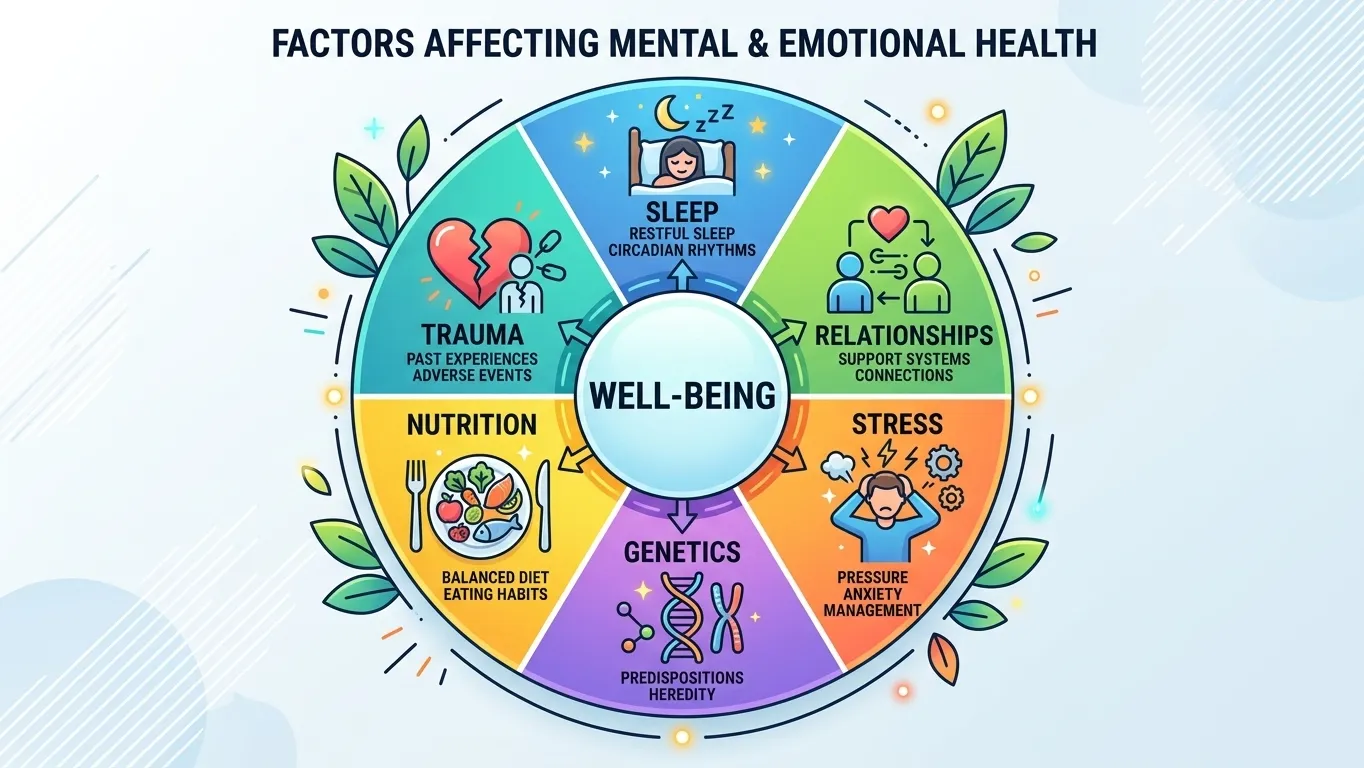
Mental and emotional health are shaped by a mix of biological, environmental, and social factors. Genetics, brain chemistry, and physical health lay the foundation, while childhood experiences, trauma, and chronic stress can leave lasting marks on both. Your relationships, daily habits, sleep, nutrition, and even how much social support you have all played a role. No single factor works in isolation; it is usually a combination of these influences that determines how resilient or vulnerable your mental and emotional wellbeing becomes over time.
How to Improve Your Mental Health
Therapy and counseling: Evidence-based approaches like Cognitive Behavioral Therapy (CBT) and Dialectical Behavior Therapy (DBT) help you identify and shift unhelpful thought patterns. Mindfulness and meditation: Regular mindfulness practice reduces stress and helps you stay grounded when things feel overwhelming.
Healthy routines: Prioritizing sleep, physical activity, and balanced nutrition creates a foundation for stable mental functioning. Social connection: Relationships are not just nice to have, they are genuinely protective when it comes to mental health. Limiting harmful substances: Alcohol and drugs might feel like relief in the short term, but they tend to worsen mental health over time. For trauma-related mental health challenges, approaches like EMDR (Eye Movement Desensitization and Reprocessing) can help process difficult experiences safely.
How to Improve Your Emotional Health
Improving emotional health starts with building self-awareness, learning to notice and name what you feel rather than pushing it aside. Regular habits like journaling, mindfulness, and honest conversations with people you trust help you process emotions in a healthy way instead of letting them build up. Setting boundaries, practicing self-compassion, and limiting exposure to chronic stressors also make a real difference. Small, consistent actions matter more than dramatic changes. The goal is to gradually build a better relationship with your own inner life.
Is Psychological Health the Same as Mental Health?
Psychological health is closely related to mental health but often refers more specifically to how you process thoughts and perceive the world, while mental health is the broader term covering psychological, emotional, and social well-being together.
Is Mental Health the Same as Mental Illness?
No. Mental health is an ongoing state of well-being that everyone has, whether it's strong or struggling. Mental illness refers to specific, diagnosable conditions like depression or anxiety disorders. You can have good mental health while managing a mental illness, and you can have poor mental health without meeting the criteria for any diagnosis. The two are related but not interchangeable.
How Is Mental and Emotional Health Evaluated?
Mental health is typically assessed by a licensed professional through clinical interviews, standardized screening tools like the PHQ-9 (for depression) or GAD-7 (for anxiety), and a review of symptoms, history, and daily functioning. Emotional health does not have a formal diagnostic process in the same way, it is assessed more through self-awareness, patterns in relationships, and how consistently someone can manage difficult feelings. At Radiant Path Therapy, this evaluation is part of the first step in building a personalized treatment plan.
Mental and Emotional Health in the Workplace
Both areas directly affect how you perform, communicate, and handle pressure at work.
Poor mental health shows up as difficulty concentrating, missing deadlines, or making unusual errors. Poor emotional health looks like frequent conflict with colleagues, trouble giving or receiving feedback, or withdrawing from the team.
Employers who invest in well-being programs, flexible schedules, and open conversations about mental health see lower turnover and stronger team performance. If you are struggling in either area, your work will eventually show it.
How Physical Health Affects Mental and Emotional Health
Your body and mind are not separate systems. Poor sleep disrupts emotional regulation and makes minor stress feel overwhelming. Lack of physical activity is linked to higher rates of depression and anxiety. Diet affects brain chemistry more than most people realize, blood sugar crashes alone can trigger irritability or fatigue that mimics emotional distress. Taking care of your physical health is not separate from mental health work, it is part of it.
When to Seek Professional Help
Most people wait too long before asking for help. They tell themselves it will pass. They push through. They manage. But sometimes managing is not the same as getting better.
There is no shame in reaching out. Seeing a therapist or counselor is no different from seeing a doctor when your body is not right. Your mind deserves the same level of care.
Persistent changes in mood or thinking that have lasted more than two weeks
Difficulty managing daily tasks or responsibilities
Thoughts of self-harm or hopelessness
Emotional reactions that feel completely out of your control
Substance use as a way of coping with how you feel
Ready to Take the Next Step
Your mental and emotional health both deserve attention. If you have been struggling with persistent mood changes, difficulty managing emotions, or overwhelming stress, speaking with a professional can make a real difference. At Radiant Path Therapy in Grand Terrace, CA we are here to help you understand your Mental and Emotional Health every step of the way. Ready to take the first step? Contact us today and let us support you on your journey.
Conclusion
Mental health and emotional health are not the same thing, but they are deeply connected. Mental health shapes how you think, process information, and function day to day. Emotional health shapes how you feel and respond to everything life sends your way.
Neither is more important than the other. Both need attention. And the good news is that improving one almost always strengthens the other. You do not need to have everything figured out before you take the first step.
At Radiant Path Therapy, we believe in treating the root, not just the symptom, which is why understanding the difference between mental and emotional health matters before starting any treatment plan.
Frequently Asked Questions
What is the difference between mental health and emotional health?
Mental health is about how you think, process information, and handle daily life. Emotional health is about how well you recognize, understand, and manage your feelings. They're closely connected, but they're not the same thing.
What is the definition of mental health?
Mental health is your overall psychological well-being: how you think, make decisions, and cope with everyday stress. It's not just the absence of mental illness. It's an ongoing state that affects your sleep, relationships, and ability to function day to day.
Can you have good mental health but poor emotional health?
Yes. Someone with no diagnosed condition can still struggle to manage their emotions. Likewise, someone living with anxiety or another mental health condition can still build strong emotional coping skills. The two don't always move together.
What are the signs of a mental health problem?
Common signs include persistent low mood, trouble concentrating, changes in sleep or appetite, and pulling away from people or activities you used to enjoy. If these last more than a couple of weeks, it's worth talking to a professional.
What are the warning signs of poor emotional health?
Frequent irritability, trouble handling normal stress, and difficulty putting your feelings into words are common signs. Struggling to bounce back after setbacks or pulling away from relationships are also warning signs worth paying attention to.
What are the top 5 most common mental health issues?
The five most common are depression, anxiety disorders, bipolar disorder, schizophrenia, and PTSD. Each affects thinking and daily functioning differently, but all are diagnosable and treatable.
What are 5 signs of good mental health?
Good mental health looks like thinking clearly without constant self-doubt, managing stress without it taking over, and adapting to change without falling apart. It also means being able to ask for help without shame, and it doesn't mean feeling happy all the time.
What factors affect mental and emotional health?
Genetics, brain chemistry, and physical health form the foundation. Life experience, including childhood, trauma, chronic stress, sleep, relationships, and nutrition, shapes the rest. It's usually a combination of these, not one single cause.
What is the 3-3-3 rule for mental health?
The 3-3-3 rule is a quick grounding technique: name 3 things you see, 3 sounds you hear, and move 3 body parts. It won't resolve deeper issues like anxiety, but it helps calm you in the moment.
How do I become more emotionally healthy?
Start by naming what you feel instead of pushing it aside. Journaling, honest conversations, and setting boundaries all build emotional awareness over time. Small, consistent habits matter more than big changes.
How do I fix myself mentally and emotionally?
There's no single fix, since mental and emotional health work together. Mental health improves with better sleep, routine, and stress management. Emotional health improves by learning to process feelings rather than avoid them. If it's affecting daily life, a licensed therapist like our Clinical Director, Tiffany Komba, LMFT, can help address both at once.
Written by Tiffany Komba, LMFT, Clinical Director at Radiant Path Therapy, specializing in trauma, addiction, and family systems. Radiant Path Therapy is a DHCS certified treatment facility (License #360174AP). Verify on California's official registry.


