
How Childhood Trauma Affects Health Across a Lifetime
Childhood trauma can affect health across a lifetime because repeated or prolonged stress during childhood can influence the developing brain, nervous system, stress response, and other biological systems. Research links adverse childhood experiences, or ACEs, with a higher risk of depression, substance misuse, heart disease, diabetes, sleep problems, and other physical and mental health concerns later in life.
If childhood trauma is affecting your health, relationships, emotions, or ability to cope with stress, support is available. Radiant Path Therapy in Grand Terrace, CA provides trauma-focused care to help adults understand how earlier experiences may still be affecting them today. Contact our team to learn about in-person therapy in Grand Terrace or telehealth options across California.
These long-term effects are not inevitable. Supportive relationships, positive experiences, healthy coping skills, and appropriate treatment can strengthen resilience and help people develop healthier responses to stress. Below, we explain the long-term effects of childhood trauma on the body and mind, signs trauma may still be affecting you as an adult, and treatment options that can support recovery.
What Is Childhood Trauma?
Childhood trauma refers to experiences that are frightening, dangerous, or deeply distressing and that happen before the age of 18. These experiences overwhelm a child's ability to cope and leave lasting marks on how they feel, think, and respond to the world.
Trauma is not limited to dramatic or violent events. It includes anything that causes a child to feel unsafe, unseen, or unloved for extended periods of time. Adverse Childhood Experiences cover abuse, neglect, and various forms of household dysfunction that a child is exposed to before their eighteenth birthday.
Why Childhood Trauma Matters
Childhood trauma matters because early experiences shape how the brain and body develop. Long-term stress or fear can affect emotions, behavior, and physical health. It may lead to issues like anxiety, depression, and trouble with relationships later in life. Understanding this is important, because with the right support, healing is possible. A person may find it hard to trust others, manage emotions, or feel safe. In some cases, these patterns continue into adulthood and can even affect future generations.
How Childhood Trauma Affects the Brain and Body
Childhood trauma can affect physical health because a child's brain and body are still developing. When danger or stress occurs, the body activates its stress-response system. In a safe environment, that response settles once the threat passes. However, severe or repeated adversity without enough supportive adult protection can keep stress systems activated for longer periods.
This prolonged activation is often described as toxic stress. Over time, it can influence the development and regulation of the brain, nervous system, immune system, and other biological processes. It may also make a person more sensitive to stress later in life.
Childhood adversity can affect health indirectly as well. People may develop coping behaviors involving sleep, eating, alcohol, substances, physical activity, or relationships that can influence health over many years.
However, childhood trauma does not determine a person's future health. Supportive relationships, safe environments, treatment, and healthy coping skills can promote resilience and help reduce the effects of prolonged stress.
Types of Childhood Trauma
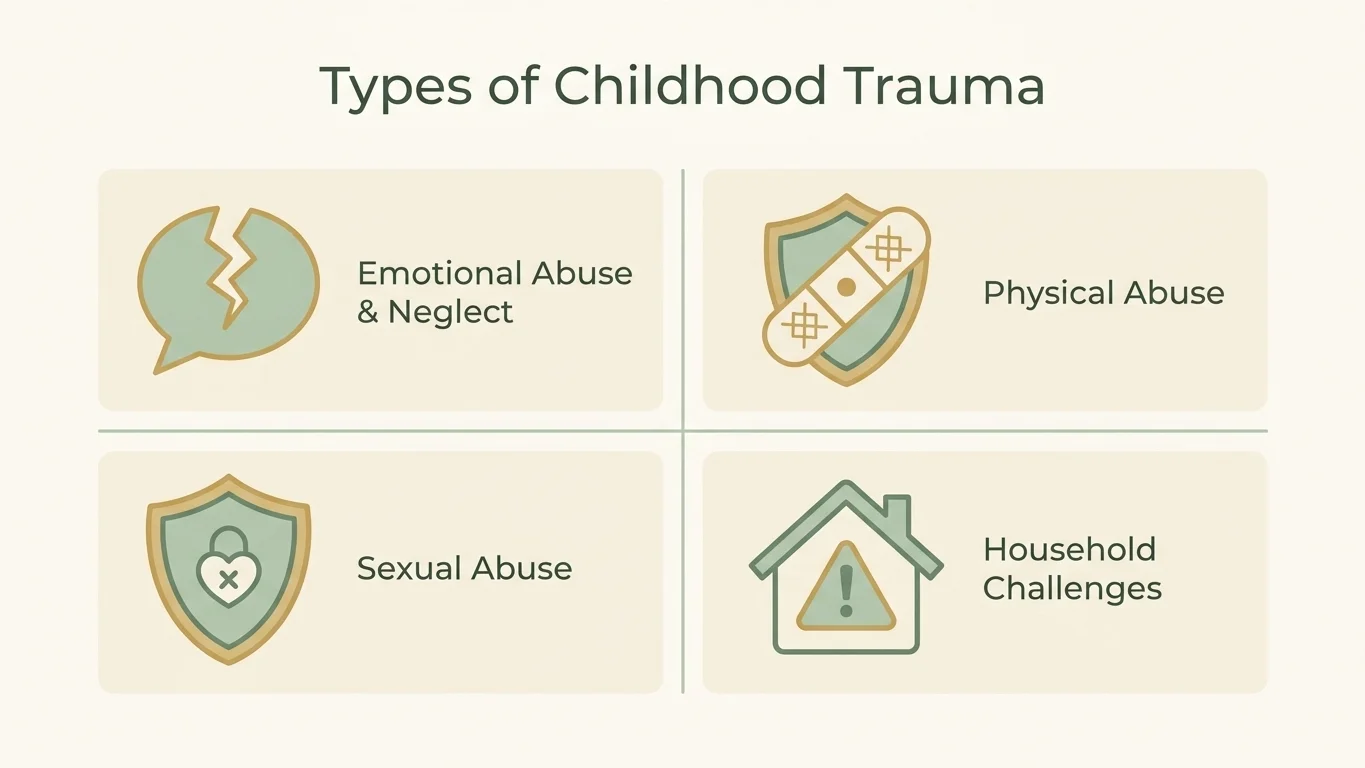
Childhood trauma can take many forms. Some experiences are obvious and easier to identify, while others may be less visible but still affect a child's sense of safety, attachment, and development.
Emotional Abuse and Neglect
Emotional abuse includes constant criticism, humiliation, rejection, and being made to feel worthless or unwanted. Emotional neglect happens when a child's need for connection, validation, and love goes consistently unmet. It leaves no visible marks but has a deep and lasting impact on self-esteem and brain development.
Physical Abuse
Physical abuse involves any deliberate physical harm to a child. This includes hitting, beating, burning, or any other act that causes physical injury or puts the child at risk of injury. Beyond the immediate physical harm, physical abuse teaches a child's nervous system that the world is dangerous and the people who are supposed to protect them are threats.
Sexual Abuse
Sexual abuse encompasses any sexual contact or behavior involving a child, including exposure to sexual content or situations. The effects are profound and wide-reaching, touching nearly every aspect of a survivor's emotional, psychological, and physical health across their entire lifetime.
Household Challenges
Growing up around addiction, domestic violence, parental mental illness, or an incarcerated family member creates constant fear and instability. The developing brain registers all of it as a threat, even when no one is raising a hand. These household challenges are among the most common ACEs and among the most underrecognized.
Long-Term Physical Health Effects
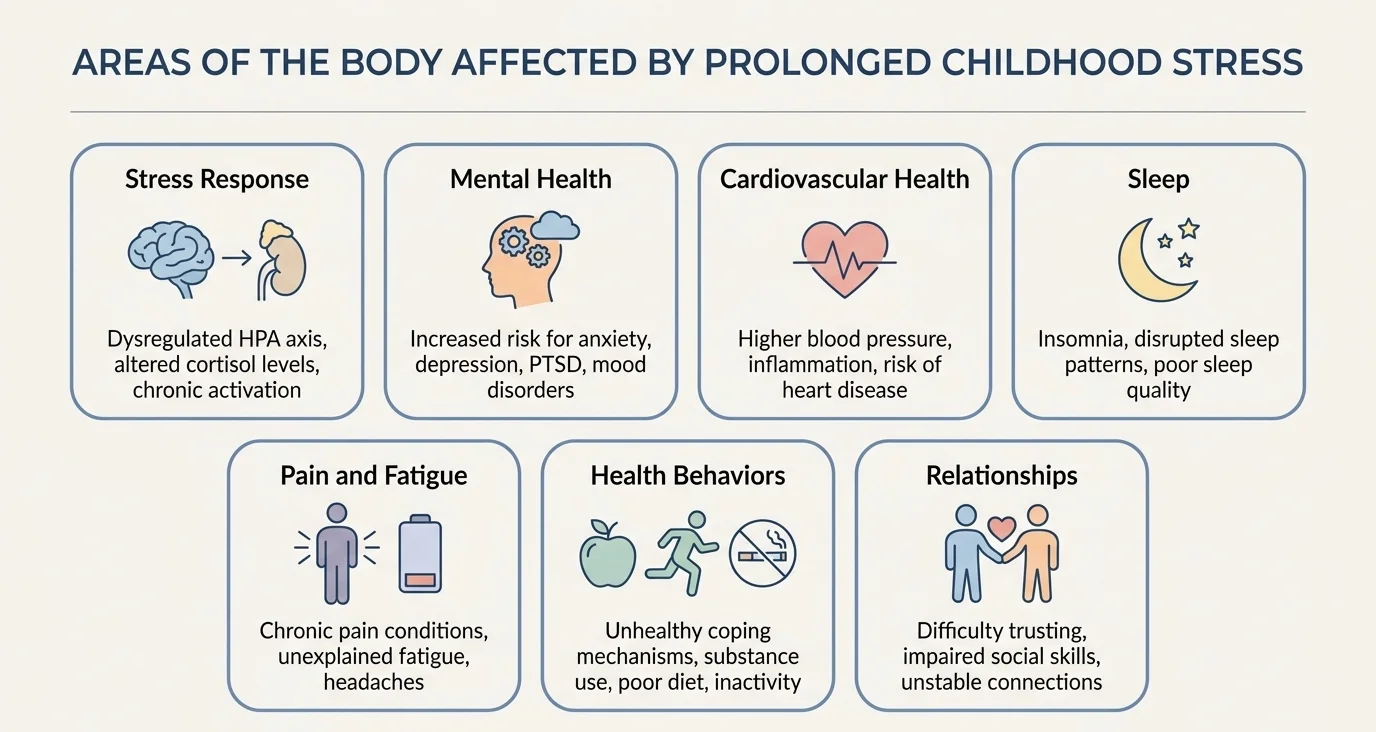
Childhood trauma can affect several interconnected areas of health rather than producing one specific outcome. The effects also vary greatly from person to person.
Long-Term Mental Health Effects
Childhood trauma can also influence emotional and psychological health well into adulthood. Early experiences of danger, neglect, instability, or abuse may shape how a person responds to stress, understands relationships, regulates emotions, and views themselves.
Not everyone who experiences childhood trauma develops a mental health condition. However, adverse childhood experiences are associated with a greater risk of anxiety, depression, post-traumatic stress symptoms, substance misuse, and other emotional difficulties.
Anxiety Disorders
A child who repeatedly experiences danger or instability may learn to remain highly alert to possible threats. In adulthood, this heightened stress response can sometimes appear as persistent worry, panic, social anxiety, or difficulty relaxing even when the environment is safe.
Everyday situations, conflict, criticism, or uncertainty may trigger stronger emotional reactions than expected. Therapy can help identify these patterns and develop healthier ways of responding to stress.
Depression
Childhood trauma has been associated with a greater risk of depression later in life. Early experiences of neglect, rejection, abuse, or instability may influence self-esteem, emotional regulation, relationships, and beliefs about personal worth.
Depression may appear as persistent sadness, hopelessness, low motivation, loss of interest, withdrawal, or difficulty experiencing pleasure. When trauma contributes to these patterns, treatment may involve addressing both current symptoms and the earlier experiences connected to them.
PTSD and Trauma-Related Symptoms
Not everyone who experiences childhood trauma develops post-traumatic stress disorder. However, some people continue to experience intrusive memories, avoidance, emotional numbness, hypervigilance, nightmares, or difficulty feeling safe long after the original events have ended.
Trauma-related symptoms can affect relationships, work, sleep, and everyday functioning. A qualified mental health professional can determine whether symptoms meet the criteria for PTSD or are connected to another condition.
Substance Use and Unhealthy Coping
Some people use alcohol, drugs, food, avoidance, or other behaviors to manage distressing emotions or memories connected to childhood experiences. These coping strategies may provide temporary relief but can create additional physical, emotional, and social problems over time.
Trauma-informed treatment can help a person understand what drives these behaviors and develop safer ways to manage difficult emotions, stress, and triggers.
Difficulty Regulating Emotions
Childhood trauma may also affect a person's ability to understand and regulate strong emotions. Some adults experience sudden anger, intense sadness, emotional shutdown, fear of rejection, or difficulty calming themselves after stressful situations.
These reactions are not proof of trauma on their own, but when they repeatedly interfere with relationships or daily life, they may be worth discussing with a mental health professional.
Behavioral and Social Impact of Childhood Trauma
Childhood trauma may also influence attachment patterns, conflict management, boundaries, work performance, and the way a person responds to criticism or rejection. Some adults become highly independent and avoid relying on others, while others may fear abandonment or repeatedly seek reassurance. These patterns are not proof of childhood trauma on their own, but they can be worth exploring when they repeatedly interfere with daily life or relationships.
Risky behaviors, such as unsafe actions or self-harm, can also develop over time. These behaviors are often used as ways to cope with emotional pain, stress, or feelings of emptiness, and may continue into adulthood if not addressed.
Risk Factors for Adverse Childhood Experiences
Childhood trauma rarely develops from one factor alone. Family stress, housing or financial instability, community violence, caregiver substance use, untreated mental health problems, domestic violence, and limited social support can increase a child's exposure to adversity. These factors increase risk, but they do not mean trauma will necessarily occur.
Protective factors can make an important difference. Safe and stable relationships with caregivers, supportive friendships, trusted teachers or mentors, reliable access to food and housing, and strong community connections can help children feel protected and supported. CDC identifies these types of nurturing relationships and environments as important buffers against childhood adversity.
Can Positive Childhood Experiences Reduce the Effects of Trauma?
Positive experiences do not erase traumatic events, but they can strengthen resilience and help buffer a child's stress response. Consistent care, feeling loved and valued, having trusted adults available, participating in school or community activities, and developing supportive friendships can all provide a greater sense of safety and belonging.
These experiences matter both during childhood and later in recovery. Adults can also build supportive relationships, healthier routines, emotional regulation skills, and a stronger sense of safety through therapy and positive connections. Past adversity can influence health, but it does not determine every future outcome.
Signs That Childhood Trauma Is Affecting You as an Adult
Many adults do not connect their current struggles to what happened in childhood. Here are the most common signs to look out for.
Emotional Triggers You react to certain situations with emotions that feel too big for the moment. A tone of voice or a specific phrase sends you into anxiety or shutdown that you cannot fully explain.
Difficulty Trusting People You struggle to let people in even when they have given you no reason not to trust them. Close relationships feel uncomfortable and you are always waiting for something to go wrong.
Trouble Coping with Stress Everyday stress feels heavier than it should. Small setbacks feel overwhelming and you recover from difficult moments more slowly than you expect.
Ongoing Physical Symptoms Chronic pain, persistent fatigue, or sleep problems with no clear medical explanation are often the body carrying what the mind has not yet processed.
Low Self-Worth You struggle to believe you deserve good things. You find it hard to set boundaries or feel guilty for having needs at all.
How to Heal from Childhood Trauma
Healing from childhood trauma is possible. It is not about erasing what happened. It is about understanding its impact and building a life that is no longer controlled by the past.
Therapy and Counseling
Treatment should be based on a person's symptoms, history, diagnosis, and goals. For adults with PTSD, evidence-based trauma-focused approaches can include Cognitive Processing Therapy, Prolonged Exposure, trauma-focused CBT approaches, and EMDR. Other therapies may focus on emotional regulation, relationships, anxiety, depression, or coping skills when those are the main concerns.
Medication
Medication does not erase childhood trauma, but it may help some people manage related conditions or symptoms such as depression, anxiety, sleep difficulties, or PTSD. A qualified medical provider can determine whether medication, psychotherapy, or a combination of approaches is appropriate for an individual's needs.
Support Systems and Relationships
Healing rarely happens alone. Safe, consistent relationships with people who show up reliably are one of the most powerful tools for recovery. Support groups, trusted friends, and community connections all play a meaningful role.
Healthy Lifestyle Changes
Regular movement, consistent sleep, and nutritious food support the body's ability to heal. Exercise reduces cortisol levels and supports new neural connections in the brain. These changes do not replace therapy but they make healing easier.
Ready to Understand How Childhood Trauma Is Affecting You?
Childhood trauma can influence your emotions, relationships, stress response, sleep, and physical well-being long after childhood ends. You do not have to understand those patterns on your own.
Radiant Path Therapy in Grand Terrace, CA provides trauma-focused therapy for adults who want to understand the effects of childhood trauma and develop healthier ways of coping. Contact us today to explore in-person support in Grand Terrace or telehealth therapy across California.
Conclusion
Childhood trauma can affect health across a lifetime because prolonged stress during important stages of development may influence the brain, stress-response system, immune function, behavior, and emotional regulation. Adverse childhood experiences are associated with a higher risk of conditions such as depression, substance misuse, heart disease, diabetes, sleep difficulties, and other long-term health problems. However, experiencing childhood trauma does not mean that a person will inevitably develop these conditions.
The effects can also appear in adulthood as difficulty trusting others, intense emotional reactions, chronic stress, poor sleep, unhealthy coping behaviors, relationship problems, or persistent physical symptoms. Recognizing these patterns can help explain why experiences from many years ago may still affect mental and physical health today.
Healing is possible at any age. Trauma-focused therapy, supportive relationships, healthy routines, appropriate medical care, and stronger coping skills can help reduce symptoms and create healthier patterns over time. Understanding how childhood trauma affects health across a lifetime is therefore not only about recognizing risk. It is also about recognizing that support, resilience, and recovery can change what happens next.
Frequently Asked Questions
Can childhood trauma cause physical illness later in life?
Childhood trauma is associated with a higher risk of several health problems later in life, including cardiovascular disease, sleep problems, mental health conditions, and unhealthy coping behaviors. It does not mean that every person who experiences trauma will develop a physical illness, because genetics, environment, support, and lifestyle also influence health.
How do I know if childhood trauma is affecting me as an adult?
Possible signs include intense emotional reactions, difficulty trusting others, chronic stress, avoidance, sleep problems, low self-worth, relationship difficulties, or unhealthy coping patterns. These experiences can have many causes, so a mental health professional can help determine whether unresolved trauma may be contributing.
Can childhood trauma be passed to the next generation?
The effects of trauma can sometimes influence later generations through parenting patterns, family relationships, learned coping behaviors, stress, and social conditions. Researchers also study biological and epigenetic pathways, but intergenerational trauma should not be simplified as trauma being directly “genetically inherited.”
Is it too late to heal from childhood trauma as an adult?
No. Adults can develop healthier coping skills, relationships, emotional responses, and ways of understanding past experiences. Therapy, supportive relationships, healthier routines, and appropriate treatment can help reduce the impact trauma has on present-day life.
What is the most effective treatment for childhood trauma?
There is no single treatment that is best for every person. For adults who meet criteria for PTSD, evidence-based options include trauma-focused therapies such as Cognitive Processing Therapy, Prolonged Exposure, trauma-focused CBT approaches, and EMDR. Treatment should be matched to the person's symptoms, goals, health history, and preferences.
Does everyone with childhood trauma develop health problems?
No. Childhood trauma increases risk, but it does not determine a person's future. Supportive relationships, protective environments, access to care, coping skills, and other life experiences can all influence how someone responds to adversity.
What does childhood trauma do to the body?
Repeated or prolonged stress can keep the body's stress-response systems activated for longer than normal. When this happens during development, it may influence the brain, nervous system, immune and metabolic processes, and the way the body responds to stress later in life.
Can positive experiences help after childhood trauma?
Yes. Safe relationships, supportive adults, friendships, community connections, and stable environments can strengthen resilience and help buffer the effects of adversity. Positive experiences do not erase trauma, but they can support healthier development and recovery.


