
Cognitive Behavioral Therapy (CBT) and Dialectical Behavior Therapy (DBT) are two widely used approaches to mental health treatment. The main difference in CBT vs DBT is their focus. CBT helps people recognize and change unhelpful thoughts and behaviors, while DBT places more emphasis on accepting difficult emotions, managing distress, and building healthier coping and relationship skills.
At Radiant Path Therapy and Psychiatry in Grand Terrace, CA, therapy can be tailored to each person’s concerns, goals, and experiences. Our therapists work with both CBT and DBT so treatment can be shaped around what actually fits you, not a one size fits all plan.
Neither therapy is automatically better than the other. CBT may be helpful when anxiety, depression, fears, or negative thought patterns are the main concern. DBT may be considered when someone has trouble managing intense emotions, coping with distress, controlling impulsive reactions, or maintaining healthy relationships. This guide explains how CBT and DBT work, their key differences, the concerns they may help address, and what to consider when deciding which approach may be right for you.
What Is Cognitive Behavioral Therapy (CBT)?
Cognitive Behavioral Therapy (CBT), is one of the most studied and widely used forms of talk therapy. The main idea behind CBT is simple. Your thoughts, feelings, and actions are all connected. When you change how you think about a situation, it can change how you feel and how you act.
For example, if you think “I always mess things up,” you might feel discouraged and avoid trying new things. CBT helps you notice thoughts like this, question whether they are true, and replace them with more balanced ways of thinking.
How CBT Works
CBT is usually short term and goal focused. Sessions are structured, meaning your therapist will often set an agenda and work with you on specific problems. You might track your thoughts between sessions, practice new skills, and complete small exercises or homework designed to reinforce what you learn in the room.
The therapy is active. Instead of just talking about your past, you and your therapist work together in the present to solve current problems and build skills you can use going forward.
Common Techniques Used in CBT
CBT uses several tools to help people change unhelpful patterns:
Cognitive restructuring, which means identifying negative thoughts and learning to challenge them
Behavioral activation, which encourages you to engage in activities that improve your mood, even when you do not feel like it
Exposure exercises, which help you face fears gradually instead of avoiding them
Thought records, which are simple worksheets used to track thoughts, feelings, and the situations that trigger them
Conditions Commonly Treated With CBT
CBT is used to treat a wide range of concerns. It is especially well known for helping with anxiety disorders, depression, panic attacks, phobias, obsessive compulsive disorder, and sleep problems. Because it focuses on specific thought patterns tied to specific issues, it works well for people who want a clear plan and measurable goals.
What Is Dialectical Behavior Therapy (DBT)?
Dialectical Behavior Therapy, or DBT, was originally developed to help people who struggle with intense emotions and self-destructive behaviors. DBT takes some of the same ideas from CBT but adds a strong focus on acceptance alongside change.
The word “dialectical” refers to holding two things that seem opposite at the same time, like accepting yourself as you are while also working to change. DBT is often more structured than standard CBT and typically includes both individual therapy and group skills training.
The Four Core Skills of DBT
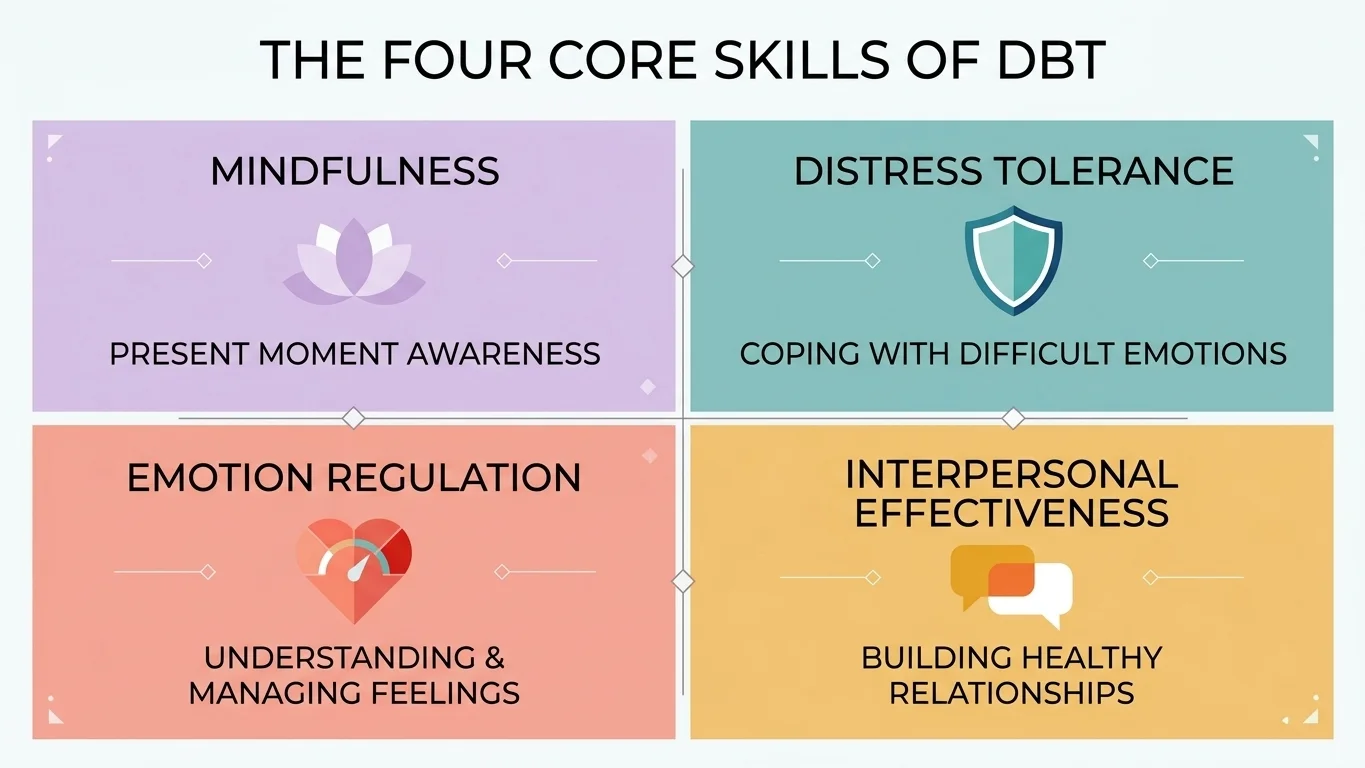
DBT is built around four main skill areas:
Mindfulness helps you stay present and aware of your thoughts and feelings without judging them
Distress tolerance gives you tools to get through painful moments without making things worse
Emotion regulation helps you understand and manage intense feelings so they do not control your actions
Interpersonal effectiveness teaches you how to ask for what you need, set boundaries, and handle conflict in relationships
Conditions Commonly Treated With DBT
DBT was originally developed to support people with borderline personality disorder, but its skills are now used for a wider range of mental health concerns. Therapists may use DBT when difficulty managing emotions, distress, impulsive behavior, or relationship problems are an important part of what someone is experiencing.
Depending on a person’s needs and diagnosis, DBT techniques may be used as part of treatment for concerns such as borderline personality disorder, self-harm behaviors, eating disorders, substance use concerns, and ongoing emotional dysregulation. A mental health professional can help determine whether DBT, another therapy, or a combination of approaches is appropriate.
CBT vs DBT Similarities
CBT and DBT share several principles because DBT developed partly from cognitive behavioral approaches. Both are structured forms of therapy that encourage people to develop practical skills and apply those skills outside of sessions.
Both approaches can involve identifying patterns, setting treatment goals, practicing new behaviors, and learning healthier ways to respond to difficult situations. The biggest difference is where each approach places its emphasis: CBT focuses more heavily on changing thoughts and behaviors, while DBT combines change with acceptance and emotional regulation.
CBT vs DBT Key Differences
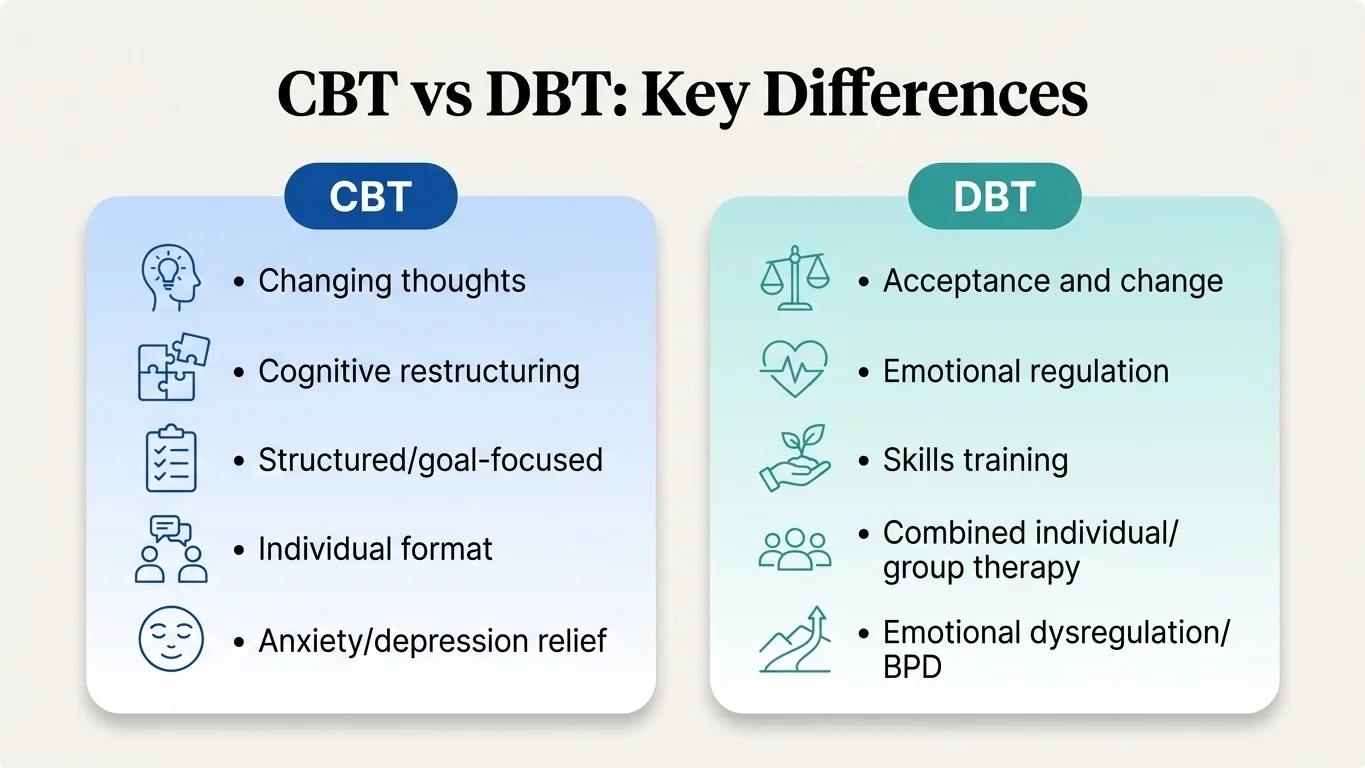
Understanding the differences between CBT and DBT can help you see which one lines up better with what you are looking for.
| CBT (Cognitive Behavioral Therapy) | DBT (Dialectical Behavior Therapy) |
|---|---|
| Focuses heavily on identifying and changing unhelpful thoughts and behaviors | Balances acceptance with behavioral change |
| Often emphasizes cognitive restructuring | Emphasizes emotional regulation and coping skills |
| Commonly structured around specific problems and goals | Often includes skills training and crisis management strategies |
| Can be delivered individually or in other formats | Often combines individual therapy with skills training |
| Widely used for anxiety, depression, and other concerns | Particularly associated with emotional dysregulation and BPD |
CBT vs DBT for Different Mental Health Conditions
There is no single answer to the question of which therapy is better. The right choice depends on your specific concerns, your goals, and what kind of support works best for you.
CBT vs DBT for Anxiety
CBT is commonly used for anxiety because it helps people identify anxious thoughts, challenge unhelpful thinking patterns, and gradually reduce avoidance behaviors. Techniques such as cognitive restructuring and exposure may be included depending on the type of anxiety being treated.
DBT can also provide useful skills for anxiety, especially when anxious feelings become overwhelming or difficult to manage. Mindfulness and distress tolerance techniques may help a person stay grounded while working through strong emotional reactions.
CBT vs DBT for Depression
CBT has a long track record of helping with depression by addressing negative thought patterns and encouraging behavioral activation. DBT can also help, particularly when depression is tied to difficulty managing emotions or maintaining relationships.
CBT vs DBT for Trauma-Related Concerns
Both therapies can be part of trauma treatment, though they are often combined with trauma-focused approaches. CBT may help address thought patterns related to trauma, while DBT skills can support emotional regulation during trauma processing.
CBT vs DBT for Borderline Personality Disorder
DBT was originally developed for people with borderline personality disorder and is commonly used to address many of the challenges associated with the condition. Its focus on emotion regulation, distress tolerance, mindfulness, and relationship skills can help people develop healthier ways to respond to difficult emotions and situations.
The best treatment plan still depends on the individual. A qualified mental health professional can assess symptoms, goals, and other factors before recommending DBT or another treatment approach.
CBT vs DBT for Emotional Dysregulation
When difficulty managing intense emotions is a major concern, DBT may be a helpful treatment option. Emotion regulation is one of the four main DBT skill areas, and treatment can help people recognize emotional triggers, understand their reactions, and respond in healthier ways.
CBT may also help when certain thoughts or beliefs contribute to emotional reactions. In some cases, therapists may use techniques from both approaches based on the person’s needs.
How to Choose Between CBT and DBT
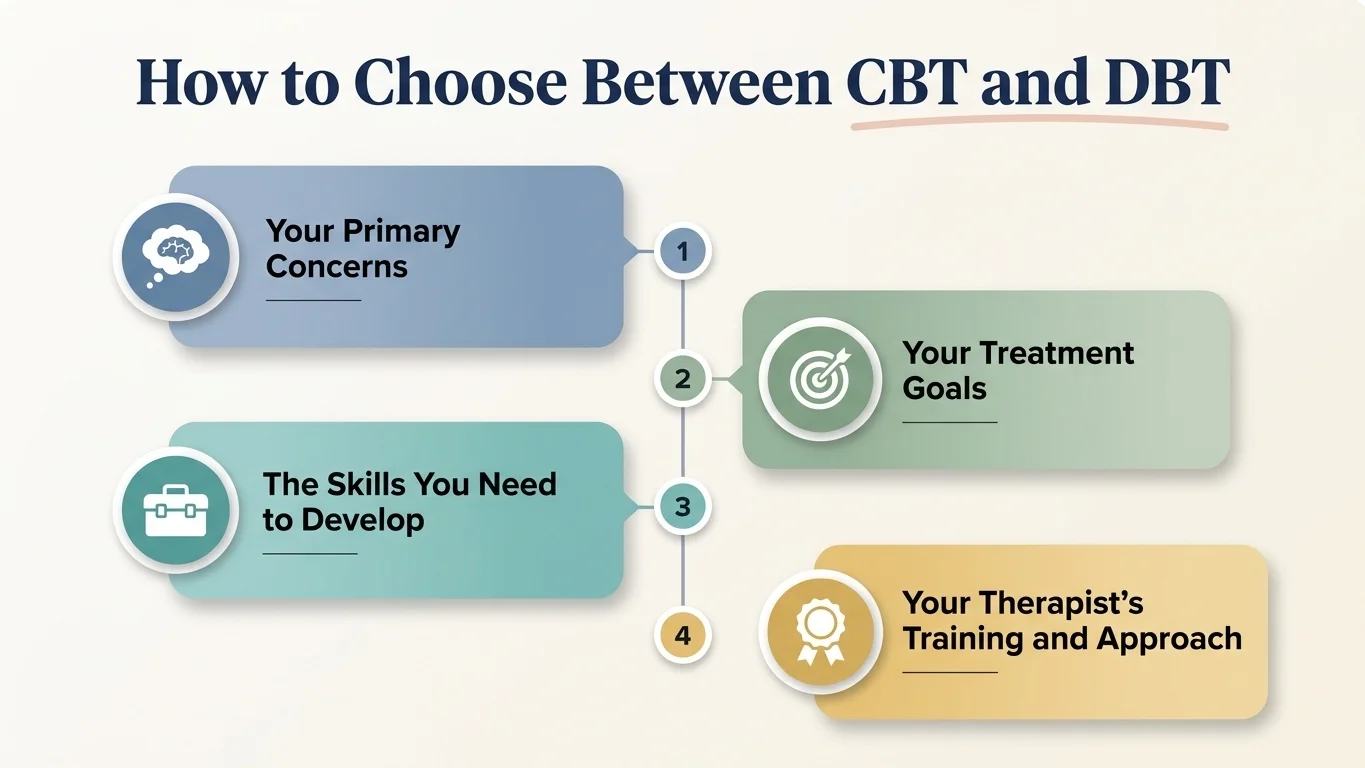
Deciding between CBT and DBT does not have to be complicated. A few key factors can guide the conversation with your therapist.
Your Primary Concerns
Think about what brings you to therapy in the first place. Are you mainly dealing with anxious or negative thoughts, or are intense emotions and impulsive behaviors more of the issue?
Your Treatment Goals
Consider what you want to get out of therapy. Are you looking to change specific thought patterns, or do you need broader skills for managing emotions and relationships?
The Skills You Need to Develop
Some people need help reframing thoughts. Others need tools to tolerate distress or communicate more effectively. Your specific skill gaps can point toward one approach or the other.
Your Therapist’s Training and Approach
Not every therapist is trained in both CBT and DBT. Ask about your therapist’s background and experience with each approach so you know what to expect.
What to Expect From CBT or DBT
CBT and DBT are both structured therapies, but sessions can look different depending on the approach, your therapist, and your treatment goals.
What CBT Sessions May Look Like
CBT sessions often focus on a specific problem, thought pattern, or behavior. You may work with your therapist to identify unhelpful thoughts, challenge them, set goals, and practice strategies between sessions. Homework or worksheets may also be used to reinforce what you learn.
What DBT Sessions May Look Like
DBT often places more emphasis on learning and practicing skills for emotional regulation, mindfulness, distress tolerance, and relationships. Comprehensive DBT programs may include individual therapy, skills training, and additional support between sessions.
How the Experience Differs
CBT generally focuses more on changing thoughts and behaviors connected to a specific concern. DBT combines change-focused strategies with acceptance and coping skills, especially when intense emotions or distress are a major part of the problem.
In both approaches, your therapist may adjust treatment based on your goals, symptoms, progress, and individual needs.
Ready to Find the Right Therapy for You?
Choosing between CBT and DBT depends on what you are experiencing, the goals you want to work toward, and the type of support that may be most helpful. You do not need to figure that out on your own. A therapist can help you understand the differences and recommend an approach based on your individual needs.
If you are unsure whether CBT or DBT may be right for you, Radiant Path Therapy and Psychiatry can help you explore your options. Contact our therapists in Grand Terrace, CA to schedule a consultation and take the next step toward finding the support that fits you.
Conclusion
CBT and DBT are both evidence-based therapy approaches, but they focus on different needs. CBT helps people identify and change unhelpful thoughts and behaviors, while DBT adds a stronger focus on acceptance, emotional regulation, distress tolerance, and coping skills.
Neither approach is better for everyone. The right choice depends on your concerns, goals, and the type of support you need. A qualified therapist can help you understand the differences and decide which approach may be the best fit for your situation.
Frequently Asked Questions
Is CBT or DBT better for anxiety?
CBT is commonly used for anxiety because it helps people identify anxious thoughts, challenge unhelpful thinking patterns, and reduce avoidance. DBT can also be helpful when anxiety comes with intense emotions or difficulty coping with distress. The best approach depends on your symptoms, goals, and individual needs.
Can you do CBT and DBT at the same time?
Yes, some therapists may use techniques from both CBT and DBT when it fits a client’s needs. CBT strategies can help address negative thought patterns, while DBT skills may help with emotional regulation and coping with distress. Your therapist can decide how to combine these approaches as part of your treatment plan.
How long does CBT or DBT take to work?
There is no set timeline because therapy progress varies from person to person. CBT is often structured as a shorter-term treatment, while a comprehensive DBT program may continue for several months or longer. Your goals, symptoms, consistency, and treatment plan can all affect how long therapy takes.
Can CBT and DBT help with depression?
CBT is commonly used to help people with depression by addressing negative thinking patterns and encouraging healthier behaviors. DBT may also be useful when depression is connected with intense emotions, difficulty coping, or relationship challenges. A therapist can help determine which approach may be more appropriate for your situation.
Which therapy is better for emotional regulation?
DBT places a strong emphasis on learning how to recognize, understand, and manage intense emotions. CBT can also support emotional regulation by helping people identify thoughts and beliefs that influence how they feel and react. The most suitable approach depends on what is contributing to your emotional difficulties.
Is CBT or DBT better for trauma?
Both CBT and DBT techniques may be used as part of trauma treatment, but neither approach is automatically right for everyone. CBT can help address trauma-related thoughts and beliefs, while DBT skills may support emotional regulation and distress tolerance. A therapist can recommend an approach based on your symptoms and treatment needs.