
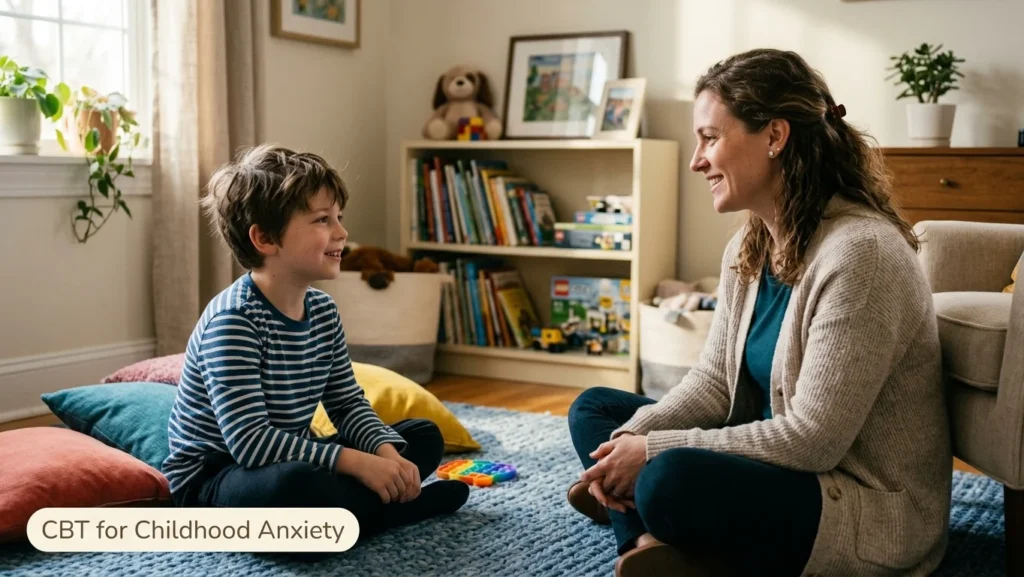
Cognitive behavioral therapy (CBT) is a common and effective treatment for childhood anxiety. It helps children understand how their thoughts, feelings, and actions are connected, and teaches healthier ways to cope with worry. Through CBT, children learn to slowly face the fears they may be avoiding, at a pace that feels manageable rather than overwhelming.
Anxiety is common in children. Most kids worry about something at some point, a test, a new school, a thunderstorm, or being away from a parent. But when fear and worry stick around and start to get in the way of school, friendships, family life, or everyday activities, it may be more than a passing phase.
This is where Cognitive Behavioral Therapy, or CBT, can help. It is one of the most studied and trusted treatments for childhood anxiety. Families in Grand Terrace, CA and nearby communities are increasingly turning to CBT to help their children understand anxious thoughts, face fears one small step at a time, and build healthier ways to cope. At Radiant Path Therapy and Psychiatry, we work with children and parents together to make this process feel manageable and supportive.
What Is Childhood Anxiety?
Every child feels nervous sometimes. Worrying about a spelling test or feeling shy at a birthday party is normal. Childhood anxiety becomes a concern when the fear is much bigger than the situation calls for, lasts a long time, or starts to interfere with daily life.
The difference between normal fear and an anxiety disorder often comes down to intensity and impact. A child with an anxiety disorder may avoid school, struggle to sleep, or have trouble enjoying activities they used to like. When worry starts controlling a child’s choices instead of just passing through, it may be time to look closer.
There are several common types of childhood anxiety disorders.
Separation Anxiety
This shows up as an intense fear of being away from a parent or caregiver. A child might cry, cling, or refuse to go to school because they are scared something bad will happen while they are apart. It is normal for young kids to feel some worry at drop off, but it becomes a concern when it happens often or makes school and sleepovers feel impossible.
Generalized Anxiety Disorder
Children with this type of anxiety worry about many different things at once, schoolwork, family, health, or the future, even when there is no clear reason to worry. The worry often jumps from topic to topic and can show up as constant reassurance seeking, redoing homework, or trouble falling asleep because their mind will not slow down.
Social Anxiety
This involves a strong fear of being judged or embarrassed in front of others. It can make school presentations, group projects, or even lunchtime with peers feel overwhelming. Children may avoid raising their hand, skip parties, or stay quiet around new people, which can make it harder to build friendships over time.
Specific Phobias
A phobia is an intense fear of one particular thing, like dogs, needles, storms, or the dark. The fear is often much stronger than the actual danger involved. A child facing the feared object may cry, freeze, or try to run away, even though phobias usually respond well to gradual, supportive treatment.
Panic Disorder
This includes sudden episodes of intense fear along with physical symptoms like a racing heart, dizziness, or trouble breathing. These episodes, called panic attacks, often come on quickly without an obvious cause and can feel frightening and confusing for a child, sometimes leading to a fear of the panic attacks themselves.
Signs of Anxiety in Children
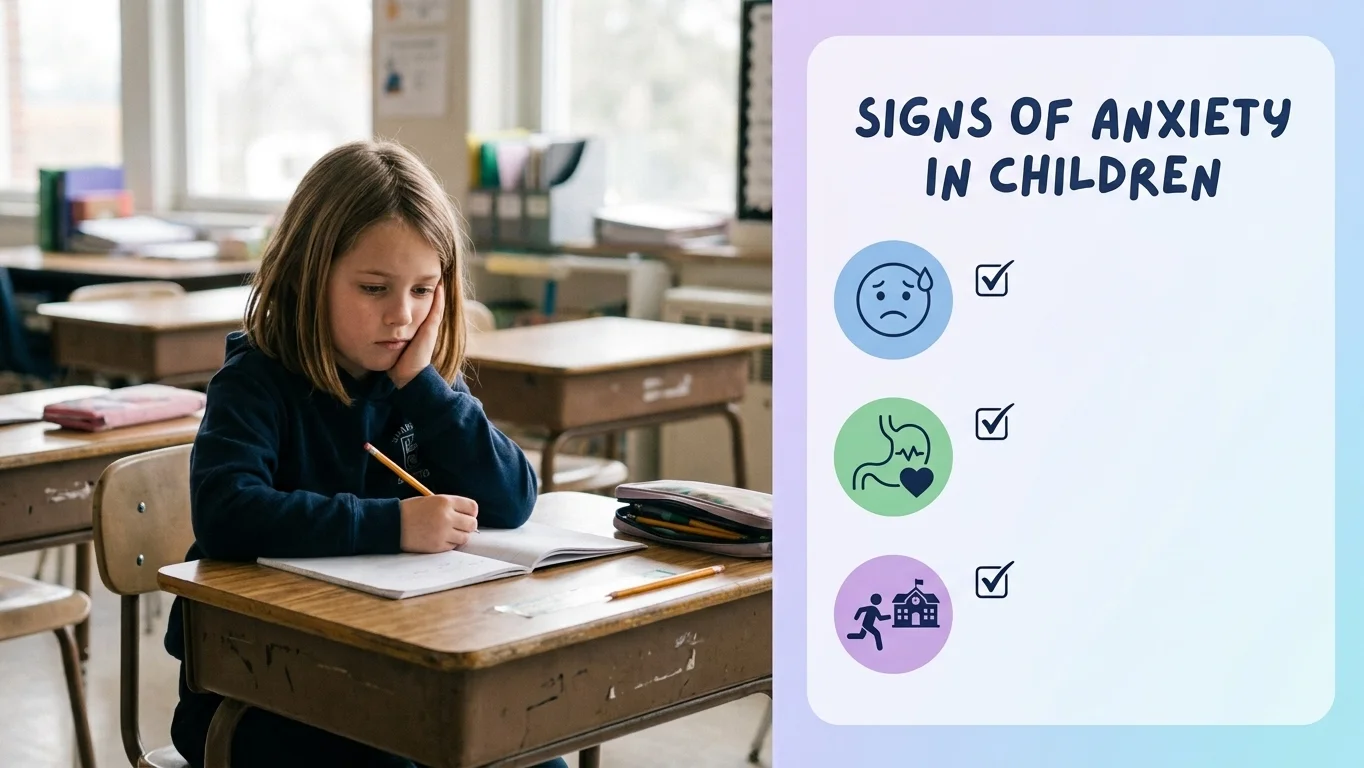
Anxiety does not always look like worry on the outside. It can show up in emotions, the body, and behavior.
Emotional Signs
Excessive worry that is hard to control
Fear and nervousness in everyday situations
Irritability or a short temper
Physical Signs
Stomachaches
Headaches
Trouble sleeping or falling asleep
A fast heartbeat, especially before stressful events
Behavioral Signs
Avoiding school or certain activities
Seeking constant reassurance from parents
Clinging to parents in new or unfamiliar situations
Avoiding new places, people, or experiences
If a parent notices several of these signs happening often and lasting for weeks, it may be worth talking to a therapist.
| Anxiety Type | Common Signs | How CBT Helps |
|---|---|---|
| Separation Anxiety | Clinging to parents, refusing school, fear of being apart | Gradual separation practice, challenging catastrophic thoughts |
| Generalized Anxiety Disorder | Worry about many things, constant reassurance seeking | Cognitive restructuring, scheduled “worry time” |
| Social Anxiety | Avoiding class participation, fear of embarrassment | Gradual exposure to social situations, confidence building |
| Specific Phobias | Intense fear of one object or situation (dogs, storms, needles) | Fear ladder, systematic desensitization |
| Panic Disorder | Racing heart, sudden fear episodes, dizziness | Relaxation training, addressing fear of the panic itself |
What Is Cognitive Behavioral Therapy (CBT)?
Cognitive Behavioral Therapy is built on a simple idea: thoughts, feelings, and behaviors are all connected. What a child thinks affects how they feel, and how they feel affects what they do. CBT helps children notice this connection and learn to change unhelpful patterns.
CBT is one of the most widely used treatments for childhood anxiety because it is practical and skills based. Instead of just talking about feelings, children practice real tools they can use in daily life, at school, at home, or with friends.
Therapists adapt CBT to fit a child’s age and stage of development. For younger children, this might mean using games, drawings, or stories. For older kids and teens, sessions may involve more direct conversation about thoughts and worries. The goal stays the same: helping the child build skills that fit how they think and learn.
How Does CBT Help Children With Anxiety?
CBT works through a series of connected steps that help children understand their anxiety and slowly gain control over it. Each step builds on the one before it, moving from noticing thoughts to actually facing fears with confidence.
Identifying Anxious Thoughts
The first step is helping a child notice when an anxious thought shows up, like “something bad is going to happen” or “everyone will laugh at me.” Many children do not realize they are having these thoughts. The thoughts happen so fast that all they notice is the fear or stomachache that follows, not the thought that caused it.
In therapy, children learn to slow down and catch these thoughts as they happen. A therapist might ask, “What went through your mind right before you felt scared?” Naming the thought is the first step to managing it, because a child cannot change a thought they do not know is there.
Challenging Unhelpful Thinking
Once a thought is identified, the child learns to ask questions about it. Is this thought true? What is the evidence for it and against it? Is there another way to look at this situation? This process is sometimes called “detective thinking,” since the child acts like a detective looking for real clues instead of just believing the first scary idea that pops up.
For example, a child who thinks “everyone will laugh at me if I answer wrong” might be guided to ask, “Has that actually happened before?” It means helping the child find a more balanced, realistic thought to replace the anxious one, so the thought feels less automatic and less powerful over time.
Learning to Face Fears
CBT does not ask children to avoid what scares them. Instead, it teaches them to approach fears in small, manageable steps, so they build confidence instead of avoidance. Facing a fear directly, at a doable pace, teaches the child something talking alone cannot: that they can handle the situation, and the feared outcome usually does not happen the way they imagined.
Reducing Avoidance
Avoiding a fear often makes it feel bigger over time. When a child avoids something scary, they get short term relief, but the brain also learns that the thing must be dangerous, since escaping felt necessary. This makes the fear grow stronger and leads to more avoidance, a pattern often called the anxiety cycle.
CBT helps break this cycle by helping children reduce avoidance gradually, in small, supported steps rather than all at once. Over repeated practice, situations that once felt impossible start to feel manageable, and eventually, ordinary.
Building Confidence and Coping Skills
As children practice facing fears and managing anxious thoughts, they build real, earned confidence, not because someone told them to feel confident, but because they have actual proof that they can handle hard moments. Confidence built through practice tends to last, since it is based on real experience rather than reassurance alone.
This growing confidence often carries over into many parts of a child’s life, not just the specific fear they worked on. The coping skills learned in CBT, like noticing thoughts, challenging worry, and taking brave steps, become tools the child can keep using long after therapy ends.
Common CBT Techniques for Childhood Anxiety
CBT uses several practical techniques to help children understand their anxiety, manage anxious thoughts, and feel more confident when facing fears.
Cognitive Restructuring This means helping a child notice an anxious thought and replace it with a more balanced one, based on facts rather than fear.
Exposure Therapy Children face feared situations in small, controlled steps, with support, so the fear becomes less overwhelming over time.
Relaxation and Calming Skills Simple tools like deep breathing, muscle relaxation, or grounding exercises help children calm their bodies when anxiety spikes.
Behavioral Experiments A child might test out an anxious prediction in a safe way, such as raising a hand in class to see what actually happens, rather than what they feared would happen.
Coping Skills Practice Children practice specific strategies, like positive self-talk or problem solving, so these tools become second nature during stressful moments.
Role-Playing and Behavioral Rehearsal Practicing a scary situation ahead of time, like a school presentation, helps a child feel more prepared and less anxious when the real moment arrives.
What Is Exposure Therapy for Children?
Exposure therapy is one of the most effective parts of CBT for anxiety. It means gently and gradually helping a child face the situations or things they fear, instead of avoiding them.
This process usually starts with something called a fear ladder. The therapist and child list feared situations from least scary to most scary. They start at the bottom, practicing the easiest step until it feels manageable, then slowly move up the ladder.
The pace matters. Exposure should always happen at a safe, manageable speed, never rushed or forced. Each small success builds the child’s confidence for the next step. Over time, this steady practice helps reduce avoidance and shows the child that they can handle more than they thought.
How Parents Are Involved in CBT for Childhood Anxiety
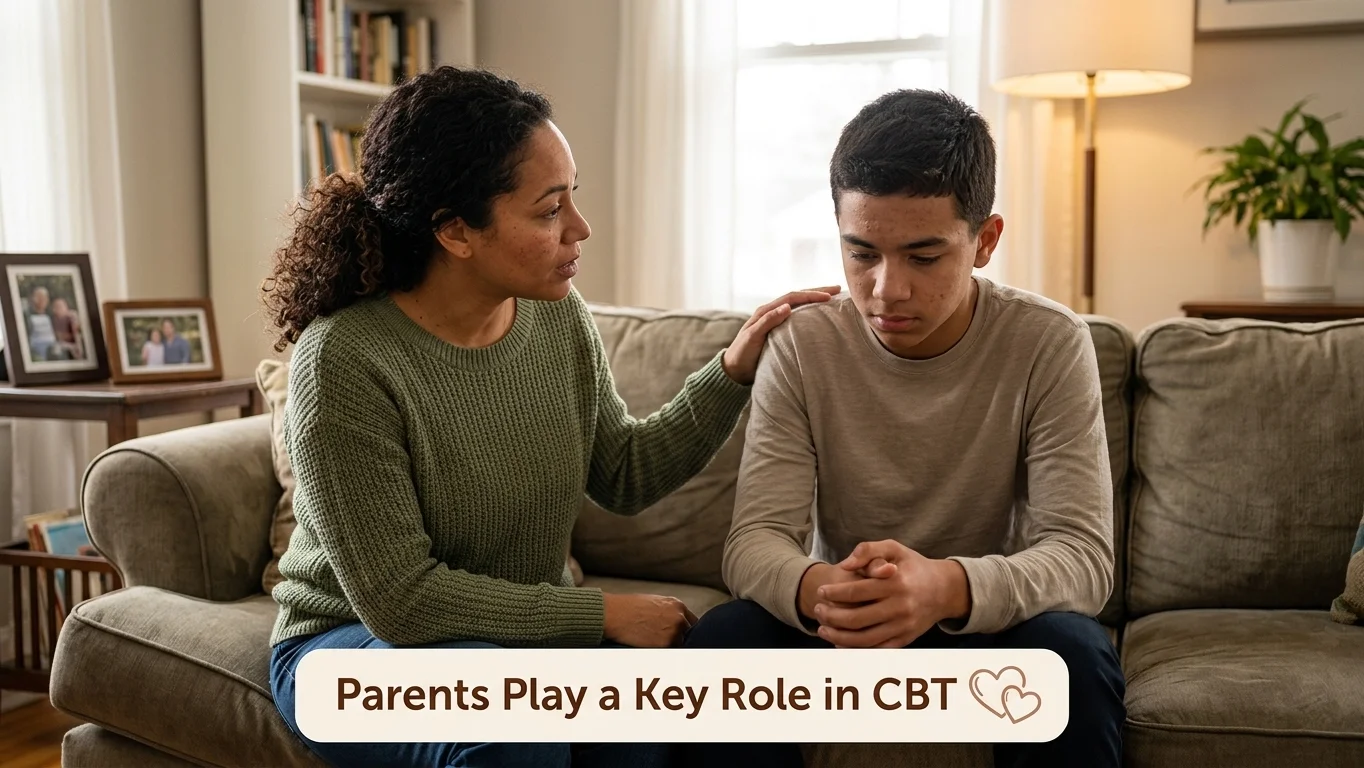
Parents play a big role in helping CBT work well. Therapy sessions matter, but what happens at home between sessions matters just as much. Parents learn how anxiety works and why their child reacts the way they do, which helps them respond in ways that support progress instead of accidentally reinforcing the anxiety.
They also help by encouraging their child to practice exercises from therapy in real life, not just talk about them in the therapy room. It is natural to want to comfort an anxious child, but too much reassurance can accidentally keep anxiety going, so parents learn how to offer support without feeding the worry cycle.
They also learn to notice and praise moments when their child faces a fear, even in small ways, since this positive attention helps brave behavior grow. On top of this, a steady, calm home environment gives children a safe base to practice new skills and take small risks without feeling pressured or judged.
What Happens During CBT for Childhood Anxiety?
CBT usually begins with an initial assessment, where the therapist meets with the child and parents to understand the anxiety, how long it has been happening, and how it affects daily life. From there, the family and therapist set clear, realistic goals together, like attending school without daily meltdowns or sleeping through the night without fear. The child also learns, in age appropriate language, what anxiety is and how it works in the brain and body, which takes some of the mystery and fear out of the experience.
Once these basics are in place, sessions move into hands-on practice with tools like cognitive restructuring, relaxation skills, and exposure exercises. Just like at school, CBT often includes homework, small practice tasks that help the child apply new skills in real situations. Throughout treatment, the therapist checks in regularly on how the child is doing, adjusting the plan as needed based on what is working.
How Long Does CBT Take for Childhood Anxiety?
There is no single answer, since treatment length depends on several factors. A child’s age, the type and severity of anxiety, and how consistently skills are practiced all play a role.
Younger children or those with mild anxiety may see progress in a shorter number of sessions. Children with more complex or long standing anxiety may need a longer course of treatment. Progress is usually tracked through regular check-ins, so the plan can be adjusted along the way.
Regular practice between sessions tends to support faster, more lasting progress. CBT is a skills based treatment, and like any skill, it improves with consistent use.
Is CBT Effective for Childhood Anxiety?
Research consistently shows that CBT is one of the most effective treatments available for childhood anxiety. Many children who complete CBT show real reductions in anxiety symptoms and improvements in daily functioning.
That said, outcomes can vary from child to child. Some children respond quickly, while others need more time and support. Getting an accurate diagnosis and a treatment plan suited to the child’s specific needs makes a real difference in how well CBT works.
It is also worth noting that anxiety sometimes shows up alongside other conditions, like ADHD or depression. When this happens, treatment may need to address more than one concern at a time for the best results.
When Should a Child See a Therapist for Anxiety?
It can be hard to know when worry has crossed into something that needs professional support. A few signs to watch for include:
Anxiety interferes with school attendance or performance
Anxiety affects friendships or family relationships
Your child avoids normal, everyday activities
Worries feel difficult to control, for your child or for you as a parent
Physical symptoms like stomachaches or headaches happen often
Anxiety continues for weeks or seems to be getting worse
If any of these sound familiar, reaching out to a therapist is a reasonable next step.
How to Find a Qualified CBT Therapist for Your Child
Finding the right therapist starts with checking their training and credentials. Look for a licensed therapist with specific training in Cognitive Behavioral Therapy, ideally with experience treating anxiety in children, since working with kids requires a different approach than working with adults. It also helps to ask how they use techniques like exposure therapy or cognitive restructuring, and how they explain these tools in a way children can understand.
Beyond credentials, your child’s comfort and trust with the therapist matters just as much. It is okay to try an introductory session and see how your child responds before committing further. Since parent involvement supports CBT’s success, it is also worth asking how the therapist includes parents in the process, whether through check-ins, home practice, or joint sessions.
Ready to Help Your Child Manage Anxiety?
If your child is struggling with worry, fear, or avoidance, you do not have to figure it out alone. Radiant Path Therapy and Psychiatry in Grand Terrace, CA offers evidence-based Cognitive Behavioral Therapy designed to help children face their fears and build real coping skills, with parents involved every step of the way. Contact us today to schedule a consultation and take the first step toward helping your child feel calmer, stronger, and more confident.
Conclusion
Childhood anxiety can affect nearly every part of a child’s life, from school and friendships to sleep and family routines. Cognitive Behavioral Therapy offers children practical, well-researched tools to understand their anxious thoughts, face fears at a manageable pace, and build lasting confidence.
With the right support, both from a trained therapist and involved parents, children can learn to manage worry instead of letting it manage them. If your child’s anxiety is starting to affect daily life, reaching out for professional support is a meaningful first step toward lasting change.
Frequently Asked Questions
Is CBT effective for childhood anxiety?
Yes. Research supports CBT as one of the most effective treatments for childhood anxiety, though results can vary depending on the child and the severity of symptoms. CBT works best when a child is matched with an experienced therapist and parents stay involved throughout the process.
What age can a child start CBT?
CBT can be adapted for young children, often as early as ages 6 or 7, using age appropriate tools like games and stories instead of long conversations about feelings. Older children and teens can usually engage in more traditional CBT, talking through thoughts more directly.
How does CBT help a child with anxiety?
CBT helps children notice anxious thoughts, challenge unhelpful thinking patterns, and gradually face fears instead of avoiding them, while building coping skills along the way. Over time, this shifts anxiety from something that feels out of control to something the child has real strategies for managing.
What techniques are used in CBT for children?
Common techniques include cognitive restructuring, exposure therapy, relaxation skills, behavioral experiments, coping skills practice, and role playing. Which techniques a therapist uses often depends on the child’s age and the type of anxiety involved.
How long does CBT take for childhood anxiety?
Treatment length varies based on the child’s age, symptoms, and consistency of practice. Some children see progress within a few months, while others with more complex anxiety need a longer course of care. Consistent practice between sessions tends to speed up progress.
Do parents participate in CBT?
Yes. Parent involvement is a key part of CBT for childhood anxiety, including learning about anxiety, supporting practice at home, and encouraging brave behaviors. This helps new skills actually transfer into daily life.
Can CBT help with separation anxiety and social anxiety?
Yes. CBT is commonly used to treat both separation anxiety and social anxiety, along with generalized anxiety, specific phobias, and panic disorder. A therapist typically tailors the core CBT tools to fit the specific fears that trigger that child’s anxiety.