
Feeling tired after a difficult day is normal. However, when you feel drained most of the time, even after resting, something more may be going on. The signs of emotional exhaustion can include constant tiredness, irritability, emotional numbness, and difficulty handling everyday responsibilities. These feelings may develop when stress and emotional demands continue for a long time without enough time to recover.
At Radiant Path Therapy and Psychiatry in Grand Terrace, CA, we understand that ongoing stress can affect how people feel, think, and connect with others. Emotional exhaustion can make work, family responsibilities, and personal relationships harder to manage. Understanding what causes it and how it affects daily life can help you recognize when you may need more support, and our Redlands clinic is here when you are ready to take that step.
What Is Emotional Exhaustion?
Emotional exhaustion is a state of feeling mentally and emotionally drained, usually after pressure has continued for a long time without enough support or time to recover.
Unlike ordinary tiredness, it comes from emotional load rather than physical effort. It is not simply about having a busy day, and it can affect your mood, concentration, and how you relate to others.
It is important to understand that emotional exhaustion describes how someone feels. It is not a diagnosis by itself. Similar symptoms can occur with depression, anxiety, sleep problems, and other health concerns.
Can Emotional Exhaustion Develop in Stages?

Emotional exhaustion may build over time instead of appearing all at once. At first, you may continue handling your daily responsibilities without noticing how much stress is affecting you. As pressure continues, it may become harder to manage your emotions, stay focused, or feel connected to others.
A 2017 study published in Science and Education examined emotional burnout among 48 medical university lecturers. The researchers described three phases of burnout: strain, resistance, and exhaustion. The findings offer one way to understand how ongoing pressure can affect emotional well-being. However, not everyone experiences these phases in the same order.
- Strain: A person experiences ongoing pressure, worry, or distress. They may find it harder to relax or stop thinking about their problems.
- Resistance: The person tries to keep managing daily demands. They may become emotionally distant or have less energy for certain situations.
- Exhaustion: Emotional resources become harder to maintain. The person may feel depleted, disconnected, or less able to respond to everyday responsibilities.
These phases are not a fixed timeline or a diagnosis. If you want to explore how researchers identified this pattern, the 2017 study of emotional burnout among medical university lecturers explains the three phases in more detail. Recognizing changes in your energy, mood, and ability to manage daily demands can help you understand when stress may be taking a greater toll.
10 Common Signs of Emotional Exhaustion
Emotional exhaustion can affect your thoughts, feelings, behavior, and physical well-being. Not everyone experiences the same symptoms, and having one or two signs does not automatically mean you are emotionally exhausted.
1. Feeling Tired Even After Getting Enough Rest
One of the common signs of emotional exhaustion is feeling tired even after sleeping or taking a break. You may wake up feeling as if you have not rested. Simple activities, such as preparing breakfast, answering emails, or getting ready for work, may seem harder than usual.
This type of tiredness can happen when your mind remains under pressure for long periods. Even when you are not doing physical work, ongoing worries and emotional demands may leave you feeling drained. If tiredness continues, it is also important to consider other possible causes, including sleep problems or physical health conditions.
2. Becoming Irritable Over Small Things
When you have little emotional energy left, situations that once seemed manageable may start upsetting you. You might become annoyed when someone asks a simple question, changes a plan, or interrupts your work. You may also find yourself reacting more strongly than you normally would.
For example, a small disagreement with a family member might turn into an argument because you already feel overwhelmed. This does not mean you are a bad person or that you cannot control your emotions. It may mean that ongoing stress is making it harder to respond calmly.
3. Feeling Emotionally Numb or Disconnected
Emotional exhaustion does not always make you feel sad. Sometimes, it can make you feel nothing at all. You may notice that things that once made you happy no longer bring the same feeling. You might also find it difficult to respond when someone shares good news or asks how you are doing.
For example, you may spend time with friends but feel disconnected from the conversation. You are physically present, but you do not feel emotionally involved. Emotional numbness can have several causes, so it is worth discussing with a mental health professional if it continues or affects your relationships.
4. Losing Interest in Activities You Once Enjoyed
You may start avoiding hobbies, social plans, or activities that once made you feel happy. For example, you might stop going for walks, meeting friends, reading, or spending time on a favorite hobby. Even when you have free time, you may not feel interested in doing anything.
This can happen when your emotional energy is low. Activities that once felt enjoyable may start feeling like another responsibility. If you notice a lasting loss of interest, it is important to consider whether depression or another mental health concern may also be involved.
5. Struggling to Concentrate or Make Decisions
Emotional exhaustion can make it harder to focus on tasks and organize your thoughts. You might read the same email several times without understanding it. You may forget small details, lose track of conversations, or struggle to decide what to do first.
Even simple choices can feel difficult. For example, deciding what to cook for dinner may seem like too much work after a stressful day. When your attention is already occupied by ongoing worries, you may have less mental energy available for other tasks.
6. Feeling Overwhelmed by Everyday Responsibilities
Normal responsibilities may start feeling much bigger than they really are. You might feel stressed when looking at your work schedule, household tasks, bills, or family commitments. Instead of handling one task at a time, you may feel pressure from everything that needs to be done.
For example, cleaning the house, preparing meals, and responding to messages may feel impossible when you are already emotionally drained. This can create a cycle where unfinished tasks add more pressure, making it even harder to get started.
7. Withdrawing From Friends and Family
You may begin spending less time with people, avoiding phone calls, or turning down invitations. Sometimes, you may not want to explain how you feel. Other times, talking to people may seem like too much effort.
For example, you might ignore a friend’s message because you do not have the energy to respond. You may also avoid family gatherings because you feel unable to handle more conversations. Taking some quiet time is normal. However, regularly avoiding people you care about can reduce the support available to you when you need it.
8. Experiencing Frequent Anxiety or Sadness
Ongoing emotional pressure can affect your mood. You may worry about things that have not happened yet, feel uneasy without knowing why, or become upset when thinking about your responsibilities. Some people also experience sadness, frustration, or a sense of hopelessness.
These feelings may become harder to manage when stress continues without a break. Persistent anxiety or sadness should not automatically be blamed on emotional exhaustion. A professional can help you understand whether another mental health concern may be involved.
9. Having Trouble Sleeping or Changes in Appetite
Emotional exhaustion can affect your daily habits, including sleep and eating patterns. You may struggle to fall asleep because your mind keeps going over problems from the day. You might wake up during the night or find it difficult to feel rested in the morning.
Your appetite may also change. Some people eat less when stressed, while others eat more for comfort. The American Psychological Association explains that ongoing stress can affect several body systems, including digestion and sleep. Its guidance on the health effects of chronic stress provides more information about these physical effects.
10. Finding It Difficult to Feel Motivated
Tasks that once felt manageable may require much more effort. You might delay starting projects, avoid making plans, or struggle to finish things you have already started.
For example, you may know that you need to complete an important task, but you keep putting it off because you feel mentally drained. This does not always mean you are lazy or careless. Ongoing emotional strain can affect your ability to stay engaged with daily responsibilities.
What Causes Emotional Exhaustion?
Emotional exhaustion can develop for different reasons. Often, it is not caused by one event but by several demands that continue over time.
Ongoing Work Pressure and Heavy Responsibilities
A demanding job can leave you with little time or energy for yourself. Long hours, tight deadlines, difficult decisions, and constant pressure may make it harder to recover after work. When work demands continue without enough support or time off, emotional strain may build.
How Unnecessary Workplace Demands Contribute to Emotional Exhaustion
Not every workplace task feels reasonable or useful. Sometimes, employees are asked to complete unnecessary assignments or take on duties outside their normal roles. A 2025 study published in the Journal of Asian Development Studies examined how unnecessary and unreasonable work tasks may contribute to stress and emotional exhaustion.
It also discussed employee silence, which happens when workers avoid speaking up about concerns because they fear negative reactions or feel unsupported. These findings suggest that feeling overworked and unable to express concerns can add to emotional strain. You can read the research on unnecessary workplace demands and emotional exhaustion for more details.
Digital Overload and the Pressure to Stay Connected
Technology makes it easier to stay in touch, but constant availability can also create pressure. You may check work messages after dinner, respond to emails during weekends, or feel that you must answer every notification immediately.
Social media can add another source of pressure when you compare your life with other people’s posts. When there is no clear break between work and personal time, it may become harder to mentally disconnect from daily demands.
Caregiving and Family Responsibilities
Caring for children, aging parents, or family members who need extra support can require a lot of emotional energy. You may spend most of your time thinking about someone else’s needs while putting your own needs aside. Over time, having little time for rest or personal activities can contribute to emotional strain.
Relationship Problems and Emotional Conflict
Ongoing arguments, trust problems, poor communication, or an unhealthy relationship can affect your emotional well-being. You may spend a lot of time worrying about what another person thinks or how they might react. Even when there is no direct argument, uncertainty and unresolved conflict can create ongoing pressure.
Perfectionism and Unrealistic Expectations
People who expect themselves to do everything perfectly may find it difficult to rest or accept mistakes. You might feel that you must perform well at work, keep your home organized, support everyone, and never disappoint anyone. These expectations can create pressure that is difficult to maintain over time.
Lack of Boundaries and Personal Time
Saying yes to every request can leave little time for your own needs. You might agree to extra work, help others even when you are tired, or feel guilty when you take time for yourself. Without healthy boundaries, your responsibilities may continue growing while your opportunities to rest become smaller.
Financial Stress and Major Life Changes
Money problems, job changes, moving, separation, or the loss of a loved one can create emotional pressure. Even when a major change is positive, adjusting to a new situation can require time and energy. When several changes happen close together, it may become harder to manage your feelings and daily responsibilities.
How Emotional Exhaustion Affects Everyday Life
Emotional exhaustion can affect more than your mood. It may change how you interact with others, complete responsibilities, and feel about your abilities.
Effects on Personal Relationships
You may find it harder to communicate clearly or give emotional support to people you care about. Small disagreements can become more common, and you may avoid conversations because you do not have the energy to deal with conflict. This can create distance between you and the people who usually support you.
Effects on Work and Productivity
You may struggle to stay focused, complete tasks on time, or feel interested in your work. Even familiar responsibilities can require more effort. You might also find it harder to work with colleagues or respond to workplace challenges. When this continues, your work may feel less satisfying than it once did.
Losing Confidence in Your Abilities and Accomplishments
Ongoing emotional strain may affect how you view your own performance. You might question decisions that you previously made with confidence. Even after completing a task, you may feel that your work was not good enough.
For example, someone who usually handles projects well may begin doubting their skills after several stressful months. This can make new challenges feel more difficult and reduce your sense of achievement.
Effects on Daily Responsibilities and Decision-Making
You may struggle to organize your day or decide which responsibilities need attention first. Simple tasks, such as paying bills, preparing meals, or arranging appointments, may take longer than usual. When several responsibilities feel equally important, it can become difficult to know where to begin.
Emotional Exhaustion vs. Stress, Burnout, and Depression
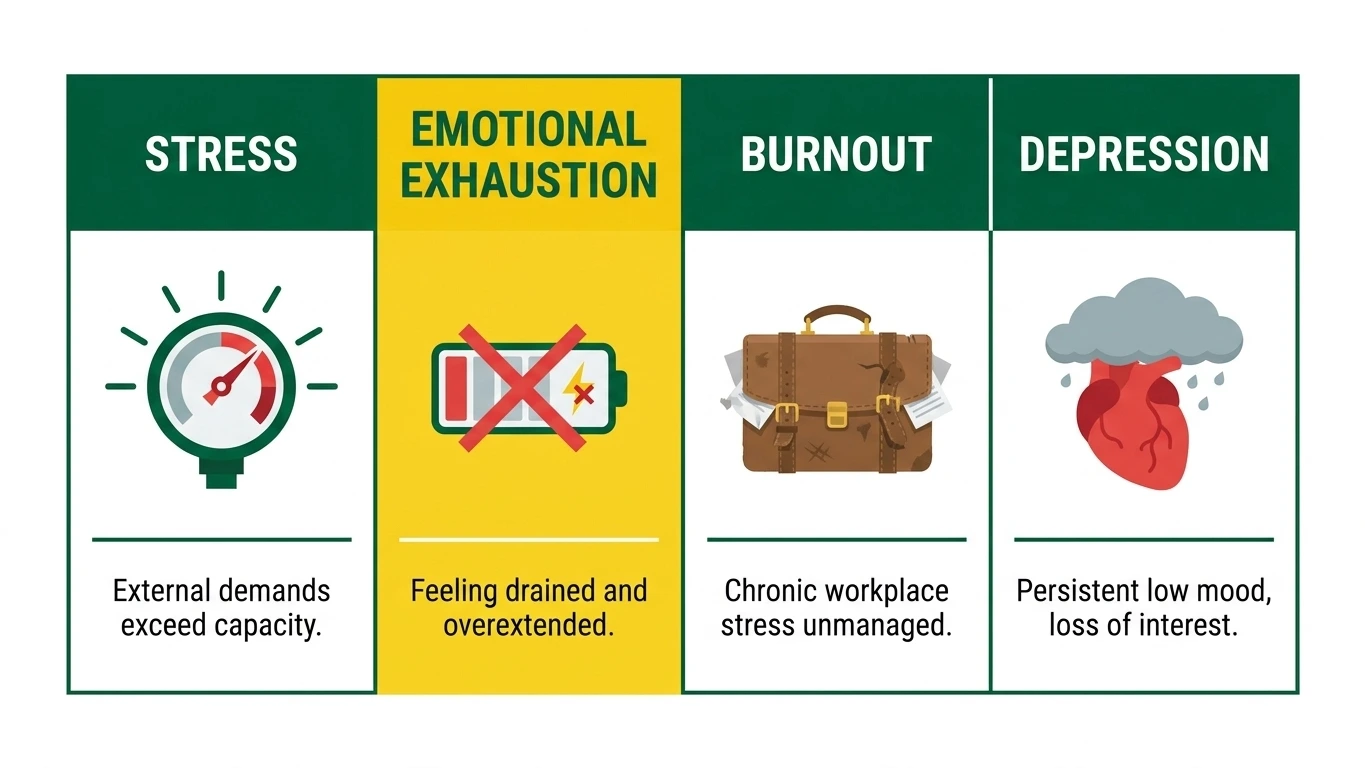
Emotional exhaustion, stress, burnout, and depression can share some symptoms. However, they are not the same.
| Condition | Main characteristic | How it may feel |
| Everyday stress | Response to pressure or challenging situations | Feeling worried, tense, or overwhelmed |
| Emotional exhaustion | Emotional depletion after ongoing demands | Feeling drained, disconnected, or unable to cope |
| Burnout | Chronic workplace stress that has not been successfully managed | Feeling exhausted, distant from work, and less effective |
| Depression | A mental health condition that affects mood and daily functioning | Persistent low mood, loss of interest, and other symptoms |
What Happens When Emotional Exhaustion Goes Unaddressed?
When emotional exhaustion continues without attention, its effects may become harder to manage. You may find yourself pulling away from relationships, struggling with responsibilities, or having less patience with everyday problems. Ongoing stress can also affect sleep, concentration, and physical well-being.
For example, someone who continues working long hours without addressing the pressure may begin struggling at home as well. They may have less energy for family activities and find it harder to enjoy their free time. This does not mean emotional exhaustion will always lead to a mental health condition. However, ignoring ongoing distress can make it harder to identify and address the problems behind it. Paying attention to your needs and getting support when necessary can help prevent further difficulties.
How to Recover From Emotional Exhaustion

Recovering from emotional exhaustion often requires more than taking one day off. It may involve understanding what is draining you and making changes that support your emotional well-being.
Identify and Address the Sources of Stress
Start by looking at the situations that leave you feeling most drained. Think about your work, family responsibilities, relationships, and personal expectations. Ask yourself whether certain demands can be reduced, changed, or shared with someone else. You may not be able to remove every source of stress, but identifying the main problems can help you decide where to begin.
Set Healthy Boundaries at Work and Home
Healthy boundaries help protect your time and emotional energy. For example, you might avoid checking work emails after a certain hour, say no to extra responsibilities when your schedule is full, or explain when you need time to yourself. Setting boundaries does not mean you do not care about other people. It means understanding that your needs matter too.
Improve Sleep and Daily Routines
Try to keep a regular sleep and wake schedule. Give yourself time to relax before bed and avoid activities that keep your mind focused on stressful tasks. You can also create simple routines for meals, exercise, and daily responsibilities. You do not need to change everything at once. Small, steady changes may be easier to maintain.
Make Time for Activities You Enjoy
Choose activities that help you feel relaxed or connected to yourself. You might enjoy walking, reading, listening to music, cooking, or spending time outdoors. The goal is not to stay busy all the time. It is to make room for activities that are not based on work, responsibilities, or other people’s expectations.
Stay Connected With Supportive People
Talking with someone you trust can help you feel less alone. You do not need to explain everything perfectly. You can simply tell a friend or family member that you have been feeling overwhelmed and could use someone to talk to. If possible, ask for practical help with tasks that have become difficult to manage.
Practice Stress Management Techniques
Simple techniques can help you manage stress during difficult moments. You might try slow breathing, gentle stretching, mindfulness, or taking a short walk. These activities may help you feel calmer and more focused. The American Psychological Association’s stress management guidance offers additional ideas, including social support, physical activity, and ways to reduce stressful demands.
Consider Professional Mental Health Support
Sometimes, emotional exhaustion continues even after you make changes to your routine. A therapist can help you understand emotional patterns, identify sources of stress, and develop healthier ways to respond to difficult situations. Therapy may also help when emotional exhaustion occurs alongside anxiety, depression, trauma, or relationship concerns.
When Should You Seek Professional Help for Emotional Exhaustion?
Consider professional support when emotional exhaustion continues, becomes harder to manage, or begins affecting important areas of your life.
You may benefit from speaking with a mental health professional if:
- You struggle to manage everyday responsibilities.
- Ongoing emotional distress affects your relationships.
- You have persistent anxiety, sadness, or emotional numbness.
- You find it difficult to focus or function at work.
- Your usual coping methods no longer help.
- You feel increasingly disconnected from people and activities.
A therapist can ask about your experiences, personal history, stress levels, and daily functioning. They may also help determine whether your symptoms are connected to another mental health concern.
If you have thoughts of harming yourself or suicide, seek immediate support. In the United States, you can call or text 988 to reach the Suicide & Crisis Lifeline. Call 911 if you are in immediate danger.
Conclusion
The signs of emotional exhaustion can include constant tiredness, irritability, low motivation, difficulty focusing, and feeling disconnected from others. These changes may develop gradually as stress and daily demands build up. Recognizing them can help you understand when you need more rest, stronger boundaries, or additional support.
Emotional exhaustion does not have to be something you manage alone. Paying attention to your emotional needs and getting help when needed can support your well-being and help you move toward a healthier balance.
Get Support for Emotional Exhaustion at Radiant Path Therapy And Psychiatry
If emotional exhaustion is affecting your relationships, work, or daily life, talking with a mental health professional may help. Radiant Path Therapy and Psychiatry, serving Grand Terrace and Redlands, CA, offers support for people dealing with ongoing stress, anxiety, trauma, and relationship concerns. In-person therapy, psychiatry services, and secure telehealth sessions are available.
You do not have to wait until you feel completely overwhelmed to ask for help. Contact Radiant Path Therapy and Psychiatry to discuss your concerns and explore available care options.
Frequently Asked Questions
Can Emotional Exhaustion Happen Even When Life Seems Fine?
Yes. Emotional exhaustion does not always come from one major problem. Several smaller demands may build up over time. You may also experience emotional strain that is not obvious to other people. Your feelings are worth paying attention to, even when your life appears normal from the outside.
Can Emotional Exhaustion Make You Feel Detached From People You Love?
Yes. Ongoing emotional strain may make it harder to feel connected or involved in conversations. You might care about your family and friends but have less emotional energy available for social interaction. This does not mean you have stopped caring about them.
Why Do I Feel Emotionally Drained Around Certain People?
Some relationships involve repeated conflict, pressure, criticism, or one-sided emotional support. These interactions may leave you feeling stressed or overwhelmed. However, feeling drained around someone does not automatically mean that person is harmful. It can help to look at the patterns in the relationship and how you feel after spending time together.
Can Emotional Exhaustion Affect Your Ability to Enjoy Good Experiences?
Yes. When you are dealing with ongoing emotional demands, it may become harder to relax and enjoy positive moments. You might find yourself thinking about unfinished tasks or worrying about future problems even during an enjoyable activity. If you consistently lose interest or pleasure, consider discussing this with a mental health professional.
Is It Possible to Experience Emotional Exhaustion Without Feeling Sad?
Yes. Some people experience emotional exhaustion as numbness, irritability, detachment, or a lack of motivation rather than sadness. People respond to ongoing stress in different ways. You do not need to feel sad to take emotional exhaustion seriously.
Can Emotional Exhaustion Return After Recovery?
Yes. Emotional exhaustion may return if the same stressful demands continue or new pressures develop. This is why it is helpful to understand what contributed to your earlier experience. Maintaining healthy boundaries, seeking support, and addressing ongoing stressors may help you manage future challenges.