

Attention-deficit/hyperactivity disorder (ADHD) is a neurodevelopmental condition that affects attention, activity levels, and impulse control. The main ADHD signs include difficulty staying focused, restlessness, and acting without thinking. Some people mainly experience inattention, while others show more hyperactivity and impulsivity. Many experience a combination of these symptoms.
Radiant Path Therapy and Psychiatry provides ADHD psychiatric care and therapy for concerns about attention, organization, and daily functioning, with clinics offering ADHD support in Grand Terrace and ADHD treatment in Redlands. ADHD signs begin in childhood and continue into adulthood for many people. They look different as a person grows and takes on new responsibilities.
What Are the Three Main ADHD Presentations and Their Main Signs?
ADHD appears in three presentations. The predominantly inattentive presentation centers on inattention. The predominantly hyperactive-impulsive presentation centers on hyperactivity and impulsivity. The combined presentation includes signs from all three areas.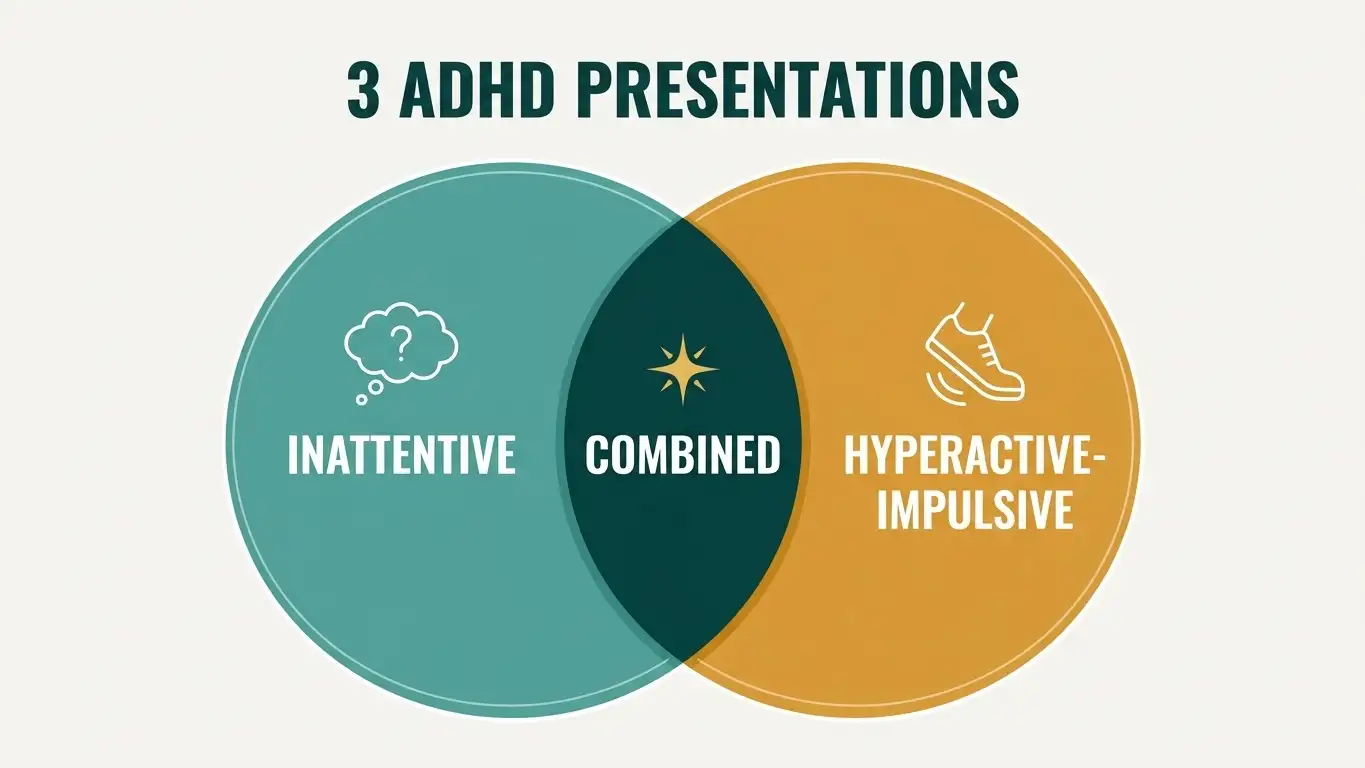
Signs of Inattention
Inattention can make it hard to stay focused, follow instructions, or complete tasks. A person may understand what they need to do but struggle to keep their attention on the activity.
Common signs include:
- Having trouble paying attention during conversations or activities
- Making careless mistakes at school or work
- Losing track of instructions before finishing a task
- Misplacing important items, such as keys, phones, or school supplies
- Forgetting appointments, chores, or other responsibilities
- Becoming distracted by sounds, movement, or unrelated thoughts
For example, a student may begin an assignment but move to another activity before finishing it. An adult may lose track of a work task after an interruption.
Signs of Hyperactivity
Hyperactivity involves more movement or activity than expected for a person’s age and situation. It may be easy to notice in children, but it can become less visible in adults.
Possible signs include:
- Fidgeting, tapping, or moving hands and feet
- Getting up when expected to remain seated
- Finding quiet activities difficult
- Talking more than the situation calls for
- Moving from one activity to another
- Feeling restless when there is no clear reason to move
Signs of Impulsivity
Impulsivity means responding or acting quickly without taking enough time to consider the situation.
Common signs include:
- Interrupting people while they are speaking
- Finding it difficult to wait in line or take turns
- Answering questions before they are finished
- Making quick decisions without considering the outcome
- Spending money or taking risks without enough planning
- Reacting strongly before thinking through a situation
These actions are not always intentional. A person may know that interrupting or rushing into decisions causes problems but still find it difficult to pause in the moment.
ADHD Signs in Children

Children with ADHD may have difficulties during everyday activities at home, in school, and while spending time with other children. Parents and teachers may notice different parts of the pattern because they see the child in different settings.
Behavioral Signs at Home
Parents may notice that a child often forgets instructions, leaves chores unfinished, or needs repeated reminders to complete daily routines. Getting dressed, putting away toys, or preparing for school may take longer than expected.
Some children may also struggle during meals, family activities, or quiet play. These behaviors deserve attention when they happen often and interfere with the child’s daily life.
Common Signs in the Classroom
Teachers may notice that a child has trouble following lessons, completing assignments, or keeping track of school materials. The child may understand the subject but struggle to finish classwork or remember what the teacher asked.
Social and Emotional Difficulties
Some children find group activities difficult because they struggle with turn-taking, listening, or responding calmly when something does not go as planned. They may also become frustrated when they receive repeated corrections. A child may feel upset about school difficulties or problems with friends.
Support should focus on understanding the behavior rather than assuming the child is being careless or deliberately difficult. A JAMA Pediatrics patient information article on ADHD explains that symptoms become a concern when they happen often enough to interfere with a child’s daily functioning. It also describes how teachers, parents, and healthcare professionals can share information during an evaluation.
ADHD Signs in Teenagers
The teenage years bring more schoolwork, social demands, and personal responsibilities. These changes can make existing ADHD difficulties easier to notice. Some teenagers may also develop ways to hide their struggles from others.
Academic and Organizational Difficulties
A teenager may have trouble planning assignments, remembering deadlines, or preparing for exams. Long projects can be especially difficult because they require several steps over time.
They may understand the material but delay starting their work, forget to submit completed assignments, or struggle to manage several deadlines at once.
Restlessness and Impulsive Behavior
Some teenagers continue to show visible restlessness, such as frequent movement or difficulty staying seated. Others may feel internally restless and find it hard to relax during quiet activities.
Impulsive behavior may affect decisions, conversations, and reactions to stressful situations. A teenager may speak before thinking or agree to plans without considering the consequences.
Emotional and Social Challenges
Teenagers may feel frustrated when they struggle to keep up with school or manage daily responsibilities. They may also find disagreements difficult when they respond quickly or have trouble considering another person’s point of view.
These experiences can affect confidence and friendships. Understanding the pattern can help families discuss support without blaming the teenager.
ADHD Signs in Adults
Some people continue to experience ADHD symptoms after childhood. Others recognize their difficulties later when work, relationships, or household responsibilities become harder to manage.
Difficulty Managing Work and Responsibilities
An adult may struggle to organize projects, follow schedules, or complete tasks by their deadlines. Work meetings and long instructions can also be challenging. A person may miss details or need reminders to return to an unfinished task.
Internal Restlessness and Mental Overactivity
Hyperactivity may become less obvious with age. Instead of running or climbing, an adult may feel a strong need to stay busy or move between activities.
Some people describe having many thoughts at once. This can make it difficult to relax or focus on one activity.
Impulsive Decisions and Reactions
Impulsivity may appear through quick purchases, rushed decisions, or agreeing to commitments without checking a schedule. These patterns can affect finances, work decisions, and communication with others.
Challenges in Personal Relationships
Forgetting plans, missing important details, or struggling to complete shared responsibilities can create tension between partners or family members.
A person may care deeply about a relationship but find it difficult to remember plans or stay engaged during long conversations. Understanding the reason behind these patterns can help people find better ways to communicate.
Less Obvious ADHD Signs That People Often Overlook
Some people with ADHD report difficulties that are not part of the official diagnostic symptom list. These experiences can help explain everyday challenges, but they do not confirm ADHD on their own.
Hyperfocus on Interesting Activities
Some people become deeply absorbed in activities they find interesting. They may spend a long time on a hobby or project and lose track of other responsibilities.
This does not mean ADHD always causes strong concentration. A person may focus intensely on one activity but struggle to maintain attention on tasks that feel less interesting.
Difficulty Starting Tasks
A person may know what needs to be done but struggle to begin. Even a simple task, such as answering an email or cleaning a room, may feel difficult to start.
They may have trouble deciding where to begin, organizing the steps, or moving their attention away from another activity.
Frequently Underestimating How Long Tasks Take
Some people find it difficult to judge how much time an activity will need. They may believe they have enough time to finish a task but discover that it takes much longer than expected.
This can lead to rushing, missed deadlines, and difficulty following schedules.
Forgetting What You Were About to Do
A person may walk into a room and forget why they went there. They may also lose track of an intention after hearing a sound, seeing a message, or starting another activity.
Feeling Overwhelmed by Small Responsibilities
Several small tasks can feel difficult to manage when they require planning and switching between activities. Emails, appointments, household chores, and bills may seem like too much to handle at once.
Breaking tasks into smaller steps and using reminders may help. However, ongoing difficulties may be worth discussing with a professional.
ADHD Signs in Girls and Women
ADHD can affect girls and women, but some signs may be less noticeable to parents and teachers. In particular, quiet inattention may not cause the same classroom disruption as visible hyperactivity.
Quiet Inattention and Frequent Daydreaming
A girl may appear quiet in class but struggle to follow lessons or remember instructions. She may daydream, lose track of assignments, or make mistakes because her attention shifts away from the task. Because these signs may not interrupt other people, adults may overlook them.
Hiding Symptoms Through Extra Effort and Preparation
Some girls and women work harder to keep up with school, work, or household responsibilities. They may spend extra time preparing, rely heavily on reminders, or copy the routines of others to avoid drawing attention to their difficulties. These efforts can hide how much work is needed to manage everyday tasks.
Emotional and Organizational Difficulties
Some people report difficulty keeping track of responsibilities, managing frustration, or handling several demands at once. They may feel overwhelmed when plans change or when many tasks need attention.
These experiences can have different causes, so they should be considered alongside other symptoms and personal history.
Why ADHD Signs May Be Missed in Girls and Women
Quiet inattention may be mistaken for shyness, daydreaming, or a lack of interest. Some girls may not show the disruptive behaviors that often lead adults to notice ADHD.
A 2007 article, Girls and ADHD: Are You Missing the Signs?, discusses how teachers can overlook less obvious signs in girls. It highlights the importance of noticing attention and learning difficulties even when a student is not disruptive. Because this is an older article, its findings should not be treated as current statistics.
Cognitive Difficulties That May Accompany ADHD
ADHD may be associated with difficulties in executive functioning. These mental skills help a person plan, organize, remember information, and control actions while completing a task.
A study by Machinskaya and colleagues examined children aged 7 to 8 and 9 to 10 who showed signs of ADHD. The researchers reported difficulties involving activity planning and control, auditory-verbal tasks, and the speed of completing some cognitive tasks. These findings offer insight into possible learning challenges in children, but they do not mean every child with ADHD has the same difficulties. You can read the study of cognitive and learning difficulties in children with ADHD for more detail.
Difficulty Planning and Regulating Activities
A child may know the goal of an assignment but struggle to plan the steps needed to complete it. They may begin without preparing materials or move between tasks without finishing them. This can affect schoolwork and activities that require several steps.
Problems With Working Memory and Following Verbal Instructions
Working memory helps people hold information in mind while using it. A child may forget part of a spoken instruction before completing the task.
For example, they may remember that a teacher asked them to collect a book but forget the other steps that came with the instruction.
Difficulty Processing Information and Completing Tasks Efficiently
Some children may need more time to understand information, organize their thoughts, or complete certain activities. This can affect classroom tasks that involve listening, remembering, and responding. These difficulties are possible associated challenges, not separate official ADHD symptoms.
How to Tell the Difference Between ADHD and Typical Behavior
Everyone loses focus, forgets things, or feels restless sometimes. These behaviors do not automatically mean someone has ADHD. The difference is often how frequently they happen and how long they continue. ADHD symptoms form an ongoing pattern rather than appearing only during stressful situations or a few difficult days.
Another important factor is whether symptoms appear in different settings and affect everyday life. For example, a child may struggle with attention at home and school, while an adult may experience similar difficulties at work and in personal responsibilities. When forgetfulness, poor focus, or restlessness repeatedly interfere with education, work, or relationships, a professional assessment may help determine whether ADHD is involved.
Conditions That Can Look Like ADHD
Several conditions can affect attention, memory, activity, or behavior. Some can also occur alongside ADHD. This is why a professional should consider the full picture instead of relying on one symptom.
A review titled Attention Deficit Hyperactivity Disorder discusses ADHD features and its association with other conditions, including anxiety, depression, and learning difficulties. These conditions can create overlapping challenges, so an evaluation should consider whether symptoms have another explanation or whether more than one condition is present.
Anxiety Disorders
Anxiety can make concentration difficult because a person’s attention is focused on worries or fears. They may seem distracted, restless, or unable to settle.
Depression
Depression can affect energy, motivation, memory, and concentration. A person may have trouble starting tasks or keeping up with responsibilities.
Sleep Disorders
Poor sleep can lead to daytime tiredness, irritability, forgetfulness, and difficulty paying attention. Sleep problems can sometimes resemble ADHD symptoms.
Learning Difficulties
A person with a learning difficulty may struggle with reading, writing, or understanding certain information. These challenges can affect school performance and may be mistaken for attention problems.
Autism Spectrum Disorder
Autism and ADHD are different neurodevelopmental conditions, but they can occur together. Autism may involve differences in social communication, sensory experiences, and patterns of behavior. ADHD mainly involves inattention and/or hyperactivity and impulsivity.
When Should You Seek an ADHD Assessment?
Consider seeking professional guidance when attention, activity, or impulse-control difficulties happen often and interfere with daily life. You do not need to wait until the problems become severe.
Signs That May Need Professional Evaluation
An evaluation may be useful when a child regularly struggles at school and home, or when an adult has ongoing problems with work, organization, or relationships.
It may also help when these patterns continue over time and are difficult to manage despite using reminders, routines, or other strategies.
What Information to Track Before an Appointment

Write down examples of the difficulties you notice. Include when they happen, how often they occur, and how they affect daily responsibilities. For a child, information from parents and teachers may help show whether the same patterns appear in different settings.
Which Healthcare Professional Can Assess ADHD?
A primary care provider, psychiatrist, psychologist, or another qualified professional may help assess ADHD. The right professional depends on the person’s age, symptoms, and local services. For a child, a pediatrician may be a useful starting point. The provider may also request information from parents, teachers, or other adults who know the child well.
How ADHD Is Diagnosed?
There is no single test that confirms ADHD. A professional reviews a person’s symptoms, personal history, and how these difficulties affect daily life. The evaluation may include questions about attention, activity, and impulsivity, such as when the difficulties began, how often they occur, and whether they appear in different settings. Standardized rating scales or questionnaires may also be used to gather information from the person being assessed, parents, teachers, or partners. However, these tools support the evaluation and do not replace a full clinical assessment.
Developmental history also helps the professional understand how a person’s behavior and functioning have changed over time. For children, this may include early development, school experiences, and information from caregivers. A study of developmental signs of ADHD and autism in 3,623 children found that developmental information can help describe patterns but cannot reliably predict a diagnosis on its own. The professional may also check for other possible explanations, such as sleep problems, anxiety, depression, or learning difficulties. By considering all this information together, they can make an informed decision and discuss suitable next steps.
What to Do After Recognizing Possible ADHD Signs
Recognizing possible ADHD signs is a first step toward understanding ongoing difficulties with attention, organization, or impulse control. If these challenges affect school, work, relationships, or daily responsibilities, consider discussing your concerns with a healthcare professional. Share specific examples of what you have noticed, including how often the difficulties happen and when they began. Keeping a written record of forgotten tasks, missed deadlines, restlessness, or trouble following instructions can also help identify patterns.
After an evaluation, a professional can discuss treatment and support options based on individual needs. At Radiant Path Therapy and Psychiatry, options include therapy, behavioral strategies, executive function coaching, and medication management, with psychiatric providers and therapists coordinating care. Some people benefit from combining several approaches to manage daily challenges.
Conclusion
ADHD signs involve inattention, hyperactivity, and impulsivity. They appear as learning and behavior challenges in children, organizational difficulties in teenagers, and problems with work and relationships in adults. Some people also report difficulties with time management, task initiation, and planning. Recognizing these patterns is a useful first step, but it does not confirm a diagnosis. A professional reviews symptoms, developmental history, daily functioning, and other possible causes.
Get Help Understanding ADHD Signs and Your Next Steps
If attention, organization, or impulsive behavior is affecting your daily life, Radiant Path Therapy and Psychiatry provides ADHD psychiatric care and therapy. Psychiatric care includes ADHD evaluation, diagnosis, and medication management. Therapy includes executive function coaching, skill-building, emotional regulation support, and help with daily routines. Psychiatric providers and therapists coordinate care so treatment works together, whether you visit our Grand Terrace clinic, our Redlands clinic, or connect by video from anywhere in California.
Explore ADHD support and management at Radiant Path Therapy And Psychiatry to learn more about available services. Take the next step toward understanding your concerns. Contact Radiant Path Therapy to discuss your options.
Frequently Asked Questions
Can ADHD affect decision-making?
Yes. ADHD can make it harder to pause, compare options, and think through possible outcomes. Some people may make quick decisions and recognize the consequences only afterward.
Can ADHD make it difficult to maintain daily routines?
Yes. Some people with ADHD struggle to follow consistent routines, even when they want to. Remembering each step, switching between activities, and staying on schedule can make daily habits harder to maintain.
Can ADHD affect listening during conversations?
Yes. A person may lose track of what someone is saying, become distracted by other thoughts, or forget parts of a conversation. This can happen even when they genuinely want to listen.
Can ADHD make it difficult to manage multiple tasks?
Yes. Handling several responsibilities at once can be challenging. A person may struggle to decide which task to complete first, switch between activities, or keep track of unfinished work.
Can ADHD affect personal confidence?
Yes. Repeated difficulties with deadlines, organization, or everyday responsibilities may affect how someone views their abilities. Negative feedback from others can also contribute to frustration or self-doubt.
Can ADHD affect the ability to relax?
Some people with ADHD find it difficult to slow down or settle into quiet activities. They may feel mentally restless, switch between activities frequently, or struggle to relax even when they have free time.