

Can Therapists Diagnose Mental Health Conditions?
Can therapists diagnose mental health conditions? This is a common question people have before starting therapy. The short answer is yes, many therapists can diagnose mental health conditions. However, it depends on the therapist's license, training, and the laws in their state.
At Radiant Path Therapy in Grand Terrace, CA, we hear this question often. Some people want to understand what they are feeling. Others worry that they need to see a different doctor before they can get help. This guide explains who can diagnose, how diagnosis works, and when you may need another mental health professional. Research and professional guidelines also explain how mental health professionals use standard tools to make a diagnosis.
What Does a Therapist Do?
A therapist is a trained mental health professional who helps people deal with emotional problems, stress, painful experiences, and relationship problems. Most therapy sessions include talking about your thoughts, feelings, and daily life. Your therapist may also teach you skills that can help you cope with difficult feelings.
Some therapists use methods such as cognitive behavioral therapy. Others focus on trauma, family problems, anxiety, or other concerns. Before a therapist can help, they need to understand what you are going through. They may ask about your mood, sleep, stress, family, past experiences, and symptoms. Sometimes, this process leads to a formal diagnosis.
A diagnosis gives a name to a group of symptoms that often occur together. It can help a mental health professional choose the right type of care for you.
Can Therapists Diagnose Mental Health Conditions?
Yes, many therapists can diagnose mental health conditions. However, not every therapist has the same ability to diagnose.
Three main things matter: the therapist's license, their training, and the laws in their state.
Licensed mental health professionals, such as clinical social workers and marriage and family therapists, may be able to diagnose conditions as part of their professional work. However, this can vary by license and state. People who are still in training may have different limits and usually work under supervision. If you are not sure whether your therapist can diagnose you, it is okay to ask. A qualified therapist should be able to explain their training, license, and what they are allowed to do.
Which Therapists Can Diagnose?
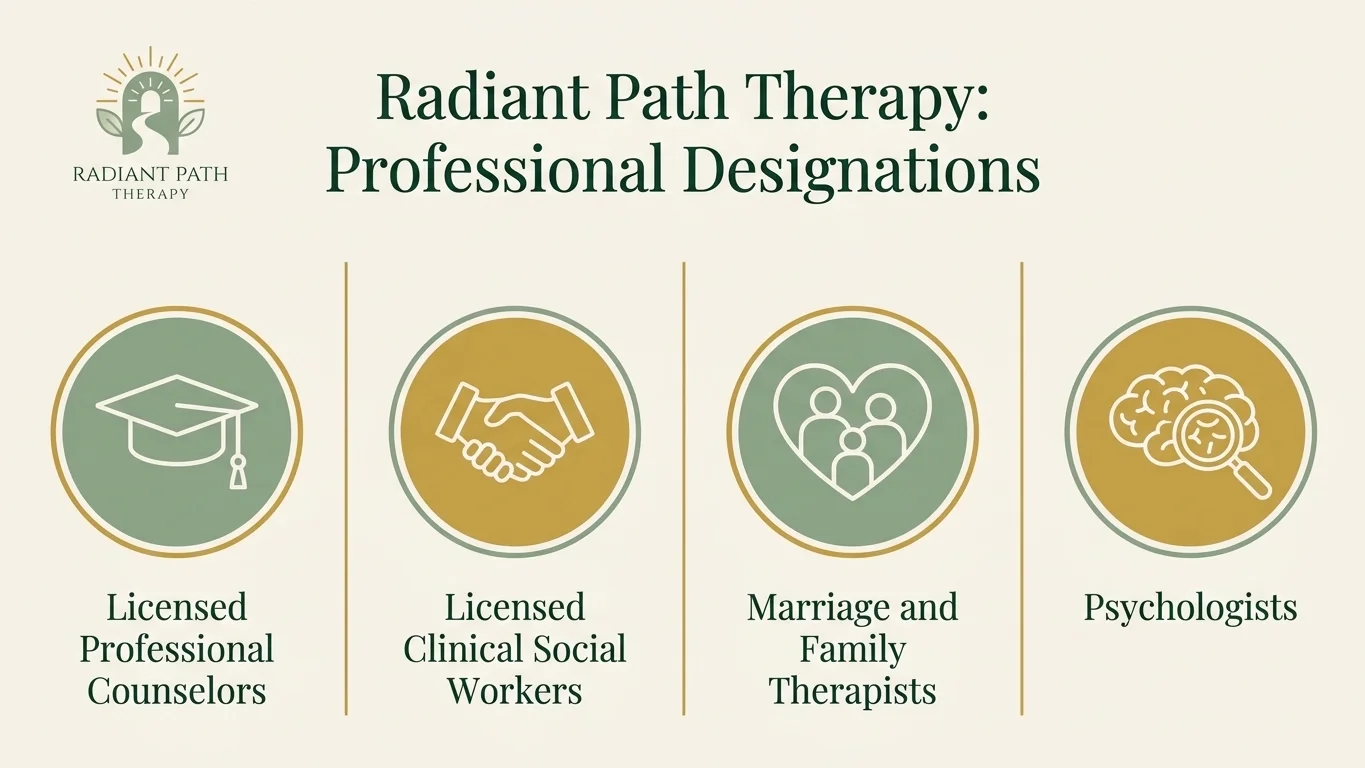
Different mental health professionals have different types of training. Some common professionals who may diagnose mental health conditions include the following.
Licensed Professional Counselors
Licensed professional counselors, often called LPCs, usually have a master's degree in counseling. Their training covers mental health, human development, counseling, and treatment. In many states, licensed counselors can assess and treat mental health conditions within the limits of their license. California uses the title Licensed Professional Clinical Counselor, or LPCC.
Licensed Clinical Social Workers
Licensed clinical social workers, or LCSWs, usually have a master's degree in social work. They also complete supervised clinical work before receiving their license. LCSWs look at many parts of a person's life. They may consider mental health, family, work, home life, and other concerns. They can provide therapy and may diagnose mental health conditions when allowed by their license and state rules.
Marriage and Family Therapists
Marriage and family therapists, or MFTs, focus on how relationships and family life can affect mental health. Their training often includes family relationships, communication, and emotional problems. MFTs can also work with people on their own. Depending on their license and state rules, they may diagnose mental health conditions.
Psychologists
Psychologists usually have advanced training in psychology. Many have a PhD or PsyD degree. Assessment and testing are important parts of psychology training. Psychologists may provide detailed evaluations when someone has questions about conditions such as ADHD, learning problems, or other mental health concerns. In most states, including California, psychologists generally cannot prescribe medication.
What Determines If a Therapist Can Diagnose?
Whether a therapist can diagnose depends on several things.
First, look at the therapist's license and training. A professional license shows that the person has completed the education, training, and supervised work required by the state. Next is the therapist's scope of practice. This means the services that a professional is legally allowed to provide. A therapist may have strong training in one area but may need to refer you to another professional for a different type of evaluation.
State laws also matter. Rules can be different from one state to another. A therapist who can diagnose in one state may have different rules to follow in another state. The type of problem also matters. A therapist may be able to assess common concerns such as anxiety or depression. A more complex situation may require more testing or a medical evaluation.
This is why it is important to ask your therapist what type of assessment they can provide.
What Mental Health Conditions Can Therapists Diagnose?
Therapists may diagnose a range of mental health conditions, depending on their license, training, and state rules.
Anxiety Disorders
Anxiety disorders include conditions such as generalized anxiety disorder, panic disorder, social anxiety disorder, and phobias. Symptoms can include constant worry, fear, a fast heartbeat, poor sleep, or avoiding certain places and situations.
During an assessment, a therapist may ask how often you feel anxious, when the symptoms started, and how much they affect your daily life. Treatment may include therapy methods such as cognitive behavioral therapy.
Depression
Depression is more than feeling sad for a short time. It can affect your energy, sleep, appetite, interest in activities, and daily life.
A therapist may ask how long you have had these symptoms and how they affect your work, relationships, and normal activities. After a careful assessment, a qualified professional may diagnose depression and help create a treatment plan.
Trauma and PTSD
Trauma can affect a person's thoughts, feelings, body, and daily life. Post-traumatic stress disorder, or PTSD, can cause symptoms such as flashbacks, nightmares, strong fear, trouble sleeping, or feeling constantly on edge.
A therapist with trauma training may assess these symptoms and determine whether they fit PTSD or another condition. Trauma care is an important part of the work at Radiant Path Therapy, where clients can receive support for trauma-related concerns.
Other Mental Health Conditions
Therapists may also work with conditions such as adjustment disorders, obsessive-compulsive disorder, mood disorders, and some substance use disorders. Some situations are more complex.
For example, symptoms related to bipolar disorder or psychosis may require a more detailed evaluation or help from a psychiatrist or psychologist. A referral does not mean that your therapist cannot help you. It can simply mean that another professional is needed for part of your care.
How Do Therapists Diagnose Mental Health Conditions?
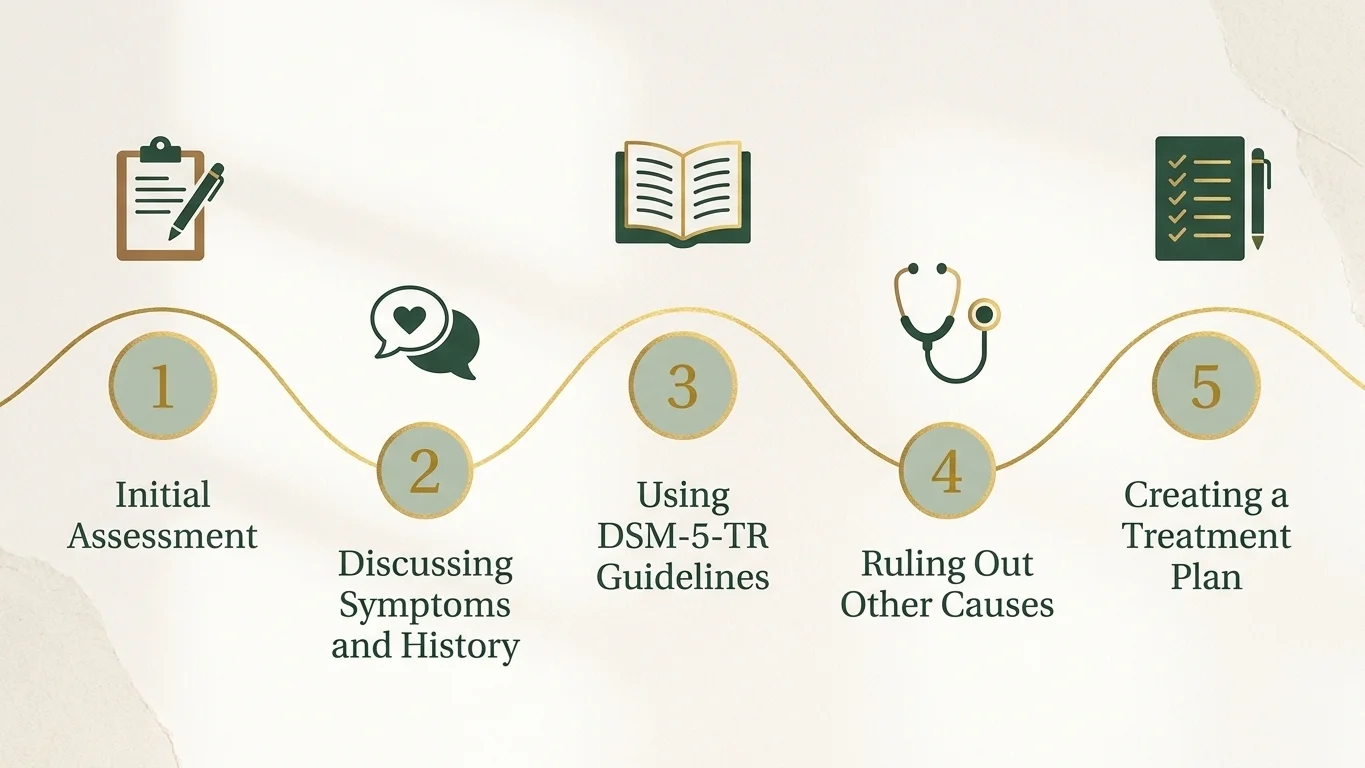
A mental health diagnosis should not be based on one quick question. It usually takes a careful assessment. Your therapist will look at your symptoms, history, and daily life.
Initial Assessment
The process often starts with an intake session. You will talk about why you are seeking help and what you want to change. Your therapist may also use short questionnaires about your mood, anxiety, stress, or other symptoms.
These tools can give the therapist more information, but they are not the only part of a diagnosis. The American Psychiatric Association explains that assessment tools should support clinical decisions and should not be used alone to make a diagnosis.
Discussing Symptoms and Personal History
Your therapist may ask when your symptoms started and how often they happen. They may also ask what makes them better or worse. You may talk about your health, family history, work, relationships, past treatment, and major life events.
Being honest can help your therapist understand the full picture. You do not need to have all the answers before your first session.
Using Diagnostic Guidelines
Mental health professionals in the United States may use the Diagnostic and Statistical Manual of Mental Disorders, Fifth Edition, Text Revision, also called the DSM-5-TR. The DSM-5-TR describes mental disorders and gives criteria that trained professionals can use when making a diagnosis. It also explains symptoms and other factors that may need to be considered.
The DSM is a guide. A professional still needs to use clinical judgment and consider the person's full situation. Learn more about the DSM-5-TR from the American Psychiatric Association
Ruling Out Other Possible Causes
Some physical health problems can look like mental health symptoms. For example, sleep problems, some medical conditions, medication side effects, and substance use can affect mood, energy, sleep, or anxiety.
Because of this, your therapist may suggest that you speak with your doctor or another health professional if they think a medical check is needed. A careful assessment looks at more than one possible cause before reaching a conclusion.
Creating a Treatment Plan
After the assessment, you and your therapist can create a treatment plan. The plan may include your goals, the type of therapy you will use, and how often you will meet. You can also talk about how you will know if treatment is helping.
Your treatment plan can change over time. If your symptoms or needs change, your therapist can adjust the plan.
Can a Therapist Diagnose Anxiety or Depression?
Yes, a qualified therapist may be able to diagnose anxiety or depression when it is within their scope of practice. During an assessment, the therapist may ask about your symptoms, when they started, how often they happen, and how they affect your daily life.
A questionnaire may also be used to learn more about the symptoms. The therapist then considers the information as a whole. Sometimes, more help is needed. If symptoms are severe, do not improve, or may have a medical cause, your therapist may suggest speaking with a psychiatrist or medical doctor.
If you are having thoughts of hurting yourself, seek immediate help. In the United States, you can call or text 988 to reach the 988 Suicide & Crisis Lifeline
Therapist vs. Psychologist vs. Psychiatrist
These terms can be confusing because they all work in mental health, but their training and roles are different. A therapist is a broad term. It can include counselors, social workers, and marriage and family therapists. Depending on their license, they may provide therapy and diagnose mental health conditions.
Most therapists cannot prescribe medication. A psychologist has advanced training in psychology. Psychologists may provide therapy, assessment, and testing. They can diagnose mental health conditions within their professional scope. In most states, including California, they generally do not prescribe medication.
A psychiatrist is a medical doctor who specializes in mental health. Psychiatrists can diagnose mental health conditions, provide treatment, and prescribe medication. The right professional depends on your needs. Some people work with more than one type of mental health professional.
When Might You Need a Psychologist or Psychiatrist?
A therapist can be a good place to start if you are not sure what is happening or need support with your symptoms. A psychologist may be helpful when you need a detailed psychological evaluation or testing. This may be useful when there are questions about ADHD, learning problems, autism, memory, or other concerns that need a closer assessment.
A psychiatrist may be helpful when you need a medical mental health evaluation or may need medication. A psychiatrist can also review medications that you are already taking. You do not have to decide this by yourself. Your therapist can explain your options and may refer you to another professional when needed.
What Happens After a Diagnosis?
Getting a diagnosis can bring different feelings. Some people feel relieved because they finally understand what may be causing their symptoms. Others may feel worried or unsure. A diagnosis does not define who you are. It is a tool that can help your care team understand your symptoms and choose the right type of support.
After a diagnosis, treatment may include therapy, medication, or both. Your treatment may also include learning new skills, joining a support group, or getting other forms of care. You should be part of these decisions. Ask questions if you do not understand something. Your treatment plan should be based on your needs, goals, and concerns.
Conclusion
So, can therapists diagnose mental health conditions? Yes, many can. However, not every therapist has the same ability to diagnose.
A therapist's license, training, scope of practice, and state laws all matter. Licensed counselors, clinical social workers, marriage and family therapists, and psychologists may diagnose within their professional scope. Psychiatrists can also diagnose and provide medical treatment, including medication.
If you are not sure what type of help you need, start by asking a qualified mental health professional. They can explain what they can assess and let you know if another professional would be helpful.
A diagnosis is not the end of the process. It can be one step toward understanding your symptoms and finding care that fits your needs.
Get Professional Mental Health Support

If you have been wondering whether therapy could help, Radiant Path Therapy in Grand Terrace, CA is here to support you. Our team provides trauma-specialized and evidence-based care for concerns such as anxiety, depression, trauma, and stress.
You can receive care in person or through secure online therapy. If you are not sure where to start, a therapist can help you understand your concerns and discuss the next steps.
Ready to take the first step? Contact Radiant Path Therapy to learn more about available support.
Frequently Asked Questions
Can therapists diagnose mental illness?
Yes, some licensed therapists can diagnose mental health conditions. However, this depends on their license, training, and state rules. It is best to ask your therapist what they are licensed and trained to diagnose.
Can a therapist diagnose anxiety?
Yes, a qualified therapist may diagnose anxiety when it is within their scope of practice. They will ask about your symptoms, how long you have had them, and how they affect your daily life.
Can a therapist diagnose depression?
Yes, some therapists can diagnose depression after a careful assessment. They may ask about your mood, sleep, energy, appetite, and interest in daily activities. They may also suggest a medical check if another health problem could be causing similar symptoms.
Can a therapist diagnose ADHD?
Some therapists may assess or diagnose ADHD, depending on their training and license. In some cases, a psychologist or psychiatrist may be involved in a more detailed evaluation. Ask your therapist what type of ADHD assessment they provide.
Can a therapist diagnose PTSD?
Yes, a qualified therapist with the right training may diagnose PTSD within their scope of practice. They may ask about the traumatic event, your symptoms, when they started, and how they affect your daily life.


