
Combined Drug Intoxication: Risks, Signs, and Treatment
Combined drug intoxication happens when a person has two or more substances in their body at the same time. These substances can work together in harmful ways. It might be alcohol with pills. It might be two street drugs taken together. It can even be a drug that was secretly mixed with something else. One substance alone may seem okay. But together, they can slow your breathing, stress your heart, and cause an overdose very fast.
At Radiant Path Therapy in Grand Terrace, CA, we help adults across the Inland Empire who are dealing with drug and alcohol use. Many of them also struggle with stress, sadness, or past trauma. We see every day how often people mix substances without knowing the danger. In this guide, we will explain what happens in the body, which mixes are most risky, what signs to look for, and how treatment can help.
What Is Combined Drug Intoxication?
Combined drug intoxication means being affected by more than one substance at once. These can be alcohol, prescription medicine, store-bought medicine, or illegal drugs. It can happen on purpose or by mistake. The CDC explains that some people mix drugs on purpose to make one drug stronger or weaker, or to feel what the mix does. Other times it happens by accident.
A person may take a drug that was mixed with fentanyl and never know it. The drugs do not have to be taken at the exact same time. If someone drinks at dinner and takes a sleeping pill at bedtime, both can still be in their body together. So how is this different from using just one drug?
When someone uses one drug, doctors usually know what to expect. The effects follow a pattern. When two or more drugs are mixed, that pattern breaks. One drug can make another stronger. It can hide the signs of the other drug. It can also make the other drug last longer. This makes the whole thing harder to predict and harder to treat.
What Happens When You Mix Multiple Substances?
Every drug changes how your brain and body work. Some drugs slow you down. Others speed you up. When you mix them, they do not just sit side by side. They affect each other.
Drugs Can Change Each Other's Effects
Two drugs that slow you down can slow your breathing much more than one drug alone. A drug that speeds you up and a drug that slows you down can confuse the body. One pushes the heart to work harder while the other slows the breathing. Your liver also has to clean every drug out of your blood. When it is busy with one drug, the other drug may stay in your body longer than usual.
Why the Effects Are Hard to Predict
The results are hard to guess. The CDC says mixing drugs is never safe because the effects can be stronger, less predictable, and even deadly compared to one drug alone. A mix that felt fine last week could hit much harder this week. It depends on how much you ate, how tired you are, and how strong the drugs are.
How the Amount and Type of Drug Matter
How much you take and what you take both matter. Even small amounts can be risky when mixed. Your size, age, health, and past drug use all play a part. For example, older adults break down some medicines more slowly. One NIH study found that nearly 78 percent of drinkers over age 65 said they took medicines that can react with alcohol.
Dangers of Mixing Drugs and Alcohol
Alcohol is legal and easy to buy, so many people forget it is a drug. Alcohol slows down the brain and body. That is why it shows up in so many harmful drug mixes.
Alcohol Makes Other Drugs Stronger
Alcohol can make other drugs stronger. When you mix it with other drugs that slow you down, the effects stack up. The person may get very sleepy or confused. They may not be able to wake up. Their breathing can become slow and weak.
A Higher Risk of Serious Harm
It also raises the chance of serious harm. A study in JAMA Network Open found that alcohol was involved in 14.7 percent of opioid overdose deaths in 2017. Benzos were involved in 21 percent.
Why Prescription Medicine and Alcohol Do Not Mix
Many people believe a medicine is always safe if a doctor prescribed it. That is not true when you add alcohol. The mixing of prescription drugs and alcohol dangers are very real.
The National Institute on Alcohol Abuse and Alcoholism warns that mixing alcohol with some medicines can cause throwing up, headaches, sleepiness, fainting, and clumsiness. It can also cause bleeding inside the body, heart problems, and trouble breathing. Alcohol can even stop a medicine from working, or make it harmful to your body.
This is true for some medicines you buy without a prescription, and even some herbal products. Sleep aids, anxiety pills, pain pills, allergy medicine, and some mood medicines can all be risky with alcohol. If your medicine has a warning about alcohol on the label, please take it seriously.
Common Drug Combinations and Their Risks
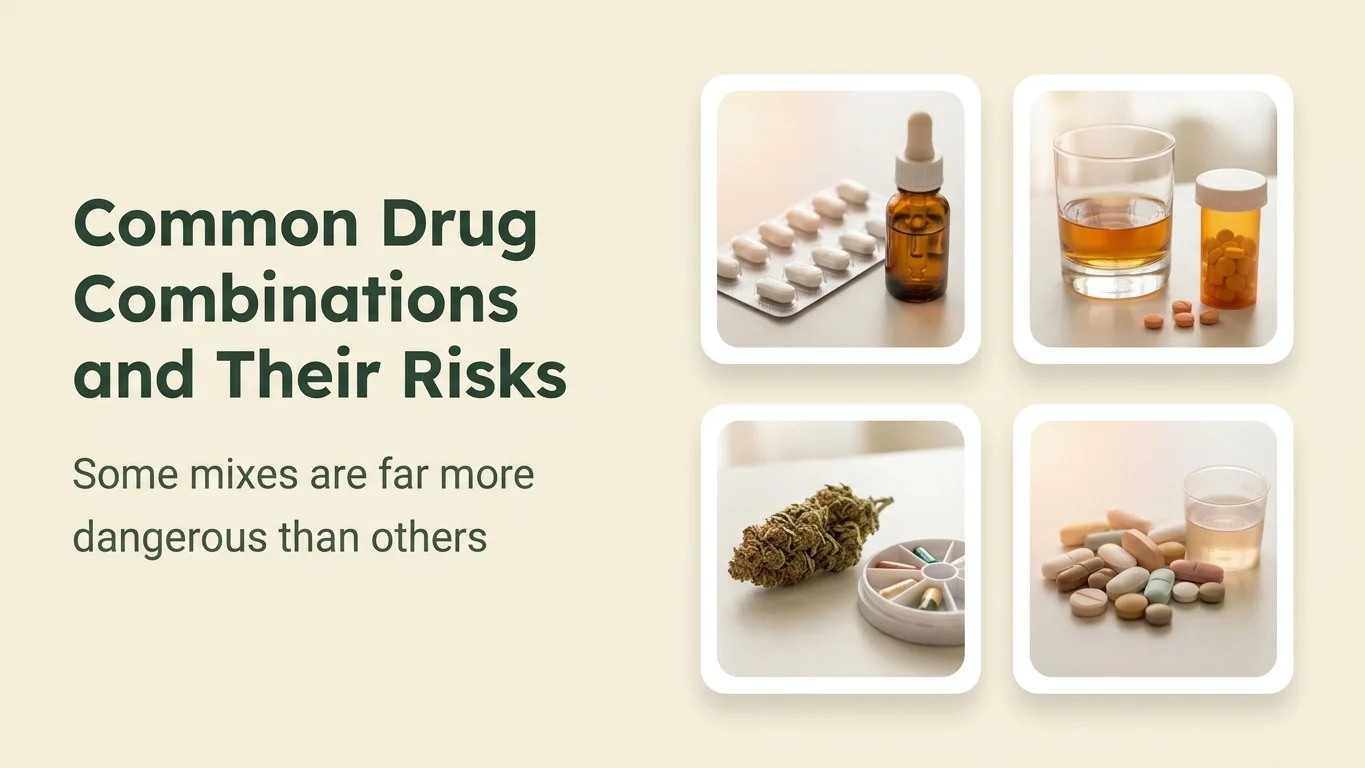
Some drug mixes are more dangerous than others. The table below gives a quick look at four of the most risky ones. After the table, we explain each one in more detail.
Drug Mix | What It Does to the Body | Main Danger |
Opioids and Alcohol | Both slow down breathing | Breathing can slow down or stop |
Opioids and Benzos | Both cause deep sleepiness and slow breathing | Coma, overdose, and death |
Cocaine and Alcohol | The body makes a new, harmful chemical | Heart and liver damage, sudden death |
Stimulants and Opioids | One speeds up the heart, the other slows breathing | Heart problems and overdose |
Opioids and Alcohol
Opioids include pain pills like oxycodone and hydrocodone. They also include heroin and fentanyl. Opioids and alcohol both slow down your breathing. When you use them together, breathing can get dangerously slow or stop completely. Health data shows that about 1 in 7 opioid-related deaths in 2017 involved drinking within a few hours of using an opioid.
Opioids and Benzodiazepines
Benzodiazepines are often called "benzos." Xanax, Valium, and Klonopin are common examples. Doctors use them for anxiety, sleep, and seizures. Mixing them with opioids is very risky.
Because of this, the FDA added a boxed warning on August 31, 2016, about giving patients both drugs together. A boxed warning is the strongest warning the FDA uses. It says this mix can cause extreme sleepiness, slow and weak breathing, coma, and death.
Cocaine and Alcohol
This mix is common at parties. Most people do not know what it does inside the body. When you use cocaine and alcohol together, your body makes a new chemical called cocaethylene. It works a lot like cocaine, but it is thought to be harder on the heart and liver. It also stays in the blood about twice as long.
This means your heart stays under stress for a longer time. In one study, people who were given both substances showed much bigger effects on the heart than with either one alone. An older review linked cocaethylene to seizures, liver damage, and a weaker immune system. It also found a much higher risk of sudden death than with cocaine alone.
Stimulants and Opioids
Stimulants include cocaine, meth, and some ADHD medicines when they are misused. Some people mix stimulants with opioids on purpose. They think one will balance out the other. That is not how it works. Stimulants can raise heart rate and blood pressure to unsafe levels, while opioids slow down breathing. The body gets hit from both sides at once.
This mix is becoming more common. The CDC reports that in 2020, about 40 percent of deaths involving street fentanyl also involved stimulants. Many people who use stimulants have no idea their drugs contain fentanyl.
Older Adults and Combined Drug Intoxication
Older adults face some of the highest risks from combined drug intoxication, but many people do not realize why. As the body ages, it processes drugs differently, and many seniors take several medicines at once for different health conditions.
How Taking Many Medications Raises the Risk
Many older adults take five or more medicines every day for things like blood pressure, pain, sleep, or anxiety. This is called polypharmacy. The more medicines a person takes, the higher the chance that two of them will react badly together. Aging bodies also break down drugs more slowly.
The liver and kidneys do not clear substances from the blood as fast as they did years ago, so drugs can build up and stay active longer than expected. This means a dose that was once safe can become risky over time, even without any change in how much a person takes.
Tips for Families of Older Adults
Families can help lower this risk in simple ways. Keep an updated list of every medicine, vitamin, and supplement your loved one takes, and share it with every doctor they see. Ask the pharmacist to check for drug interactions whenever a new prescription is added. Watch for signs of confusion, excessive sleepiness, or unsteady walking, since these can be early warning signs rather than "just getting older."
If your loved one drinks alcohol, ask their doctor directly whether it is safe with their current medicines. And if you notice pill bottles being used faster than expected, it may be time to have an honest conversation.
How Mixing Drugs Damages Your Organs
Combined drug intoxication does not only cause immediate danger. Over time, mixing substances can cause lasting damage to the organs that keep the body running.
Liver Damage
The liver works to break down almost every drug and medicine a person takes. When two or more substances compete for the liver's attention, it has to work harder and longer. This extra strain can lead to inflammation, scarring, and in serious cases, liver failure. Mixing alcohol with medicines like acetaminophen is especially hard on the liver, since both are processed through the same pathway.
Kidney Damage
The kidneys filter waste and drug byproducts out of the blood. Combined drug intoxication can raise blood pressure suddenly, cause dehydration, or create toxic byproducts that the kidneys were never built to handle at once. Over time, repeated strain like this can lead to reduced kidney function or kidney failure.
Heart and Stomach Problems
Some combinations, like stimulants and opioids, pull the heart in two directions at the same time. This can lead to irregular heartbeat, high blood pressure, or even heart attack, especially with repeated use. Mixing alcohol with certain pain medicines can also irritate the stomach lining, raising the risk of ulcers and internal bleeding.
Signs and Symptoms of Combined Drug Intoxication
Physical signs can include very tiny or very large pupils, slurred speech, and trouble walking. The person may throw up. Their skin may look pale or feel cold and sweaty. Their heartbeat may be too fast, too slow, or uneven. They may also be very sleepy and hard to keep awake.
You may also notice changes in how the person acts or thinks. They may seem confused or forget things. They might get angry, scared, or act in ways that are not normal for them. Some people seem "out of it" and cannot follow a simple talk.
Some signs mean the person needs emergency help right away. Call 911 if you see any of these:
Slow, weak, or stopped breathing
Gurgling or loud snoring sounds
Blue or gray lips or fingertips
Not waking up, even when you shout or shake them
Seizures or shaking fits
Chest pain
A very high body temperature
Do not wait to see if the person will "sleep it off." Waiting can cost a life.
Combined Drug Intoxication and Overdose
Many people think an overdose only happens when someone takes too much of one drug. But mixing drugs can lead to an overdose even when the amount of each drug seems small. Knowing how intoxication and overdose are different, and why mixing drugs makes things worse, can help you act fast and save a life.
How Intoxication Is Different From an Overdose
Intoxication and overdose are not the same thing. Intoxication means a person is under the influence. Their body and mind are affected, but their body is still working. An overdose happens when there is too much of a substance for the body to handle. The brain, heart, or lungs start to shut down. Intoxication can turn into an overdose very fast, sometimes in just minutes.
Why Mixing Drugs Raises Overdose Risk
Mixing drugs makes an overdose more likely. When drugs make each other stronger, a normal amount of one drug can quickly become a deadly amount. In 2022, close to half of all drug overdose deaths in the U.S. involved more than one drug. The CDC also says deaths from mixing drugs have gone up.
Why an Overdose Can Be Hard to Spot
An overdose from mixed drugs can also be hard to notice. One drug can hide the signs of another. For example, a stimulant may keep someone looking awake while an opioid is slowly shutting down their breathing. When the stimulant wears off, the person can crash very fast. Friends may think the person is just drunk or tired. That is why it is always safer to treat worrying signs as an emergency.
Polydrug Use and Mental Health
Drug use and mental health are closely connected. Using more than one substance can make both problems worse.
How Mixing Drugs Affects Mood and Thinking
Mixing drugs can cause big highs followed by deep lows. Over time, this can lead to ongoing worry, sadness, poor sleep, trouble focusing, and memory problems. Research has found that using many substances is linked to worse depression and anxiety. People who mix drugs also tend to do worse in treatment than people who use only one substance.
The Link Between Drug Use and Mental Health Problems
Many people start using drugs or alcohol to cope with pain, trauma, or stress. The relief does not last. So they use more, or they add another drug. One study of young adults found that mental health problems were more common in those who struggled with many substances than in those who only had problems with alcohol or cannabis.
Effects on Daily Life and Relationships
Mixing substances also affects daily life. A large study of more than 28,000 people starting treatment looked at this closely. It found that people who used many substances in the past month were more likely to face housing problems, job loss, depression, anxiety, PTSD, self-harm, and overdose. Families feel the pain too. Trust breaks down. Money gets tight. Loved ones live in constant worry.
Why People With Trauma Often Mix Substances
Trauma and substance use are deeply connected, and this connection often goes unspoken until it becomes a crisis.
Self-Medicating PTSD, Anxiety, and Depression
Many people who mix substances are not doing it for fun. They are trying to quiet symptoms of PTSD, anxiety, or depression. The feelings feel too heavy to face alone. A person might use alcohol to fall asleep. Then they add a pill to stay calm during the day.
Then they reach for something else when the first two stop working. Each substance is a way to cope. But combined, they create real danger. The effects become unpredictable. The risk of overdose goes up fast.
How Trauma Therapy Helps Break the Cycle
Treating substance use alone is often not enough. If the trauma underneath is never addressed, the urge to self-medicate tends to come back.
At Radiant Path Therapy, our Trauma Therapy approach works alongside addiction treatment. We help people process what happened to them in a safe, structured way. This is different from trying to outrun the pain. When trauma and substance use are treated together, people have a much stronger chance at lasting recovery.
What Is Polysubstance Use Disorder?
Polysubstance use disorder means a person keeps using more than one substance in a way that hurts their health and life. Doctors today usually diagnose each substance problem on its own, so one person may have both an alcohol and an opioid use disorder. This is different from mixing substances once. A disorder is a repeated pattern that is hard to control, even when it causes problems.
Some warning signs include needing more of a drug to feel the same effect, feeling sick or shaky when stopping, and not being able to cut back. The person may miss work or family time, hide their use, or keep using even after it causes harm. If this sounds familiar, it may be time to talk to a professional.
Combined Substance Use Risks and Treatment
The good news is that people can get better. Good treatment looks at every substance a person uses, not just one. Research suggests that care built around a person's full drug use and mental health needs may lead to better results.
The first step is a medical check to make the person safe and stable. Stopping some drugs all at once, like alcohol or benzos, can be dangerous. The FDA advises lowering benzo doses slowly and telling your doctor about everything you use, including alcohol.
Next comes therapy. CBT helps change unhealthy habits, trauma therapy helps heal past pain, and dual diagnosis care treats drug use and mental health together. Some people need extra support through IOP or PHP programs. Ongoing help, like support groups and relapse prevention plans, keeps people strong over time.
What to Do in an Emergency
Call 911 right away if someone is breathing slowly or not at all, will not wake up, has blue lips, has a seizure, or has chest pain. It is always better to call than to wait too long.
While you wait, try to wake the person by saying their name loudly. If you think opioids are involved, give naloxone (Narcan) if you have it. If they are breathing, roll them onto their side so they do not choke. If they are not breathing, follow what the 911 operator tells you. You can also call Poison Help at 1-800-222-1222.
Do not leave the person alone. Mixed drugs can wear off at different times, so someone may seem better and then suddenly get worse. Stay with them and watch their breathing until help arrives.
How to Lower the Risk of Combined Drug Intoxication
While the safest choice is never to mix substances, harm reduction tools can save a life when someone is not ready to stop.
Fentanyl Test Strips
Illegal drugs today are frequently contaminated with fentanyl, often without the user's knowledge. Fentanyl test strips are a low-cost way to check a substance before using it. They cannot catch everything, but a positive result is a clear warning sign to not use that batch.
Never Use Alone
If something goes wrong, having another person present can be the difference between life and death. If using alone cannot be avoided, tell someone what you are taking and ask them to check on you, or use a virtual overdose monitoring service that can call for help if you stop responding.
How to Get Naloxone in California Without a Prescription
California allows pharmacies to give out naloxone (Narcan) without an individual prescription under a standing order. This means anyone can walk into most pharmacies and ask for it directly, no doctor's visit needed.
Many local health departments and community organizations also give out naloxone for free. Keeping it on hand, and knowing how to use it, can save the life of someone experiencing an opioid-related overdose.
Conclusion
Mixing drugs is much more dangerous than most people think. Alcohol, pills, and street drugs can team up inside the body in ways that are hard to predict. They can slow breathing, stress the heart, and cause an overdose with little warning. Knowing the signs and acting fast can save a life.
If mixing substances has become a habit for you or someone you love, you are not alone. In 2023, about 54.2 million Americans needed treatment for substance use, but only 12.8 million people with a substance use disorder got it. Getting help early can truly change your future.
Get Professional Help for Combined Substance Use
At Radiant Path Therapy in Grand Terrace, CA, we help adults across the Inland Empire stop mixing substances and start healing. Our caring, licensed team offers addiction treatment, dual diagnosis care, and IOP and PHP programs that treat drug use and mental health together. We accept PPO insurance and check your benefits for free.
We also offer same-day admission, with both in-person and online visits. You do not have to do this alone. Call (909) 577-1124 or contact Radiant Path Therapy today to talk with our Grand Terrace team. A healthier life can start right now.
Frequently Asked Questions
What is combined drug intoxication?
It is when two or more substances affect a person at the same time. This can be alcohol, medicine, or street drugs. The drugs can make each other stronger and more harmful.
What are the warning signs of dangerous drug intoxication?
Watch for slow or weak breathing. Look for blue lips or gurgling sounds. Confusion, seizures, and chest pain are also warning signs. These are emergencies. Call 911 right away.
Is combined drug intoxication treatable?
Yes. Emergency care can treat the danger right away. After that, medical care and therapy can help. This support helps people stop mixing drugs and build a healthier life.
What is the difference between polydrug use and polysubstance use disorder?
Polydrug use means using more than one substance. A disorder is different. It means there is an ongoing pattern that is hard to control. It also causes harm to health, work, or relationships.
Which drug combination is the most dangerous?
Opioids with benzodiazepines or alcohol are among the most dangerous mixes. All three slow breathing. This can lead to coma or death. Cocaine and alcohol are also high-risk. Together they create a toxic byproduct that stresses the heart and liver.
How long should you wait between alcohol and medication?
This depends on the medicine. There is no single safe number of hours for everyone. Some medicines warn against any alcohol at all. Others may be safer after several hours. Always check the label. Or ask a pharmacist first.


