

Yes, depression can cause memory loss, and for most people, memory comes back as the depression improves with treatment. Depression affects concentration, short-term memory, and recall, so everyday details slip away more easily than usual. Some fogginess can linger for a while after your mood lifts, but it usually keeps getting better with the right care.
If you’ve been forgetting more than usual lately, it’s natural to worry that something serious is going on. Many people who visit Radiant Path Therapy and Psychiatry’s mental health clinics in Grand Terrace and Redlands come in asking could depression cause memory loss like this, and the answer often brings real relief. This guide explains why it happens, how it differs from dementia, and what helps your memory recover.
Why Does Depression Cause Memory Loss?
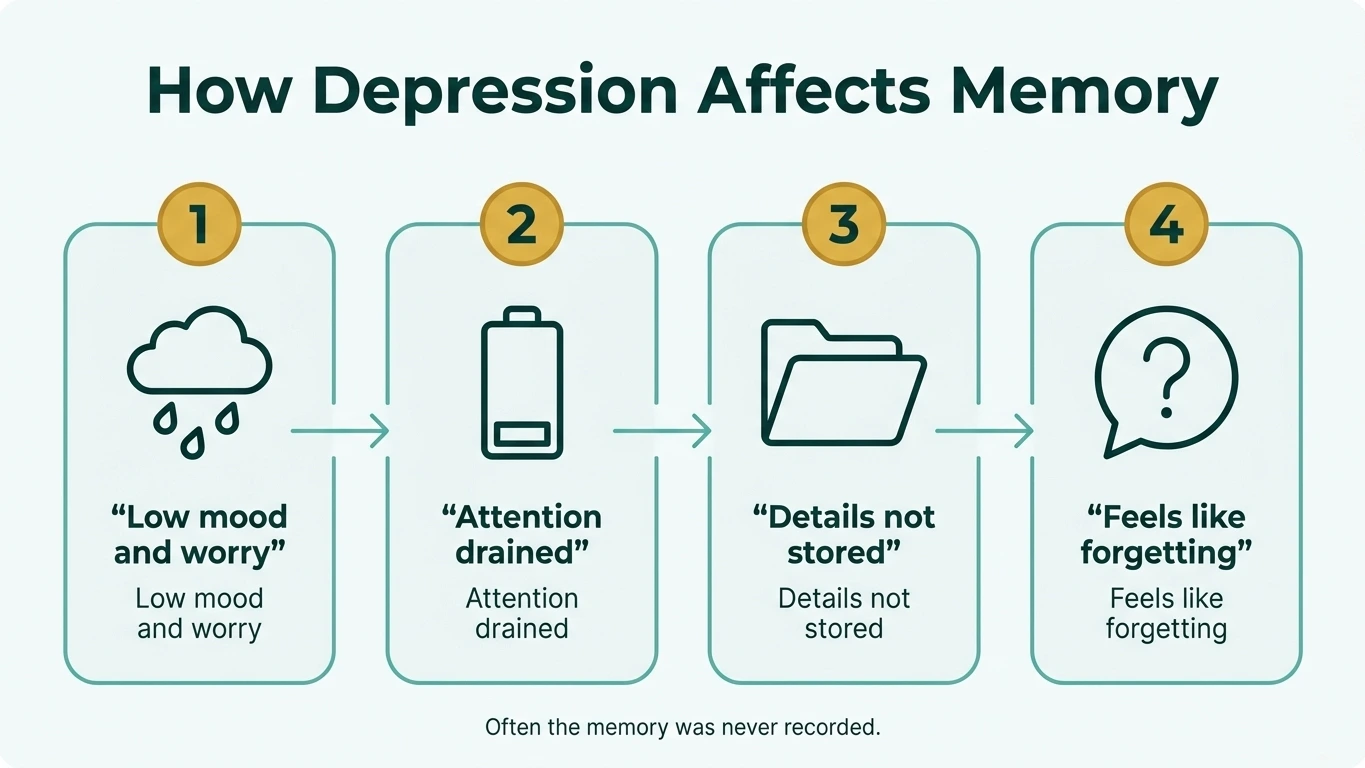
Depression causes memory loss because it drains your attention, the mental energy your brain needs to store new information. Low mood, worry, and fatigue crowd your mind, so new details often don’t stick. Stress-related brain changes and a pull toward negative memories add to the problem in their own ways.
Forgetfulness isn’t a side issue, because it’s one of the ways depression actually shows up. A 2023 Nature review puts trouble with thinking and memory on the same short list as sadness and losing interest in things you enjoy, the core signs of major depressive disorder (MDD).
Poor Focus Stops New Memories From Forming
Your brain has to notice information before it can store it, a step called encoding. Rumination, which means replaying the same worries over and over, uses up that attention. That’s why you might reread a page three times or forget a name seconds after hearing it. In many cases, the memory isn’t lost, because your brain never recorded it in the first place.
Brain Chemicals and the Hippocampus
The hippocampus is the part of your brain that turns daily experiences into lasting memories. Depression changes how your brain uses chemical messengers like serotonin, and long-term stress keeps cortisol, your main stress hormone, high. Research links long-lasting or repeated depression with a smaller hippocampus, which helps explain why memory suffers most in severe or recurring depression.
Why Happy Memories Fade First
Depression makes your brain grab onto sad and painful memories, while happy ones fade into the background. Psychologists call this mood-congruent memory, which simply means your memory tends to match your mood. Your autobiographical memory, the story of your own life, also turns vague, so whole years can feel gray instead of full of specific good moments.
How Depression and Memory Loss Feed Each Other
Depression and memory problems can make each other worse. Forgetting appointments or losing focus at work leaves many people embarrassed and less confident, and those feelings deepen the low mood. Seeing forgetfulness as a symptom rather than a personal failure takes some of that weight off.
Signs That Depression Is Affecting Your Memory
The most common signs are trouble concentrating, forgetting recent conversations or tasks, losing your train of thought, and feeling mentally slow. These problems show up alongside other depression symptoms, like low mood and poor sleep, and they rise and fall with how depressed you feel.
The National Institute of Mental Health (NIMH) depression guide lists trouble concentrating, remembering, or making decisions among the common signs of depression, along with feeling slowed down.
Short-Term and Working Memory Lapses
Working memory holds information for seconds to minutes, like a phone number you’re about to dial, and depression often affects it first. Watch for everyday lapses like these.
- Walking into a room and forgetting why
- Losing your place in the middle of a sentence
- Putting something down and forgetting where a minute later
- Skipping steps in a recipe you know well
Trouble Recalling Past Personal Memories
Some people with depression struggle to recall specific events from their own lives, like a birthday dinner or last summer’s trip. This affects your autobiographical memory, the story of your own life, so the memories feel blurry or summarized rather than truly lost. In Alzheimer’s disease and other dementias, a person may lose the memory of the event altogether.
Brain Fog, Slower Thinking, and Memory Loss
Brain fog is cloudy, slow thinking that makes it hard to focus. Unlike true memory loss, you can usually recall the information when you get extra time or a hint. Slower processing speed shows up as taking longer to answer questions, make choices, or finish routine tasks.
Other Depression Symptoms That Come With Memory Problems
Memory trouble from depression usually comes with several of these symptoms.
- Sad, anxious, or “empty” mood that doesn’t lift
- Loss of interest in hobbies you used to enjoy
- Low energy or constant tiredness
- Sleeping too little, waking too early, or oversleeping
- Changes in appetite or weight
- Feelings of hopelessness, guilt, or worthlessness
The more of these you notice alongside memory trouble, the more likely depression is part of the picture.
Seeing yourself in these signs? Our team can help you find out what’s behind them, so reach out whenever you’re ready.
What Kind of Depression Is Most Likely to Cause Memory Loss?
Severe, long-lasting, or repeated depression is the most likely to affect memory, while milder depression usually causes smaller lapses that clear up sooner. Some types of depression also put extra strain on memory for specific reasons.
| Type of Depression | Why Memory May Suffer More |
| Severe major depression | Deep fatigue and low mood leave little attention for storing new information |
| Persistent depressive disorder | Symptoms last 2 years or longer, so poor focus becomes a daily pattern |
| Psychotic depression | Delusions or hallucinations pull attention away from what’s happening around you |
| Postpartum depression | Night feedings break up the deep sleep your brain needs to lock in memories |
| Perimenopausal depression | Falling estrogen and night sweats disrupt sleep while mood drops |
| Late-life depression | Normal age-related brain changes add to depression’s effect on memory |
Can Anxiety or Trauma Make Depression-Related Memory Problems Worse?
Yes, anxiety and trauma can make depression-related memory problems worse, because they compete for the same attention depression already drains. Constant worry from generalized anxiety disorder keeps your mind busy, post-traumatic stress disorder (PTSD) keeps your brain on alert for danger, and dissociation, feeling detached from yourself or your surroundings, can leave short gaps in memory. Cognitive behavioral therapy (CBT) works on both depressive and anxious thinking, so one treatment plan can address both.
Depression-Related Memory Loss vs. Dementia
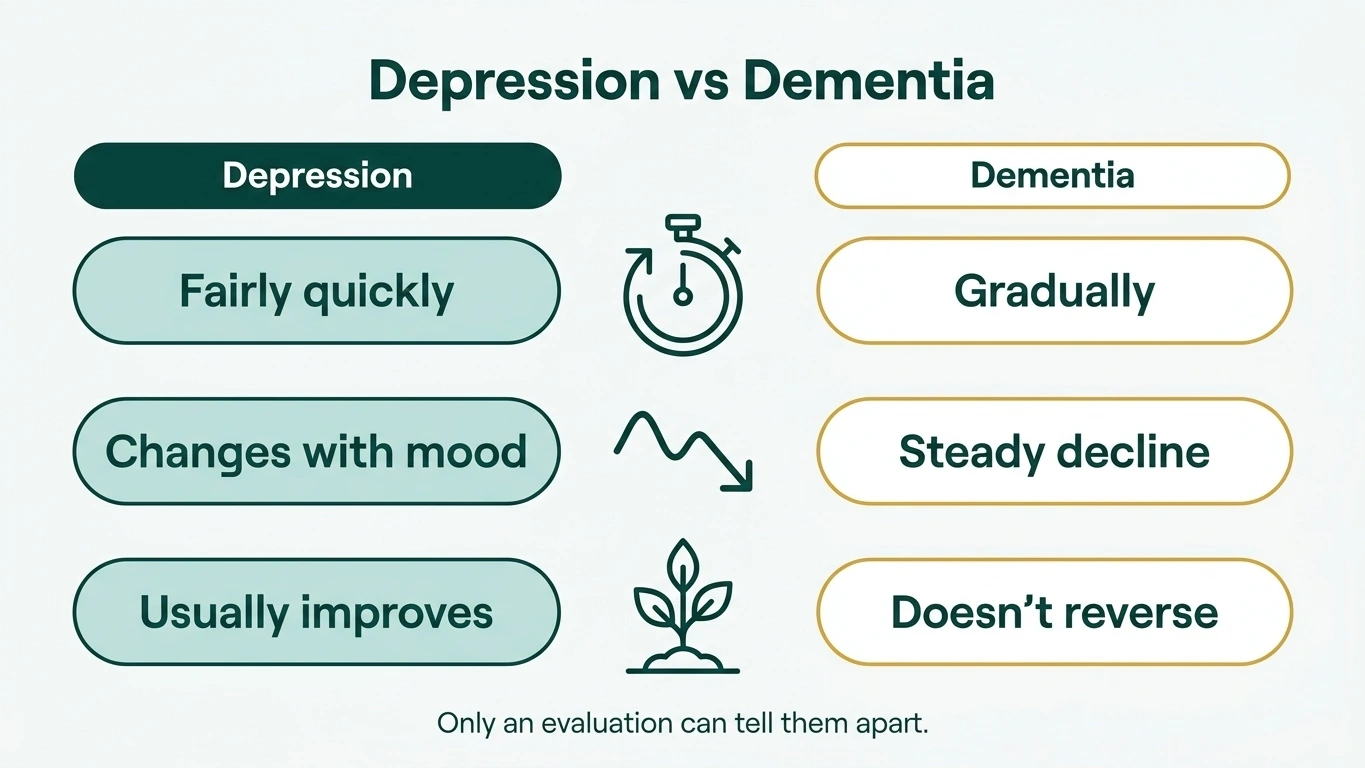
Depression-related memory loss usually starts alongside low mood, changes from day to day, and improves with treatment. Dementia develops slowly, keeps getting worse, and affects more than memory over time. People with depression usually notice and worry about their forgetfulness, while people with dementia often don’t.
| Feature | Depression-Related Memory Loss | Dementia |
| How it starts | Fairly quickly, along with mood changes | Gradually, over months or years |
| Day to day | Better or worse with mood and sleep | Slow, steady decline |
| Self-awareness | You notice it and feel worried | You may not notice it |
| On memory tests | You may give up or say “I don’t know” | You try but give wrong answers |
| With depression care | Usually improves | Doesn’t reverse |
The two can also happen together, so only a full evaluation can tell them apart.
What Is Pseudodementia?
Pseudodementia is an older term for depression-related memory and thinking problems that look like dementia but improve once the depression lifts. In a 2022 case report, a 74-year-old man’s memory tests and brain scans first pointed to moderate Alzheimer’s disease. After treatment for his depression, both returned to normal over the next two years.
The same authors note that up to 30% of older adults with depression get misdiagnosed with Alzheimer’s disease. That shows how easily the two get confused, even by experienced doctors.
Does Depression Raise Your Risk of Dementia Later?
Depression may raise your risk of dementia later, especially when it starts in older age. The 2022 report above describes depression in older adults as a risk factor that may double the chance of later Alzheimer’s disease. Researchers still aren’t sure whether depression drives that risk, shares causes with dementia, or sometimes appears as an early sign, so regular checkups help catch any changes early.
Other Causes of Memory Loss to Rule Out
Several health problems cause memory trouble that looks like depression or makes it worse. The most common are hypothyroidism, low vitamin B12, sleep apnea or insomnia, medication side effects, alcohol use, and head injuries.
Thyroid problems are a good example, since an underactive thyroid brings the same tiredness, low mood, and slow thinking that depression does. Sleep aids, some allergy medicines, and some pain medicines can dull memory as well, so bring a full medication list to your appointment. Treating one of these causes can improve memory on its own.
How Doctors Tell If Depression Is Causing Your Memory Loss
Doctors look at how your memory problems started, how they connect to your mood, and whether anything else explains them. If memory improves as mood improves, that confirms the link. A typical evaluation follows these steps.
- Symptom history. Your provider asks when the memory trouble began, how often it happens, and how it affects daily life.
- Depression screening. You fill out a short questionnaire, such as the PHQ-9, that rates 9 common symptoms.
- Cognitive screening. A 10 to 15-minute test checks your recall, attention, and problem-solving.
- Physical exam and blood work. These rule out the medical causes covered above.
- Medication review. Your provider goes over everything you take, including supplements.
- Further testing if needed. Your provider may suggest neuropsychological testing or a brain scan when the picture stays unclear.
How Memory Loss From Depression Is Treated
Treat memory loss from depression by treating the depression itself, with talk therapy, medication, or both, matched to how severe it is. CBT and interpersonal therapy (IPT) ease rumination and free up attention, while antidepressants such as SSRIs usually take 4 to 8 weeks to work. If these don’t help enough, doctors may add repetitive transcranial magnetic stimulation (rTMS) or electroconvulsive therapy (ECT).
Can ECT Cause Memory Loss?
Yes, ECT can cause memory loss, mostly for things that happened just before and during treatment. Your ability to make new memories usually comes back within a few weeks, though a few memories from that time may not come back. Doctors save ECT for severe depression that other treatments haven’t helped, and a 2026 ECT meta-analysis of 447 patients found it actually makes the brain’s memory center a little bigger for a while. If ECT is on the table, ask your doctor how they’ll protect and check your memory along the way.
Is Memory Loss From Depression Permanent?
No, memory loss from depression is usually not permanent. It’s tied to the illness itself, so as the depression responds to treatment, your ability to focus and store new memories returns step by step.
How Long Does It Take for Memory to Come Back?
The first change most people notice is sharper concentration, which NIMH says often returns even before mood lifts. Memory for everyday details usually follows over the next few weeks to months as therapy and medication take hold. Tracking 1 or 2 daily tasks, like remembering appointments, helps you see progress you might otherwise miss.
Why Can Memory Problems Linger After Your Mood Improves?
Mood often bounces back faster than thinking skills, so focus and memory can lag behind for a while after you feel better, and that doesn’t mean treatment failed. A 2024 CBT review of stroke survivors found therapy eased depression without clearly improving memory scores.
Poor sleep, stress, and shaky confidence can keep the fog around, so tell your provider and ask about cognitive remediation, exercises that rebuild attention and memory. Keep your treatment going even after your mood lifts, since stopping early can bring the depression and the forgetfulness back.
Daily Habits That Help Your Memory During Depression

Small daily habits protect your memory while treatment does its work, though they don’t replace it. Keep the same bedtime and wake time, since sleep is when your brain handles memory consolidation. Just 30 minutes of walking a day can lift your mood, and cutting back on alcohol protects both your sleep and your mood. Write tasks down within a minute in one notebook, which honestly beats any reminder app, and keep your keys in one spot by the door.
When to Get Help for Depression-Related Memory Loss
See a psychiatrist if memory problems last 2 weeks or more alongside low mood, affect your work or safety, or keep getting worse. Get medical care right away for sudden confusion, getting lost in familiar places, or memory loss after a head injury. If you’re thinking about harming yourself, call or text 988 right now. When depression sits behind your memory trouble, depression treatment can help clear the fog.
Get Depression Treatment at Radiant Path Therapy and Psychiatry
Forgetting things while you’re depressed makes every day harder, and you don’t have to sort it out alone. At Radiant Path Therapy and Psychiatry, our therapists, psychologists, and psychiatrists find out what’s really behind your memory slips, then build depression treatment around it.
Our clinics are a short drive from Colton, Loma Linda, and Rialto, and virtual sessions are available too. We accept insurance plans and check your benefits for free, so call us today to schedule your first appointment.
Conclusion
So, could depression cause memory loss? Yes, it can blur your focus, your recent memories, and even how you see your past, but for most people that fog lifts with treatment. Treat depression, protect your sleep, and give your brain a little patience, and your memory usually finds its way back.
The bigger lesson is that a struggling memory is a signal to get help, not a reason to fear the worst. If the fog won’t lift on its own, depression treatment can help you feel like yourself again, so call our team to take the first step.
Frequently Asked Questions
Is Memory Loss a Common Symptom of Depression?
Yes, memory loss is a common symptom of depression. Many people first notice it at work or school, sometimes even before they recognize the low mood behind it.
Could Depression Cause Memory Loss Even if You Feel More Anxious Than Sad?
Yes, because depression doesn’t always show up as sadness, and some people mostly feel tense, irritable, or numb. Mention your memory trouble to your provider even if you’d never call yourself sad.
Can Young Adults Get Memory Problems From Depression?
Yes, depression can affect memory in your teens and 20s too. At that age, slips often get blamed on stress or burnout, so falling grades or missed deadlines are worth raising with a provider.
Can Antidepressants Cause Memory Loss?
Some sedating antidepressants can cause drowsiness or mild memory complaints, but for most people, treating depression helps memory far more. If new fogginess shows up after a medication change, tell your prescriber, who can adjust the dose or switch medications.
Can Memory Test Scores Improve With Treatment?
Yes, memory and attention scores often rise as depression improves. Testing 2 to 3 months after your mood lifts usually gives a fairer picture than testing during an episode.