
Spravato works by targeting glutamate, a brain chemical that helps nerve cells communicate, instead of serotonin like most antidepressants. This may help some people feel relief sooner than they would with daily pills.
Each dose happens during a scheduled clinic visit, so you never take Spravato at home. After you use the spray, a care team stays with you for at least two hours. Some people feel dizzy, sleepy, or a little disconnected during this time, but these effects usually fade before the visit ends. Since Spravato can affect alertness, plan for someone else to drive you home.
Most people start with two sessions a week during the first month, and visits become less frequent as symptoms improve. Our team at Radiant Path Therapy and Psychiatry offers Spravato treatment to patients across the Inland Empire at our Grand Terrace, Redlands, and Corona clinics, and we’ll guide you through each stage so you always know what comes next.
What Is Spravato and What Is It Used For?
Spravato is the brand name for esketamine, a prescription medicine given as a nasal spray. The U.S. Food and Drug Administration (FDA) approved it for adults with treatment-resistant depression. It is also approved for depressive symptoms in adults with major depressive disorder who have acute suicidal thoughts or behavior, when used with an oral antidepressant. Treatment-resistant depression means that a person has not had enough improvement after trying other antidepressant treatments.
The exact treatment history and diagnosis must be reviewed by a qualified healthcare provider. In January 2025, the FDA expanded Spravato’s approval to allow it to be used alone for adults with treatment-resistant depression. It may also be prescribed with an oral antidepressant, depending on the patient’s treatment plan.
The Ohio Northern University review of Spravato’s approval discusses this change and explains why esketamine is different from many older antidepressants. Spravato is not approved for children. It is also not a general treatment for every type of depression. A provider must decide whether it is appropriate based on a person’s symptoms, medical history, previous treatments, and possible risks.
How Does Spravato Work in the Brain?
Spravato works by blocking NMDA receptors, which are involved in how brain cells respond to glutamate. This may increase activity through other receptors, including AMPA receptors, and support changes in brain cell connections that help regulate mood.
A 2026 review by van Hoogdalem and colleagues in Clinical and Translational Science explains how esketamine affects NMDA receptors, increases glutamate signaling through AMPA receptors, and may support new connections between brain cells. However, the exact way Spravato improves depression is still being studied.
What Is the Role of Glutamate?
Glutamate is a brain chemical that helps nerve cells communicate. It plays an important role in learning, memory, and mood regulation. Researchers believe changes in glutamate signaling may be involved in depression. Unlike traditional antidepressants that mainly affect serotonin or norepinephrine, Spravato works through the glutamate system.
How Does Esketamine Affect NMDA Receptors?
Esketamine blocks NMDA receptors, which normally respond to glutamate. This can temporarily change how nerve cells communicate and increase glutamate signaling through other receptors. Researchers believe these changes may help explain Spravato’s antidepressant effects, although the exact process is not fully understood.
What Are AMPA Receptors and Brain Cell Connections?
AMPA receptors help brain cells communicate using glutamate. When esketamine blocks certain NMDA receptors, it may increase activity through AMPA receptors and support synaptic plasticity. Synaptic plasticity is the brain’s ability to strengthen or change connections between nerve cells. Researchers believe this process may contribute to improvements in depression symptoms, but results vary between patients.
How Is Spravato Different From Traditional Antidepressants?
Spravato differs from traditional antidepressants in how it affects the brain, how it is administered, and how quickly it may work. While many antidepressants target serotonin or norepinephrine, Spravato affects glutamate signaling through NMDA receptors. Some patients may notice improvement sooner, although results vary.
| Feature | Spravato | Traditional Antidepressants |
| How it works | Affects glutamate signaling through NMDA receptors | Often target serotonin, norepinephrine, or both |
| How it is taken | Nasal spray under medical supervision | Usually oral tablets or capsules |
| Treatment location | Certified healthcare setting | Usually taken at home |
| Monitoring | At least 2 hours after each dose | Routine medical follow-ups |
| Treatment frequency | Initially twice weekly, then less often | Usually taken daily |
| Response time | Some patients improve within 24 hours | Often take several weeks to show full effects |
Spravato is generally considered for certain adults with treatment-resistant depression, while traditional antidepressants are used for a wider range of patients. A healthcare provider can determine which treatment is appropriate based on symptoms, medical history, and previous treatment results.
Spravato vs. IV Ketamine: What Is the Difference?
Spravato and IV ketamine are related treatments, but they are not the same. Spravato contains esketamine, which is one form of ketamine. It is an FDA-approved nasal spray for specific depression-related uses. IV ketamine is given through a vein and is not FDA-approved for depression, although some providers use it off-label.
| Feature | Spravato | IV ketamine |
| Medication | Esketamine | Ketamine |
| Form | Nasal spray | Intravenous infusion |
| FDA approval for depression | Approved for specific adult indications | Not FDA-approved for depression |
| Administration | Under supervision in a certified healthcare setting | Given by a healthcare professional |
| Monitoring | At least two hours after each dose | Monitoring depends on the clinical setting and protocol |
| Treatment plan | Follows the approved dosing schedule and individual response | Schedule varies by provider and treatment plan |
Both treatments can cause changes in perception, dizziness, sedation, and increases in blood pressure. Their approval status, dosing, and monitoring requirements are different. A healthcare provider can explain which options are appropriate and what evidence supports each one.
How Quickly Does Spravato Start Working?
Some people experience improvement in depressive symptoms within the first day after treatment, but this does not happen for everyone. In clinical studies, changes in depression scores were observed as early as 24 hours after a dose. The timing and amount of improvement can vary. Some people need several sessions before they and their provider can judge whether treatment is helping.
A faster possible onset does not mean Spravato provides an immediate or permanent solution. Patients still need follow-up appointments and a treatment plan that addresses their ongoing mental health needs. A provider generally reviews progress during the first four weeks to decide whether treatment should continue. The FDA prescribing information for Spravato describes the clinical studies, dosing schedule, and safety requirements.
What Happens During a Spravato Treatment Session?

Spravato treatment takes place in a healthcare setting certified under the FDA’s Risk Evaluation and Mitigation Strategy (REMS) program. This safety program requires supervised administration and at least two hours of monitoring after each dose. Patients cannot take Spravato home for self-administration.
Before the first session, a healthcare provider reviews the patient’s medical history, current medications, blood pressure, and treatment goals. The provider also explains how to use the nasal spray and what to expect during observation.
A typical session includes the following steps:
- Before the dose: The care team checks the patient’s health and blood pressure. They also review preparation instructions.
- Nasal spray administration: The patient uses the prescribed number of nasal spray devices under healthcare supervision.
- Rest and observation: The patient remains at the healthcare setting while staff monitor for side effects and changes in health.
- Discharge assessment: The care team checks whether the patient is stable and safe to leave.
Each device delivers 28 mg of esketamine. A prescribed 56 mg dose uses two devices, while an 84 mg dose uses three devices. The healthcare team determines the dose and supervises administration. Patients must be monitored for at least two hours after each treatment. The observation period may last longer if the provider needs more time to assess symptoms or blood pressure.
How Often Do Patients Receive Spravato?
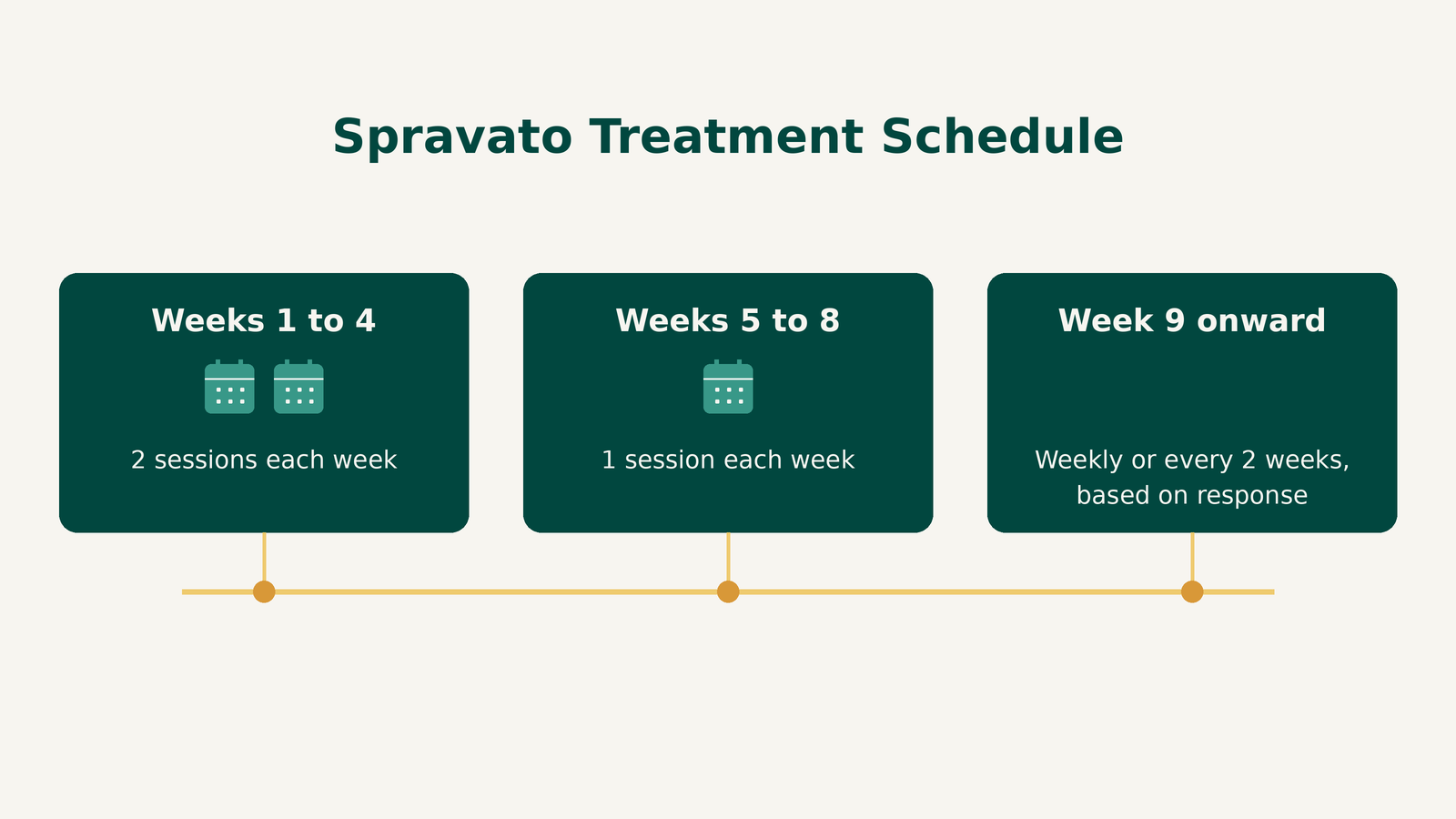
For adults with treatment-resistant depression, the usual schedule begins with two sessions each week for the first four weeks.
After the first four weeks, the schedule generally changes:
- Weeks 1 to 4: Two sessions each week.
- Weeks 5 to 8: One session each week.
- Week 9 onward: One session every week or every two weeks, based on the patient’s response and treatment needs.
The provider may adjust the dose or schedule based on how well the patient responds and how well they tolerate treatment. Patients should not change or stop their treatment schedule without speaking with their provider.
How Should You Prepare for a Spravato Session?
Following the preparation instructions can help reduce problems during treatment. The FDA prescribing information gives specific guidance about food, drinks, and certain nasal medicines before a session.
Patients are generally advised to:
- Avoid eating for at least two hours before treatment.
- Avoid drinking liquids for at least 30 minutes before treatment.
- Use a nasal corticosteroid or nasal decongestant at least one hour before Spravato, if needed on the treatment day.
- Tell the healthcare provider about all prescription medicines, over-the-counter medicines, and supplements they use.
- Arrange for transportation home because driving is not allowed until the next day after a restful sleep.
Patients should follow the instructions given by their treatment team. They should not stop prescribed medicines or change their usual medication routine unless their provider tells them to.
What Does Spravato Feel Like?
Spravato can feel different for each person. Some patients feel relaxed or sleepy, while others experience dizziness, nausea, or a floating sensation. Some may feel disconnected from their body or surroundings, notice changes in their sense of time or space, or have trouble staying alert.
These effects are usually temporary but can feel uncomfortable. The healthcare team monitors patients during treatment and helps manage side effects. Patients should tell their provider if they feel confused, distressed, unusually sleepy, or physically unwell.
Who Can Receive Spravato Treatment?
Adults with treatment-resistant depression who have not improved enough with previous antidepressants may be eligible for Spravato. A healthcare provider reviews their medical history, medications, blood pressure, and previous treatments before recommending it.
Spravato should not be used by people with aneurysmal vascular disease affecting the aorta, brain, or peripheral arteries; arteriovenous malformation (abnormal blood vessel connections); a history of bleeding inside the brain; or an allergy to esketamine, ketamine, or any ingredient in the medicine.
What Are the Possible Side Effects of Spravato?
Common side effects of Spravato include feeling disconnected from your surroundings (dissociation), dizziness, nausea, sedation, vertigo, numbness or reduced sensation (hypoesthesia), anxiety, tiredness (lethargy), increased blood pressure, vomiting, and feeling drunk. These reactions were reported in patients receiving Spravato with an oral antidepressant. Patients should report severe or persistent symptoms to their provider.
Why Does Spravato Require Blood Pressure Monitoring?

Spravato can temporarily increase blood pressure, which may be risky for some patients. Healthcare providers check blood pressure before and after treatment to ensure patient safety.
Can Spravato Affect Memory or Thinking?
Spravato may temporarily affect memory, concentration, judgment, and reaction time. Some patients experience confusion or difficulty focusing during treatment. Persistent memory or thinking problems should be discussed with a healthcare provider.
Can Spravato Cause Bladder Problems?
Spravato may cause urinary symptoms, including frequent or painful urination. Although esketamine-related interstitial cystitis was not observed in clinical studies lasting up to 1 year, patients should report new or worsening bladder problems to their provider.
How Long Does Esketamine Stay in the Body?
Esketamine does not leave the body immediately after a Spravato session. The FDA prescribing information reports a mean terminal half-life of approximately seven to twelve hours after nasal administration.
A drug’s half-life is the time it takes for the amount of medicine in the body to decrease by about half. It does not mean the medicine is completely gone after one half-life. The time needed for the body to clear a medicine can vary based on several factors, including metabolism and individual health.
The effects patients feel during a session may wear off sooner than the time it takes for the body to eliminate the medicine. This is why patients must follow the required observation and driving restrictions even if they begin to feel normal.
Conclusion
Spravato works differently from many traditional antidepressants because it affects the brain’s glutamate system through NMDA receptor activity. This may change communication between nerve cells and help reduce depressive symptoms in some adults with treatment-resistant depression.
Some people notice improvement within a day, while others need more treatment sessions to assess their response. Spravato also requires medical supervision, blood pressure checks, and at least two hours of observation after each dose. It is not suitable for everyone, so a careful assessment is important before starting treatment.
Talk With Radiant Path Therapy and Psychiatry About Depression Care
If you’re considering Spravato for treatment-resistant depression, our team at Radiant Path Therapy and Psychiatry can help you understand your treatment options. We serve patients at our Grand Terrace, Redlands, and Corona clinics. Contact us to discuss your symptoms, treatment history, and whether Spravato may be appropriate for you.
Frequently Asked Questions
How Long Does One Spravato Treatment Session Take?
A Spravato appointment requires at least 2 hours of observation after the dose. Extra time may be needed for preparation and blood pressure checks.
Can You Work or Go to School After a Spravato Session?
Work or school may be possible if you can rest and avoid tasks requiring full alertness. Driving and operating machinery must wait until the next day after a restful sleep.
What Is the Spravato REMS Program?
The Spravato REMS program is an FDA-required safety program that ensures treatment takes place in certified healthcare settings with medical supervision and monitoring.
Can Spravato Be Taken at Home?
Spravato must be taken at a certified healthcare facility under medical supervision. Home use is not permitted.
What Happens If Spravato Does Not Improve Depression Symptoms?
Your provider will review your treatment response and may adjust your care plan or recommend other treatment options.
If you or someone you know is experiencing a mental health crisis or suicidal thoughts, call or text 988 in the United States. If there is immediate danger or a medical emergency, call 911 or go to the nearest emergency department.