

What Is Individual Psychotherapy? A Research-Backed Guide to One-on-One Therapy
Life can become difficult when stress, anxiety, sadness, trauma, or personal problems start to affect your daily life. Individual psychotherapy gives you one-on-one time with a trained mental health professional to understand what you are going through, learn healthier ways to cope, and work toward changes that matter to you.
At Radiant Path Therapy in Grand Terrace, CA, adults can receive trauma-specialized, evidence-based therapy in person or through secure telehealth therapy. Every treatment plan is built around your goals.
Understanding Individual Psychotherapy
Individual psychotherapy is a mental health treatment in which one person works directly with a trained therapist on their thoughts, feelings, behaviors, relationships, and life experiences. The meaning of psychotherapy goes beyond simply talking about problems.
According to the National Institute of Mental Health's overview of psychotherapy, psychotherapy, also called talk therapy, covers a range of treatments that help people identify and change troubling emotions, thoughts, and behaviors, and most of it takes place one-on-one with a licensed mental health professional. NIMH lists its main goals as relieving symptoms, maintaining or improving daily functioning, and improving quality of life.
What Is Individual Therapy?
Individual therapy is the everyday name for the same one-on-one treatment. Some practices also list it as individual counseling psychotherapy. The terms are often used interchangeably, although the exact services depend on the therapist's training, license, and approach.
Why the One-on-One Format Matters
In psychotherapy, individual sessions give you the therapist's full attention. Couples, family, and group formats divide the focus among several people. One-on-one work gives you space to explore your own experiences, including things that feel hard to say in front of others.
Individual Psychotherapy vs. Other Therapy Formats
In psychotherapy, individual sessions give you the therapist's full attention, while other formats divide the focus among several people.
Format | Who Is Involved | What It Focuses On |
Individual psychotherapy | You and a therapist | Your thoughts, feelings, behaviors, trauma, and personal goals |
Couples therapy | Two partners and a therapist | Communication, trust, conflict, and connection |
Family therapy | Family members and a therapist | Family conflict and patterns that affect everyone |
Group therapy | Several people and a therapist | A shared concern, peer support, and coping skills |
Individual therapy is often the best fit when you want to focus on your own experiences or discuss things that feel hard to say in front of others.
How Does Individual Psychotherapy Work?
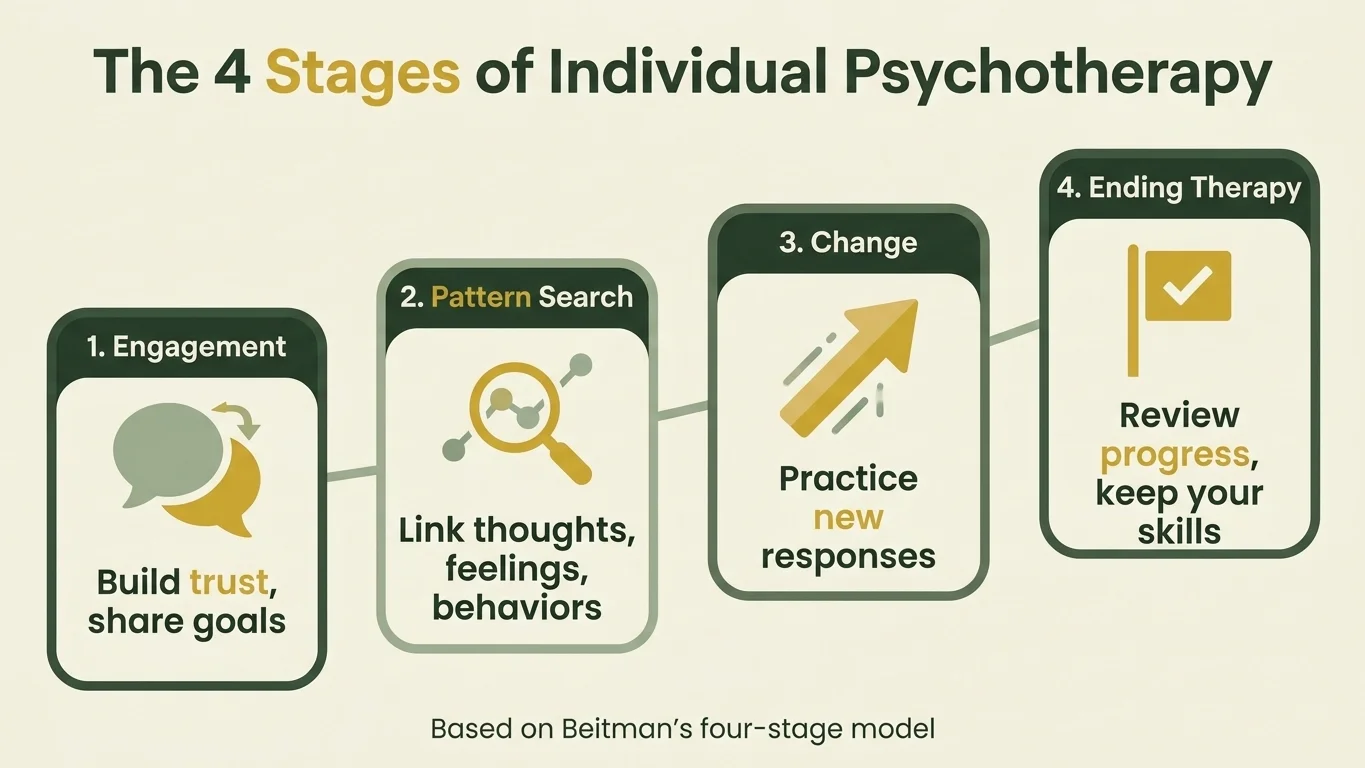
Therapy can look different from one approach to another, but many approaches share a similar structure. In The Structure of Individual Psychotherapy (1990), psychiatrist Bernard D. Beitman describes four stages: engagement, pattern search, change, and termination.
Stage 1: Engagement and Building Trust
In the first few sessions, your therapist learns about your history, concerns, and goals. Together, you decide how to work toward the changes you want.
This relationship has a real effect on results. A 2011 research synthesis by Horvath and colleagues reviewed more than 14,000 treatments and found that a stronger client-therapist bond was linked to better outcomes across different types of therapy. The American Psychological Association also highlights this relationship as key to how therapy works.
Trust often takes a few sessions to develop, and that is normal.
Stage 2: Pattern Search
Next, you and your therapist look for the patterns behind your concerns. These are the links between your thoughts, feelings, and behaviors. For example, avoiding a stressful situation may bring short-term relief but make anxiety stronger over time.
Stage 3: Change
Once a pattern is clear, you begin practicing new ways to respond. Therapists choose methods based on their training, your concerns, and your goals. The National Institute of Mental Health explains that psychotherapy can include different treatment approaches, and that treatment may be tailored to the condition being treated and the needs of the person receiving care.
Stage 4: Ending Therapy
When you have met your goals, you and your therapist plan how to finish treatment. This includes reviewing your progress and preparing you to keep using your skills on your own.
Who Can Benefit From Individual Psychotherapy?
You do not need a diagnosis, and you do not need to wait until things feel severe. NIMH notes that people seek therapy for reasons such as long-term stress, the loss of a loved one, relationship problems, and unexplained changes in sleep, appetite, energy, or mood.
Anxiety and Stress
Therapy can help when worry, fear, or panic starts to interfere with daily life. NIMH notes that CBT is commonly used for generalized anxiety disorder and can help people understand automatic thoughts and change patterns that contribute to anxiety. Learn more about our anxiety treatment.
Depression and Mood Concerns
Depression can affect your mood, energy, sleep, and motivation. NIMH explains that psychotherapy is one common treatment for depression, and approaches such as CBT and interpersonal therapy may be used. See our depression treatment services.
Trauma and Painful Experiences
Abuse, accidents, violence, and sudden loss can affect your sleep, relationships, and sense of safety. A trauma-informed therapist helps you work through these experiences at a manageable pace, starting with safety and stability. Radiant Path Therapy also offers specialized care for PTSD and complex trauma.
Therapy for Mental Illness
As therapy for mental illness, psychotherapy is used for anxiety disorders, depression, trauma-related conditions, and other diagnosed concerns. According to NIMH, it can be used instead of or alongside medication, and the right plan depends on each person's needs under the guidance of a mental health professional. When mental health and substance use overlap, dual diagnosis treatment addresses both together.
Types of Therapy Used in Individual Psychotherapy
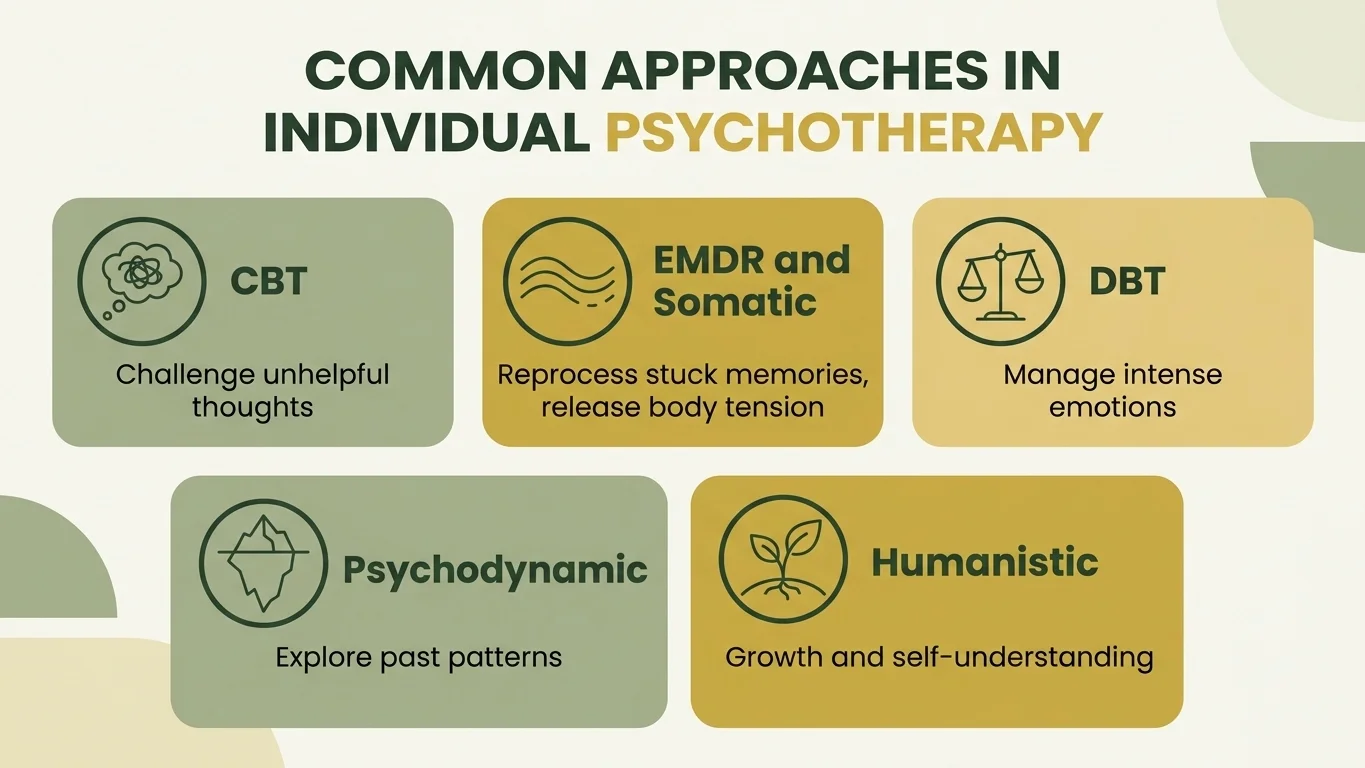
Each approach has its own focus. Many therapists combine techniques from more than one.
Cognitive Behavioral Therapy (CBT)
CBT helps you notice automatic thoughts that are inaccurate or harmful, question them, and change self-defeating behavior patterns. It is one of the most widely studied approaches for anxiety and depression.
EMDR and Somatic Therapy for Trauma
EMDR (Eye Movement Desensitization and Reprocessing) uses guided eye movements to help the brain reprocess memories that feel stuck. You do not need to describe every detail out loud. Somatic therapy works with the tension trauma leaves in the body and pairs well with EMDR. Both are part of our trauma therapy program.
Dialectical Behavior Therapy (DBT)
DBT teaches skills for managing intense emotions, including emotional regulation, distress tolerance, mindfulness, and healthy relationships. It is often used to help clients manage triggers and stay grounded.
Psychodynamic Therapy
Psychodynamic therapy explores how past experiences and emotions you may not fully notice shape how you think and feel today. David Malan's work on Individual Psychotherapy and the Science of Psychodynamics, updated with Lynn Parker in a 1995 second edition, is regarded as a classic textbook of dynamic psychotherapy, and it teaches core principles through true clinical stories.
Humanistic and Other Approaches
Humanistic and person-centered therapy focuses on growth, self-understanding, and choice. Other options include interpersonal therapy, acceptance and commitment therapy (ACT), and integrative therapy. The American Psychological Association's information on psychotherapy explains that treatment can be adapted to each person's needs.
Benefits of Individual Counseling
The benefits of one-on-one therapy go beyond feeling better in the moment. Because every session focuses on you, your therapist can tailor the pace, methods, and goals to your specific needs. Over time, many people find they understand themselves better, handle stress more effectively, and feel more confident in their relationships and daily lives.
Focused, Confidential Support
Therapy gives you time that is entirely about you. You can discuss concerns that feel hard to share with friends or family, with a professional whose role is your care.
Better Self-Understanding and Coping Skills
You learn why certain situations affect you the way they do. You also practice tools for stress, worry, and conflict that you can use between sessions.
Evidence That It Works
In a review published in the Annual Review of Psychology (1999), S. Mark Kopta, Robert J. Lueger, Stephen M. Saunders, and Kenneth I. Howard concluded that individual psychotherapy has been proven generally effective, even though researchers were still debating exactly why it works. NIMH similarly reports that evidence-based therapies have been shown to reduce symptoms of depression, anxiety, and other mental disorders.
How Culture and Family Shape Therapy
Your background affects how you view mental health, family roles, and asking for help. A good therapist asks about it rather than making assumptions.
Individual Psychotherapy in a Multicultural Setting
Consider a case of individual psychotherapy in a multicultural context: a client raised in a community where emotional struggles were kept private may feel unsure about seeking help at all. By understanding the client's language, faith, and values, the therapist can build a plan that fits their life.
A Family Systems Approach to Individual Psychotherapy
Individual therapy does not mean your family is ignored. This approach looks at how family conflict, expectations, and changing roles affect you, while keeping the focus on your own goals.
What Happens in a Therapy Session?
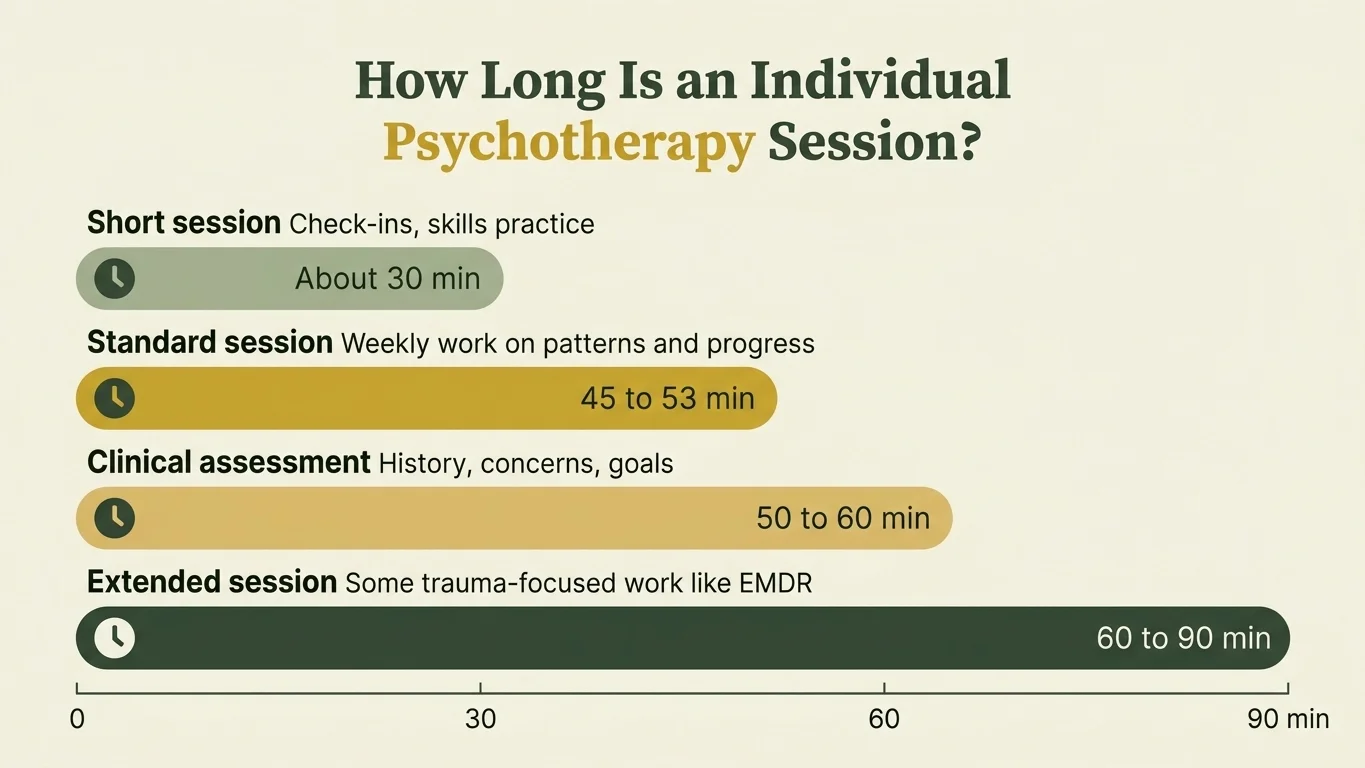
Session length depends on the purpose of the visit. For example, when a patient receives individual psychotherapy for 30 minutes, it is usually a short check-in rather than a full session.
Session Type | Typical Length | What Happens |
Clinical assessment | 50–60 minutes | Your therapist reviews your history, current concerns, and goals |
Standard session | 45–53 minutes | Ongoing weekly therapy focused on patterns, skills, and progress |
Short session | About 30 minutes | Check-ins, skills practice, or follow-up support |
Extended session | 60–90 minutes | Some trauma-focused work, such as EMDR |
Conclusion
Individual psychotherapy gives you a private, structured space to understand what you are facing and make real changes. Research supports what many clients experience firsthand. Psychotherapy is generally effective, and the relationship you build with your therapist is one of the strongest predictors of how well it works.
Whether you are dealing with anxiety, depression, trauma, or a difficult life change, the right approach depends on your needs and goals. You do not have to solve everything at once. Therapy is a process, and each session builds on the last.
Take the First Step With Radiant Path Therapy
If stress, anxiety, trauma, or depression is making daily life harder, you do not have to wait for things to get worse. Radiant Path Therapy in Grand Terrace, CA provides trauma-specialized, evidence-based care for adults, both in person and through secure telehealth.
Getting started is simple, and same-day appointments are often available. If you are ready to talk with a therapist, visit Radiant Path Therapy to learn more about available therapy options and how to get started. You can also contact us online or call (909) 577-1124 to schedule your free consultation.
Frequently Asked Questions
What can individual psychotherapy help with?
It can help with anxiety, depression, stress, trauma, ADHD, relationship problems, and major life changes. Treatment is tailored to your needs and goals.
How does psychotherapy help troubled individuals?
It helps people who are struggling understand difficult emotions, recognize unhealthy patterns, and build healthier coping skills. Over time, this can make daily life feel more manageable.
Is individual psychotherapy effective?
Psychotherapy is an effective treatment for many concerns, including anxiety, depression, and trauma. Results depend on your goals, the approach used, and your relationship with your therapist.
Do I need a diagnosis to start therapy?
Many people start therapy for stress, life changes, or personal growth without any diagnosis. Your therapist will assess your needs during your first session.
Can I do individual therapy online?
Many therapists offer secure video sessions that follow the same approaches as in-person care. Online therapy can be a convenient option if travel or scheduling is a challenge.


