
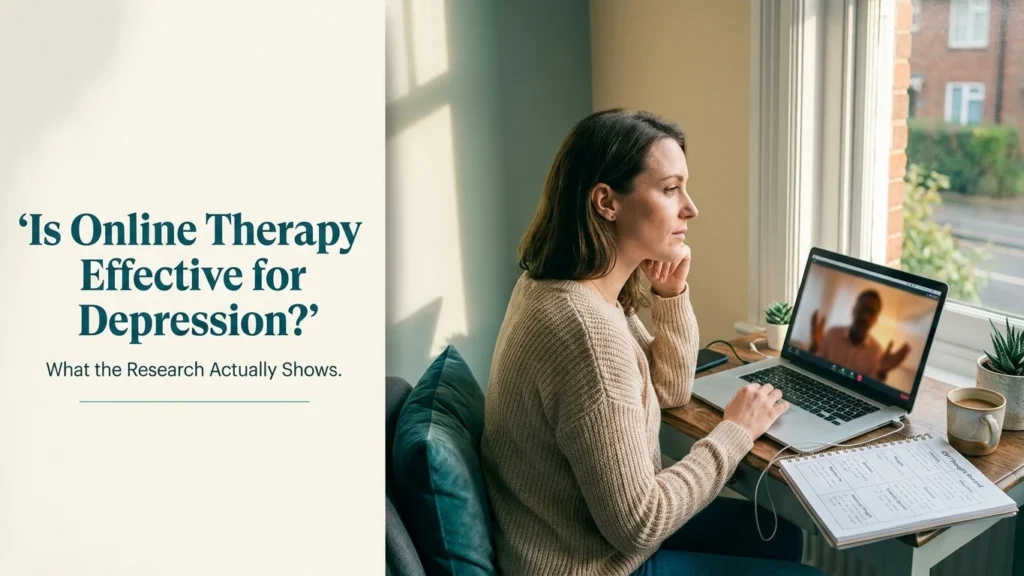
Depression can make everyday responsibilities, including attending an appointment, feel exhausting. So, is online therapy effective for depression? For many people with mild to moderate symptoms, the answer is yes. Online therapy can reduce depressive symptoms and may provide results similar to in-person care when it uses an evidence-based method, involves a qualified therapist, and is attended consistently.
Therapist-guided online CBT is one of the most researched options for depression. It helps people identify negative thought patterns, change unhelpful behaviors, and develop practical coping skills. At Radiant Path Therapy and Psychiatry in Grand Terrace, California, clients can access evidence-based virtual therapy without the travel, waiting-room time, or scheduling difficulties associated with traditional appointments. Contact our team to learn whether online therapy for depression fits your needs.
However, virtual therapy is not the right level of care for every situation. People experiencing severe symptoms, active suicidal thoughts, self-harm urges, psychosis, or difficulty remaining safe may require immediate evaluation or more intensive in-person support. The right choice between online and in-person therapy depends on symptom severity, privacy, technology, personal comfort, and the therapist’s clinical recommendations.
What Is Online Therapy?
Online therapy is professional mental health treatment that happens over the internet instead of in a physical office. A licensed therapist works with you the same way they would in person, but you connect through a video call, phone call, or sometimes a secure messaging platform.
How Online Therapy Works
Most online therapy happens through video sessions, where you and your therapist meet face to face over a screen at a scheduled time. Phone sessions are also available for people who prefer audio only or who do not have reliable video access. Some platforms also offer messaging or chat support, where you can write to your therapist between sessions. Therapy apps bring all of this together in one place, often with added tools like mood tracking, journaling, and guided exercises.
Types of Therapy Available Online
The types of therapy you can access online are the same ones used in traditional offices. CBT is one of the most widely available and well-researched. It focuses on changing negative thought patterns that contribute to depression. Talk therapy, psychodynamic therapy, behavioral activation, and even online group therapy are all options depending on the platform and therapist you work with.
Benefits of Online Therapy for Depression
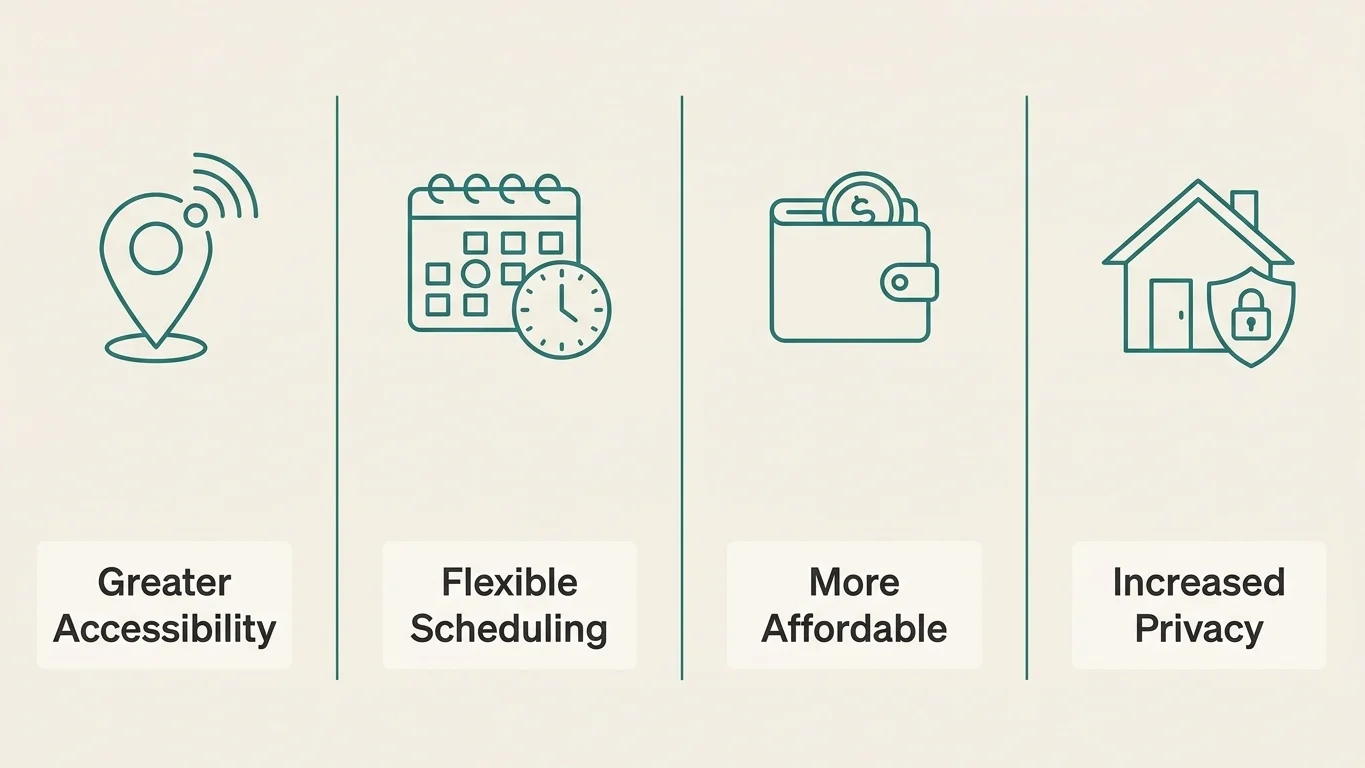
Online therapy offers several advantages for people struggling with depression, especially those who may find traditional in-person sessions difficult to access.
Greater Accessibility
Online therapy has opened up mental health care to people who previously had little or no access to it. Online platforms may reduce transportation and geographic barriers by helping you connect with a depression therapist who is licensed to provide care in your location. Parents of young children, people working long hours, and anyone with a packed schedule find online therapy far easier to fit into their lives.
Flexible Scheduling
Traditional therapy offices typically operate during standard business hours. Online therapists often offer evening and weekend appointments, which makes it possible for working professionals and parents to get consistent support without disrupting their week. Flexibility in scheduling means fewer missed sessions.
More Affordable Than Traditional Therapy
The cost of therapy is one of the most common reasons people delay getting help. Online therapy tends to cost less per session than in-person therapy. There are no travel costs, no parking fees, and many platforms offer subscription-based pricing that makes regular access more manageable.
Increased Privacy and Comfort
Attending a session from your own home removes a layer of anxiety that many people feel about going to a clinic. You do not have to sit in a waiting room or worry about running into someone you know. For people who feel self-conscious about seeking mental health support, that added privacy often makes it easier to show up and stay engaged.
Similarities in Treatment Outcomes
Online therapy and in-person therapy often produce similar outcomes for treating depression, especially when using evidence-based methods like Cognitive Behavioural Therapy (CBT). Both approaches aim to reduce symptoms such as low mood, negative thinking, and loss of motivation, and many people see steady improvement over time.
Research also shows that the quality of the therapist-client relationship can be strong in both formats, which plays an important role in recovery. Overall, both online and in-person therapy can be equally effective when delivered consistently by a qualified professional.
Online Therapy vs. In-Person Therapy for Depression
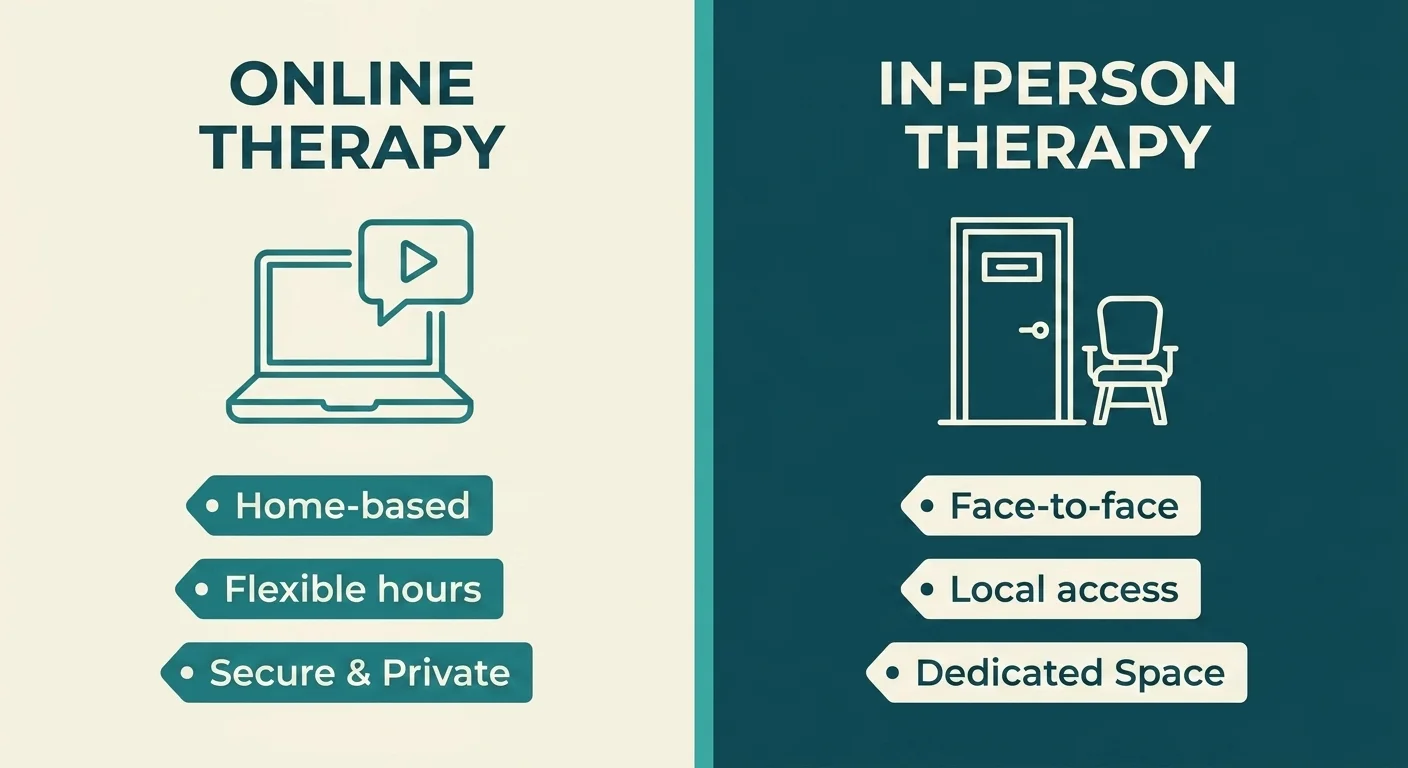
Online and in-person therapy can both support people experiencing depression. The better option depends on your symptoms, treatment needs, privacy, schedule, comfort level, and access to qualified therapists.
| Factor | Online Therapy | In-Person Therapy |
|---|---|---|
| Convenience | Sessions can be attended from home, which removes travel and waiting-room time. | You must travel to the therapist’s office and allow additional time for the appointment. |
| Scheduling | Evening, weekend, and flexible appointments may be easier to find. | Appointment times may be limited to the therapist’s regular office hours. |
| Therapist access | You may be able to choose from more therapists who are licensed to work with clients in your location. | Your options may be limited by distance, transportation, and local therapist availability. |
| Privacy | You avoid public waiting rooms, but you need a private place at home where you cannot be overheard. | The therapist’s office usually provides a private and controlled environment. |
| Technology | A reliable internet connection, suitable device, and secure therapy platform are required. | No internet connection or video equipment is normally needed. |
| Personal connection | Some people feel comfortable opening up through video, while others may find screen-based communication less natural. | Face-to-face interaction may make it easier for some people to build trust and communicate openly. |
| Treatment methods | Evidence-based approaches such as CBT, behavioral activation, and talk therapy can often be delivered online. | A wider range of treatments may be available when hands-on, structured, or closely monitored care is needed. |
| Depression severity | It may be suitable for many people with mild to moderate depression when provided by a qualified therapist. | It may be more appropriate for severe symptoms, complex conditions, or people who need closer clinical monitoring. |
| Crisis support | Online therapy alone is not suitable for an immediate mental health crisis or when someone cannot remain safe. | In-person services may provide faster access to assessment, crisis intervention, and coordinated support. |
| Cost | Online therapy may reduce travel and parking expenses, but session prices and insurance coverage vary. | Costs may be higher in some cases, although coverage and fees depend on the provider and insurance plan. |
| Best suited for | People who value convenience, flexibility, home-based care, or broader therapist access. | People who prefer face-to-face communication or require more intensive and closely monitored treatment. |
When Online Therapy May Not Be the Best Fit
Online therapy can help many people manage depression, but it is not appropriate for every situation. The right level of care depends on your symptoms, safety, diagnosis, support system, and ability to participate in virtual sessions.
Severe Depression or a Mental Health Crisis
Online therapy alone may not provide enough support if you are experiencing severe depression, active suicidal thoughts, self-harm urges, or difficulty keeping yourself safe. These situations may require immediate evaluation, in-person treatment, or a higher level of clinical care.
If you are in immediate danger, call 911 or go to the nearest emergency room. In the United States, you can also call or text 988 to reach the 988 Suicide & Crisis Lifeline.
Conditions Requiring Intensive Support
Some people living with psychosis, severe trauma symptoms, serious substance use problems, or other complex mental health conditions may need more structured care. This could include psychiatric support, medication management, intensive outpatient treatment, or regular in-person monitoring.
Online therapy may still be included in the treatment plan, but it should not replace services recommended by a qualified mental health professional.
Limited Privacy or Unreliable Technology
Virtual therapy works best when you have a stable internet connection and a private place to talk. Sessions may feel less helpful if calls frequently disconnect or you cannot speak openly without being overheard.
In that situation, you may benefit from phone sessions, a private community space, hybrid care, or traditional in-person appointments.
Difficulty Connecting Through a Screen
Some people feel comfortable speaking through video, while others find it difficult to build trust without being in the same room as their therapist. This does not mean therapy will not work. It may simply mean that in-person care is a better fit for your communication style and comfort level.
A therapist can help you compare your options and decide which treatment format offers the level of support you need.
Signs Online Therapy Could Help You
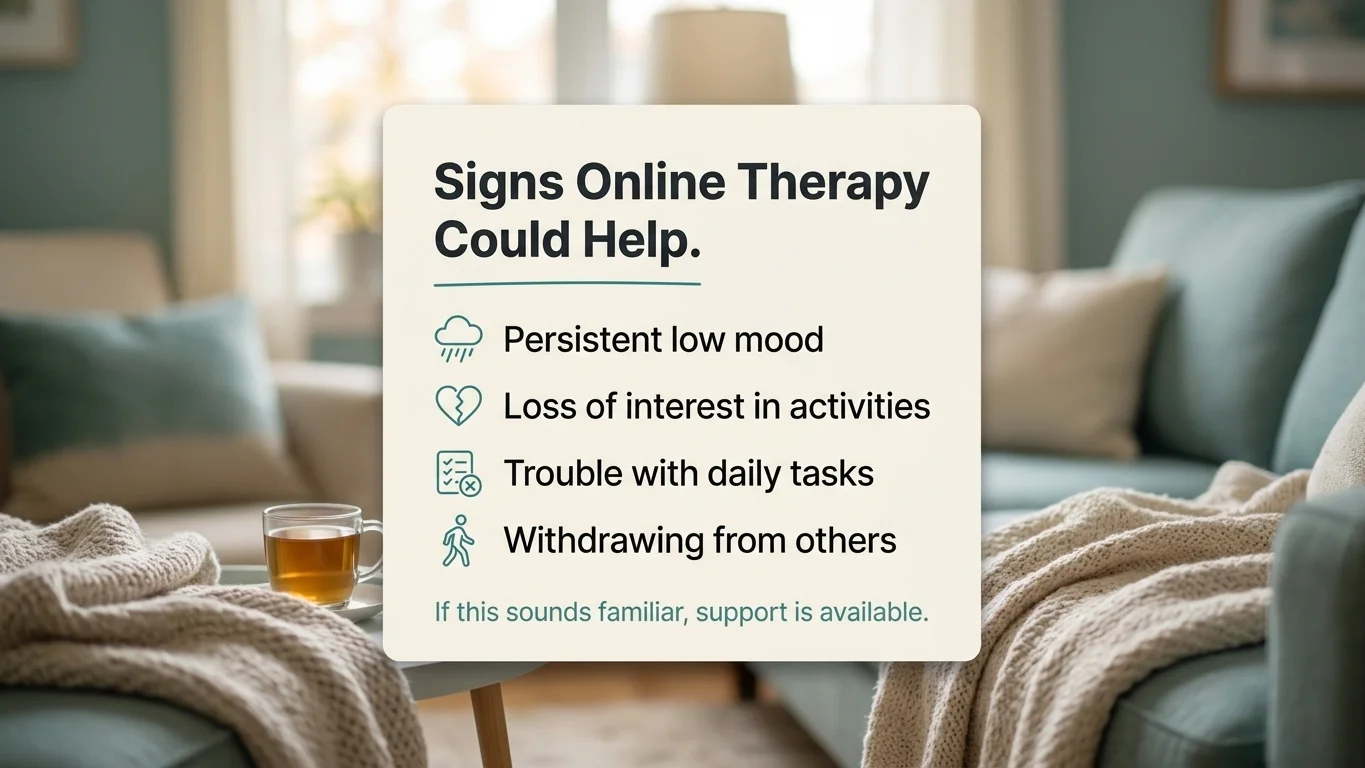
It is not always easy to know when sadness, low motivation, or emotional exhaustion has reached the point where professional support may help. Online therapy could be worth considering when your symptoms are lasting, affecting daily life, or becoming difficult to manage on your own.
You may benefit from speaking with an online therapist if:
You have felt sad, empty, hopeless, or emotionally numb for more than two weeks.
Your mood is affecting your work, studies, relationships, sleep, or daily responsibilities.
You have lost interest in activities you previously enjoyed.
You feel tired or unmotivated even after getting enough rest.
You have started withdrawing from friends, family, or social activities.
You are struggling with negative thoughts, guilt, low self-worth, or constant self-criticism.
You want professional support, but attending appointments in person feels overwhelming.
Travel, work, caregiving duties, or limited local options make office visits difficult.
You would feel more comfortable speaking with a therapist from a familiar and private setting.
You have tried managing your symptoms alone, but they are not improving.
You do not have to wait until depression becomes severe before asking for help. Speaking with a qualified therapist early may help you understand your symptoms, develop healthier coping strategies, and prevent problems from becoming harder to manage.
What to Expect During an Online Therapy Session
An online therapy session is similar to an in-person appointment, but you meet with your therapist through a secure video call or, in some cases, by phone. Most sessions take place at a scheduled time and follow the same privacy and professional standards as office-based therapy.
During your first appointment, the therapist will usually ask about your symptoms, health history, current concerns, daily routine, and what you hope to gain from therapy. You may also discuss how long you have been feeling depressed and how your mood affects your work, relationships, sleep, motivation, or daily responsibilities.
You do not need to know exactly what to say. Your therapist will guide the conversation and ask questions to better understand what you are experiencing.
Future sessions may include:
Discussing changes in your mood and symptoms
Identifying negative or unhelpful thought patterns
Exploring situations that contribute to stress or depression
Setting realistic treatment goals
Learning coping and problem-solving skills
Practicing strategies between appointments
Reviewing what is and is not helping
A therapist using Cognitive Behavioural Therapy may help you notice connections between your thoughts, feelings, and actions. Other therapists may focus more on relationships, past experiences, behavior, emotions, or practical changes in your daily life.
Before each session, find a quiet location, test your internet connection, and keep your device charged. Having a notebook nearby can also help you remember important points, coping strategies, or goals discussed during the appointment.
Tips for Getting the Most Out of Online Therapy
Getting results from online therapy depends a lot on how you show up for it. Here are some simple things that make a real difference.
Find a quiet and private space before each session so you can speak openly without worrying about being overheard.
Be honest with your therapist, even about things that feel hard to say. The more open you are, the more useful the sessions will be.
Attend sessions consistently, especially on the days when you do not feel like it. Those are often the sessions that help the most.
Practice any coping strategies or exercises your therapist gives you between sessions. Therapy works best when you apply what you learn in real life.
Track how you are feeling between sessions. Noticing small changes in your mood or energy helps you and your therapist see what is working.
Give the process time. Depression does not lift overnight and real progress usually takes several weeks of steady effort.
How to Choose the Right Online Therapist
Finding the right therapist is about more than choosing the first available appointment. The therapist should have suitable qualifications, experience treating depression, and a communication style that helps you feel respected and understood.
Questions you may want to ask include:
Do you regularly treat depression?
What therapy methods do you use?
Do you offer video, phone, or messaging sessions?
How often do you recommend meeting?
What happens if I need support between appointments?
Do you accept my insurance?
What are the session fees and cancellation policies?
How do you protect my privacy during online sessions?
Look for a therapist who explains treatment clearly and listens without making you feel rushed or judged. A strong therapeutic relationship often takes time, but you should still feel that your concerns are being taken seriously.
It is also reasonable to change therapists if the relationship does not feel productive after several sessions. A poor fit does not mean therapy cannot help. You may simply need someone with a different approach, personality, or area of expertise.
Before choosing a platform or provider, check whether sessions are conducted through secure technology. You should also confirm costs, insurance coverage, appointment availability, and whether the therapist offers the type of support you need.
Common Concerns About Online Therapy
A common concern is whether online therapy is as effective as in-person therapy. Research shows it can be just as helpful for mild to moderate depression, especially with CBT-based treatment. Some people also worry about privacy, but most platforms use secure systems to keep sessions confidential.
Others feel unsure about building a connection through video, though many find a strong therapist relationship still develops over time. Technical issues like internet problems can also be a concern, but most platforms are designed to be simple and easy to use.
The Future of Online Mental Health Treatment
Telehealth therapy has grown dramatically and shows no sign of slowing down. More insurance providers are covering virtual sessions, more licensed therapists are offering online services, and technology continues to make the experience smoother and more accessible.
Hybrid models that combine online and in-person sessions are becoming more common, giving people the best of both formats. As acceptance of virtual care continues to grow, more people who previously had no access to mental health support are getting the help they need.
Ready to Start Feeling Better?
Depression can make taking the first step feel difficult, but you do not have to manage everything alone. Radiant Path Therapy and Psychiatry provides evidence-based online therapy for depression in Grand Terrace, California, helping clients access professional support from a private and familiar setting.
Contact Radiant Path Therapy and Psychiatry to discuss your symptoms, treatment goals, and appointment options. Our team can help you determine whether virtual therapy is the right place to begin.
Conclusion
Yes, online therapy can be effective for depression, particularly for people with mild to moderate symptoms. Evidence-based approaches such as therapist-guided online CBT can reduce negative thinking, low mood, withdrawal, and loss of motivation. For many clients, treatment outcomes may be comparable to in-person therapy when they work with a qualified therapist, attend sessions consistently, and practice the recommended strategies between appointments.
The best format depends on your individual needs. Online therapy may be a good choice when travel, scheduling, limited local providers, or discomfort with visiting a clinic makes traditional therapy difficult. In-person or more intensive care may be more appropriate for severe depression, complex conditions, suicidal thoughts, self-harm risk, or situations requiring closer clinical monitoring. Online therapy should not replace emergency or crisis care.
Before beginning treatment, confirm that the therapist is licensed to work with clients in your location, experienced in treating depression, and uses secure technology. Insurance coverage and session costs vary, so check your benefits directly with the provider and your insurance company. Therapists generally cannot prescribe medication, but some virtual mental health practices coordinate therapy with psychiatric medication management.
If depression is affecting your mood, relationships, work, sleep, or daily responsibilities, support is available. Contact Radiant Path Therapy and Psychiatry in Grand Terrace, California, to explore online therapy for depression and find a treatment approach suited to your symptoms, comfort, and goals.
Frequently Asked Questions
Is online therapy as effective as in-person therapy for depression?
Online therapy can be as effective as in-person therapy for many people with mild to moderate depression. Results often depend more on the therapist’s qualifications, the treatment method, and consistent participation than on whether sessions happen online or in an office. People with severe symptoms or complex needs may require in-person or more intensive care.
What type of online therapy works best for depression?
Cognitive Behavioural Therapy, or CBT, is one of the most widely used online treatments for depression. It helps people recognize unhelpful thought patterns and develop healthier ways to respond. Behavioral activation, talk therapy, and psychodynamic therapy may also help, depending on your symptoms, goals, and personal preferences.
How do I know if online therapy is right for my depression?
Online therapy may be a good fit if you want professional support but struggle with travel, scheduling, limited local options, or discomfort with visiting a clinic. You also need reliable internet access and a private place to talk. A licensed therapist can assess your symptoms and help determine whether virtual care provides enough support.
Can online therapy help with severe depression?
Online therapy may be included in a treatment plan for severe depression, but it may not be enough by itself. People experiencing intense symptoms, suicidal thoughts, self-harm urges, psychosis, or difficulty staying safe may need immediate in-person evaluation or more structured treatment. Online therapy should not replace emergency or crisis care.
How long does online therapy take to work?
There is no exact timeline that applies to everyone. Some people notice small improvements after several sessions, while others need several months of regular treatment. Progress depends on the severity of the depression, the treatment approach, attendance, personal circumstances, and how consistently coping strategies are practiced between sessions.
Is online therapy for depression covered by insurance?
Many insurance plans cover virtual mental health appointments, but coverage varies by provider and policy. Before booking, ask whether the therapist accepts your insurance, whether a referral is required, and whether copays or deductibles apply. You should also confirm whether the therapist is licensed to provide care in your location.
Can I do CBT online for depression?
Yes. CBT can be delivered through scheduled video or phone sessions with a licensed therapist. During treatment, you may learn how your thoughts, emotions, and actions affect one another. Your therapist may also provide exercises, mood-tracking activities, or practical strategies to complete between appointments.
Can an online therapist prescribe medication for depression?
Most therapists and counselors cannot prescribe medication. Medication is usually prescribed by a psychiatrist, physician, or another qualified medical professional with prescribing authority. Some online mental health providers offer both therapy and medication management, while others may refer you to a separate medical provider when medication should be considered.