

7 Types of ADHD in Adults: Symptoms & Treatment Guide
If you have looked into ADHD, you may have come across two very different ways of describing it. The official medical guide, called the DSM-5, recognizes three ADHD presentations. But a separate framework, developed through years of brain imaging research, proposes a broader model with seven distinct ADHD types. Dr. Amen first introduced this model in a 1998 paper and later expanded on it in his book, Healing ADD: The Breakthrough Program that Allows You to See and Heal the 7 Types of ADD. It is important to understand that this seven-type model is not an official medical diagnosis, but many people find it helpful for understanding their own patterns of symptoms.
Whether you are trying to make sense of your own experience or looking for language that fits how ADHD actually shows up in your life, this guide walks through both models in plain terms. At Radiant Path Therapy in Grand Terrace, CA, we help adults understand their ADHD symptoms and find treatment approaches that actually fit their specific challenges, not just a generic label.
What Is ADHD in Adults?
ADHD, or attention-deficit hyperactivity disorder, is a condition that affects focus, impulse control, and activity levels. While many people think of ADHD as something that only affects children, it often continues into adulthood, sometimes without ever being formally diagnosed earlier in life.
ADHD can look different in adults compared to children. Hyperactivity that once showed up as running around a classroom might turn into constant restlessness, difficulty sitting through meetings, or a mind that always feels like it is racing. Instead of struggling with homework, adults with ADHD may struggle with deadlines, paperwork, or keeping track of bills and appointments.
Many adults overlook their own symptoms because they do not match the stereotype of a hyperactive child. Common signs that get missed include chronic disorganization, trouble finishing tasks, difficulty managing time, and feeling easily overwhelmed by daily responsibilities that seem to come easily to others.
Where the 7-Type Model Comes From
Dr. Amen's model is built on SPECT (single photon emission computed tomography) imaging, a nuclear medicine scan that measures blood flow and activity in the brain rather than structure, the way an MRI does. Over the course of his career, Amen and his team have reportedly reviewed more than 200,000 brain scans, and it was this dataset that led him to argue that ADHD isn't one condition, but a group of distinct brain-activity patterns, each of which he believes may respond to different treatment approaches.
This is a meaningfully different starting point than the DSM-5, which diagnoses ADHD based on observed behavior and symptom checklists rather than imaging. That distinction matters when you're deciding how much weight to put on the seven-type label, which we'll come back to later in this guide.
The 7 Types of ADHD in Adults
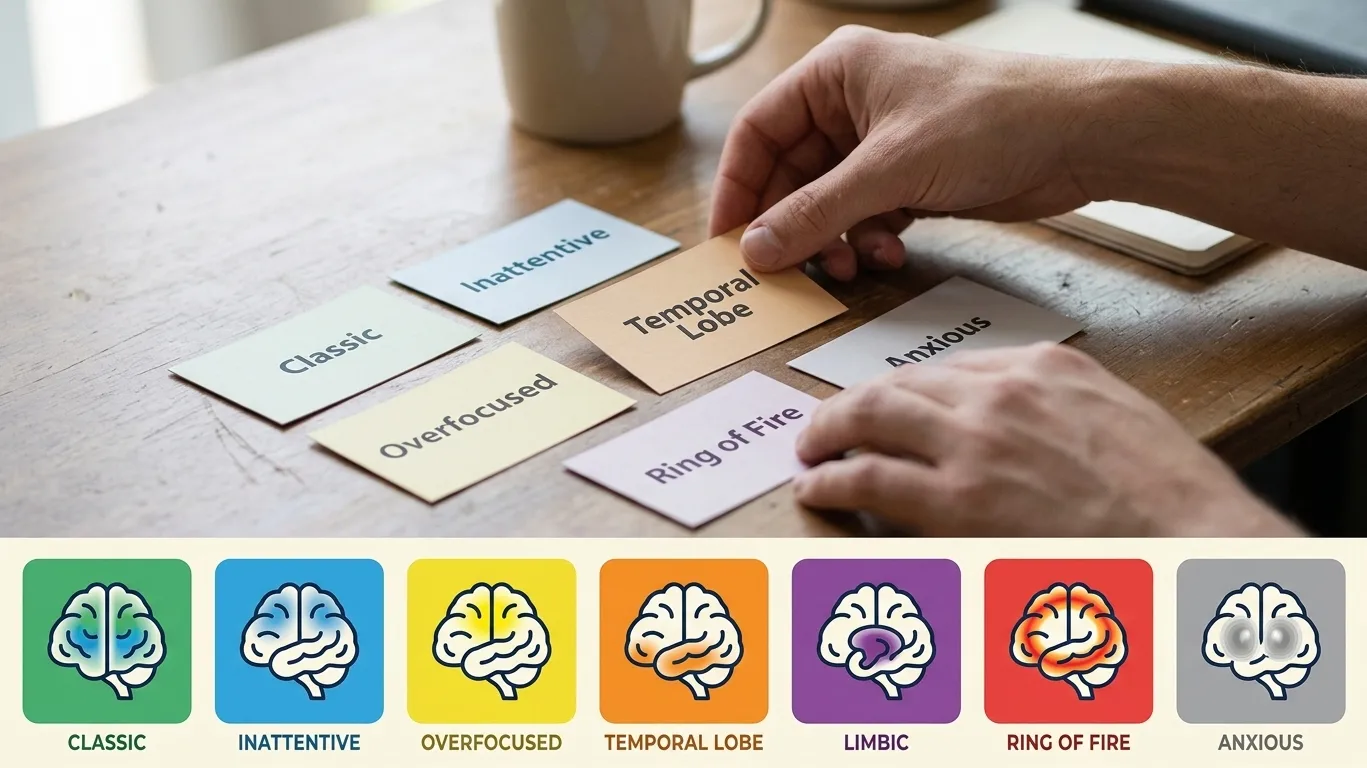
Each of the seven proposed types comes with its own pattern of symptoms and daily struggles. Here is a closer look at what each type typically looks like in everyday life.
Type 1: Classic ADHD
This type closely resembles the traditional picture of ADHD that most people are familiar with. Common symptoms include hyperactivity, impulsivity, restlessness, and difficulty focusing on tasks that feel boring or repetitive. Everyday challenges often include trouble sitting still, interrupting others mid-conversation, and acting before thinking things through, like blurting out a comment or making an impulsive decision.
Type 2: Inattentive ADHD (Formerly ADD)
This type involves difficulty focusing without significant hyperactivity, which is part of why it often goes unnoticed for years. Common symptoms include being easily distracted, forgetfulness, and trouble following through once the initial excitement of a task wears off. Everyday challenges often include losing track of responsibilities, daydreaming during conversations, and struggling to finish projects that started with good intentions.
Type 3: Overfocused ADHD
This type involves getting stuck on certain thoughts or tasks and having trouble shifting attention once it locks onto something. Common symptoms include rigid thinking, difficulty with transitions, and getting stuck in negative thought loops that are hard to let go of. Everyday challenges often include trouble adapting to sudden changes in plans and becoming overly fixated on small details, sometimes at the expense of the bigger picture.
Type 4: Temporal Lobe ADHD
This type is associated with mood instability and memory difficulties, in addition to typical attention struggles. Common symptoms include irritability, memory problems, and a short temper that can surface with little warning. Everyday challenges often include emotional outbursts that feel bigger than the situation calls for and difficulty recalling information clearly, even things discussed recently.
Type 5: Limbic ADHD
This type is associated with low mood alongside typical ADHD symptoms, giving it some overlap with depressive symptoms. Common symptoms include low energy, persistent sadness, and difficulty focusing that can feel tied to low motivation rather than pure distractibility. Everyday challenges often include trouble starting or finishing tasks and feeling emotionally flat throughout much of the day.
Type 6: Ring of Fire ADHD
This type involves widespread overactivity in the brain, which tends to produce a wider and more intense range of symptoms than other types. Common symptoms include extreme distractibility, sensitivity to sound or light, and mood swings that can shift quickly. Everyday challenges often include feeling overstimulated easily in busy or loud environments and having a hard time calming down once emotions spike.
Type 7: Anxious ADHD
This type combines core ADHD symptoms with significant anxiety, creating a mix of restlessness and worry that can feel exhausting. Common symptoms include nervousness, physical tension, and a strong fear of making mistakes, even in low-stakes situations. Everyday challenges often include avoiding tasks out of worry and feeling physically tense much of the time.
The 3 Official DSM-5 ADHD Presentations
Before looking at symptoms in general, it's worth being clear about what's actually used to diagnose ADHD. The DSM-5, the diagnostic manual mental health professionals rely on, recognizes only three official presentations:
Predominantly Inattentive Presentation This closely mirrors what's described above as Inattentive ADHD: difficulty sustaining focus, disorganization, forgetfulness, and trouble following through on tasks, without significant hyperactivity or impulsivity.
Predominantly Hyperactive-Impulsive Presentation This presentation centers on restlessness, excessive talking, interrupting, impatience, and acting without thinking, with attention problems being less prominent than in the inattentive presentation. It's also considered the least common presentation in adults, with some research estimating it accounts for roughly 3% of adult ADHD cases, since hyperactive symptoms in children often evolve into more inattentive patterns by adulthood. Because attention isn't the primary issue here, some adults with this presentation respond well to non-stimulant medications like guanfacine or clonidine, which aren't typically a first choice for the other presentations.
Combined Presentation This includes a mix of inattentive and hyperactive-impulsive symptoms and is generally considered the most common presentation in adults, in part because symptoms often shift in character from childhood to adulthood, leaving a mixed profile behind.
These three presentations are what a clinician will actually use to diagnose you. The seven-type model above can be a useful way to describe how your symptoms feel day to day, but it sits alongside the DSM-5 categories rather than replacing them.
Common Symptoms of ADHD in Adults
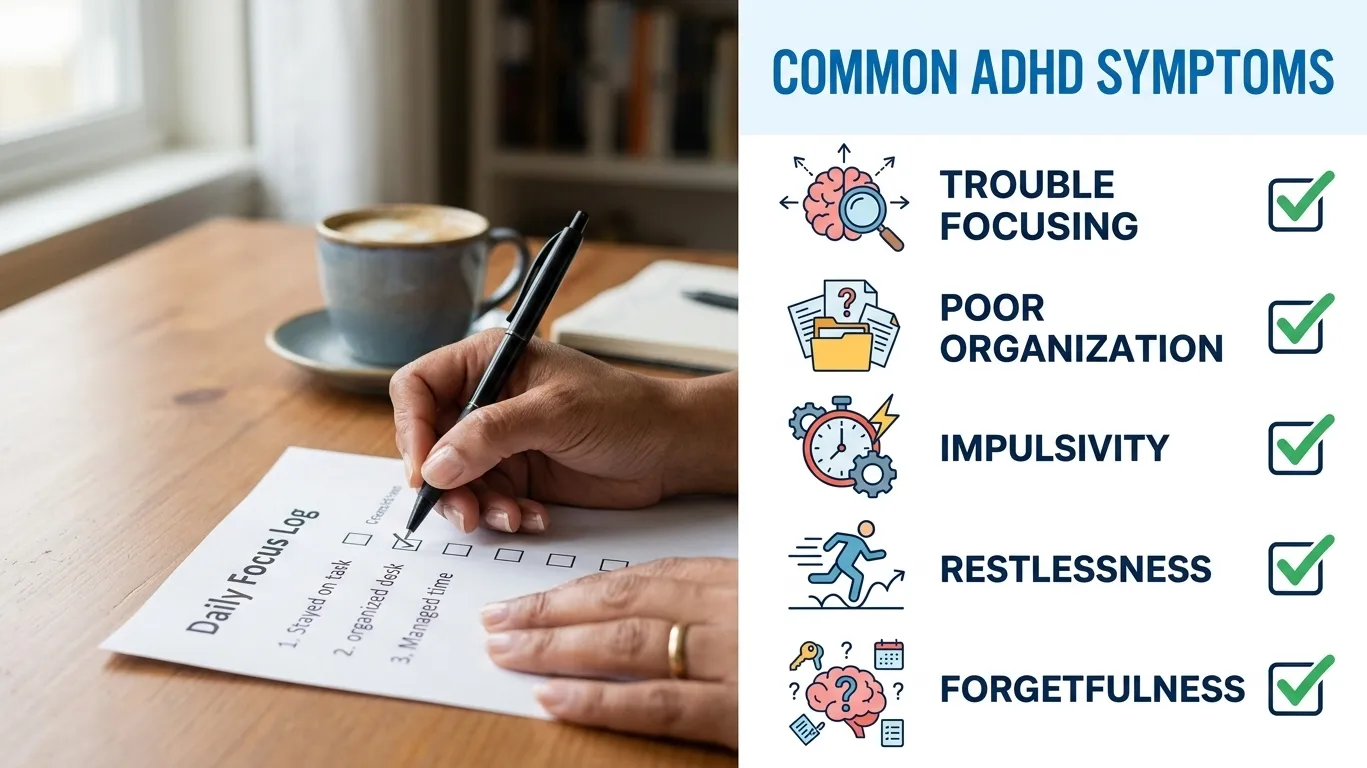
While the seven types each have their own patterns, most adults with ADHD share some core symptoms, including:
Trouble focusing, especially on tasks that feel repetitive or boring
Poor organization, including messy workspaces or missed deadlines
Impulsivity, such as making quick decisions without thinking them through
Restlessness, including feeling constantly on edge or unable to relax
Emotional dysregulation, like intense frustration or mood swings
Forgetfulness, including losing items or missing appointments
Time management problems, such as chronic lateness or underestimating how long tasks take
What Causes ADHD in Adults?
Genetics play a significant role in ADHD, and it often runs in families. Research suggests genetic factors account for as much as 75% of a person's risk of developing ADHD, and if a parent or sibling has ADHD, the likelihood of having it increases.
Brain development also plays a part, since ADHD is linked to differences in how certain brain regions develop and function, particularly areas involved in attention and impulse control. Environmental factors, such as exposure to certain substances before birth or early childhood stressors, may also contribute to the likelihood of developing ADHD.
Coexisting mental health conditions, like anxiety or depression, can also overlap with ADHD, sometimes making symptoms more complex or harder to identify without a full evaluation.
How Is ADHD Diagnosed in Adults?
Diagnosing ADHD in adults starts with a thorough evaluation of your medical and symptom history, including when your symptoms began and how they have affected your life over time, often going back to childhood. Alongside this, standardized ADHD rating scales help measure the frequency and severity of symptoms, giving a clearer, more objective picture of how they show up in daily life.
A mental health professional will also complete a psychological evaluation, since ADHD often overlaps with other conditions that need to be considered during diagnosis. Because symptoms like poor focus or restlessness can stem from other causes, such as anxiety, depression, or sleep issues, ruling out these other conditions is an important final step in reaching an accurate diagnosis.
It's worth noting that brain imaging, including the SPECT scans Dr. Amen's model is based on, is not part of a standard ADHD diagnosis and is not recognized by the American Psychiatric Association as a diagnostic tool for the condition. A thorough clinical evaluation remains the accepted standard of care.
Treatment Options for Adults With ADHD

Effective ADHD treatment usually combines several approaches rather than relying on just one.
Medication
Stimulant and non-stimulant medications are commonly used to help manage ADHD symptoms, and a psychiatric provider can help determine which option may work best for your specific situation.
Cognitive Behavioral Therapy (CBT)
CBT can help adults with ADHD develop practical strategies for managing time, organization, and impulsive behaviors, while also addressing negative thought patterns that often come with the condition.
ADHD Coaching
Coaching focuses on building practical systems and routines to manage daily responsibilities, offering ongoing support and accountability outside of therapy sessions.
Lifestyle Changes
Simple changes like regular exercise, consistent sleep schedules, and reducing distractions in your environment can meaningfully support ADHD symptom management alongside other treatment.
Stress Management
Since stress can worsen ADHD symptoms, learning relaxation techniques and stress reduction strategies can be a valuable part of an overall treatment plan.
Can Adults Have More Than One ADHD Type?
Yes. Many adults show features from more than one of the seven categories, since symptoms often overlap rather than fitting neatly into a single box. Someone might experience the impulsivity of Classic ADHD alongside the worry and tension described in Anxious ADHD.
This overlap is part of why the seven-type model is meant to be a helpful description rather than a strict diagnostic category. Real symptoms rarely line up perfectly with any single label, and that is completely normal.
Does Each ADHD Type Need Different Treatment?
Treatment plans should be personalized based on your specific symptoms, not just a type label. Two people with ADHD may need very different combinations of medication, therapy, and lifestyle changes depending on how their symptoms actually show up.
This is why an accurate, thorough evaluation matters so much. Rather than choosing a treatment based solely on which of the seven types someone identifies with, a good provider looks at the full picture of symptoms, coexisting conditions, and personal goals to build a plan that truly fits.
Are the 7 Types of ADHD Model Scientifically Proven?
Current research has not validated the seven-type model using the same rigorous standards applied to the DSM-5. While this brain imaging approach has been influential in popular discussions about ADHD, the broader medical and scientific community has raised concerns about the research methods behind it.
Critics point out that using brain scans to categorize ADHD subtypes has not been consistently replicated in independent research, which is a key standard for scientific validation. Specifically, SPECT scans are not recognized by the American Psychiatric Association as a diagnostic tool for ADHD, and a single scanning session can cost several thousand dollars out of pocket. Dr. Amen has also been offered the opportunity to have his findings validated through blind analysis by the Brain Imaging Council of the Society of Nuclear Medicine, a process that would remove potential bias from the results, and has reportedly declined to do so. Because of this, the DSM-5 remains the clinical standard used for official ADHD diagnosis, even though many people find the descriptive categories relatable and useful for understanding their own experience.
When Should You See a Mental Health Professional?
It can be hard to know when ADHD symptoms have crossed the line into something worth addressing professionally. Consider reaching out if:
Symptoms are affecting your performance or relationships at work
ADHD symptoms are creating tension or misunderstandings in your relationships
Daily life challenges, like managing bills or appointments, feel constantly overwhelming
You have ongoing difficulty managing responsibilities that others seem to handle more easily
If these signs sound familiar, a proper evaluation can help clarify what is going on and what treatment options might help.
Conclusion
Understanding ADHD, whether through the official DSM-5 categories or Dr. Amen's more detailed seven-type model, can help adults make sense of symptoms that have often gone unrecognized for years. While the seven-type model is not an official diagnosis, it can offer helpful language for describing patterns that a simple checklist might miss.
What matters most is getting an accurate evaluation and a treatment plan built around your specific symptoms, not just a label. If ADHD symptoms are affecting your work, relationships, or daily life, reaching out for professional support is a meaningful first step.
Ready to Better Understand Your ADHD Symptoms?
If you are an adult in Grand Terrace, CA struggling with focus, organization, or restlessness, Radiant Path Therapy is here to help. Our team offers thorough evaluations and personalized treatment plans designed around your specific ADHD symptoms, not a one-size-fits-all approach.
Contact Radiant Path Therapy today to schedule a consultation and take the first step toward understanding your ADHD and finding treatment that actually works for you.
Frequently Asked Questions
Are there really 7 types of ADHD?
A separate framework, developed by psychiatrist Dr. Daniel Amen, proposes seven types of ADHD based on brain imaging patterns, but this model is not an official medical diagnosis. The DSM-5, which is what mental health professionals actually use to diagnose ADHD, recognizes only three official presentations.
What are the official ADHD types?
The DSM-5 recognizes three official presentations of ADHD: predominantly inattentive, predominantly hyperactive-impulsive, and combined type. Inattentive type mainly involves trouble focusing and disorganization, hyperactive-impulsive centers on restlessness and impulsive decisions, and combined type involves a mix of both.
Which ADHD type is most common in adults?
Combined type, which includes both inattentive and hyperactive-impulsive symptoms, is generally considered the most common presentation in adults. This is likely because symptoms often shift over time, so someone with mostly hyperactive symptoms as a child may develop more inattentive symptoms as an adult, leading to a mixed picture.
Which ADHD type is rarest in adults?
The predominantly hyperactive-impulsive presentation is generally considered the least common in adults, with some estimates putting it at around 3% of cases. This is largely because hyperactive symptoms tend to become less prominent with age, often evolving into inattentive patterns instead.
Can adults have more than one ADHD type?
Yes. It is common for adults to show symptoms that overlap across more than one of the seven categories, since real-life symptoms rarely fit neatly into a single type. This overlap is normal and is part of why these categories are meant to be descriptive rather than strict boxes.
Is the 7-type ADHD model medically recognized?
No. The seven-type model has not been validated through the same research standards as the DSM-5, and professionals do not use it for official diagnosis. It was developed by Dr. Daniel Amen based on SPECT brain imaging rather than the symptom-based criteria used in the DSM-5. The scientific community has raised concerns about how consistently the brain scan patterns can be replicated, though many people still find the descriptions relatable.
How do I know which ADHD type I have?
The best way to understand your specific symptoms is through a thorough evaluation with a qualified mental health professional, who can assess your history, symptoms, and any coexisting conditions. This gives a clearer, more accurate picture than trying to self-diagnose based on a description you relate to.


