

Cognitive Behavioral Therapy for Dissociative Disorder: How It Can Help
Dissociation can make a person feel disconnected from their thoughts, memories, emotions, body, or surroundings. For some people, these experiences are brief. For others, dissociation can happen often and affect relationships, work, daily routines, and emotional well-being. Dissociative disorders are mental health conditions that can involve problems with memory, identity, awareness, and perception.
Cognitive behavioral therapy for dissociative disorder can be part of a personalized treatment plan. CBT is a structured form of therapy that helps people understand the connection between their thoughts, feelings, and behaviors. It can also help people recognize triggers, learn coping skills, and develop healthier ways to respond to distress.
Treatment is not the same for everyone. The right approach depends on the type of dissociative disorder, symptoms, personal history, and other mental health concerns. Professional support can help determine which treatment methods are appropriate.
At Radiant Path Therapy in Grand Terrace, CA, mental health care is designed around each person's symptoms and goals, with in-person and online therapy options available.
What Is a Dissociative Disorder?

A person experiencing dissociation may feel as if they are watching themselves from outside their body. They may also feel that the world around them is unreal or distant. Some people experience gaps in memory or have difficulty connecting certain experiences with their sense of self.
There are several types of dissociative disorders, and their symptoms can look quite different from one another. Dissociative amnesia mainly involves problems remembering important personal information. Depersonalization/derealization disorder can involve feeling disconnected from yourself or feeling that your surroundings are unreal. Dissociative identity disorder (DID) involves disruptions in identity and may include significant memory gaps.
Because symptoms can vary so much, an accurate assessment is an important first step in treatment. DID is often described as rare, and published research generally places its prevalence at around 1% of the general population, though estimates vary depending on the study population and diagnostic methods used. It is a well-studied, clinically recognized condition rather than a fringe or unverified diagnosis.
What Causes Dissociative Disorders?
Dissociative disorders can develop for different reasons. They are often linked to overwhelming experiences, trauma, severe stress, or emotional difficulties. Dissociation may become a way for the mind to cope when a person feels unable to deal with what is happening.
Trauma: Traumatic experiences are often linked with dissociation. A person may go through abuse, neglect, an accident, loss, or another frightening experience that feels too difficult to process.
Stress: Dissociation can also occur during periods of intense stress. Ongoing conflict, major life changes, or other emotional difficulties may make a person feel overwhelmed.
Coping: For some people, dissociation may act as a coping response when an experience feels too painful or difficult to handle. A person may feel detached from their thoughts, emotions, body, or surroundings.
Individual Differences: There is no single cause of every dissociative disorder. People have different life experiences, coping styles, symptoms, and emotional needs. Some may also experience anxiety, depression, or trauma-related symptoms.
Because of these differences, treatment should be based on the individual. A therapist can consider a person's symptoms, history, triggers, and current needs when creating a treatment plan.
What Is Cognitive Behavioral Therapy?
Cognitive behavioral therapy, often called CBT, is a structured form of psychotherapy. It focuses on the relationship between thoughts, feelings, and behaviors. For example, a person may have a stressful experience and begin thinking, "I am not safe." That thought may increase fear or anxiety. The person may then avoid certain places, people, or situations. Avoidance can provide short-term relief but may make fear stronger over time.
CBT helps people notice these patterns and understand how they affect daily life. Therapy can then focus on developing more helpful thoughts, behaviors, and coping responses. CBT does not mean simply trying to think positively. Instead, it involves learning to recognize patterns and examine whether certain thoughts are accurate, helpful, or connected to past experiences.
For people experiencing dissociation, this structured approach may help them better understand what happens before, during, and after dissociative symptoms.
How Does CBT Help With Dissociative Disorders?
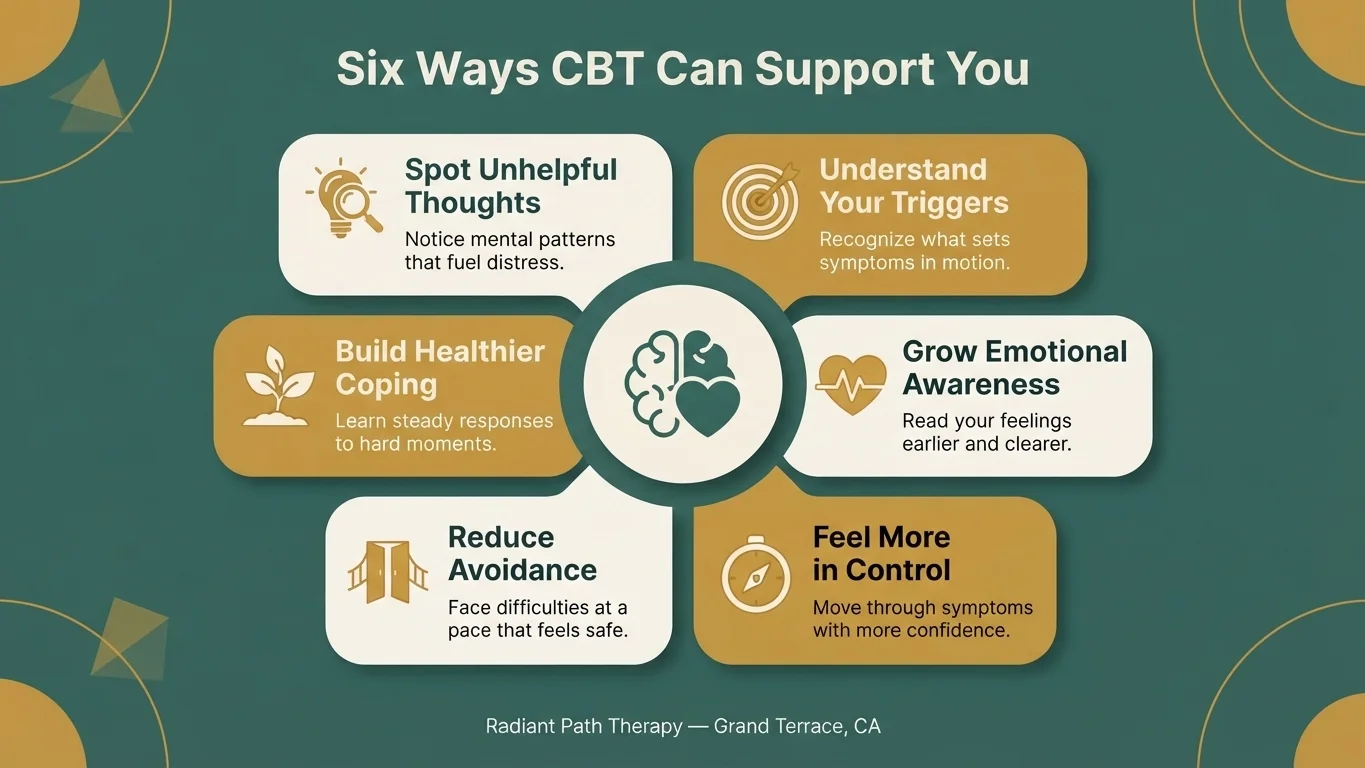
Cognitive behavioral therapy for dissociative disorder can focus on several areas of daily functioning and emotional health.
Identifying Unhelpful Thoughts and Beliefs
Dissociation can be connected with frightening thoughts or beliefs about yourself, other people, or the world. A person may believe that they cannot handle certain emotions or situations. CBT can help identify these thoughts and look at how they influence feelings and behavior. With support, a person can learn to develop more balanced ways of thinking.
Understanding Triggers and Dissociative Patterns
Dissociation may happen in response to certain situations, memories, emotions, or stress. Learning to identify these triggers can make symptoms easier to understand.
A therapist may help a person notice what happens before dissociation begins. This can include physical sensations, thoughts, emotions, changes in surroundings, or stressful interactions. Recognizing patterns can give a person a better sense of control.
Developing Healthier Coping Responses
When people feel overwhelmed, they may use avoidance or other coping behaviors that provide temporary relief. CBT can help them learn healthier ways to handle difficult emotions and situations. These skills may include grounding, relaxation, emotional awareness, problem-solving, and communication skills.
Improving Emotional Awareness and Regulation
Strong emotions can sometimes increase feelings of disconnection. CBT can help people recognize emotions earlier and understand how those emotions affect their thoughts and actions. Over time, learning to tolerate difficult emotions can make stressful situations feel more manageable.
Reducing Avoidance and Distress
Avoiding triggers may seem helpful in the moment, but it can sometimes keep fear and distress going. CBT can help people understand avoidance and gradually build healthier responses when appropriate. This work should be done at a pace that fits the person's needs. Therapy for dissociation should focus on safety and stability rather than pushing someone too quickly.
Building a Greater Sense of Control
One important goal of therapy is helping people feel more capable of managing their symptoms. Understanding dissociation, recognizing warning signs, and practicing coping skills can help a person feel more prepared when symptoms appear.
CBT Techniques for Dissociation
CBT techniques for dissociation focus on helping people understand their symptoms and recognize what may trigger them. A therapist may help identify unhelpful thoughts, emotional patterns, and behaviors connected to dissociation. Grounding exercises can also help a person stay connected to the present moment by paying attention to their surroundings, body sensations, and immediate experiences.
CBT may also teach healthy coping and emotion regulation skills to manage distress without becoming overwhelmed. These techniques can include challenging negative thoughts, developing healthier responses to triggers, maintaining daily routines, and learning ways to manage difficult emotions. The specific techniques used depend on the person's symptoms, needs, and treatment goals.
CBT for Dissociative Identity Disorder
Dissociative identity disorder (DID) is a complex condition that can involve disruptions in identity and memory. Treatment requires careful planning and should be provided by a qualified mental health professional with appropriate experience. CBT may be used as part of a broader treatment approach. The focus may include understanding symptoms, improving safety, managing distress, and developing coping skills.
Therapy may also help a person understand different identity states and the experiences connected with them. The goal is to create a safe environment for understanding these experiences and improving daily functioning. Safety and stabilization are often important parts of treatment. A therapist may first help the person build skills for managing strong emotions and staying grounded before working on difficult memories.
What Happens During CBT for a Dissociative Disorder?

CBT usually begins with an assessment. The therapist may ask about symptoms, personal history, stressful experiences, current challenges, and treatment goals. Early sessions may focus on understanding what the person is experiencing and creating a safe treatment plan. The therapist can then help identify patterns involving thoughts, emotions, behaviors, and dissociative symptoms.
Grounding and coping skills may be introduced early in treatment to help manage distress. As therapy continues, the therapist may work on unhelpful thoughts, triggers, emotional responses, avoidance, and daily behaviors. Progress can be reviewed regularly, and the treatment plan can be adjusted when needed. Because dissociation can be complex, therapy should be individualized and move at a safe pace.
CBT vs. Other Therapies for Dissociative Disorders
CBT is one possible approach. Other therapies may also be considered depending on the person's symptoms, diagnosis, history, and treatment goals.
Therapy | Main Focus | How It May Help |
CBT | Thoughts, emotions, and behaviors | Helps develop coping skills and change unhelpful patterns |
Trauma-focused therapy | Trauma-related symptoms | May help address trauma when clinically appropriate |
EMDR | Trauma processing | May help with certain trauma-related symptoms |
DBT | Emotion regulation and coping | Builds distress tolerance, emotional skills, and interpersonal skills |
These approaches are not necessarily competing choices. A therapist may use more than one method when appropriate.
For someone with dissociative symptoms, treatment should be based on a careful assessment. The best approach depends on what the person is experiencing and what will provide the safest and most useful support.
Can CBT Completely Treat a Dissociative Disorder?
CBT can be a useful part of treatment, but it is not accurate to say that CBT completely treats every dissociative disorder in the same way. Treatment goals are often focused on reducing distress, improving daily functioning, increasing emotional awareness, developing coping skills, and helping the person feel safer and more stable. Recovery can take time, especially when symptoms are connected with long-term trauma or other mental health concerns.
Progress may happen gradually. Some people may need a combination of therapies or different levels of support during different stages of treatment. A therapist can monitor progress and adjust the plan as needs change. The goal is not to force a person to recover quickly. The goal is to help them develop skills and understanding that support long-term stability.
When Should You Seek Professional Help for Dissociation?
Professional support may be helpful when dissociation becomes frequent, intense, or disruptive.
Consider reaching out to a mental health professional if you experience:
Frequent episodes of feeling disconnected from yourself
Feeling that your surroundings are unreal or distant
Memory gaps or unexplained periods of lost time
Confusion about your identity or experiences
Dissociation that affects work, school, or relationships
Increasing difficulty managing emotions
Avoidance that limits your daily life
Difficulty staying safe or managing severe distress
You do not need to wait until symptoms become severe before asking for help. If you are experiencing thoughts of suicide, self-harm, or immediate danger, seek emergency help or contact a crisis service in your area rather than waiting for a routine therapy appointment.
Conclusion
Dissociation can affect how a person experiences memories, emotions, identity, thoughts, and the world around them. When these symptoms interfere with daily life, professional support can provide a path toward greater understanding and stability.
Cognitive behavioral therapy for dissociative disorder may help people recognize triggers, understand unhelpful thought patterns, manage emotions, reduce avoidance, and develop practical coping skills. CBT may also be used alongside other therapies when appropriate.
There is no single treatment plan that works for everyone. A qualified mental health professional can assess your symptoms and help create a treatment approach that matches your needs and goals. Seeking help does not mean you have failed to manage your symptoms. It means you are taking a step toward understanding them and finding healthier ways to cope.
Get Support for Dissociative Symptoms
If dissociation is affecting your emotions, relationships, work, or daily life, professional support can help you understand what you are experiencing.
Radiant Path Therapy in Grand Terrace, CA provides personalized, trauma-specialized mental health care with evidence-based therapy approaches. In-person care is available in Grand Terrace, and secure telehealth options are also available.
If you are ready to take the next step, reach out to Radiant Path Therapy to discuss your concerns, treatment options, and goals. Start your healing journey with professional support that is built around you.
Frequently Asked Questions
Can CBT help with dissociative disorders?
CBT may help some people with dissociative disorders by improving awareness of thoughts, emotions, triggers, and behaviors. It can also teach coping and grounding skills. Treatment should be personalized to the person's symptoms and diagnosis.
What CBT techniques are used for dissociation?
CBT may include psychoeducation, grounding, identifying unhelpful thoughts, emotion regulation, trigger awareness, behavioral strategies, and healthy routines. A therapist chooses techniques based on the person's needs.
Is CBT effective for dissociative identity disorder?
CBT may be used as part of treatment for dissociative identity disorder. Treatment is usually more complex than using one therapy technique alone. Safety, stabilization, coping skills, and improved daily functioning may be important treatment goals.
Can CBT make dissociation worse?
CBT does not automatically make dissociation worse, but therapy needs to be paced carefully. Working too quickly on difficult memories or emotions may increase distress for some people. A qualified therapist can adjust treatment based on symptoms and stability.
How long does CBT take for dissociative disorders?
There is no single treatment length that works for everyone. The number and frequency of sessions depend on symptoms, treatment goals, personal history, and progress. Dissociative disorders may require longer-term care.
Is CBT better than other therapies for dissociation?
Not necessarily. CBT can be helpful, but other therapies may also have a role. The right treatment depends on the person's diagnosis, symptoms, history, and goals. A mental health professional can help determine an appropriate approach.
Can dissociative disorders be treated successfully?
Yes. Treatment can help many people manage symptoms, improve daily functioning, and develop better coping skills. Recovery can take time, but professional support can make the process more manageable.


