
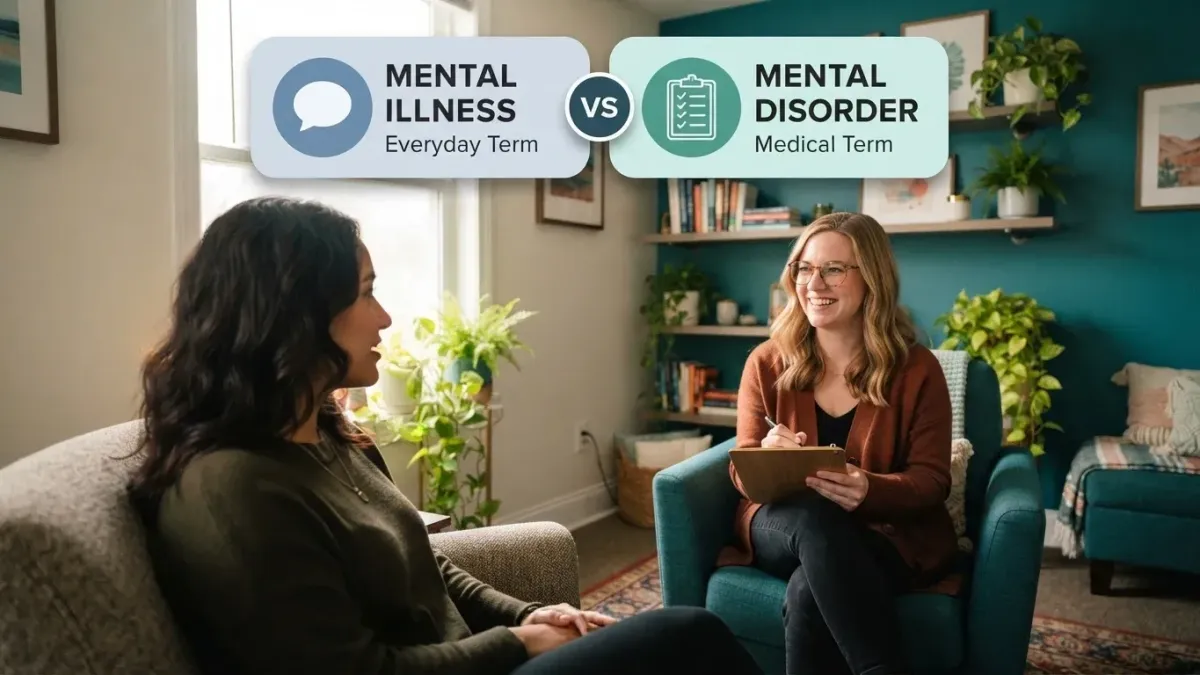
Mental Illness vs Mental Disorder: What's the Difference? (Complete Guide)
Have you ever heard someone use the words "mental illness" and "mental disorder" like they mean the same thing? You are not alone. Most people use these terms without thinking twice. But there is a real difference between them, and knowing that difference can help you understand yourself or a loved one a little better.
If you live in Grand Terrace, CA or anywhere in the Inland Empire, this guide is for you. Radiant Path Therapy wrote this article to help clear up the confusion in plain, simple words. No confusing medical talk. Just honest answers you can actually use.
Mental Illness vs Mental Disorder: Quick Answer
In short, "mental illness" is the everyday term most people use to talk about conditions that affect a person's thoughts, feelings, and behavior. "Mental disorder" is the medical term doctors and therapists use for the same kinds of conditions, based on official medical guides. The two terms point to the same group of conditions. The difference is mostly about who is using the word and where.
Here is a quick side by side look:
What Is Mental Illness?
Mental illness is a general term for any condition that changes the way a person thinks, feels, or acts in a way that makes daily life harder. This can include sadness that will not go away, worry that feels too big, or thoughts that feel out of control. It is not just about having a rough day or feeling stressed once in a while. A mental illness sticks around, and it can get in the way of work, school, relationships, and simple daily tasks like getting out of bed or eating a meal.
The term covers a wide range of experiences. Some people struggle with their mood. Others struggle with fear, focus, memory, or how they see the world around them. No matter what form it takes, a mental illness is a real health issue, just like a broken bone or a heart condition. It is not something a person can simply choose to turn off or ignore.
Why the Term Is Used
People use the word "mental illness" because it is easy to say and does not need any medical training to use. Families, friends, teachers, and news reporters often use it because it fits naturally into everyday conversation.
The term also puts mental health struggles on the same level as physical illness, which helps people see them as real health problems, not personal failures. At the same time, because it has been used so long in movies and everyday talk, it can sometimes carry unfair stereotypes, which is part of why professionals often use more precise language in clinical settings.
Examples
Some conditions people often call a mental illness include depression, anxiety, bipolar disorder, OCD, and schizophrenia. Eating disorders, PTSD, and ADHD also fall under this term.
For example, someone with depression may feel a heavy sadness that does not lift for weeks, along with low energy and trouble sleeping. Someone with an anxiety disorder may feel constant worry along with a racing heart, even when nothing dangerous is happening.
What Is a Mental Disorder?
A mental disorder is a health condition that involves changes in thinking, emotion, or behavior, along with distress or problems functioning in social, work, or family life. This definition comes from official medical sources, not everyday talk.
DSM-5 and ICD Classifications

Doctors and therapists in the United States often use a book called the DSM-5, which stands for the Diagnostic and Statistical Manual of Mental Disorders. Around the world, many providers also use the ICD, or International Classification of Diseases. Both books list specific signs a person must have before a provider can give a diagnosis.
These guides are updated over time as new research comes out, so the criteria stay current with the latest understanding of mental health. Using a shared guide also means a diagnosis given in one clinic will mean the same thing in another clinic across the country.
Why Healthcare Professionals Use This Term
Doctors and therapists use "mental disorder" because it is exact. It comes with clear rules and checklists. This helps two different providers agree on what is going on with a patient, no matter where they work.
It also plays a practical role in insurance paperwork, treatment planning, and research studies, where a precise term makes record keeping much easier. This shared language helps make sure a patient gets consistent care, even if they switch providers or move to a new city.
Mental Illness vs Mental Disorder

Mental illness is a broad, everyday word. Mental disorder is a specific medical term with a formal definition. Here's a simple side-by-side breakdown of how mental illness and mental disorder differ across a few key areas.
Are Mental Illness and Mental Disorder the Same Thing?
In most cases, yes. The two terms describe the same conditions. The difference is really about tone and setting, not about the actual health condition.
Why many people use them interchangeably: Most people were never taught the difference, so they use whichever word feels natural at the moment.
When the distinction matters: The difference matters more in medical records, insurance paperwork, and research studies, where exact language is important.
Clinical vs everyday language: A therapist writing a treatment plan will use "mental disorder." That same therapist, talking to a client's family at dinner, might say "mental illness" instead.
Common Types of Mental Disorders
There are many types of mental disorders, and each one affects a person's thoughts, feelings, or behavior in its own way. Here is a closer look at some of the most common ones.
Anxiety Disorders
These involve constant worry, fear, or nervousness that does not match the actual situation. Panic attacks and racing thoughts are common signs. A person may also feel restless, have trouble sleeping, or avoid certain places and situations because they trigger fear. Over time, this worry can start to affect work, school, and relationships.
Depressive Disorders
These involve ongoing sadness, low energy, and loss of interest in things a person used to enjoy. It is more than just having a bad day. Depression can also affect appetite, sleep, and concentration, making even small daily tasks feel exhausting. Some people also experience feelings of worthlessness or guilt that do not match their actual situation.
Bipolar Disorder
This involves big mood swings, from very high energy periods to very low, depressed periods. During high energy phases, a person may feel unusually confident, talk quickly, or take risks they normally would not take. During low phases, they may feel drained, hopeless, or unable to get out of bed.
Obsessive-Compulsive Disorder (OCD)
This involves unwanted repeated thoughts, along with actions a person feels they must do to feel less anxious. These thoughts and actions can take up hours of a person's day and get in the way of normal routines. Common examples include repeated checking, counting, or cleaning rituals that feel impossible to stop.
Post-Traumatic Stress Disorder (PTSD)
This can develop after a scary or dangerous event. It can cause flashbacks, nightmares, and a constant feeling of being on edge. A person with PTSD may also avoid places, people, or conversations that remind them of what happened, and may feel jumpy or easily startled long after the event is over.
Schizophrenia Spectrum Disorders
These affect how a person thinks, feels, and sees reality. They can include hearing or seeing things that are not there. Other signs can include confused thinking, trouble organizing thoughts, and pulling away from friends and family. Early treatment can make a real difference in how someone manages these symptoms over time.
Eating Disorders
These involve unhealthy patterns around food, eating, and body image that can seriously harm physical health. This can include eating far too little, eating large amounts in a short time, or feeling an intense fear of gaining weight. Eating disorders affect people of every age, gender, and body type, not just one type of person.
Personality Disorders
These involve long term patterns of thinking and behaving that make relationships and daily life difficult. These patterns usually start in the teen years or early adulthood and stay fairly consistent over time. They can affect how a person sees themselves, handles emotions, and connects with others.
Neurodevelopmental Disorders
These begin in childhood and can affect learning, attention, and social skills. ADHD and autism spectrum disorder fall into this group. These conditions are often noticed first by parents or teachers, and early support can help a child build helpful skills that carry into adulthood.
What Causes Mental Illness and Mental Disorders?
Mental illness and mental disorders rarely come from just one cause. Most of the time, it is a mix of things working together, like a person's genes, their brain chemistry, and the experiences they have gone through in life. Some people may be born with a higher chance of developing a certain condition, while others may develop one later in life because of stress, trauma, or a major life change.
It is also important to know that mental health struggles are not anyone's fault. They are not caused by weakness or bad choices. Understanding the real causes, from biology to environment, can help take away the blame and shame that often surrounds mental health, and make it easier for someone to ask for help.
Common Signs and Symptoms
Emotional symptoms: Sadness, fear, anger, or feeling numb for long periods of time.
Behavioral symptoms: Pulling away from friends and family, sleeping too much or too little, or changes in eating habits.
Physical symptoms: Headaches, stomach problems, tiredness, or unexplained aches and pains.
Cognitive symptoms: Trouble focusing, racing thoughts, memory problems, or trouble making decisions.
How Mental Disorders Are Diagnosed
Getting a diagnosis is not just one quick step. It is a process where a mental health professional gathers information from a few different angles to get a clear, accurate picture of what is going on. This helps make sure a person gets the right diagnosis and the right treatment plan, instead of guessing based on just one symptom.
The process usually starts with a conversation and moves through a few key checks, from reviewing medical history to comparing symptoms against official criteria. Each step adds a piece to the puzzle, so the final diagnosis is based on solid information rather than a quick guess. Here is how the process usually works.
Treatment Options for Mental Illness and Mental Disorders
There is no single fix for mental illness, but there are several proven treatment options that can help, often used together for the best results.
Psychotherapy: Talk therapy helps people understand their thoughts and feelings and learn new ways to cope.
Medication: Some people benefit from medication that helps balance brain chemistry and ease symptoms.
Lifestyle Changes: Sleep, exercise, and healthy eating all play a real part in mental health recovery.
Support Groups: Talking with others who understand what you are going through can reduce feelings of being alone.
Hospital or Intensive Care: For serious symptoms, a higher level of care like inpatient or partial hospitalization may be needed for a short time.
Ongoing Mental Health Care Recovery: is often a long term process. Regular checkups with a therapist help keep progress on track.
Can Mental Illness Be Prevented?
Not every mental illness can be fully prevented, since things like genetics and brain chemistry are out of a person's control. But that does not mean prevention is pointless. Certain daily habits and choices can lower the risk of developing a mental disorder or help catch one early, before it becomes more serious.
Prevention is really about building a strong foundation for mental health over time. Small, steady steps like managing stress, staying connected to others, and getting regular checkups can make a real difference. Here are a few ways to support long term mental wellness.
When Should You Seek Professional Help?
Warning signs: If sadness, worry, or other symptoms last for weeks and affect your daily life, it may be time to talk to someone.
Crisis situations: If you or someone you know is thinking about self-harm, reach out for emergency help right away.
Early treatment benefits: The sooner you get support, the easier it often is to manage symptoms and feel better.
Common Myths About Mental Illness and Mental Disorders
Wrong ideas about mental illness are everywhere, and they often stop people from getting the help they need, so let's clear a few of them up.
Myth 1: They're Different Diseases
This is false. Mental illness and mental disorder describe the same conditions, just in different types of language. One is the word people use in daily conversation, and the other is the word used in medical settings. Neither term points to a separate or more serious condition than the other.
Myth 2: Mental Disorders Are Rare
In reality, mental health conditions are very common. Millions of people live with one at some point in their life. Conditions like anxiety and depression affect people of every age, background, and income level, which means most families have been touched by this in some way, even if it is never talked about.
Myth 3: Mental Illness Is a Personal Weakness
Mental illness is a health condition, not a character flaw. It is not caused by being weak or lazy. It often comes from a mix of genetics, brain chemistry, and life experiences, none of which a person can control through willpower alone. Blaming someone for their symptoms only makes it harder for them to reach out for support.
Myth 4: People Never Recover
Many people manage their symptoms well and go on to live full, healthy lives with the right treatment and support. Recovery does not always mean symptoms disappear completely. For many people, it means learning tools that help them feel stable, connected, and in control of their daily life again.
Myth 5: Therapy Is Only for Severe Problems
Therapy can help with everyday stress too, not just major crises. You do not need to wait until things get extreme. Many people use therapy simply to build better coping skills, work through a tough life change, or check in on their mental health, much like a regular checkup for the body.
Mental Illness vs Mental Disorder: Which Term Should You Use?
Once you understand both terms, the real question becomes simple: which one should you actually use, and when?
Conclusion
Mental illness and mental disorder are two ways of talking about the same thing. One is the language people use every day. The other is the language doctors use to diagnose and treat. Knowing the difference will not change your symptoms, but it can help you feel more confident when you talk about your mental health or ask for help.
Whatever term you use, what matters most is recognizing when something feels off and knowing that support is available. No one has to carry these struggles alone.

Ready to Take the First Step?
If you are searching for support in Grand Terrace, CA or the surrounding Inland Empire area, you do not have to face this alone. Radiant Path Therapy offers trauma specialized, evidence based care from licensed therapists who genuinely want to help you heal. Same day appointments are available, with no long waitlists standing in your way.
Ready to take the first step? Contact Radiant Path Therapy in Grand Terrace, CA today to schedule your free consultation and find a therapist who truly understands you. Contact us to get started.
Frequently Asked Questions
Is mental illness the same as a mental disorder?
Yes, in most cases they describe the same conditions. Mental illness is the everyday term most people grow up hearing, while mental disorder is the medical term used in diagnosis and treatment. The condition itself does not change based on which word is used, only the setting and the audience do.
Which term do doctors use?
Doctors and therapists usually use "mental disorder" in medical charts and diagnosis, based on the DSM-5 or ICD. This keeps records consistent no matter which provider a patient sees, and it makes sure insurance companies and other clinics understand exactly what condition is being treated.
Is depression a mental illness or a mental disorder?
Depression is both. In casual talk, people call it a mental illness. In a medical chart, it is listed as a mental disorder called Major Depressive Disorder. A therapist will use the clinical name when documenting treatment, but will often use simpler words like "depression" or "mental illness" when talking directly with a client.
Is anxiety considered a mental disorder?
Yes. Anxiety disorders are a recognized category of mental disorders under the DSM-5. This category includes several specific types, such as generalized anxiety disorder, panic disorder, and social anxiety disorder, each with its own set of symptoms a provider looks for.
Can mental disorders be cured?
Some conditions can go away fully, while others are managed over time with treatment. Many people live full lives with proper care. Recovery looks different for everyone. For some, it means symptoms disappear completely. For others, it means learning tools to manage symptoms so they no longer control daily life.
What is the most common mental disorder?
Anxiety disorders are among the most common mental disorders, affecting a large number of people each year. Depression is not far behind, and many people experience both anxiety and depression at the same time, which is sometimes called a co-occurring condition.
What causes mental disorders?
A mix of genetics, brain chemistry, trauma, stress, and environment can all play a part. No single factor is usually responsible on its own. This is why treatment often works best when it looks at the whole person, not just one symptom or one possible cause.
When should I see a mental health professional?
If symptoms last for weeks, get worse, or affect your work, school, or relationships, it is a good time to reach out for help. You do not need to wait for a crisis. Reaching out early, even for mild symptoms, often makes treatment shorter and easier in the long run.


