
Signs of Emotional Trauma in Adults: How to Recognize Them
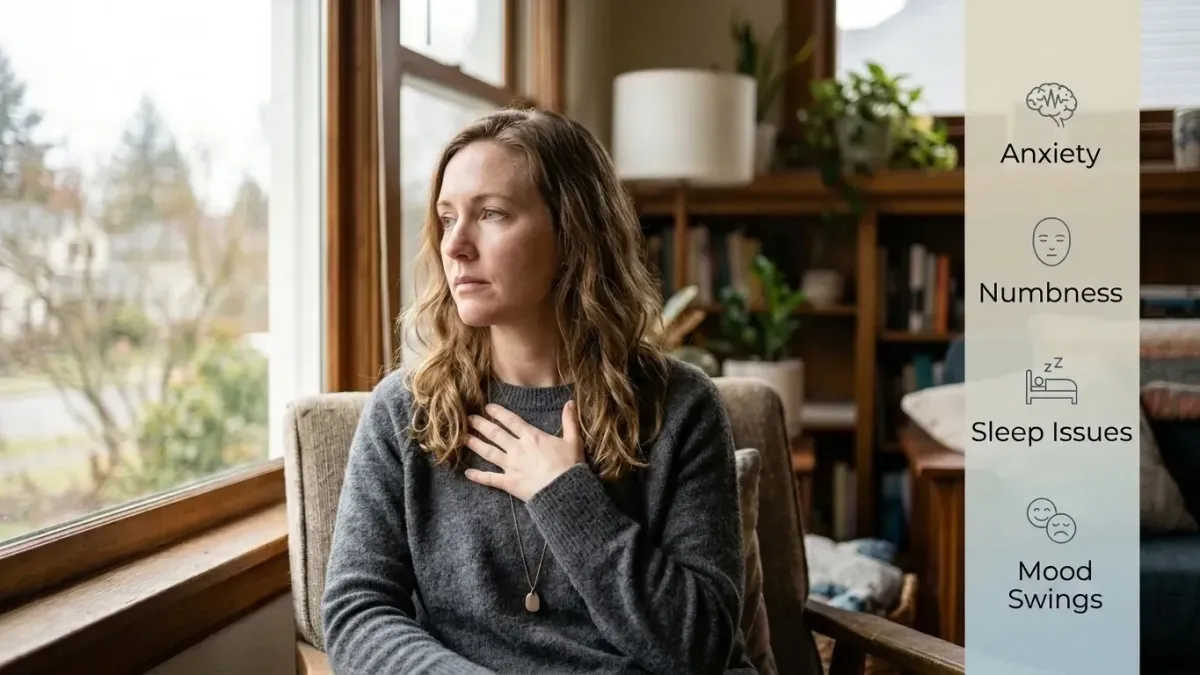
Emotional trauma in adults often shows up as constant anxiety or fear, emotional numbness, sudden mood swings, and trouble trusting other people. Many adults also avoid certain places or situations, have sleep problems, or feel physical symptoms like headaches and stomach pain with no clear cause. Relationship struggles are common too. These signs can appear right after a hard event, or they can show up months or even years later. If several of these signs sound familiar, it may be worth talking to a professional who understands trauma.
If you live in Southern California and want support close to home, Radiant Path Therapy in Grand Terrace, CA offers trauma focused care for adults who are ready to feel like themselves again. You do not have to figure this out alone.
What Is Emotional Trauma?
Emotional trauma is the lasting stress response that follows a painful or frightening event. It is not just about what happened to you. It is about how your mind and body reacted to it, and how that reaction stuck around.
How Trauma Affects the Mind and Body
Trauma changes the way the brain processes stress. When something scary or painful happens, the brain's alarm system, often called the amygdala, can become overactive. This means your body may keep reacting as if the danger is still there, even long after it has passed. That is why a person can feel on edge, jumpy, or unsafe even in calm, safe situations.
It also helps to know that trauma looks different for everyone. Two people can go through the same hard event and walk away with completely different reactions. One might feel anxious and on edge, while the other feels numb or shut down. Neither response is wrong. The brain and body simply react in the way that feels safest at the time, and those patterns can stick around long after the danger has passed.
Why Symptoms Can Appear Long After the Event
Trauma symptoms do not always show up right away. Some people feel fine at first and then notice signs weeks, months, or years later. A stressful life event, a new relationship, or even a small reminder of the past can bring old feelings back to the surface. This delayed reaction is normal, and it does not mean something is wrong with you.
Emotional Signs of Trauma in Adults

Emotional trauma can have a lasting impact on how adults think, feel, and respond to everyday situations, even long after the event has passed.
Persistent sadness or emptiness Many adults with unresolved trauma describe a heavy sadness that will not lift. It can feel like a fog that follows them through the day, even when life seems fine on the outside.
Anxiety and constant worry Trauma can leave the nervous system stuck in high alert. This often shows up as constant worry, racing thoughts, or a feeling that something bad is about to happen, even when there is no clear reason for it.
Emotional numbness Some people cope with trauma by shutting down their feelings. This can look like feeling disconnected from loved ones, struggling to feel joy, or going through daily life on autopilot.
Irritability or anger Trauma does not always look like sadness. For many adults, it shows up as a short temper, frustration over small things, or anger that feels bigger than the situation calls for.
Feelings of guilt or shame It is common for trauma survivors to blame themselves for what happened, even when it was not their fault. This guilt can quietly affect self-worth for years.
Behavioral Signs of Emotional Trauma
If a person, place, or situation reminds someone of a painful event, they may go out of their way to avoid it. This can shrink a person's world over time, limiting where they go and who they see. Pulling away from loved ones is a common trauma response. It can feel safer to be alone than to risk being hurt or misunderstood again.
When trust has been broken, especially by someone close, it can be hard to let people in again. This can affect friendships, romantic relationships, and even relationships with coworkers.
Some adults cope with trauma through risky choices, like substance use, reckless spending, or dangerous activities. This is often an attempt to feel something, or to feel nothing at all. Trauma can make it hard to focus, remember things, or make even small decisions. This happens because the brain is spending so much energy managing stress that it has less left over for daily tasks.
Physical Signs of Emotional Trauma

Physical symptoms can be an important sign of emotional trauma, even when the underlying emotional pain is not immediately obvious.
Sleep problems
Trouble falling asleep, staying asleep, or having nightmares is one of the most common signs of trauma. The body may struggle to relax enough to rest. Even when a person feels tired, their mind may stay alert, making it hard to fully switch off at night.
Chronic fatigue
Living in a constant state of stress is exhausting. Many trauma survivors feel tired no matter how much sleep they get. This happens because the body is using so much energy staying on guard that it has little left over for daily life.
Headaches or body aches
Emotional pain often shows up as physical pain. Tension headaches, jaw pain, and muscle aches are common in people carrying unresolved trauma. This is often the body holding onto stress that has not been fully released or processed.
Digestive issues
The gut and brain are closely connected. Stomach pain, nausea, or digestive trouble with no medical cause can sometimes be linked to emotional stress. When the nervous system stays on high alert, it can disrupt normal digestion over time.
Increased heart rate or panic symptoms
A racing heart, shortness of breath, sweating, or dizziness can be signs that the body's stress response has been triggered, even without an obvious threat in front of you. These moments can feel frightening, but they are the body reacting to old danger signals rather than something happening right now.
How Childhood Trauma Can Affect Adults
Trauma from childhood does not simply disappear with time. It often follows people into adulthood and shapes how they see themselves and the world.
Common long-term effects include ongoing relationship challenges, where old patterns of fear or mistrust show up in new relationships. Many adults also carry low self-esteem that started when they were young, along with a deep fear of abandonment that makes closeness feel risky.
People-pleasing tendencies are also common. Someone who had to keep the peace or stay small as a child may grow into an adult who struggles to say no or set boundaries. Difficulty regulating emotions is another lasting effect, since a child who never learned healthy coping tools may still be figuring them out as an adult.
What Causes Emotional Trauma?
Emotional trauma can come from many different experiences, and no two people respond to the same event in exactly the same way. Common causes include:
Abuse or neglect
Loss of a loved one
Accidents or injuries
Domestic violence
Bullying
Military or first-responder experiences
Medical trauma
It is also worth knowing that trauma is not only caused by one big event. Ongoing stress, like growing up in an unstable home, can also leave lasting marks. This is sometimes called complex trauma, and it can be just as impactful as a single traumatic event, even if it does not stand out as clearly in a person's memory.
Trauma vs. PTSD: What's the Difference?
Not everyone who experiences trauma develops post-traumatic stress disorder, or PTSD. Trauma is the emotional response to a distressing event, while PTSD is a specific mental health condition that can develop when trauma symptoms do not fade over time.
The key difference often comes down to how long symptoms last and how much they affect daily life. Someone with trauma may feel better within weeks or months as they process what happened. Someone with PTSD may continue to have intense flashbacks, nightmares, and fear responses long after the event, and these symptoms may get in the way of work, relationships, or basic daily routines.
If symptoms become more severe, more frequent, or start to feel unmanageable, it is a sign that professional support is needed.
When Should You Seek Help?
It can be hard to know when everyday stress crosses into something that needs support. A few signs it may be time to reach out include:
Symptoms interfere with daily life
Work or relationships are affected
Frequent panic attacks
Thoughts of self-harm
Substance misuse
If any of these apply to you or someone you love, please do not wait. Reaching out early can make healing easier and faster.
How Emotional Trauma Is Treated
Talking with a trained therapist gives trauma a safe place to be processed. Therapy helps people understand their reactions, build coping skills, and slowly feel more in control. This is a structured type of therapy that helps people change unhelpful thought patterns connected to trauma. It is especially helpful for managing anxiety and fear tied to specific memories.
EMDR, or Eye Movement Desensitization and Reprocessing, helps the brain reprocess traumatic memories so they feel less overwhelming. Many people find it helpful when talking alone has not been enough. Connecting with others who understand trauma can reduce feelings of isolation. Hearing that you are not alone can be a powerful part of healing.
In some cases, a doctor or psychiatric provider may recommend medication to help manage symptoms like anxiety, depression, or sleep trouble alongside therapy.
Steps That May Support Healing

Healing from trauma is not a straight line, but small daily steps can make a real difference over time.
Building a support system of people you trust gives you somewhere safe to turn. Improving sleep habits, like keeping a regular bedtime, can help calm an overactive nervous system. Regular physical activity, even a short walk, can lower stress hormones and improve mood.
Mindfulness and relaxation techniques, such as deep breathing or grounding exercises, can help bring your body out of fight-or-flight mode. Journaling gives your thoughts and feelings a safe outlet, especially on days when talking feels hard. Setting healthy boundaries protects your energy and helps you feel more in control of your relationships and your time.
None of these steps need to be perfect, and you do not have to do them all at once. Even one small change, like going for a short walk or writing down how you feel for five minutes, can start to shift how your body and mind respond to stress. Healing tends to build slowly, one small choice at a time.
Ready to Start Your Healing Journey?
You do not have to keep carrying this on your own. Radiant Path Therapy in Grand Terrace, CA offers trauma-specialized, evidence-based care for adults who are ready to understand their symptoms and start moving toward real healing. Our team takes time to listen, to understand your story, and to build a treatment plan that actually fits your life, not a one-size-fits-all approach.
Whether you are dealing with anxiety, emotional numbness, sleep problems, or the lingering effects of childhood trauma, help is closer than you think. We offer same-day admission, no long waitlists, and a team of licensed therapists who specialize in trauma-informed care. Contact us today to schedule a confidential consultation. Taking the first step can be hard, but you do not have to take it alone, and you do not have to wait until things get worse to ask for support.
Conclusion
Emotional trauma can affect the mind, the body, and daily life in ways that are not always easy to spot. Anxiety, numbness, sleep trouble, and relationship struggles are all common responses, not signs of weakness. Many adults carry the effects of past pain for years without ever putting the word "trauma" to what they are feeling.
The good news is that these signs are your body's way of asking for support, not proof that something is broken beyond repair. With the right care, the nervous system can learn to feel safe again, old patterns can shift, and daily life can start to feel lighter. Healing is rarely instant, but it is possible, and it often starts with one simple step, like naming what you are going through and deciding you are ready for something different.
If any of these signs sound familiar, whether it is the sleepless nights, the constant worry, or the feeling of being disconnected from people you love, please know that you are not alone, and you are not asking for too much by wanting to feel better. Reaching out for help is not a sign of weakness. It is one of the strongest steps a person can take.
Frequently Asked Questions
What are the most common signs of emotional trauma in adults?
The most common signs include anxiety, emotional numbness, mood swings, trouble trusting others, avoidance behaviors, sleep problems, unexplained physical symptoms, and relationship difficulties. These signs can show up alone or together, and they often get stronger during times of stress.
Can emotional trauma show up years later?
Yes. Trauma symptoms can appear right away or stay hidden for years before showing up, often triggered by a stressful event or a reminder of the past. This is why some adults feel confused when strong emotions surface with no clear cause in the present.
How do I know if my childhood trauma still affects me?
Signs may include ongoing struggles with trust, low self-esteem, fear of abandonment, or trouble managing your emotions as an adult. A therapist can help you explore these patterns further and connect them back to experiences you had growing up.
What is the difference between emotional trauma and PTSD?
Trauma is the emotional response to a distressing event. PTSD is a diagnosable condition that can develop when trauma symptoms do not improve and continue to affect daily life. A mental health professional can help determine which one you may be experiencing.
Can emotional trauma cause physical symptoms?
Yes. Trauma can lead to headaches, fatigue, digestive problems, muscle tension, and a racing heart, even without a medical cause. This happens because ongoing stress keeps the body's nervous system in a heightened state.
How can adults begin healing from trauma?
Healing often starts with therapy, along with healthy habits like better sleep, movement, mindfulness, and building a strong support system. Small, steady steps tend to work better than trying to fix everything at once.


