
Yes, stress can contribute to body pain. When you feel stressed, your body may tighten its muscles, change how it processes pain, and affect your sleep. These changes can lead to headaches, neck pain, back pain, stomach discomfort, and other physical symptoms. The pain may appear during a stressful period or continue after the situation has passed.
However, not all body pain comes from stress. An injury, nerve problem, or another health condition may also cause discomfort. Understanding the connection between stress and physical pain can help you recognize possible triggers and decide when to seek medical care.
For people in Redlands, Grand Terrace, and Corona, CA, Radiant Path Therapy and Psychiatry offers support for emotional and mental health concerns across California. Learning how stress affects the body is one way to understand the connection between emotional health and physical discomfort.
How Stress Can Cause Body Pain
Stress can affect several systems in your body, including your nervous system, muscles, and digestive system. These changes can make you feel pain or make existing pain more noticeable.
The Fight-or-Flight Response and Muscle Tension
When you face a stressful situation, your body may activate its fight-or-flight response. This is a natural reaction that prepares you to respond to a possible threat. Your heart rate may increase, your breathing may become faster, and your muscles may tighten.
Muscle tension can help your body react quickly in the short term. However, staying tense for long periods may lead to soreness and stiffness. You may notice this in your neck, shoulders, jaw, or back.
For example, you may spend a difficult workday with your shoulders raised and your jaw clenched without noticing it. By the evening, your muscles may feel tight or painful. If this pattern happens often, your body may have less time to relax between stressful situations.
How Stress Hormones Affect Pain Sensitivity
During stress, your body releases hormones such as adrenaline and cortisol. These hormones help prepare you to respond to a challenge. Adrenaline can increase alertness and heart rate, while cortisol helps regulate the body’s response to stress. These changes are useful for short periods. However, ongoing stress may affect sleep, muscle tension, and other processes involved in pain. Stress can also change how strongly you experience pain. Researchers use the term stress-induced hyperalgesia to describe an increase in pain sensitivity linked to stress.
In some situations, stress may have the opposite effect and temporarily reduce pain. This is known as stress-induced analgesia. The review Pain in Times of Stress discusses how stress can increase or reduce pain through changes in the nervous system and other body processes. This means stress does not affect everyone in the same way. Your response may depend on the type of stress, how long it lasts, and your overall health.
How the Brain Changes the Way You Experience Pain
Pain is not only a signal from an injured body part. Your brain also helps process and interpret those signals. The brain considers information from your body along with emotions, memories, attention, and other experiences. This can influence how strong pain feels and how you respond to it.
Researcher R. Melzack explored this connection through the neuromatrix theory of pain. His work, Pain and the Neuromatrix in the Brain, describes pain as an experience shaped by several brain processes rather than a simple response to physical injury. This does not mean that pain is imaginary. Pain is a real experience, even when stress or emotional factors contribute to it. It also does not mean that every painful symptom has a psychological cause.
What Parts of Your Body Can Hurt Because of Stress?
Stress can contribute to discomfort in different parts of your body. The location and severity of pain can vary from person to person.
Neck, Shoulder, and Upper Back Pain
Neck and shoulder pain are common physical complaints during stressful periods. You may tighten these muscles when you feel worried, rushed, or under pressure. Sitting in one position for a long time can add to the problem. Poor posture, limited movement, and muscle tension may work together and increase discomfort.
You may notice:
- Tightness around your neck and shoulders
- Stiffness when turning your head
- Aching between your shoulder blades
- Muscle soreness after a stressful day
Research on Stress-Related Musculoskeletal Pain discusses the relationship between stress and pain in muscles and joints. The relationship can involve several factors, including changes in pain processing and how people respond to discomfort.
Headaches, Jaw Pain, and Facial Tension
Stress may contribute to tension-type headaches. These headaches can feel like pressure or tightness around your forehead, temples, or the back of your head. You may also clench your jaw or grind your teeth when you feel tense. Some people do this during sleep without realizing it. Repeated jaw tension can cause soreness around the jaw, face, and temples.
Pay attention to patterns. For example, headaches that appear after long periods of concentration or jaw soreness when you wake up may be worth discussing with a healthcare professional. Stress is one possible contributor, but headaches and jaw pain can have other causes. A professional can help assess symptoms that are frequent, severe, or changing.
Lower Back and Widespread Muscle Pain
Stress may contribute to lower back pain and discomfort in several muscle groups. Muscle tension, poor sleep, reduced physical activity, and changes in pain sensitivity can all play a part. Some people notice that their pain becomes worse during stressful periods. Others experience discomfort that moves between different areas of the body.
A 2007 review by Alexander Cowell McFarlane discusses how stress may interact with musculoskeletal pain through nervous system changes, physical responses, and behaviors such as avoiding movement. However, lower back pain can also result from muscle strain, joint problems, nerve irritation, or other medical conditions. Do not assume that stress is the only cause.
Abdominal Pain and Digestive Discomfort
Stress can affect communication between your brain and digestive system. This may influence gut movement, sensitivity, and how you experience abdominal discomfort. Some people notice stomach cramps, bloating, nausea, or changes in bowel habits during stressful periods. Stress may also make symptoms of an existing digestive condition feel worse.
Research in Mechanisms of Stress-Induced Visceral Pain explains how stress can affect the nervous system and increase sensitivity in the digestive tract.
These effects may be relevant to some people with irritable bowel syndrome (IBS), a condition that can involve abdominal pain and changes in bowel habits. Still, stomach pain should not automatically be blamed on stress. Severe, persistent, or unexplained digestive symptoms need medical assessment.
Can Stress Cause Chest Pain?
Yes, stress and anxiety can contribute to chest discomfort in some people. Muscle tension, changes in breathing, and the body’s stress response may cause tightness or discomfort in the chest. However, chest pain can also be a sign of a serious medical problem, including a heart condition. You should never assume that chest pain is caused by stress.
Seek emergency medical care if chest pain is sudden, severe, or occurs with symptoms such as shortness of breath, fainting, sweating, nausea, or pain spreading to your arm, jaw, back, or shoulder. If you are unsure about the cause, get medical help promptly.
Why Stress-Related Pain Can Continue After Stress Has Passed
Stress-related pain does not always stop when a difficult situation ends. Muscle tension, sleep problems, and changes in pain sensitivity may continue for some time.
Increased Pain Sensitivity and Nervous System Changes
When stress continues for a long time, your nervous system may become more responsive to pain signals. This can make ordinary sensations feel more uncomfortable or make existing pain feel stronger. For example, a person with ongoing back discomfort may notice that even small movements feel painful during a stressful period.
This response does not prove that stress is the only cause. It shows why pain can be influenced by both physical and emotional factors. If pain continues or becomes worse, a healthcare professional can help check for other possible causes.
The Cycle Between Pain, Stress, and Poor Sleep
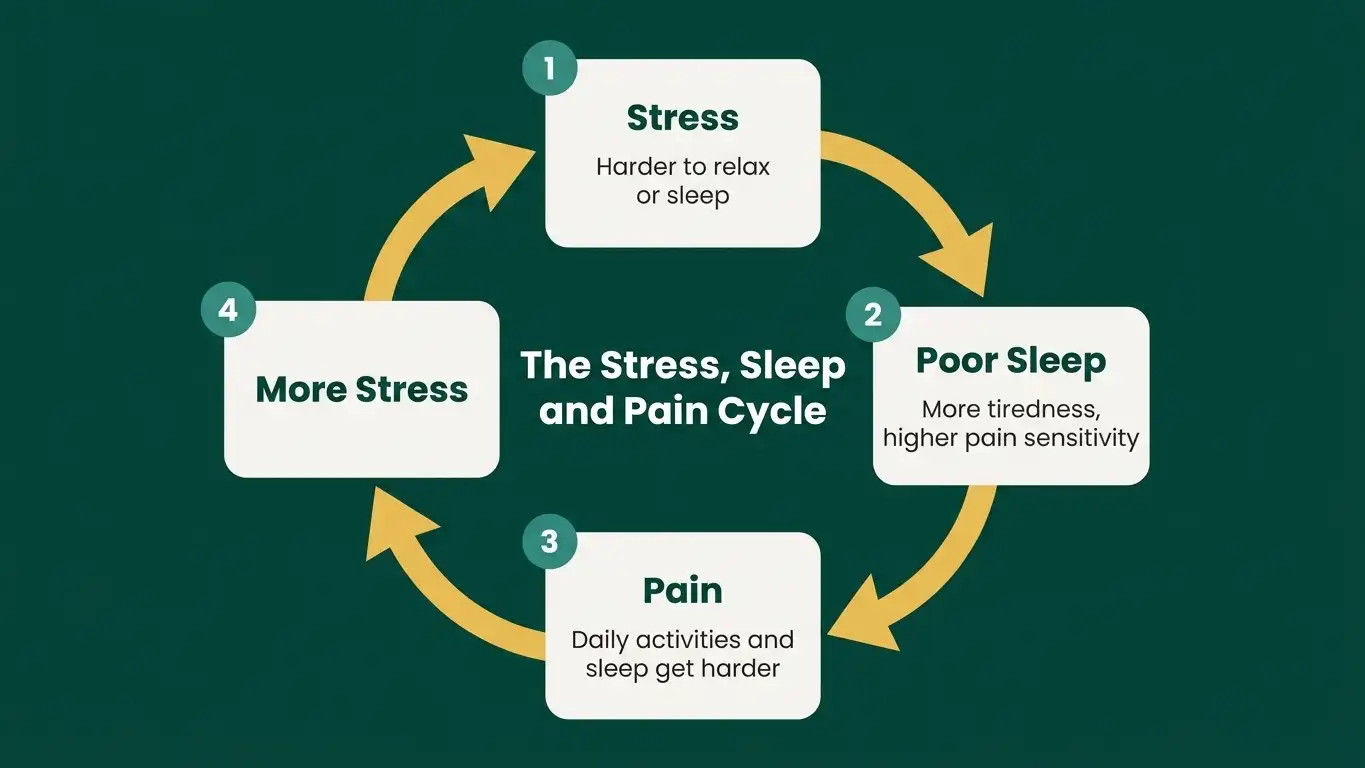
Pain and stress can affect each other. Stress may make it harder to fall asleep or stay asleep. Poor sleep can leave you feeling tired and less able to cope with discomfort.
Pain can also interrupt sleep. When you wake up repeatedly, you may feel more stressed the next day. This can create a cycle:
- Stress makes it harder to relax or sleep.
- Poor sleep increases tiredness and may affect pain sensitivity.
- Pain makes daily activities and sleep more difficult.
- These problems add to your stress.
Breaking this cycle may take time. Improving sleep habits, managing stress, and getting appropriate care can help address some of the factors involved.
How Avoiding Movement Can Make Pain Harder to Manage
When movement causes discomfort, you may begin avoiding activities. Rest can be helpful after an injury or during a painful flare-up, but avoiding movement for long periods may lead to stiffness and reduced strength. This can make everyday tasks feel harder. You may also become more worried about activities that you once completed without difficulty. A healthcare professional can help you understand which activities are safe and whether gentle movement or physical therapy may be appropriate. Do not push through severe or unexplained pain.
How to Recognize Whether Your Body Pain May Be Stress-Related
You may notice a connection between stress and physical discomfort by paying attention to when your symptoms appear and what makes them better or worse.
Pain That Gets Worse During Stressful Situations
Notice whether your pain becomes stronger during certain situations. These may include work pressure, family conflict, financial concerns, or periods of poor sleep. For example, you may experience shoulder tension before an important meeting or headaches after a demanding day. Keep track of when the pain starts, where you feel it, and how strong it is. These details can help you identify patterns.
Pain That Changes With Relaxation and Rest
Some people notice that their discomfort improves when they relax, sleep well, or take a break from stressful activities. You might feel less tension after a walk, a breathing exercise, or a period of quiet rest. However, improvement during relaxation does not prove that stress caused the pain. Other conditions can also improve with rest. Use these patterns as helpful information, not as a diagnosis.
Other Symptoms That May Occur Alongside Physical Pain
Stress can affect more than your muscles. You may also notice:
- Trouble falling asleep or staying asleep
- Feeling tired during the day
- Difficulty concentrating
- Irritability or restlessness
- Changes in appetite
- Stomach discomfort
- Feeling tense or worried
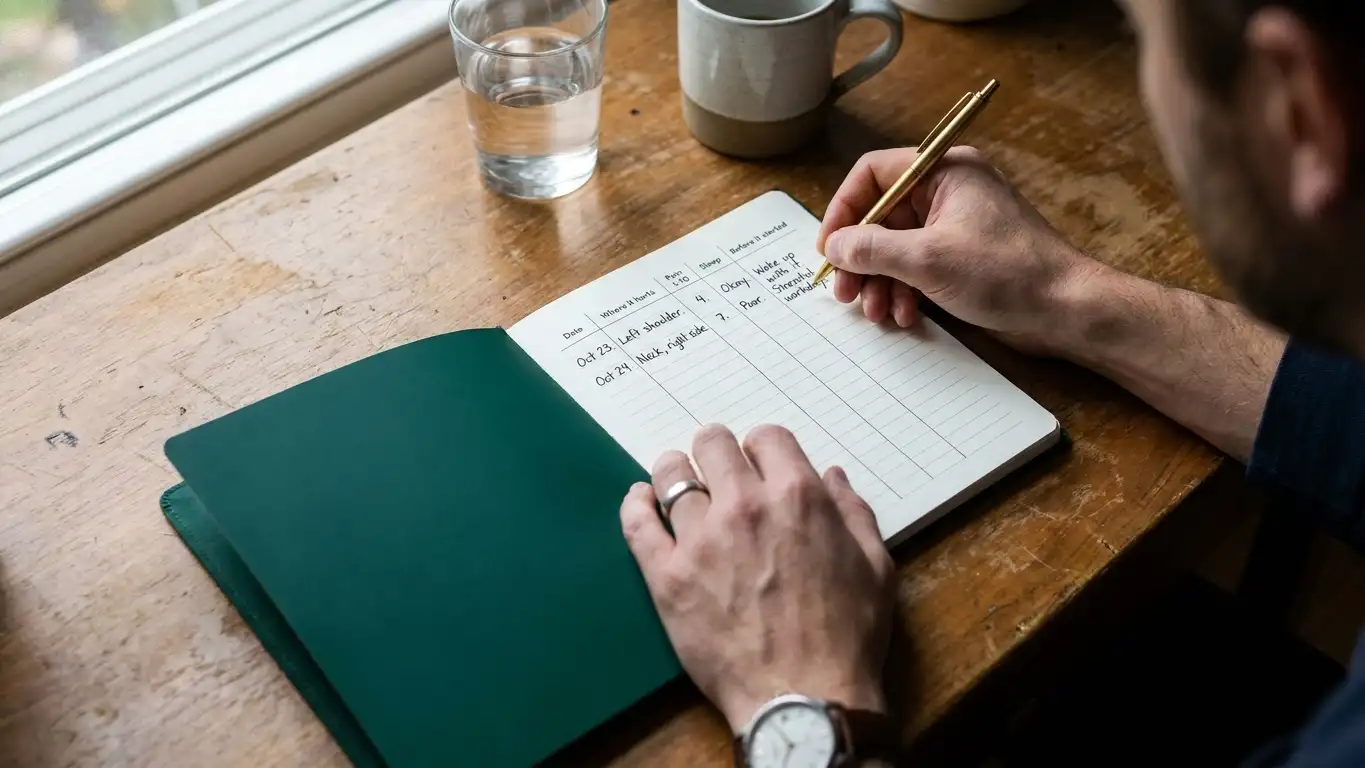
If several symptoms appear together, consider discussing them with a healthcare professional. You can also keep a simple symptom record.
For example, write down the date, where you feel pain, how severe it is, how you slept, and what was happening before the discomfort started. This can help you explain your symptoms during an appointment.
Can Stress-Related Pain Be Different From Pain Caused by a Medical Condition?
Stress may contribute to pain, but symptoms alone cannot reliably tell you whether the cause is stress or a medical condition. Some patterns may offer clues, but a medical assessment is important when pain is new, persistent, severe, or unexplained.
| Pain pattern | Possible explanation | What to do |
| Neck or shoulder tightness during stressful periods | Muscle tension may contribute | Notice triggers and discuss ongoing pain with a healthcare professional |
| Headaches after poor sleep or long periods of stress | Stress or sleep changes may play a role | Track symptoms and seek care if headaches are frequent or severe |
| Pain with numbness, tingling, or weakness | A nerve or other medical problem may be involved | Arrange a medical assessment |
| Abdominal pain with changes in bowel habits | A digestive condition or stress response may contribute | Discuss persistent symptoms with a healthcare professional |
| Sudden or severe chest pain | A serious medical problem may be involved | Seek emergency medical care |
A doctor may ask when your pain started, where you feel it, what makes it better or worse, and whether you have other symptoms. They may also review your medical history and perform an examination. Do not use a stress-related explanation to delay medical care.
What Can Help Relieve Stress-Related Body Pain?
The right approach depends on what is causing your pain. If stress is contributing to your symptoms, addressing both physical discomfort and emotional stress may help.
Gentle Movement
Gentle movement can help reduce stiffness and support muscle function. Depending on your health and pain level, you might try walking, light stretching, or other low-impact activities. Start slowly. If an activity increases your pain, stop and ask a healthcare professional whether you need a different approach. Movement should not replace medical care when pain is severe, unexplained, or linked to an injury.
Sleep and Recovery
Good sleep gives your body time to rest and recover. Try to keep a regular sleep schedule and create a calm bedtime routine.
You may find it helpful to:
- Go to bed and wake up at similar times.
- Reduce screen use before bedtime.
- Keep your bedroom quiet and comfortable.
- Avoid large meals close to bedtime.
- Limit caffeine later in the day.
If pain regularly wakes you up or you have ongoing sleep problems, discuss them with a healthcare professional.
Relaxation and Breathing
Relaxation exercises may help your body settle after a stressful situation. Slow breathing, meditation, and progressive muscle relaxation are examples of techniques you can practice. For a simple breathing exercise, sit comfortably and breathe in slowly through your nose. Then breathe out gently. Repeat for a few minutes without forcing your breath.
You can also try gently tightening and relaxing different muscle groups. This may help you notice where you hold tension. These techniques are not a cure for every type of pain, but they may help reduce stress and support relaxation.
Therapy for Ongoing Stress
If stress is affecting your sleep, relationships, daily activities, or physical comfort, talking with a therapist may help. Therapy can give you a place to discuss stressful experiences and learn ways to respond to difficult situations. Depending on your needs, a therapist may use approaches such as cognitive behavioral therapy (CBT) to help you recognize unhelpful thought patterns and develop coping skills. Therapy does not replace medical care for physical symptoms. It can be one part of a broader plan when stress and emotional concerns are affecting your quality of life.
When Should You See a Doctor About Body Pain?
You should speak with a healthcare professional when pain is persistent, unexplained, worsening, or interfering with daily activities. A doctor can help identify the cause and decide whether you need treatment or further testing.
Do Not Ignore Persistent or Unexplained Pain
Arrange an appointment if your pain:
- Continues for several days or keeps returning
- Gets worse over time
- Makes it difficult to work, sleep, or complete daily tasks
- Occurs with numbness, tingling, or weakness
- Appears with unexplained fever, swelling, or other new symptoms
The right assessment depends on your symptoms and medical history. Your doctor may recommend an examination, tests, or a referral to another healthcare professional.
Know When to Seek Urgent Help
Get urgent medical care for sudden, severe, or rapidly worsening pain. Chest pain with breathing difficulty, fainting, sweating, or pain spreading to the arm or jaw needs emergency attention. New weakness, sudden confusion, or other serious symptoms also need prompt medical care.
If you are experiencing emotional distress or thoughts of suicide, call or text 988 to reach the Suicide & Crisis Lifeline in the United States. If you or someone else is in immediate danger, call 911.
Conclusion
Stress can contribute to physical discomfort by increasing muscle tension, affecting sleep, and changing how your nervous system processes pain. You may notice symptoms in your neck, shoulders, back, head, or stomach. However, stress is only one possible cause of body pain.
Pay attention to your symptoms and seek medical advice when pain is persistent, severe, or unexplained. If stress is affecting your daily life, addressing your emotional health may also help you manage some of the factors connected to physical discomfort.
Get Support for Ongoing Stress and Emotional Health
When stress shows up as neck pain, headaches, or poor sleep, treating the stress can ease the strain on your body. Radiant Path Therapy and Psychiatry helps teens and adults in Redlands, Grand Terrace, and Corona, CA, manage ongoing stress, anxiety, and depression.
Our psychiatrists and nurse practitioners provide evaluations, therapy, and medication management based on your needs. Same-day or next-day appointments are available. Call (909) 577-1124 to request an appointment.
Frequently Asked Questions
Can Stress Cause Body Pain Without Anxiety?
Yes, stress can contribute to body pain even when you do not feel anxious. Work pressure, lack of sleep, difficult responsibilities, and ongoing life changes can affect your body without causing obvious feelings of anxiety. You may notice muscle tension, headaches, or stomach discomfort before recognizing that stress is affecting you.
Can Stress Cause Pain All Over Your Body?
Yes, stress may contribute to widespread body pain. Ongoing muscle tension, poor sleep, and changes in how your nervous system processes pain can make discomfort feel more widespread. However, pain throughout the body can also have medical causes. See a healthcare professional if the pain is persistent, severe, or unexplained.
How Long Does Stress-Related Body Pain Last?
There is no fixed timeline for stress-related body pain. The duration may depend on how long the stress continues, your sleep quality, the cause of the pain, and whether another health condition is involved. Some discomfort may improve as stress decreases, while persistent or worsening pain needs medical assessment.
Can Stress Cause Nerve Pain?
Stress may affect how your nervous system processes pain, but burning, tingling, numbness, or electric-like sensations can also indicate a nerve problem. These symptoms should be assessed by a healthcare professional rather than automatically attributed to stress. Seek medical advice if they are new, persistent, or getting worse.
Can Emotional Stress Cause Physical Pain Even When You Feel Fine?
Yes, emotional stress can affect your body even when you do not feel upset at that moment. You may hold muscle tension, sleep poorly, or experience changes in pain sensitivity without noticing a clear emotional trigger. Tracking your symptoms and discussing them with a healthcare professional can help you understand possible causes.