
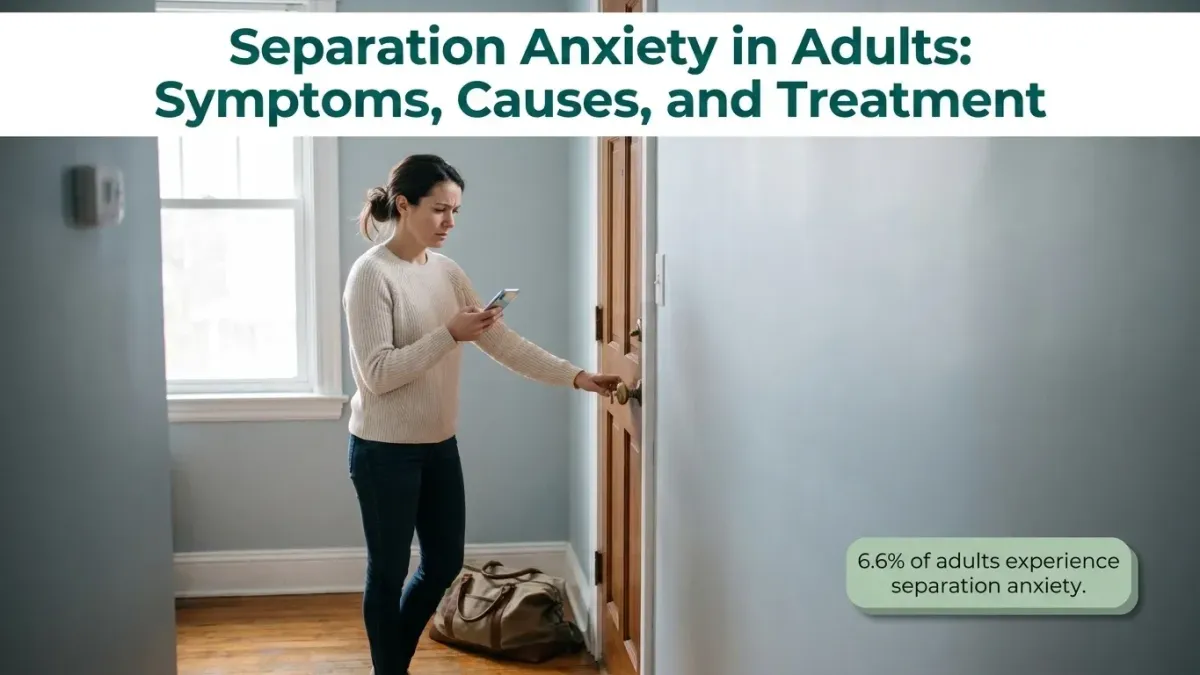
Separation Anxiety in Adults: Symptoms, Causes, and Treatment
Separation anxiety is not only something children experience. Separation anxiety in adults can cause strong fear, worry, or distress when a person is away from someone they feel closely attached to. This may be a partner, parent, child, close friend, or even a pet. The worry can become so strong that being alone, traveling, going to work, or sleeping without a loved one feels very difficult.
At Radiant Path Therapy in Grand Terrace, CA, adults can access mental health support for anxiety, trauma, stress, and relationship concerns. The practice offers in-person care in Grand Terrace and secure online therapy, making support available to people in different locations.
Some concern about loved ones is normal. It becomes a problem when fear starts controlling daily choices or makes it hard to function without another person nearby. Separation anxiety can affect relationships, sleep, work, travel, and personal independence.
This guide explains the signs of separation anxiety in adults, possible causes and risk factors, how it can affect relationships and daily life, how professionals diagnose it, treatment options, practical coping skills, and when it may be time to seek professional help.
What Is Separation Anxiety in Adults?
Separation anxiety is an intense fear or distress related to being away from an important person or attachment figure. Adults with this problem may worry that something bad will happen to someone they love, that the person will leave them, or that they will not be able to cope while apart.
The condition was once viewed mainly as a childhood problem. The DSM-5 moved separation anxiety disorder into the broader group of anxiety disorders and recognized that it can occur in adults. Research also shows that adult onset is not unusual. A large U.S. study found that the lifetime prevalence of adult separation anxiety disorder is about 6.6%. The study also found that many cases first developed during adulthood.
Healthy attachment is not the same as an anxiety disorder. Missing your partner while they are away or feeling concerned when a family member travels is normal. The concern becomes more serious when the fear is excessive, difficult to control, and begins interfering with everyday life.
What Does Adult Separation Anxiety Feel Like?
For some adults, the anxiety starts before separation actually happens. They may spend hours thinking about an upcoming trip, workday, or night alone. They may imagine accidents, illness, abandonment, or other frightening events involving someone they love.
The emotional response can include fear, dread, loneliness, sadness, or a strong need for reassurance. Some people know their fears may be greater than the situation calls for, but knowing this does not always make the anxiety disappear.
Symptoms of Separation Anxiety in Adults
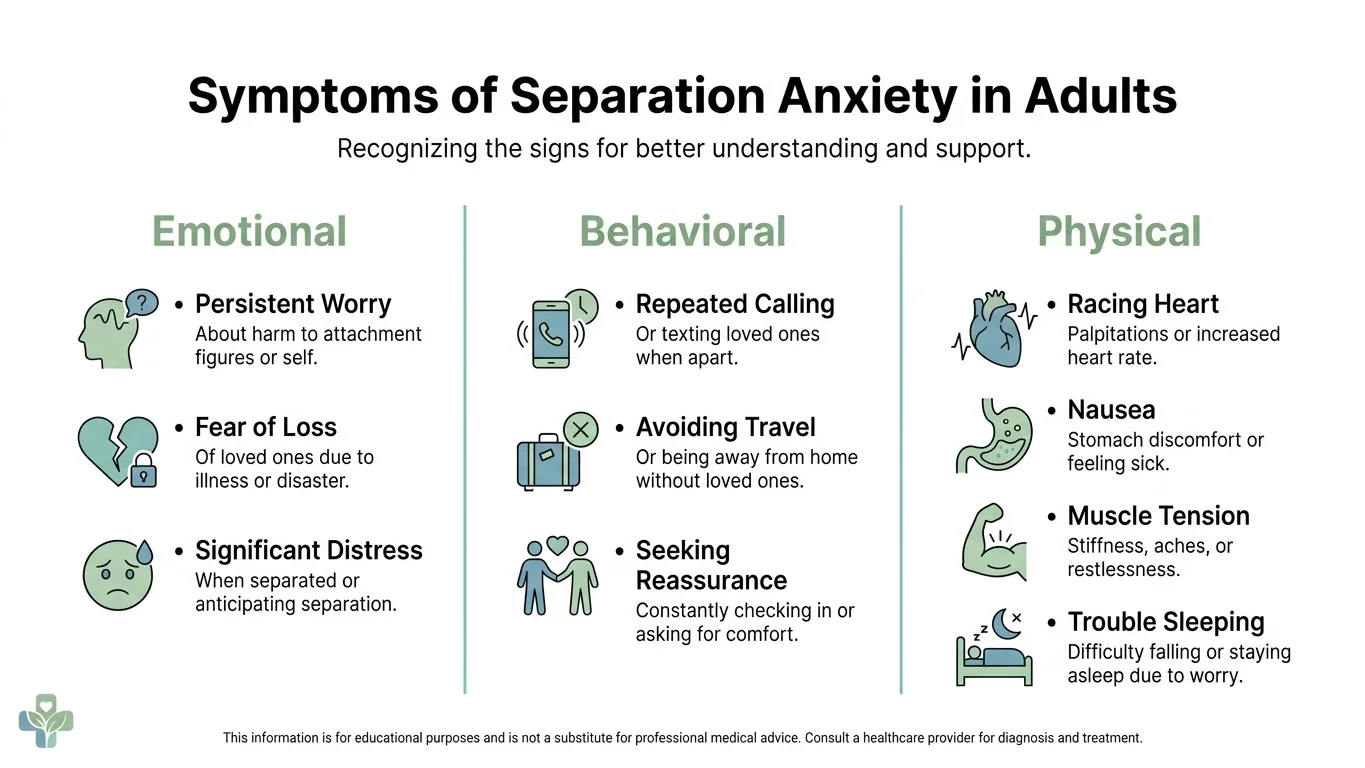
Symptoms can look different from person to person. Some adults mainly experience constant worry, while others notice physical symptoms or changes in their behavior.
The key issue is not simply having one or two worries. Symptoms become more concerning when they are persistent, intense, and begin affecting relationships, work, sleep, or normal activities.
Emotional Symptoms
Emotional symptoms often center on the fear of losing or being separated from someone important. An adult may worry constantly that a loved one will become sick, get hurt, leave, or stop caring about them.
They may feel intense distress before or during separation. Some people also feel unable to relax unless they know where their loved one is or when they will return.
Behavioral Symptoms
Behavioral signs may be easier for other people to notice. An adult may avoid traveling, going out alone, staying overnight somewhere else, or participating in activities that require time away from a loved one.
Repeated phone calls and messages may also become common. A person may ask for reassurance again and again, change plans to stay close to someone, or find reasons to avoid being alone.
Physical Symptoms
Anxiety can affect the body as well as the mind. Adults may experience a racing heart, sweating, nausea, stomach discomfort, headaches, muscle tension, or trouble sleeping.
Some people may experience panic-like symptoms when separation occurs or when they think about it. These physical reactions can make the fear feel even more dangerous, which may create a cycle of more worry.
What Causes Separation Anxiety in Adults?
There is usually no single cause. Adult separation anxiety can develop from life experiences, relationships, stress, and emotional patterns. Research shows it can also begin in adulthood. A World Mental Health Survey of almost 39,000 adults across 18 countries found that 43.1% of lifetime cases began after age 18.
Childhood Separation Experiences
Difficult childhood separations, loss, major changes at home, or inconsistent caregiving may affect how someone responds to separation later in life. However, these experiences do not automatically cause adult separation anxiety.
Trauma, Loss, or Major Life Changes
Loss, divorce, the end of a relationship, serious illness, or another major life change can increase fears of losing loved ones. Avoiding separation may feel safer at first, but it can strengthen anxiety over time.
Relationship Stress and Attachment
Relationship insecurity may cause fears that a partner will leave or stop loving you. This can lead to frequent reassurance seeking and difficulty giving a partner personal space.
Stress and Other Mental Health Concerns
High stress can make separation anxiety harder to manage. It may also occur alongside other anxiety or mood concerns. When symptoms are severe or unclear, a professional assessment can help identify the right support.
Can Separation Anxiety Start in Adulthood?
Yes. Separation anxiety can begin during adulthood. This is an important point because many adults assume that separation anxiety must have started during childhood. However, research shows that a large share of cases first appear later in life, and the fear is not simply a leftover pattern from childhood for everyone who experiences it.
A major life change may bring these symptoms to the surface. If fear of separation starts interfering with normal responsibilities, relationships, or independence, it is worth discussing the symptoms with a mental health professional.
How Separation Anxiety Affects Adult Relationships
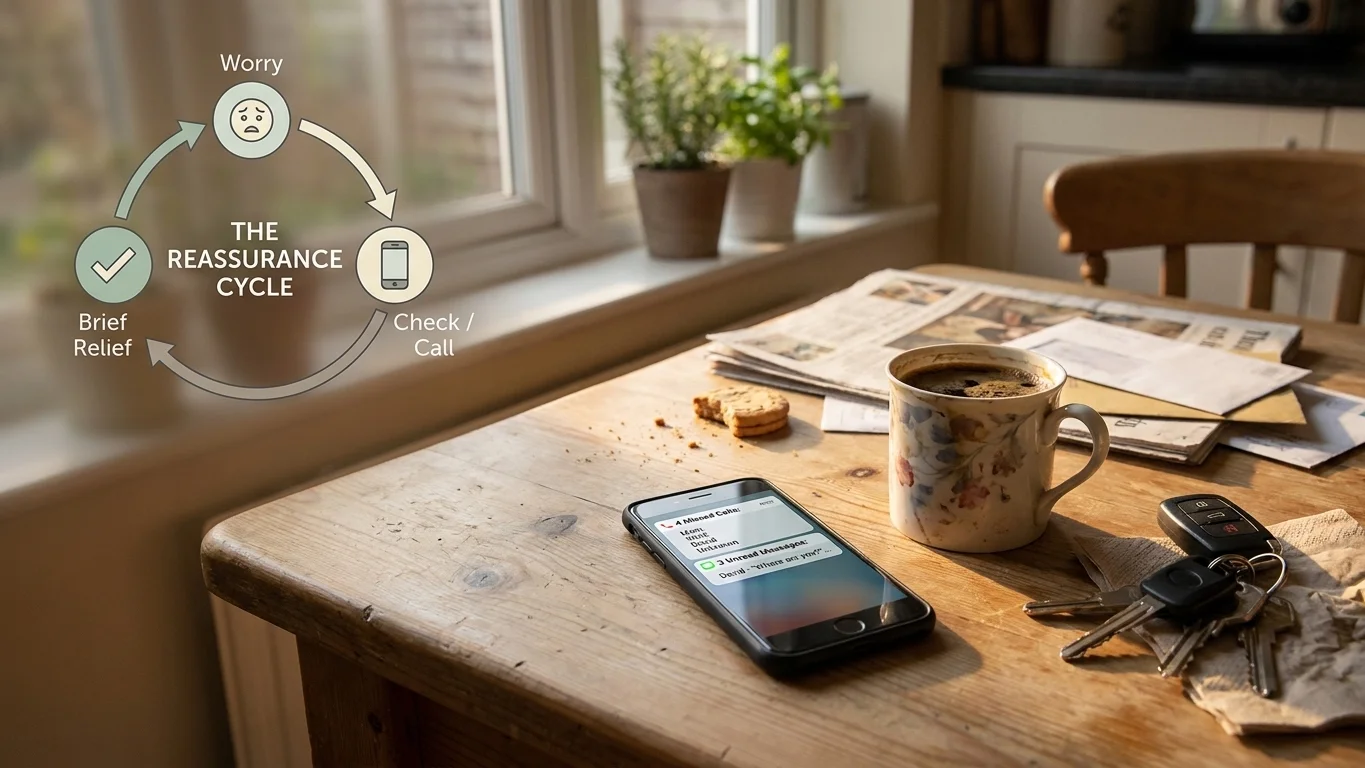
Separation anxiety can make adult relationships feel uncertain and stressful. A person may constantly worry that their partner will leave, lose interest, or something bad will happen while they are apart. This fear can lead to frequent calls, texts, reassurance seeking, or discomfort when a partner wants time alone. Over time, these behaviors can create tension even when the relationship itself is healthy.
It can also make it difficult to maintain a healthy balance between closeness and independence. A person may avoid spending time away from their partner, become overly dependent on them for emotional comfort, or feel distressed during normal periods of separation. Learning to manage these fears can help reduce reassurance seeking, build trust, and allow both partners to have a secure and healthy relationship.
How Separation Anxiety Can Affect Work and Daily Life
The effects can reach beyond relationships. Some adults may struggle to focus at work because they are thinking about a loved one throughout the day. Travel can become especially difficult. A person may avoid work trips, vacations, overnight stays, or social activities because they do not want to be away from someone important. Over time, this avoidance can limit opportunities and reduce independence.
Leaving home may trigger intense worry for some adults. They may feel uncomfortable going somewhere alone or staying somewhere without a partner or family member. Avoiding these situations can feel helpful at first. However, repeated avoidance may prevent a person from learning that they can handle time apart.
Sleep can also be affected. Some adults may have difficulty sleeping alone or may worry throughout the night about a loved one's safety. Repeated checking, calling, or waiting for a loved one to return can interfere with rest. Poor sleep can then make anxiety and emotional stress harder to manage the next day.
How Is Separation Anxiety Diagnosed in Adults?
A qualified mental health professional should diagnose separation anxiety. The evaluation looks at the person's symptoms, how long they have been present, how severe they are, and how much they interfere with daily life.
Self-diagnosis is not enough. Several mental health concerns can cause similar symptoms, so a professional needs to consider the full picture.
What Does a Mental Health Assessment Include?
An assessment may include questions about anxiety symptoms, relationships, family history, past experiences, current stress, sleep, work, and daily functioning. The clinician may also ask what happens before, during, and after separation.
This helps identify patterns and possible triggers. The goal is not simply to give a label. A good assessment helps determine what kind of support may be most useful.
Separation Anxiety Questionnaire and Other Assessment Tools
A clinician may use questionnaires or structured assessment tools to better understand symptoms. The Adult Separation Anxiety Questionnaire, sometimes called the ASA-27, is one tool that has been used in research and clinical settings.
These tools can provide useful information, but they should not be treated as a stand-alone diagnosis. A professional needs to consider the person's full history and current situation.
How Is Separation Anxiety in Adults Treated?
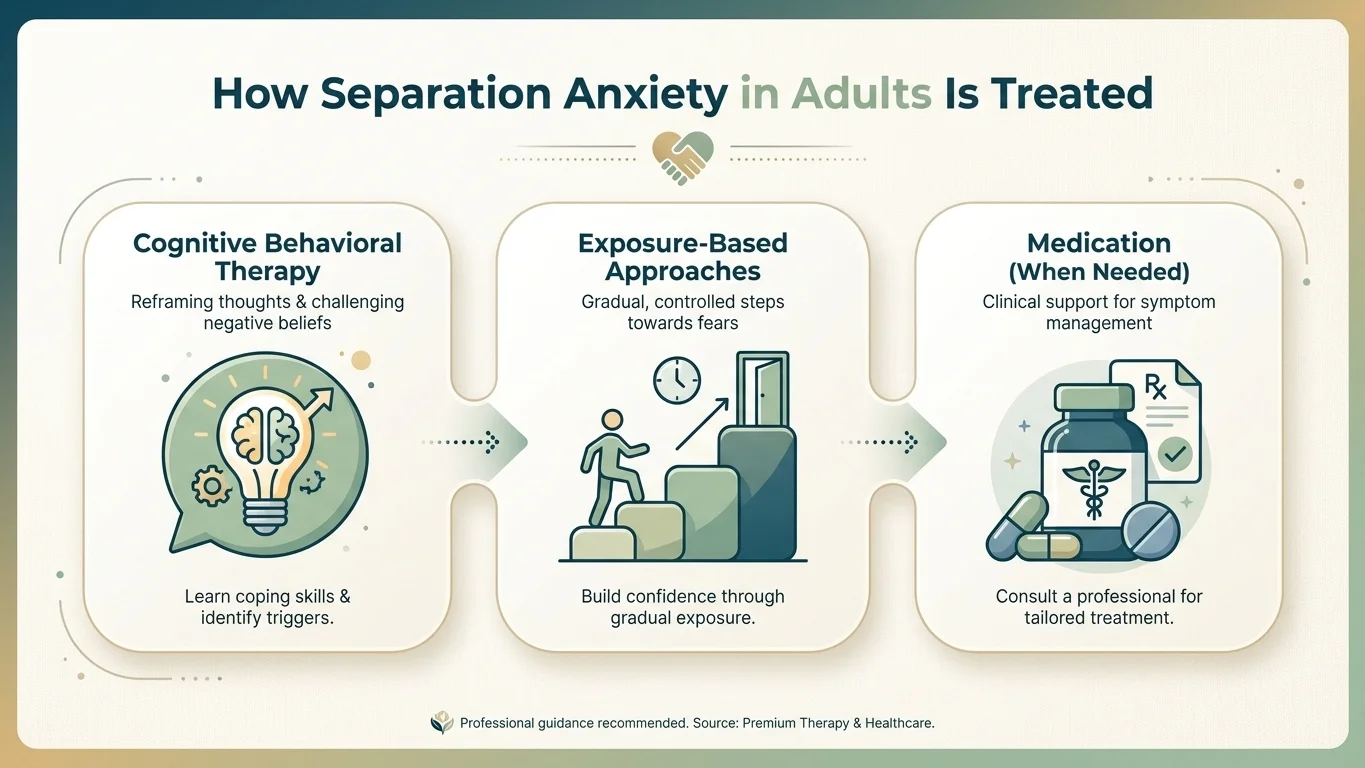
Treatment depends on the person's symptoms, needs, and overall mental health. It may include psychotherapy, coping strategies, exposure-based work, and medication when clinically appropriate.
The goal is not to make a person stop caring about the people they love. Instead, treatment can help reduce fear and build the ability to tolerate healthy periods of separation.
Cognitive Behavioral Therapy
Cognitive behavioral therapy, or CBT, helps people understand the connection between thoughts, feelings, and behaviors.
For example, someone may think, "If my partner does not answer immediately, something terrible must have happened." CBT can help the person examine this thought and consider a more balanced explanation. Therapy can also help reduce avoidance and practice situations that cause anxiety. Over time, this can help build confidence and independence.
Exposure-Based Approaches
Exposure involves gradually facing situations that cause fear instead of avoiding them.
A therapist may help someone create small steps. One person may begin by spending a short amount of time away from their partner, then slowly increase the time as they become more comfortable. Exposure should be planned and guided. It should not involve forcing someone into an overwhelming situation.
Medication for Adult Separation Anxiety
Medication may be considered for some people, especially when anxiety is severe or occurs alongside other mental health concerns.
A qualified medical professional should decide whether medication is appropriate. The choice depends on the person's symptoms, medical history, other medications, and overall treatment needs. Medication may sometimes be used alongside therapy rather than as the only form of treatment.
Building Secure Independence
Getting treatment does not mean becoming distant from the people you love. Healthy relationships can include closeness and independence at the same time.
Treatment can help a person feel more secure when alone, enjoy personal interests, and spend time away from loved ones without feeling overwhelmed.
How to Manage Separation Anxiety in Adults
Alongside professional treatment, daily habits can support progress. Start with short periods of separation and slowly increase them as your confidence grows. Stay connected to hobbies, friends, work, and personal goals instead of relying on one person for emotional comfort. Breathing exercises, grounding techniques, and regular routines can also help manage anxiety when separation feels difficult.
When Should You Seek Help for Separation Anxiety?
Consider professional support when fear of separation becomes persistent, intense, or disruptive. Occasional worry about someone you love is part of life. Missing your partner during a business trip, for example, is normal. It becomes a different situation when someone refuses every work trip because they believe they cannot cope without their partner. The level of interference matters. If anxiety is limiting your work, relationships, sleep, travel, or independence, professional support may help.
It may be time to talk with a therapist if you:
Avoid work or travel because of separation fears
Have difficulty sleeping alone
Constantly check on a loved one
Experience frequent relationship conflict
Have severe distress when someone leaves
Feel unable to spend reasonable periods alone
Struggle to complete normal responsibilities
Notice that the anxiety is getting worse
When Separation Anxiety Becomes a Serious Problem
Occasional worry about someone you love is part of life. The concern becomes more serious when anxiety begins controlling your choices. For example, missing your partner during a business trip is normal.
Refusing every work trip because you believe you cannot cope without your partner is a different situation. The level of interference matters. If anxiety is limiting your work, relationships, sleep, travel, or independence, professional support may help.
Can Separation Anxiety in Adults Get Better?
Yes. Many people can learn to manage separation fears and become more comfortable with time apart. Treatment can help people understand their anxiety, challenge unhelpful thoughts, reduce avoidance, and gradually build confidence.
Progress may not happen overnight, and each person's recovery can look different. Research has found that adult separation anxiety can be linked with significant impairment, which is one reason early recognition and appropriate care matter.
What Can Affect Recovery?
Recovery can depend on several factors, including the severity and length of symptoms, other mental health concerns, participation in treatment, support from loved ones, and access to appropriate professional care. Consistency also matters. Skills learned in therapy often become more useful when they are practiced in everyday situations.
Conclusion
Separation anxiety in adults is a real mental health concern, and it is not simply a sign that someone cares too much about their loved ones. The important difference is how much fear affects everyday life.
An adult may worry about losing a partner, struggle to spend time alone, avoid travel, repeatedly seek reassurance, or experience physical symptoms when separation occurs. Over time, these patterns can affect relationships, work, sleep, and independence.
The good news is that support is available. Therapy can help people understand anxious thoughts, reduce avoidance, become more comfortable with healthy separation, and build confidence. CBT and gradual exposure are among the approaches that may be considered as part of treatment.
Get Support for Anxiety at Radiant Path Therapy
Living with constant fear of separation can be exhausting. You may feel caught between wanting to stay close to the people you love and wanting more freedom in your own life. Therapy can help you work toward both.
Radiant Path Therapy in Grand Terrace, California provides mental health care for adults dealing with anxiety, trauma, stress, and relationship concerns. The practice also provides secure telehealth services, allowing eligible clients to receive care online.
If separation fears are affecting your relationships, work, sleep, or daily routine, consider reaching out to Radiant Path Therapy to discuss your concerns and available treatment options. Take the first step toward feeling more secure and independent. Contact us today to get started.
Frequently Asked Questions
Can adults have separation anxiety?
Yes. Adults can experience separation anxiety, and it can cause significant distress. Research has found that many cases begin during adulthood rather than continuing from childhood.
What are the signs of separation anxiety in adults?
Common signs include excessive worry about a loved one, fear of being alone, repeated reassurance seeking, avoiding time apart, difficulty sleeping alone, and physical anxiety symptoms.
Is adult separation anxiety the same as codependency?
No. They are different concepts. Some behaviors may overlap, but separation anxiety centers on excessive fear and distress related to separation. A therapist can help identify what is driving the behavior.
Can separation anxiety affect romantic relationships?
Yes. It may lead to frequent checking, repeated requests for reassurance, fear of abandonment, or difficulty giving a partner normal space. Therapy can help a person build greater security while maintaining close relationships.
How is separation anxiety treated in adults?
Treatment may include psychotherapy such as CBT, gradual exposure, coping skills, and medication when appropriate. A mental health professional can recommend an approach based on the person's symptoms and needs.
Can separation anxiety start after a traumatic event?
It can. Loss, trauma, illness, divorce, or another major life change may increase fears about separation for some people. However, the cause can be different for each person, so an assessment is important.
When should I see a therapist for separation anxiety?
Consider seeing a therapist when separation fears interfere with work, relationships, sleep, travel, or everyday activities. Persistent or worsening anxiety is also a good reason to seek professional support.


