
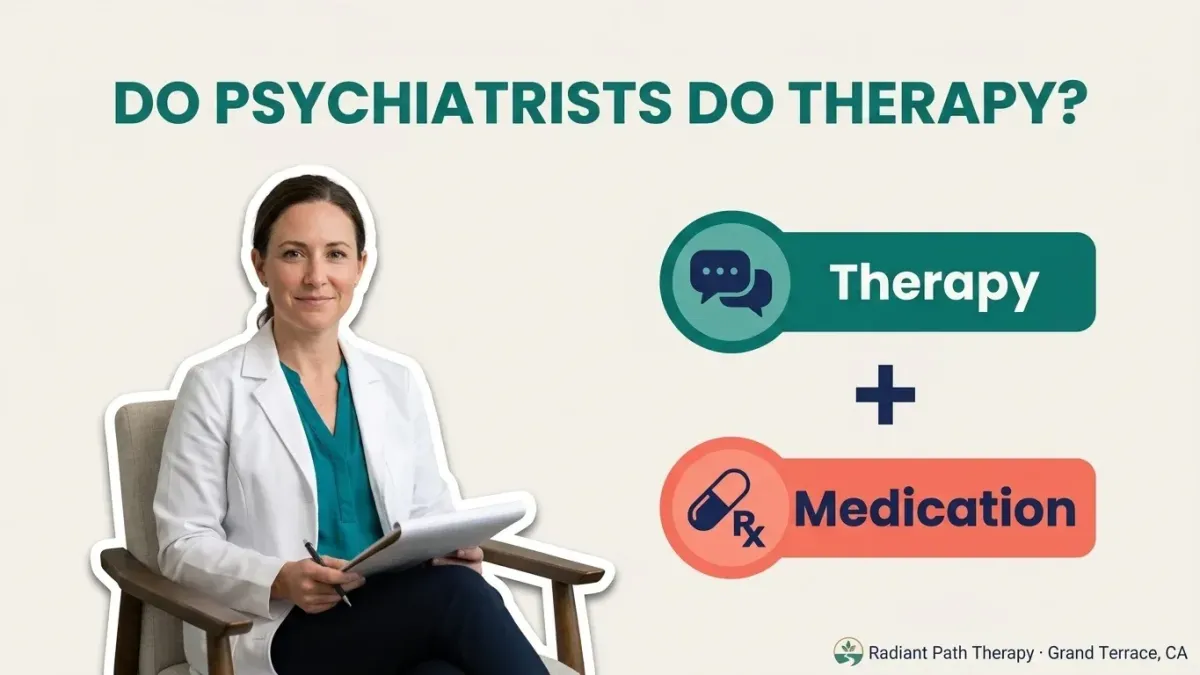
Do Psychiatrists Do Therapy? Everything You Need to Know
If you are trying to figure out the right kind of mental health support, you have probably asked yourself, do psychiatrists do therapy, or do they only handle medication? It is a common question, and the answer is not as simple as a plain yes or no.
At Radiant Path Therapy in Grand Terrace, CA, our team works with both psychiatric providers and licensed therapists, so we see firsthand how these two roles can work together. This guide will walk you through what psychiatrists actually do, how their role compares to a therapist, and how to figure out which type of care fits your needs.
Do Psychiatrists Do Therapy?
The short answer is yes, some psychiatrists do provide therapy, but not all of them do. It really depends on how a psychiatrist chooses to run their practice.
Some psychiatrists spend most of their time on medication management, seeing patients for shorter visits focused on symptoms and prescriptions. Others set aside longer appointments to provide talk therapy alongside medication, giving patients a more complete form of care in one place.
Psychiatric care has changed a lot over the years. In the past, psychiatry leaned heavily on medication alone. Today, many psychiatrists recognize that combining therapy with medication often leads to better results, so more of them are offering both services or working closely with therapists who do.
What Is a Psychiatrist?

A psychiatrist is a medical doctor who specializes in diagnosing and treating mental health conditions. Because they are medical doctors, they can look at both the mental and physical sides of a health concern.
Education and Medical Training
Psychiatrists complete four years of medical school, just like any other doctor, followed by a psychiatric residency that usually lasts four more years. During this training, they learn about the brain, mental illness, medications, and often some forms of therapy as well.
What Psychiatrists Are Qualified to Do
Because of their medical background, psychiatrists can diagnose mental health conditions, prescribe and manage medication, order lab tests, and treat conditions that have both physical and mental health causes. Many are also trained in specific therapy methods.
Mental Health Conditions They Treat
Psychiatrists commonly treat depression, anxiety, bipolar disorder, PTSD, ADHD, schizophrenia, and substance use disorders. Many of these conditions can involve both a biological and an emotional component, which is part of why psychiatrists are trained to look at the whole picture.
Can Psychiatrists Provide Therapy?
Yes, psychiatrists can provide therapy, and many are fully trained to do so. Whether they actually offer it often comes down to their personal approach to practicing medicine, their schedule, and the needs of the patients they see. Some psychiatrists offer structured talk therapy sessions in addition to medication visits. This might include cognitive behavioral therapy, supportive therapy, or other approaches based on their training and interests.
Why Some Psychiatrists Focus on Medication
Many psychiatrists work in settings, like hospitals or busy clinics, where their time is mostly spent on evaluations and medication management. In these settings, they often refer patients to a therapist for ongoing talk therapy while they manage the medical side of care.
When Psychiatrists Combine Therapy and Medication
Some psychiatrists, especially those in private practice, offer longer appointments that include both therapy and medication management. This can be a good fit for patients who want fewer providers to coordinate with.
What Types of Therapy Do Psychiatrists Use?
When a psychiatrist does offer therapy, they typically rely on a few well studied approaches, many of which are backed by years of research and used across the mental health field. The method a psychiatrist chooses often depends on the condition being treated, the patient's personal goals, and the psychiatrist's own training and areas of interest.
Cognitive Behavioral Therapy (CBT)
CBT helps patients notice unhelpful thought patterns and replace them with healthier ways of thinking.
It is one of the most common types of therapy used across mental health care. This approach is often structured and goal focused, which means sessions may include specific exercises, homework, or tools patients can practice between appointments. CBT is widely used for anxiety, depression, and many other conditions because it gives patients practical skills they can rely on long after therapy ends.
Psychodynamic Therapy
This approach looks at how past experiences and unconscious patterns shape current thoughts and behaviors.
It often involves exploring long standing patterns rather than focusing only on present day symptoms. Sessions tend to be more open ended, allowing patients to talk freely while the psychiatrist helps connect current struggles back to earlier experiences or relationships. This type of therapy can take more time to show results, but it often leads to a deeper understanding of why certain patterns keep showing up in a person's life.
Supportive Therapy
Supportive therapy focuses on helping patients cope with stress and difficult emotions through encouragement, guidance, and practical problem solving, rather than deep exploration of the past.
This approach is often used during especially hard periods, like a major life change, a health crisis, or a stressful transition, when a patient needs steady support more than deep analysis. It can also be used alongside other types of therapy, giving patients a place to process day to day challenges as they come up.
Interpersonal Therapy (IPT)
IPT looks at how relationships and communication patterns affect a person's mental health, and it works on improving those relationships as part of treatment.
This approach often focuses on specific areas, such as grief, conflict with a partner or family member, or difficulty adjusting to a new role in life, like becoming a parent or changing jobs. By working through these relationship issues directly, IPT can help reduce symptoms of depression and anxiety that are closely tied to a person's social world.
Other Evidence-Based Therapies
Depending on their training, some psychiatrists also use approaches like dialectical behavior therapy or trauma focused therapy, especially if they specialize in certain conditions. Dialectical behavior therapy, often called DBT, is commonly used for intense emotions and self harm behaviors, teaching skills for managing distress and improving relationships.
Trauma focused therapy is designed specifically for patients who have experienced significant trauma, helping them process difficult memories in a safe, structured way. Psychiatrists who work with more specialized populations often train in one or more of these additional approaches to better meet their patients' needs.
What Other Treatments Do Psychiatrists Provide?
Therapy is only one part of what a psychiatrist can offer. Because they are trained medical doctors, their role often stretches well beyond talk therapy, covering the full range of care a person might need for their mental health.
The sections below cover the other key services psychiatrists typically provide, from the very first evaluation through ongoing medication support and lifestyle guidance, giving you a clearer picture of what a full course of psychiatric care can look like.
Benefits of Seeing a Psychiatrist for Therapy
There are some real advantages to receiving therapy directly from a psychiatrist, especially for patients who also need medication.
Comprehensive Mental Health Care: Seeing one provider for both therapy and medication means your treatment plan is built around a full picture of your mental and physical health.
Medication and Therapy in One Place: You do not have to coordinate between two different providers, which can simplify communication and reduce scheduling stress.
Personalized Treatment Plans: Psychiatrists who offer therapy can adjust both talk therapy and medication together, based on how you are responding to treatment over time.
Ongoing Monitoring and Support: Regular visits allow your psychiatrist to track your progress closely and make changes quickly if something is not working as well as it should.
When Should You See a Psychiatrist Instead of a Therapist?
Therapy alone works well for many people, but there are times when it makes more sense to start with a psychiatrist instead. Certain symptoms, conditions, or situations call for medical input right from the beginning, rather than talk therapy on its own.
Knowing these signs ahead of time can save you from spending months in the wrong type of care. The sections below cover the situations where seeing a psychiatrist first, or at least alongside a therapist, tends to lead to better and faster results.
Psychiatrist vs. Therapist: What's the Difference?

Though both play an important role in mental health care, psychiatrists and therapists differ quite a bit in their training, their day to day work, and what they are able to offer patients.
Psychiatrist vs. Psychologist: Key Differences
While both are trained to diagnose mental health conditions, psychiatrists and psychologists take very different paths to get there and offer different tools for treatment.

Can You See Both a Psychiatrist and a Therapist?
Yes, and it is actually a very common approach to mental health care. Many people find that seeing both a psychiatrist and a therapist at the same time gives them more complete support than working with just one provider alone.
This kind of team based care allows each professional to focus on what they do best, with the psychiatrist managing medication and diagnosis while the therapist provides regular talk therapy. The sections below explain how this collaborative approach works and why it can lead to better results for many patients.
What to Expect During Your First Appointment With a Psychiatrist
Walking into a first psychiatric appointment can feel a little intimidating, especially if you are not sure what questions will be asked or how the visit will be structured. Knowing what to expect ahead of time can help ease some of that uncertainty.
In general, your first visit will focus on understanding your history and current concerns, followed by a discussion of possible next steps. The sections below break down what typically happens during this first appointment and the visits that follow.
How to Find a Psychiatrist Who Offers Therapy
Not every psychiatrist offers therapy, so finding one who does may take a bit of research upfront. Some list this information clearly on their website or practice profile, while others may only offer it if you ask directly during a first phone call or consultation.
Taking the time to check a few key details, like the questions to ask before scheduling, insurance coverage, and the provider's credentials, can help you find a psychiatrist who truly fits your needs. The sections below walk through exactly what to look for during this search.
Common Myths About Psychiatrists and Therapy
A lot of confusion around psychiatric care comes from a few common myths, so clearing them up can help you make better decisions about your own treatment.
Myth: Psychiatrists Only Prescribe Medication
While many psychiatrists focus mainly on medication, plenty of them are trained in therapy as well and offer it as part of their practice. This myth often comes from experiences with psychiatrists who work in busy clinical settings, where shorter visits are more common than full therapy sessions.
Myth: Therapy Is Only for Mild Conditions
Therapy can be helpful for a wide range of mental health conditions, including more severe ones, often working alongside medication rather than replacing it. Even conditions like bipolar disorder or PTSD can see real improvement when therapy is combined with the right medical treatment.
Myth: Medication Replaces Therapy
Medication and therapy usually work best together. Medication can help manage symptoms, while therapy helps address the underlying thoughts and patterns behind them. Relying on medication alone often leaves the root causes of a struggle unaddressed, which is why many providers recommend both.
Ready to Get the Right Mental Health Support in Grand Terrace, CA?
If you are still wondering whether you need a psychiatrist, a therapist, or both, you do not have to figure it out alone. Radiant Path Therapy in Grand Terrace, CA brings together licensed therapists and psychiatric providers under one supportive team, so your care can be built around your full needs, not just one piece of them.
Whether you are dealing with anxiety, depression, trauma, or another mental health concern, our team can help you understand your options and match you with the right type of care from the very start. We offer same-day consultations, flexible scheduling, and both in-person and telehealth appointments, so getting started is simple. Reach out to Radiant Path Therapy today to schedule your consultation and take the first step toward care that treats your whole mental health picture, not just the symptoms on the surface.
Conclusion
So, do psychiatrists do therapy? The answer is yes, for many psychiatrists, though it depends on how their practice is set up and what kind of care they choose to focus on. Some provide therapy directly, while others focus mainly on medication and work closely with therapists to cover the rest of a patient's care.
Understanding this difference can help you make a more informed choice about your own mental health treatment. Whether you need medication, therapy, or a combination of both, the most important step is reaching out to a qualified provider who can guide you toward the right kind of support for your specific situation. With the right team in your corner, lasting progress is possible.
Frequently Asked Questions
Do all psychiatrists provide therapy?
No, not all psychiatrists provide therapy. Some focus mainly on medication management and refer patients to a separate therapist for ongoing talk therapy. Others are trained in specific therapy approaches and include it as part of their regular appointments. Whether a psychiatrist offers therapy usually depends on their training, their practice setting, and how much time they set aside for each patient visit.
Can psychiatrists prescribe medication and provide therapy?
Yes, psychiatrists are medical doctors, so they are qualified to prescribe and manage medication. Many are also trained in therapy methods like cognitive behavioral therapy or supportive therapy. When a psychiatrist offers both services, patients can sometimes receive their full mental health care from one provider, rather than coordinating between multiple appointments and offices.
Is therapy from a psychiatrist different from therapy from a psychologist?
The therapy techniques themselves, like CBT or supportive therapy, are often similar between the two professions. The main difference comes from their background, since psychiatrists are medical doctors who can also prescribe medication, while psychologists usually focus only on therapy and psychological testing. This means a psychiatrist can adjust medication and therapy together, while a psychologist typically focuses on the therapy side alone.
Should I see a therapist or a psychiatrist first?
If your symptoms are mild to moderate and you are not sure medication is needed, starting with a therapist is often a reasonable first step. If your symptoms are severe, involve a complex condition, or have not improved with therapy alone, starting with a psychiatric evaluation may be more helpful. A mental health provider can also help guide you toward the right starting point based on your symptoms.
Can I receive therapy without medication?
Yes, therapy on its own is a common and effective treatment option for many mental health concerns, especially milder anxiety, stress, and adjustment related issues. Some people choose therapy without any medication and see real progress over time. However, for certain conditions, combining therapy with medication may lead to better results, which is something you can discuss with your provider.
How often do psychiatrists provide therapy sessions?
This depends entirely on the individual psychiatrist and their practice style. Some see patients for therapy on a weekly or biweekly basis, similar to a typical therapist's schedule. Others reserve their appointments mainly for medication check-ins, which may happen monthly or every few months, while therapy is handled separately by another provider.
Does insurance cover therapy with a psychiatrist?
In many cases, yes, insurance plans that cover mental health services will also cover therapy sessions provided by a psychiatrist, though coverage details can vary by plan and provider. It is a good idea to check directly with your insurance company and the psychiatrist's office to confirm coverage, co-pays, and any out-of-pocket costs before starting treatment.


