
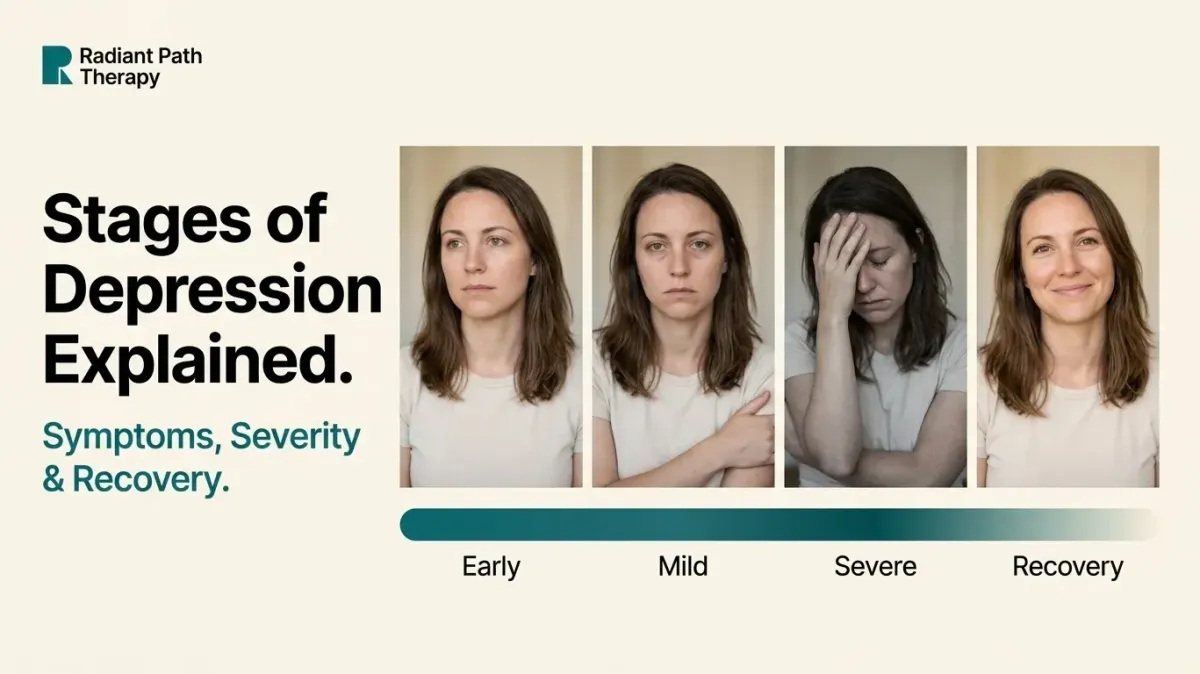
Stages of Depression: Symptoms, Severity, and How They Can Change Over Time
Depression can affect how a person feels, thinks, sleeps, works, and connects with others. Symptoms may begin slowly or become noticeable within a short period. When people search for the stages of depression, they are often trying to understand whether depression can move from mild symptoms to more serious problems.
Depression does not follow the same path for everyone. For people in Grand Terrace, CA, understanding changes in symptoms can make it easier to know when extra support may be needed. Radiant Path Therapy provides personalized mental health support based on each person's symptoms, daily challenges, and individual needs.
Understanding How Depression Develops
Depression can develop in many different ways. For some people, the first signs are emotional, while others notice changes in sleep, energy, concentration, or daily habits first. The stages of depression are better understood as changing levels of symptoms rather than fixed steps. A person does not have to move from mild to moderate and then severe depression.
Does Depression Follow a Fixed Set of Stages?
No. Depression does not have an official first, second, or final stage that every person must experience. Symptoms can stay mild, become stronger, improve, or return later. Professionals focus more on symptom severity, duration, daily functioning, and how much distress the person is experiencing.
How Symptoms May Progress Differently for Each Person
One person may experience mild symptoms for months while still managing daily responsibilities. Another person may notice symptoms becoming more disruptive within weeks. Life events, health concerns, stress, sleep, and access to support can all affect how depression develops over time.
Recognizing the Earliest Changes
Early depression can be difficult to recognize because the first changes may seem small. Looking at emotional, behavioral, and physical changes together can provide a clearer picture.
Emotional changes: A person may feel sad, empty, irritable, guilty, hopeless, or emotionally numb. They may also stop feeling excited about activities they usually enjoy. These feelings may appear slowly and become more noticeable as time passes.
Behavioral changes: Someone may begin canceling plans, avoiding friends, delaying household tasks, or spending more time alone. They may stop doing hobbies or activities that were once part of their normal routine.
Physical changes: Depression can affect sleep, energy, appetite, and the way the body feels. A person may sleep too much or too little, feel tired throughout the day, eat differently, or notice headaches and body aches.
Changes in thinking: Concentration and decision-making may become harder. A person might forget simple tasks, struggle to follow conversations, or spend more time thinking negatively about themselves or their future.
Mild Depression and Its Everyday Effects

Mild depression can be easy to overlook because a person may still work, study, socialize, and care for themselves. However, these activities may begin to require more emotional and physical effort. Symptoms may not seem severe from the outside, but they can still affect quality of life.
Common Signs of Mild Depression
Mild symptoms can include low mood, tiredness, poor concentration, reduced motivation, sleep changes, and less interest in enjoyable activities. A person may continue meeting most responsibilities while privately feeling drained, disconnected, or emotionally low for much of the day.
How Mild Symptoms Affect Daily Responsibilities
Normal tasks may begin taking longer or feel harder than before. Someone might delay cleaning, exercise less, lose focus at work, or turn down social plans. These changes may seem minor individually, but together they can show that depression is affecting everyday functioning.
When Mild Symptoms May Start to Intensify
Symptoms may be becoming more serious when they happen more often, last longer, or affect several areas of life. Increasing isolation, worsening sleep, stronger hopelessness, or difficulty caring for basic needs are signs that professional evaluation may be helpful.

Moderate Depression and Increasing Impairment
Moderate depression generally causes a clearer change in everyday functioning. Responsibilities that were manageable during milder symptoms may begin to feel much harder. The person may still complete some daily activities, but maintaining their usual routine can require significant effort.
Changes in Work, School, and Social Functioning
Depression can lead to missed deadlines, reduced productivity, poor concentration, or more absences. Relationships can also change as the person becomes quieter or more withdrawn. They may stop answering messages or avoid social situations because interacting with others feels exhausting.
Why Moderate Symptoms Often Need Professional Support
When depression regularly interferes with work, relationships, school, or self-care, professional support can help clarify what is happening. Treatment can focus on reducing symptoms, improving coping skills, rebuilding routines, and addressing factors that may be making depression harder to manage.
Severe Depression and Major Functional Changes
Severe depression can affect nearly every part of everyday life. Emotional symptoms may become more intense while energy, concentration, motivation, and the ability to complete basic activities can greatly decrease. At this level, waiting for symptoms to disappear on their own may create additional risks.
Symptoms Associated With Severe Depression
A person may experience intense hopelessness, sadness, guilt, loss of interest, very low energy, major sleep changes, appetite problems, or difficulty thinking clearly. Some people may feel emotionally numb rather than deeply sad, which can also be a serious symptom.
When Basic Daily Activities Become Difficult
Getting out of bed, showering, preparing food, attending work, paying bills, or maintaining the home may feel overwhelming. A person may begin depending more on others for everyday support. These changes show that depression is causing significant functional impairment.
Warning Signs That Require Urgent Attention
Thoughts of suicide or self-harm, feeling unable to stay safe, severe confusion, or losing contact with reality require immediate attention. These warning signs should not be treated as something to watch and wait on. Emergency mental health or medical care should be sought when immediate safety is at risk.
How Professionals Determine Depression Severity

Depression severity is not judged by one symptom alone. Professionals look at the full pattern of symptoms and how they affect the person's life.
How Different Forms of Depression May Progress
Depression does not always appear in the same form. Different types can have different patterns, lengths, and triggers. Understanding these differences can help explain why one person's experience may look very different from another's.
Major Depressive Disorder
Major depressive disorder can cause strong changes in mood, energy, sleep, appetite, interest, and concentration. Symptoms can interfere with normal daily functioning. Some people experience one major episode, while others may have several episodes at different points in life.
Persistent Depressive Disorder
Persistent depressive disorder involves symptoms that continue for a long period. The symptoms may sometimes feel less intense than a major depressive episode, but their ongoing nature can still affect motivation, relationships, productivity, and overall quality of life.
Seasonal Depression
Seasonal depression follows a repeated pattern during certain times of the year. A person may notice changes in mood, sleep, appetite, energy, and motivation during the same season. Symptoms often improve when that seasonal period ends.
Postpartum and Health-Related Depression
Depression can sometimes develop after childbirth or alongside ongoing physical health problems. Pain, major body changes, reduced sleep, treatment stress, and changes in daily independence can affect emotional health. These forms of depression should still be taken seriously when symptoms interfere with daily life.
Factors That Can Make Depression Symptoms Worse
Depression can become harder to manage when other challenges are happening at the same time. These factors do not affect everyone in the same way, but they may increase emotional strain.
Ongoing stress and major life events: Financial pressure, job problems, grief, family conflict, caregiving demands, or major changes can increase stress and make existing symptoms more difficult to manage.
Sleep problems and chronic fatigue: Poor sleep can affect mood, concentration, patience, and energy. Depression can also disrupt sleep, creating a cycle where both problems make each other harder.
Trauma and emotional distress: Past or recent trauma may affect sleep, emotions, relationships, and responses to stress. Depression and trauma-related symptoms may sometimes occur together.
Limited social support: Depression often causes people to withdraw. Less contact with trusted friends or family can increase feelings of loneliness and make everyday problems feel more difficult.
Alcohol or substance use: Some people use substances to cope with difficult emotions. This may offer short-term relief but can negatively affect sleep, judgment, relationships, mood, and treatment progress.
Untreated health concerns: Anxiety, chronic pain, sleep disorders, physical illnesses, and other mental health concerns may add to depression symptoms. Addressing these concerns can be an important part of care.
What Happens When Depression Begins to Improve
Depression recovery is often gradual. Someone may notice small improvements before they feel fully like themselves again. Different symptoms can also improve at different speeds.
Early Response to Treatment
Early changes may include sleeping better, completing simple tasks more easily, or feeling slightly more interested in daily activities. These improvements may seem small, but they can show that recovery has started. Mood itself may take more time to improve.
Reaching Symptom Remission
Remission means depression symptoms have greatly decreased or are no longer causing the same level of difficulty. It can be an important point in recovery. However, feeling better does not always mean that treatment or healthy routines should immediately stop.
Returning to Stable Daily Functioning
As symptoms improve, work, relationships, exercise, hobbies, household tasks, and self-care may become easier again. Returning to these activities can happen gradually. Someone may feel ready for one part of their normal routine before another.
Maintaining Progress Over Time
Long-term recovery often includes protecting the progress that has already been made. Regular care, healthy sleep, coping skills, supportive relationships, and awareness of early warning signs may help someone respond sooner if symptoms begin changing again.
Understanding Depression Relapse
Improvement does not always mean depression can never return. Some people experience another period of symptoms after feeling better. Knowing what relapse can look like may help a person notice changes earlier and seek support before symptoms become more disruptive.
What Relapse Means After Improvement
A relapse occurs when depression symptoms return or become stronger after a period of improvement. The person may notice old symptoms coming back slowly or feel that progress has started to reverse. This can be a reason to review the current care plan.
Early Signs Symptoms May Be Returning
Changes in sleep, lower motivation, irritability, social withdrawal, poor concentration, or loss of interest may appear before depression becomes more serious. Personal warning signs can differ, so learning individual patterns can make them easier to recognize.
Why Recurrence Can Happen After Recovery
Depression may return because of several factors, including new stress, health changes, difficult life events, or a history of previous episodes. Recurrence does not mean that previous progress was meaningless. It may simply mean that support is needed again.
Ways a Long-Term Care Plan May Reduce Risk
A long-term plan may include continued therapy, medication when prescribed, healthy routines, social support, and regular check-ins. It can also include clear steps for what to do when early symptoms appear so action can be taken sooner.
Treatment Approaches Based on Symptom Severity
The right treatment plan depends on the person rather than simply the name of a depression level. Symptom severity, duration, daily functioning, health history, and personal preferences can all affect treatment decisions. Care may also change over time as symptoms improve or new needs appear.
Therapy for Depression
Therapy can help people understand thoughts, emotions, behaviors, and situations that may be connected with depression. It can also help build coping skills, improve problem-solving, and create healthier daily patterns. The approach can be adjusted based on individual needs.
Medication and Combined Treatment
Medication may be considered when symptoms are moderate, severe, persistent, or recurring. Some people may benefit from medication together with therapy. Decisions should be made based on symptoms, medical needs, treatment history, and response to previous care.
Supportive Lifestyle Changes
Sleep, movement, balanced meals, meaningful activities, and regular social contact can support emotional health. These changes may work best when they are realistic and gradual. Lifestyle support should not replace professional care when depression is causing significant impairment.
Care for Persistent or Severe Symptoms
When symptoms remain severe or do not improve with initial treatment, the care plan may need to be reviewed. A professional may look again at symptoms, treatment response, other health concerns, and possible barriers to progress before deciding what changes may help.
Why Identifying Depression Early Can Matter
A person does not need to wait until depression becomes severe before asking for help. Even mild symptoms can affect quality of life when they continue for a long time.
Recognizing changes early can create more opportunities to respond before everyday functioning becomes significantly affected.
Reducing the Risk of Greater Functional Impairment
Early support may help someone address sleep, motivation, mood, and daily routines before these problems grow stronger. It can also help identify stressors or health concerns that are adding to symptoms and making daily responsibilities harder.
Protecting Work and Personal Relationships
Depression can affect communication, concentration, patience, motivation, and connection with others. Recognizing these changes early may make it easier to address problems before they create greater strain at work, at home, or in close relationships.
Addressing Emotional and Physical Effects
Depression is not limited to sadness. It can affect sleep, appetite, energy, concentration, activity, and physical comfort. Looking at emotional and physical symptoms together can provide a clearer picture of how much depression is affecting everyday life.
Supporting Someone Whose Depression Is Worsening
Watching someone you care about struggle with depression can be difficult. Support does not mean you need to have all the answers. Small, respectful actions can help someone feel less alone while encouraging them to get appropriate care.
Starting a Supportive Conversation
Choose a calm moment and talk about changes you have noticed without criticizing or blaming the person. Let them explain how they feel in their own words. Listening with patience can be more helpful than immediately trying to solve the problem.
Encouraging Professional Evaluation
If symptoms continue or become more disruptive, encourage the person to speak with a mental health professional. Practical help can also matter. You might help them prepare for an appointment, arrange transportation, or simply stay connected while they seek support.
Offering Practical Day-to-Day Support
Depression can make basic responsibilities feel exhausting. Helping with meals, errands, transportation, household tasks, or regular check-ins may reduce some pressure. The goal is to support the person without making them feel powerless or judged.
Responding to Serious Warning Signs
Statements about suicide, self-harm, or being unable to stay safe should always be taken seriously. If there is an immediate safety risk, seek emergency mental health or medical help right away rather than waiting for symptoms to improve on their own.
Knowing When Professional Help Is Needed
Depression can be difficult to judge from the inside. Someone may become used to feeling low and not realize how much their life has changed.
Looking at both symptoms and daily functioning can help show when professional support should be considered.
Symptoms That Should Prompt an Evaluation
Ongoing sadness, loss of interest, sleep changes, low energy, guilt, poor concentration, appetite changes, or social withdrawal can be reasons to seek an evaluation. Symptoms deserve attention when they continue, cause distress, or become difficult to manage.
When Depression Begins Interfering With Daily Life
Professional support becomes especially important when depression affects work, school, relationships, eating, hygiene, sleep, parenting, or other important responsibilities. A person does not need to completely lose the ability to function before asking for help.
When Immediate Mental Health Support Is Necessary
Immediate support is necessary when someone may harm themselves, cannot stay safe, or experiences severe changes in thinking or awareness. These situations require urgent attention. Emergency mental health or medical care should be contacted when there is an immediate danger.
Take the Next Step With Radiant Path Therapy
If depression is making everyday life harder, you do not have to wait until symptoms become severe before seeking support. Radiant Path Therapy in Grand Terrace, CA provides personalized mental health care based on your symptoms, needs, and recovery goals.
Contact Radiant Path Therapy today to discuss your symptoms, explore treatment options, and take the next step toward feeling more stable and supported.
Conclusion
Depression can change over time, but it does not follow one fixed path for everyone. Some people may experience mild symptoms for a long period, while others may notice a faster increase in emotional, physical, and daily challenges. Understanding the stages of depression can help you notice when symptoms are becoming more disruptive and when extra support may be needed.
Recovery is also different for each person. Symptoms may improve gradually, return after a period of remission, or require changes in treatment over time. Paying attention to mood, sleep, motivation, relationships, and daily functioning can make it easier to recognize important changes and respond earlier.
Frequently Asked Questions
How many stages of depression are there?
There is no official set number of stages of depression that everyone goes through. Depression is more often described by symptom severity, such as mild, moderate, or severe. A person's symptoms can improve, remain stable, or become more serious without following a fixed order.
Is mild depression considered a stage?
Mild depression is better understood as a level of symptom severity rather than an official stage. Someone with mild symptoms may still work, study, socialize, and manage daily tasks, but those activities may require more effort. Mild symptoms still deserve attention if they continue or cause distress.
Can depression progress from mild to severe?
Yes, depression can become more severe over time, but this does not happen to everyone. Mild symptoms may improve with support and treatment before they become more disruptive. Watching for changes in mood, sleep, motivation, functioning, and social behavior can help identify worsening symptoms earlier.
How can you tell when depression is getting worse?
Depression may be getting worse when symptoms become stronger, happen more often, or begin affecting more areas of everyday life. Increased isolation, poor self-care, worsening sleep, missed responsibilities, stronger hopelessness, and difficulty functioning can all be warning signs. Serious safety concerns require immediate attention.
How long can a depressive episode last?
A major depressive episode involves symptoms that continue for at least two weeks, but many episodes last longer. The length can vary widely depending on the person, symptom severity, treatment, health conditions, stress, and previous episodes. Professional evaluation can help when symptoms continue or interfere with normal life.
Can depression improve without reaching a severe level?
Yes. Depression does not have to progress to severe symptoms before recovery begins. Someone with mild or moderate depression may improve with therapy, lifestyle support, medication when appropriate, or a combination of treatments. Seeking support early may help prevent greater disruption to daily life.
What is the most severe level of depression?
Severe depression is generally considered the highest level of symptom severity. It can strongly affect sleep, eating, concentration, relationships, work, self-care, and basic daily activities. Severe depression may also involve serious safety concerns, so professional care becomes especially important.
What happens during depression recovery?
Recovery often happens gradually rather than all at once. Sleep or energy may improve first, while motivation, enjoyment, concentration, or mood may take more time. As symptoms improve, everyday routines and relationships may become easier to manage again.
Can depression return after remission?
Yes. Depression can return after a person has experienced a period of remission or recovery. Previous depressive episodes, severe past symptoms, ongoing stress, and incomplete recovery may increase the chance of another episode. A long-term care plan can help people recognize warning signs and respond earlier.


